






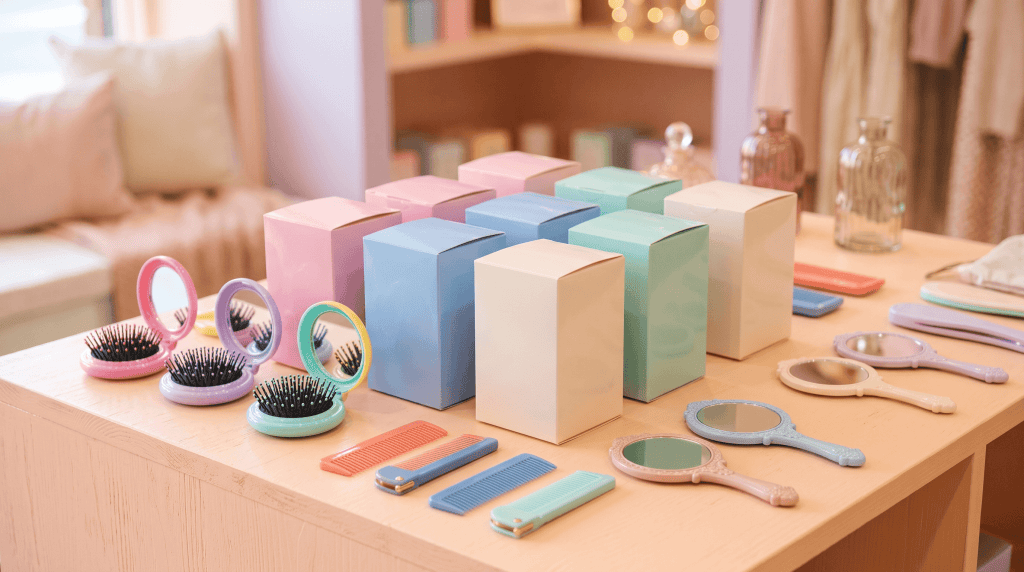
Adding a new gift category forces retail buyers to answer two questions at once: will the item feel exciting enough to open, and will it still be useful after the surprise is gone? Beauty accessory blind boxes address both sides of that decision by combining collectible presentation with practical products such as compact hairbrushes, mirrors, combs, or small grooming accessories.
The concept can suit beauty stores, lifestyle boutiques, gift shops, variety retailers, and online sellers. However, a visually appealing sample is not enough to justify a commercial order. Buyers need to examine accessory specifications, assortment structure, case quantities, packaging durability, landed cost, and destination-market requirements before comparing quotes.
Why a Functional Gift Item Fails the Usual Blind Box Test
A figure can be evaluated mainly as a collectible, but a hairbrush or grooming accessory must also perform a practical task. A brush that looks attractive but feels uncomfortable, catches hair, or does not close securely may disappoint customers even when the packaging succeeds as a gift.
Start by identifying the intended retail use rather than ordering solely from product photographs:
- Beauty and cosmetics stores: Look for designs that complement existing makeup, haircare, or travel-accessory displays.
- Gift and lifestyle shops: Prioritize gift-ready packaging, an understandable surprise concept, and accessible product functions.
- Anime or character retailers: Evaluate whether the visual style fits the interests already represented in the store.
- Интернет-продавцы: Request enough images and assortment information to explain the product without revealing every surprise.
- Event and seasonal sellers: Check whether the design works beyond a single holiday if unsold units remain.
- Beauty subscription services: Confirm box dimensions, weight, and whether the accessory can be packed safely with other items.
A buyer already merchandising character collectibles can compare this category against a conventional figure series using a structured resource such as the Руководство для покупателей «Cupa Blind Box». Focus the comparison on audience overlap, display space, repeat-purchase potential, and the additional performance checks required for a functional accessory.
What to Confirm Inside a Beauty Accessory Blind Box
“Hairbrush” is not a complete specification. Ask the supplier to identify the brush format, body material, bristle or tooth material, closure mechanism, dimensions, unit weight, color assortment, and included components. If the series contains several product types, request a list showing what differs between designs.
| Контрольная точка | What to request or inspect | Buyer risk if unclear |
|---|---|---|
| Accessory format | Compact brush, folding brush, brush-and-mirror unit, comb, or mixed assortment | Customers may expect a function that the product does not provide |
| Dimensions and weight | Closed and open measurements plus packed unit weight | Poor shelf fit, unexpected freight volume, or difficult subscription-box packing |
| Brush surface | Bristle or tooth material, tip shape, spacing, and flexibility | Comfort and hair-use expectations cannot be assessed |
| Opening mechanism | Hinge, sliding part, snap closure, or removable cover | Parts may open in a handbag or feel difficult to operate |
| Assortment structure | Regular designs, possible special designs, and case distribution method | Duplicate exposure and merchandising claims may be misunderstood |
| Decoration method | Printed, molded, painted, or attached decorative elements | Finish durability may vary across contact points |
| Individual packaging | Sealed bag, protective insert, product card, and tamper evidence | Scuffing, dust, opened-box disputes, or incomplete units |
| Master carton details | Units per case, carton dimensions, gross weight, and carton protection | Inaccurate freight estimates and warehouse planning |
Request an assembled sample when feasible and test the actual mechanism repeatedly. Examine edges, seams, loose decorative pieces, mirror protection where applicable, and whether the brush can be cleaned according to any supplied care instructions. Product photographs alone cannot establish these points.
How to Test Hairbrush Blind Box Demand Without Overbuying
The first order should be large enough to create a credible display but controlled enough to reveal whether customers understand the category. MOQ and case pack are separate questions: a supplier may quote an order minimum while also requiring purchases in complete cases or fixed assortment increments.
As a planning example, a retailer considering 48 units might allocate 24 to a main store, 12 to an online channel, and 12 as replenishment stock. That is not a recommended order quantity; it simply illustrates how buyers can assign every unit before placing an order. If the case configuration does not fit the planned allocation, ask whether mixed cases or smaller test arrangements are available rather than assuming they are.
Confirm these assortment details in writing:
- How many regular designs are in the series?
- Is case composition fixed, random, or otherwise structured?
- Can buyers order individual units, complete cases, or both?
- Are any rare or special designs mentioned, and how may retailers describe them accurately?
- Do outer cases carry identifying information that affects receiving or resale?
- Will a reorder use the same assortment and packaging version?
Visual fit matters as much as unit count. A beauty-led assortment may need softer color coordination than a figure wall, while an alternative fashion store may favor stronger character styling. The merchandising considerations in this witchy kawaii buying guide offer a useful comparison for retailers deciding whether a distinctive aesthetic matches their existing audience.
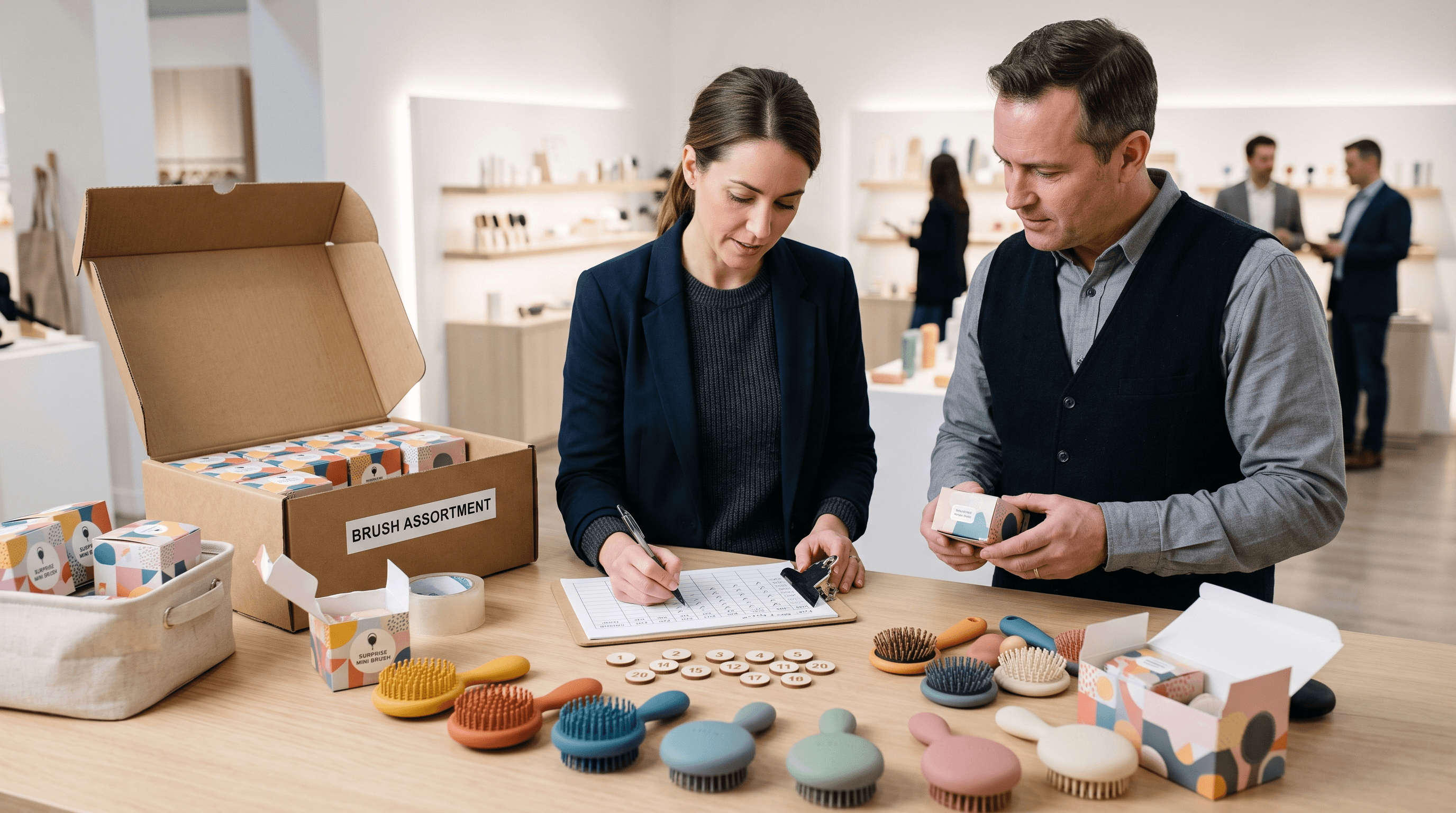
If the proposed series matches your customers, prepare a one-page specification request before seeking a quote. It will make supplier answers easier to compare and expose missing details early.
Turning a Unit Quote Into a Real Landed Cost per Brush
A low unit quotation does not automatically produce a strong retail opportunity. Compact accessories may be inexpensive to handle individually but inefficiently packed, so freight and carton utilization can materially change the cost per sellable unit.
Use this planning formula:
Estimated landed cost per sellable unit = product cost + allocated packaging or customization cost + allocated freight + duties and taxes where applicable + customs or handling charges + inspection allowance + expected damage allowance.
Ask for the trade term used in the quotation and the point at which responsibility transfers. Buyers should obtain carton dimensions and gross weight before comparing freight options. Customs classification, duties, taxes, and import procedures vary by destination, so confirm them with an appropriate customs or logistics professional rather than relying on a generic estimate.
Compare quotations in a normalized worksheet with columns for currency, included packaging, case quantity, sample charges, tooling or artwork charges if relevant, trade term, carton data, payment terms, and quotation validity. Do not compare one supplier’s product-only price with another supplier’s quote that includes additional services.
Keeping Brushes and Gift Packaging Intact in Transit
The retail box performs several jobs: it conceals the design, creates the opening experience, carries required information, and protects the accessory. Crushed corners or an easily opened bottom flap can reduce gift appeal even when the hairbrush remains usable.
Ask for close-up images or samples of the retail box, internal bag or insert, sealing method, and master carton. During sample review, check that the accessory cannot move enough to scratch itself or any mirror surface. Look for ink transfer, rubbing on raised decorations, sharp plastic edges, weak hinges, loose parts, odor, and inconsistent closure tension.
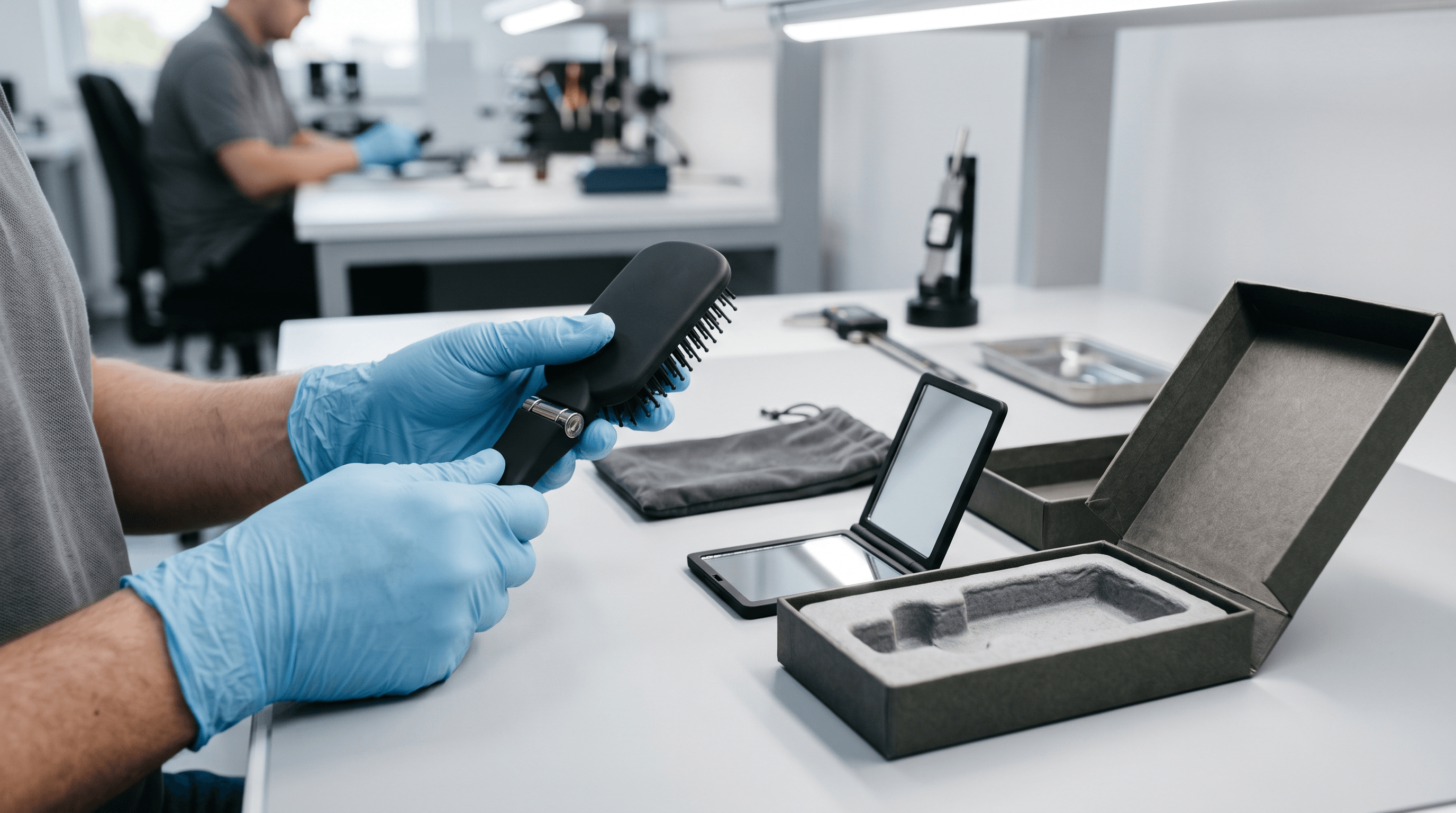
For an example inspection plan, a buyer may review units from the top, middle, and bottom of several cartons instead of opening only the easiest carton at receiving. Record defect types separately—such as crushed packaging, loose components, finish marks, or mechanism failure—so recurring issues are visible.
Beauty accessories may be subject to product safety, material, labeling, age-grading, packaging, chemical, or consumer-product rules depending on their design and destination. A mirror, small detachable decoration, or child-oriented presentation can change the questions buyers need to ask. Request available product and material documentation, then verify whether it is current, applicable to the exact item, and suitable for the intended market. Do not assume that paperwork for a similar product or another country is sufficient.
When to Reorder a Giftable Beauty Series
Plan backward from the required selling date. Ask the supplier to separate sample preparation, order confirmation, production or procurement, inspection, export handling, and transit estimates. These stages may vary, so obtain current written estimates instead of treating an earlier conversation as a fixed schedule.
For reorder planning, track weekly unit sales, sell-through by channel, damaged units, customer questions, and the remaining weeks of cover. As an example calculation, if 30 sellable units remain and recent sales average 10 units per week, the retailer has about three weeks of cover before accounting for any safety stock. Compare that window with the supplier’s current replenishment estimate before deciding whether to reorder.
Gift positioning can also influence the sales curve. A good-luck theme, romantic theme, or travel-use message may peak around different occasions. Retailers exploring occasion-led merchandising can review the good-luck gift product guide as a contrasting example of how a product theme affects display and purchase motivation.
Questions That Expose an Incomplete Beauty Accessory Quote
Pause the comparison when a quotation does not identify the exact series, accessory format, case configuration, or included packaging. Other warning signs include stock photos replacing actual product details, unexplained differences between sample and bulk specifications, changing assortment descriptions, missing carton data, pressure to pay before basic terms are documented, or claims about compliance without item-specific supporting information.
A concise inquiry can read:
Hello, we are evaluating beauty accessory blind boxes for [market and sales channel]. Please quote [planned quantity or quantity range] and confirm the exact accessory types, materials, dimensions, unit weight, designs per series, case quantity, assortment method, individual packaging, master carton dimensions and weight, trade term, payment terms, sample options, current order timeline estimate, and available product or material documentation. Please also identify any customization requirements, additional charges, and differences between the sample and quoted bulk product.
Before approving an order, match the quotation, invoice, sample, and product specification line by line. Confirm who approves artwork, how changes are documented, what inspection arrangement is permitted, and how nonconforming units would be addressed. Keep all material decisions in writing.
Ready to compare suppliers? Send a structured inquiry with your destination market, sales channel, target quantity range, required selling date, and accessory preferences. Request complete case and carton information so the commercial comparison reflects landed cost rather than the headline unit price alone.
ЧАСТО ЗАДАВАЕМЫЕ ВОПРОСЫ
What products can be included in beauty accessory blind boxes?
Possible formats include compact hairbrushes, folding brushes, brush-and-mirror combinations, combs, and other small grooming accessories. Buyers should request an exact contents list because the product mix varies by series.
How should retailers compare MOQ and case quantity?
Ask for both the minimum order requirement and the number of units per case. Then confirm whether cases have a fixed assortment, a random assortment, or another distribution method before planning the first order.
What should buyers inspect on a blind box hairbrush sample?
Check the opening mechanism, edges, bristle or tooth finish, decoration, loose components, closure strength, surface marks, packaging seals, and any protected mirror area. Repeat the opening and closing action rather than inspecting appearance only.
How is landed cost calculated for beauty blind boxes?
Combine the product cost with allocated freight, packaging or customization charges, duties and taxes where applicable, customs handling, inspection costs, and a reasonable damage allowance. Use carton dimensions and weight to improve the estimate.
Do beauty accessory blind boxes require compliance documents?
Requirements depend on the product design, materials, labeling, intended user, and destination market. Buyers should request item-specific documentation and verify applicable import and consumer-product rules with qualified local professionals.
Before Adding Hairbrush Blind Boxes to the Assortment
The category works best when surprise value supports a genuinely usable accessory. Define the intended customer, document the product specification, understand the case assortment, inspect the closure and finish, and calculate cost through delivery. A controlled retail test with clear reorder metrics provides better evidence than committing on packaging appeal alone.

