



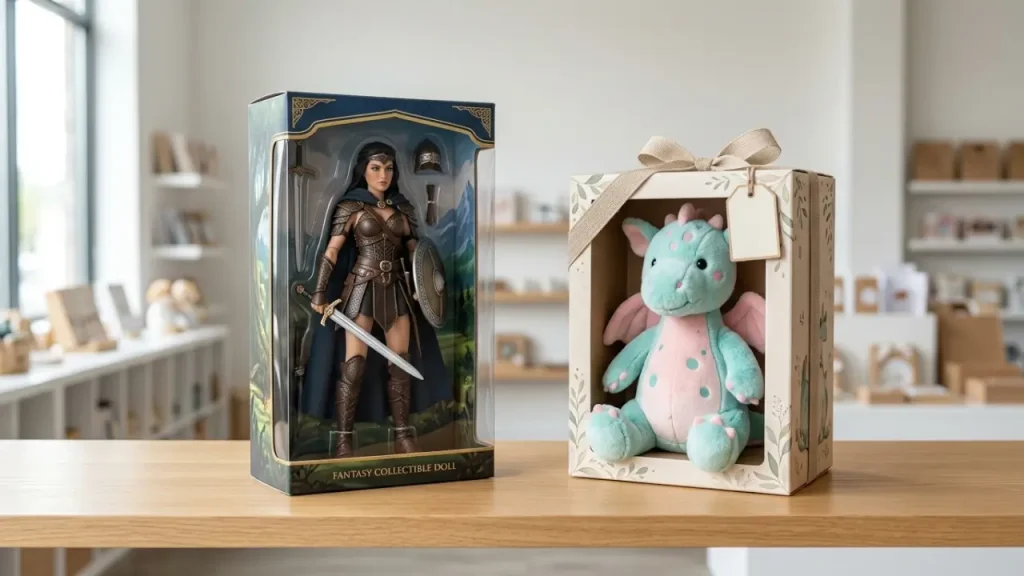
Deciding between a display-oriented collectible and a soft gift product affects far more than shelf appearance. The format changes who is likely to buy, how staff explain the item, how much packaging space an order consumes, and which defects you must inspect for. This comparison weighs Nommi Forest Kingdom BJD against Nommi Baby Plush from a retailer’s perspective, without assuming the two formats share identical specifications or commercial terms.
The right choice depends on your store’s customer base, selling channel, average basket, display space, and ability to present format-specific features. Before committing to either series, request current specifications, case-pack details, packaging dimensions, and order terms.
Start With Why Your Customer Actually Buys
BJD-style collectibles and plush products can attract overlapping character-toy audiences, but they often answer different buying motivations. A BJD shopper may care about posing, display, clothing, accessories, scale, and the visual details of an individual design. A plush shopper may prioritize softness, gifting, portability, character expression, or use as a bag or desk accessory. Confirm the exact features of Forest Kingdom BJD and Baby Plush from the supplier’s specification sheet.
Map each format to a clear use case before requesting quantities:
- Specialty collectible stores: Consider Forest Kingdom BJD if staff can explain body construction, included components, scale, and display options.
- Магазины подарков и товаров для жизни: Consider Baby Plush if tactile appeal and easy gifting suit the assortment.
- Интернет-магазины: Compare how clearly each format can be shown through product photography, dimensions, variant information, and packaging images.
- Pop-up sellers: Check whether the products can withstand frequent transport and whether display samples are practical.
- Mixed toy stores: A controlled test of both formats may reveal whether local demand favors collector detail or plush accessibility.
Decision rule: choose the format whose main purchase reason can be communicated in one short product-page paragraph and supported by accurate images. If customers need information the supplier has not documented, resolve that gap before ordering.
Forest Kingdom BJD and Baby Plush at a Glance
Do not compare the series only by unit quote. Use a format-level scorecard, then replace each “confirm” item with verified supplier data. This prevents a visually appealing sample from hiding operational differences.
| Контрольная точка | Forest Kingdom BJD | Baby Plush | Действия покупателя |
|---|---|---|---|
| Primary retail appeal | Likely display, posing, styling, or character collection | Likely tactile gifting, character collection, or casual display | Ask customers or staff which purchase reason is easier to sell |
| Construction | Confirm body material, articulation, joints, and removable parts | Confirm outer fabric, filling, attachments, and any rigid components | Request a complete material and component list |
| Size and shelf use | Confirm assembled dimensions and stand requirements | Confirm product dimensions and whether it sits, hangs, or stands | Measure the intended shelf or display fixture |
| Содержание | Verify doll, outfit, accessories, stand, cards, and instructions | Verify plush item, attachment hardware, accessories, cards, and inserts | Get a contents list for every regular design |
| Customer explanation | May require more specification and assembly information | May be simpler, but size and attachment details still matter | Draft the product listing before placing the order |
| Quality focus | Joint function, fit, finish, paint, clothing, and small components | Seams, embroidery, symmetry, filling, fabric condition, and attachments | Create separate inspection checklists |
| Freight sensitivity | Packaging may prioritize part protection | Volumetric space may matter depending on compression and box design | Request carton dimensions and gross weight |
| Repeat-purchase logic | Driven by designs, character completion, or styling interest | Driven by designs, gifting, collectability, or accessory use | Track sell-through by format rather than combining the data |
Retailers new to articulated collectibles can also review the buying questions in the Luluya BJD retail buying guide. For a closer plush-format comparison, see the guide to Nommi Baby versus Sitting Zoo.
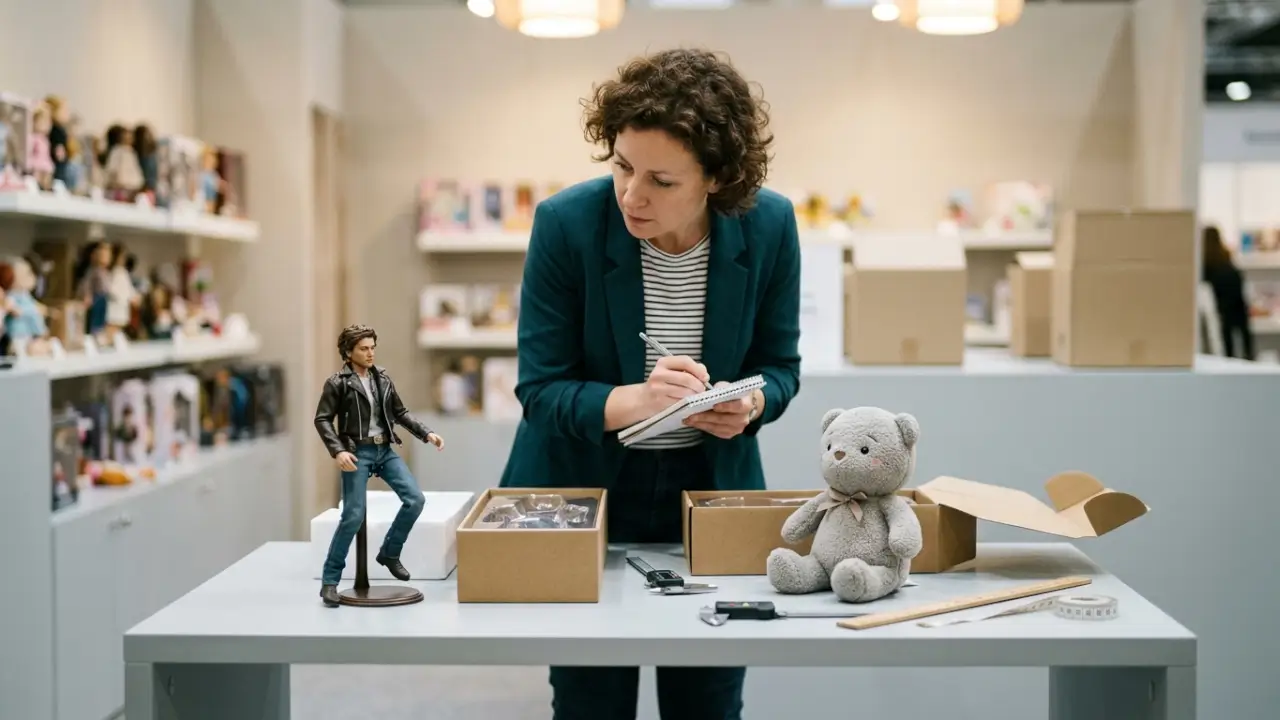
Nail Down Case Quantities Before You Compare Anything Else
MOQ alone does not show the inventory commitment. Ask whether the minimum applies per series, per design, per sealed case, or across the total order. Also confirm whether Forest Kingdom BJD and Baby Plush can be combined to meet an order threshold. Do not assume mixed-format ordering is permitted.
Request these details in writing:
- Units per inner box and master carton
- Number of regular designs in each series
- Whether a sealed case follows a stated assortment structure
- Whether random loose units, sealed sets, or both are available
- How secret or special designs affect the assortment, if applicable
- Product and retail-box dimensions for each format
- Master-carton dimensions, gross weight, and net weight
- Whether samples and repeat orders follow different quantity rules
As a planning example, a retailer testing 60 total units might compare a single format-only allocation against a split allocation. The split provides demand data for both formats, but only if the available case packs permit it. A sealed case can also differ commercially from a mixed assortment, so review this guide to Наборы из серии «Sealed» против смешанных наборов в «слепых коробках» before finalizing your order structure.
If the current product sheets do not answer these questions, send the supplier your intended channel and preferred quantity range. That creates a more useful conversation than asking only for the lowest unit price.
Calculate the Cost of Getting Saleable Units on the Shelf
The lowest quoted unit cost is not automatically the more profitable option. Compare the cost of getting saleable units onto the shelf or into the fulfillment bin.
Planning formula: product cost + freight + customs-related charges + payment or handling costs + inspection expense + local delivery + expected loss allowance = estimated landed order cost. Divide that total by the number of saleable units, not merely the number shipped.
Format changes the calculation. A BJD product may require stronger protection for rigid parts or accessories. A plush format may occupy more carton volume relative to weight. These are comparison points, not assumptions about the actual Nommi cartons; use supplier-provided packing data and a freight estimate.
Ask for quotes in a consistent format:
- Same quantity basis and assortment type
- Same currency and trade terms
- Clear statement of included packaging
- Carton count, dimensions, and weight
- Separate sample, product, and freight charges
- Validity period and payment milestones
Risk warning: a quote that omits carton data cannot support a reliable landed-cost comparison. Likewise, a low unit quote can mislead if it covers loose items while another quote covers sealed retail packaging.
How Packaging Risks Differ Between BJD and Plush
Packaging protects both product condition and customer confidence. For Forest Kingdom BJD, confirm how the body, outfit, accessories, and any small components are secured. Ask whether parts can move inside the box and whether assembly or handling instructions are included when needed.
For Baby Plush, inspect seam condition, shape consistency, fabric cleanliness, embroidery alignment, attachment points, and whether the retail package compresses or distorts the item. If there is metal or plastic hardware, include it in the inspection rather than treating the product as fabric-only.
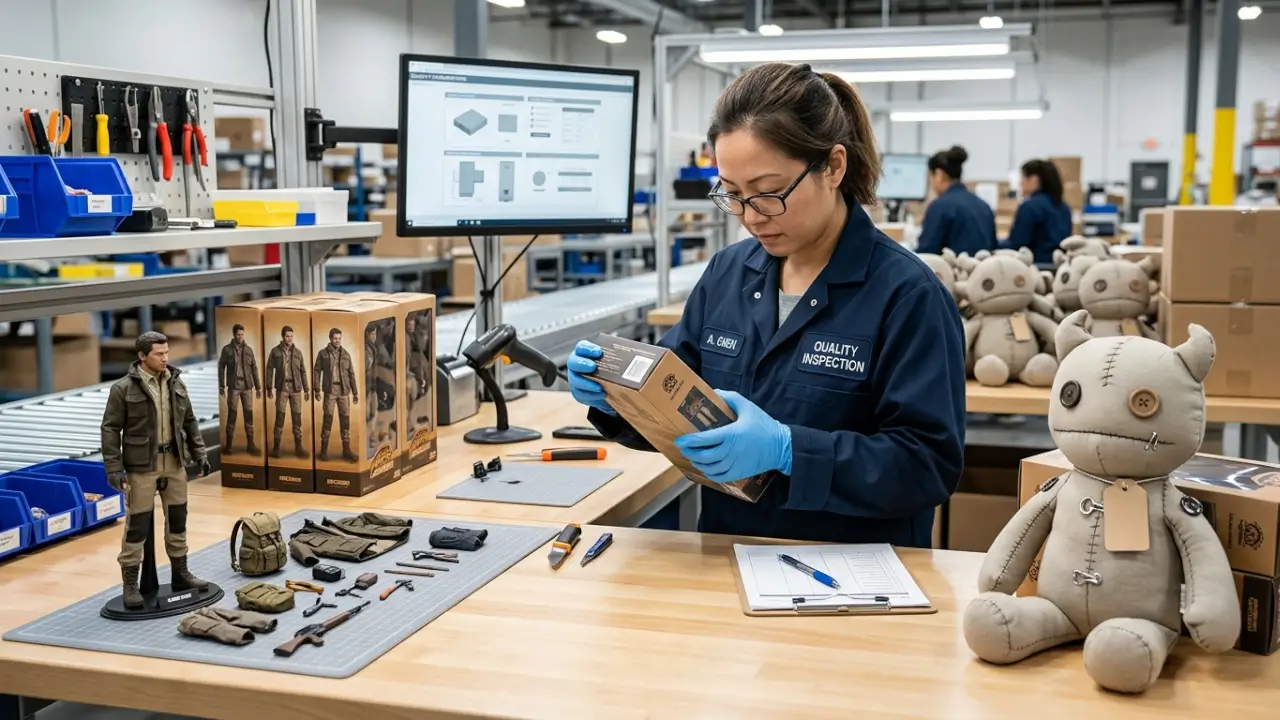
A practical pre-shipment or receiving checklist may include:
- Match carton labels and quantities to the packing list.
- Check retail boxes for crushing, moisture exposure, broken seals, or incorrect labels.
- Open a planned sample across multiple cartons rather than taking every sample from the top layer.
- For BJD units, review joint movement, component fit, surface condition, clothing, and accessory count.
- For plush units, review seams, filling distribution, symmetry, embroidery, fabric, and attachment security.
- Photograph recurring issues and record affected carton numbers.
Also verify destination-market requirements covering product labeling, age grading, small parts, materials, testing documentation, importer information, and warnings. Requirements vary by market and product construction, so do not infer compliance from product photos or from another series.
Let Each Format’s Sell-Through Set Its Own Reorder Point
BJD and plush stock should have separate sales records even if they share the Nommi name. Combined reporting can hide that one format sells quickly while the other lingers on hand.
Record weekly unit sales, remaining stock, damaged units, returns, and variant requests. Then compare expected weeks of cover against the supplier’s current production, preparation, and shipping estimate. Ask whether repeat orders require the same MOQ and case structure as the opening order.
As a planning reference, a store might review replenishment when roughly 40% of its test allocation remains. That is not a universal reorder point. Move the trigger earlier when replenishment is slow or unpredictable, and later when demand is volatile or storage is limited.
Keep a buffer between the expected arrival date and any planned promotion. Freight and customs timing can change, so confirm current routing and destination requirements rather than relying on a previous shipment.
Signs a Nommi Quote Is Not Yet Comparable
Vague answers create more risk when two product formats have different components and packing needs. Pause the comparison if a supplier cannot identify what is included, how units are packed, or which specifications apply to the quoted version.
Watch for these warning signs
- Only promotional images are provided, with no current product or packaging specifications.
- The quote uses “set,” “case,” and “carton” without defining the unit count.
- Forest Kingdom BJD contents or Baby Plush attachments are not itemized.
- Carton measurements are unavailable but freight is presented as final.
- Substitution rules, assortment structure, or packaging condition are unclear.
- Compliance questions receive a broad assurance instead of relevant documents for buyer review.
- Defect reporting procedures and response windows are not explained before payment.
Copyable inquiry checklist
Please quote Nommi Forest Kingdom BJD, Nommi Baby Plush, or both. For each format, provide the product version, included contents, regular design count, assortment method, MOQ basis, units per case, master-carton dimensions and weight, retail packaging details, available specification or material information, sample options, current preparation estimate, shipping terms, payment terms, and process for reporting shortages or defects. Please also identify which compliance or testing documents are available for buyer review. The destination market and delivery location are: [insert details]. Our intended channel and estimated opening quantity are: [insert details].
Retailers comparing plush suppliers may find additional inspection and quote questions in the plush blind box sourcing guide for Siinono.
Before paying for stock, request comparable written quotes for both Nommi formats and attach the same specification checklist to each inquiry. Compare landed cost, case exposure, merchandising fit, documentation, and replenishment conditions—not just the unit figure.
ЧАСТО ЗАДАВАЕМЫЕ ВОПРОСЫ
Is Nommi Forest Kingdom BJD better for collectible stores?
It may suit stores whose customers value display, posing, styling, or detailed character collectibles. Buyers should first confirm the body construction, included accessories, dimensions, and staff’s ability to explain the format.
Is Nommi Baby Plush easier to sell as a gift?
Its soft format may support gifting, but ease of sale depends on size, presentation, price positioning, character appeal, and the store’s audience. Confirm packaging and attachment details before making that assumption.
Can Forest Kingdom BJD and Baby Plush share one opening order?
Possibly, but buyers must ask whether the supplier allows formats to be combined toward an MOQ and whether each series has separate case-pack requirements. Do not assume mixed ordering is available.
Which Nommi format is cheaper to ship?
That cannot be determined from format alone. Compare packed carton dimensions, gross weight, carton count, protection requirements, shipping method, and destination charges using current quote data.
What quality checks differ between BJD and plush products?
BJD checks may emphasize joints, component fit, surface finish, clothing, and accessory count. Plush checks may emphasize seams, embroidery, filling, symmetry, fabric condition, and attachment security. Use the confirmed construction of each product to finalize the checklist.
Before Choosing Your First Nommi Format
Choose Forest Kingdom BJD when verified specifications and customer behavior support a more display- or collector-led offer. Choose Baby Plush when the store can better convert tactile, gift, or accessory-oriented demand. A small, structured comparison order may be more informative than a large commitment based on appearance alone.
The final decision should rest on five documented points: customer intent, complete specifications, case quantity, landed cost, and reorder feasibility. If any of those remain unclear, improve the quote request before increasing the order.

