




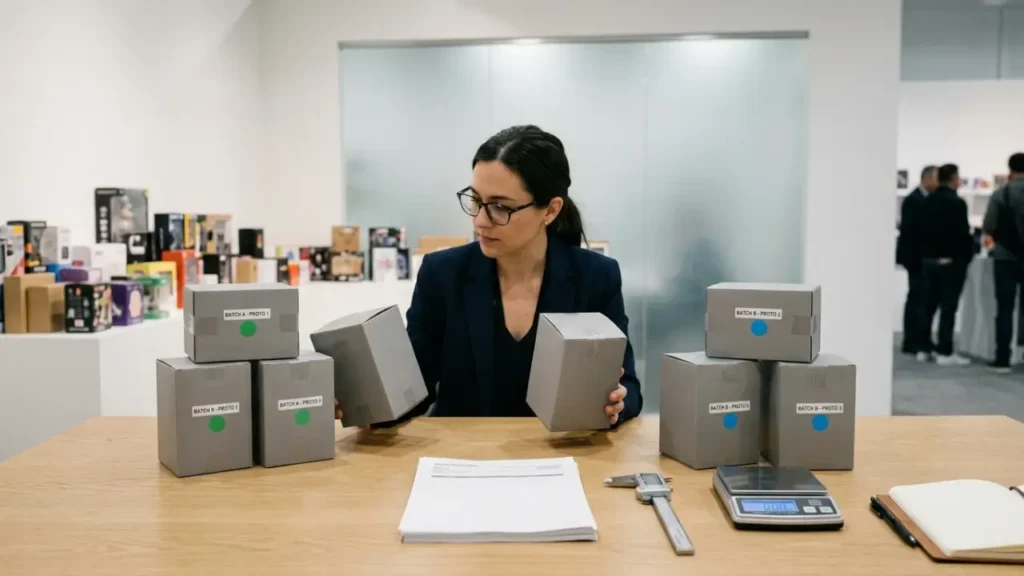
A lower quoted price can hide a different purchase unit, product format, or assortment. Before you decide which series earns shelf space or purchasing budget, you need to know exactly what each quote for SKULLPANDA Off Mode and Petals in Four Acts actually contains.
This guide does not assign an unverified format, piece count, or carton quantity to either series. Instead, it provides a side-by-side purchasing framework for confirming those details with the supplier. That distinction matters: a series name, a retail blind box, a display box, and a shipping carton are not interchangeable specifications.
Confirm the Exact SKULLPANDA Off Mode SKU Before Comparing Formats
Start by requesting the full product name, SKU or barcode, and photographs of the actual retail packaging for both series. A shortened listing title is not enough to establish material, dimensions, intended use, or sales format.
Ask the supplier to identify the product as a display figure, plush item, pendant, accessory, or another format, rather than inferring it from promotional artwork. Also establish whether the offer covers factory-sealed random units, opened identified designs, or a supplier-selected assortment.
The decision rule: compare equivalent purchasing arrangements first. If one quote covers sealed random boxes and the other covers identified designs, keep those offers separate even when the character branding is the same.
For a broader way to evaluate these differences, the guide to comparing plush and figure formats offers a related buying perspective. Use that framework without assuming either SKULLPANDA series shares those specifications.
Which Confirmed Format Fits Your Store?
Collector stores may prioritize sealed presentation and assortment rules. Gift shops may place more weight on box condition and gift-ready appearance. Online sellers need accurate dimensions for listings and parcel estimates, while convention sellers must account for transport and display space.
Complete the following comparison before choosing a series. Each blank is a supplier question, not a specification that can safely be filled from the series name.
| Buyer check | Off Mode: record | Petals in Four Acts: record | Why it changes the decision |
|---|---|---|---|
| Exact identity | SKU, barcode, edition | SKU, barcode, edition | Prevents comparing different releases or variants |
| Product format | Confirmed format and materials | Confirmed format and materials | Determines display, handling, and listing needs |
| Product and box size | Dimensions measured separately | Dimensions measured separately | Controls shelf capacity and outbound packaging |
| Sales condition | Sealed random or identified | Sealed random or identified | Changes the customer promise and assortment risk |
| Display quantity | Retail boxes per display | Retail boxes per display | Sets a practical order increment |
| Carton configuration | Displays and retail units per carton | Displays and retail units per carton | Allows freight and inventory calculations |
| Assortment rules | Duplicates, substitutions, special variants | Duplicates, substitutions, special variants | Prevents unsupported complete-set claims |
| Order constraints | MOQ and split-case conditions | MOQ and split-case conditions | Shows how much budget each trial requires |
Once completed, select the series that fits your actual sales channel rather than the one with the most appealing promotional image. For example, a space-constrained retailer may prefer the confirmed smaller retail package if both options otherwise meet customer demand.
Translate Each Pack Size Into Sellable Retail Units
Ask suppliers to define every packaging level in writing: individual retail unit, display box or inner pack, and master carton. The word “box” alone is too ambiguous for a purchase order.
Retail units ordered = master cartons × displays per carton × retail units per display. If the packing structure does not include displays, request the direct retail-unit count per carton instead.
As a hypothetical planning example—not a specification for either series—an offer containing four displays of six retail boxes equals 24 sellable units. Another offer containing two displays of twelve also equals 24 units, but its display footprint and replenishment flexibility may differ.
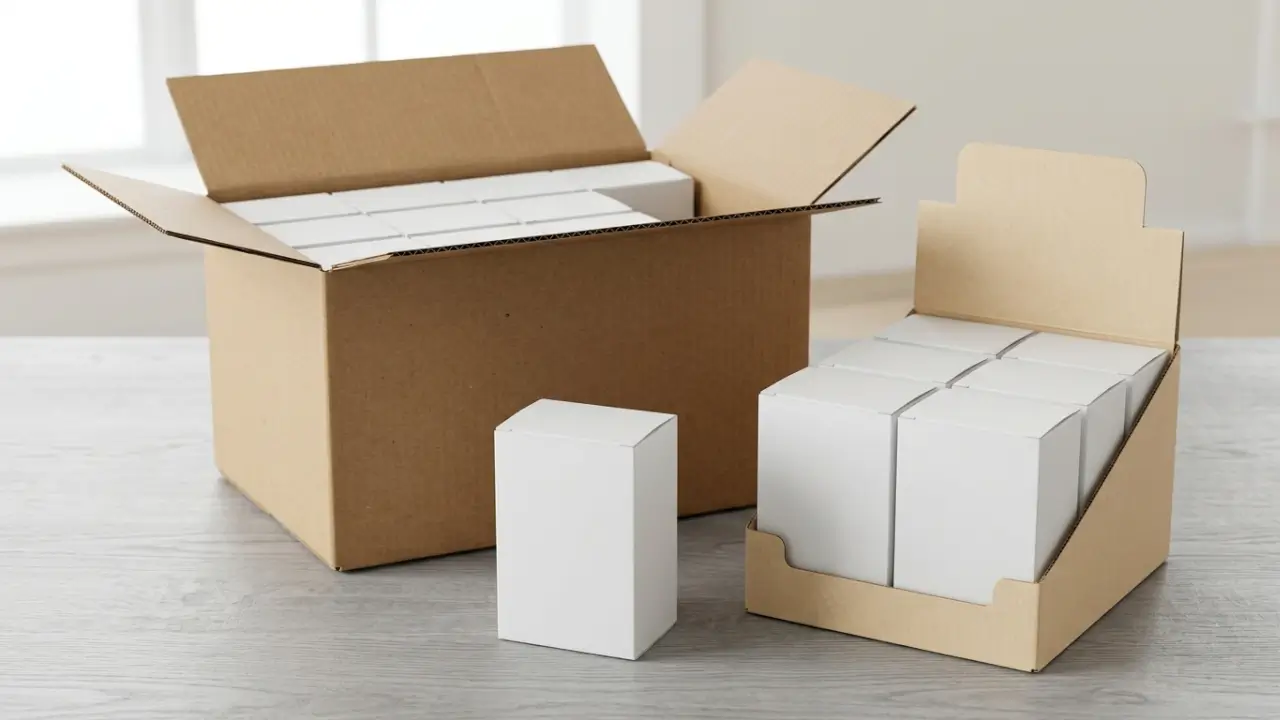
Confirm whether the minimum order applies to each SKU, each series, or the whole purchase. Ask whether mixing the two series is permitted, whether partial displays remain factory sealed, and whether split-case handling changes the quotation.
Do not interpret “full case” as “complete collection.” Request the documented assortment policy, including any stated duplicate or special-variant rules. Only repeat claims to customers that the supplier can substantiate for the exact item.
If your trial budget is tight, the small-store blind box buying guide provides related assortment-planning ideas. A sensible test order should leave room for freight, packaging, and an eventual reorder—not just the initial goods payment.
Before narrowing your shortlist, ask the supplier to return the completed comparison table and packaging photographs for both series. That small step can reveal whether the offers are genuinely comparable.
Why the Cheaper SKULLPANDA Quote May Cost More to Land
Normalize both quotations to the same sellable unit, currency, and delivery basis. A display-box price cannot be compared directly with an individual-box price, and freight-inclusive and freight-exclusive offers need separate adjustments.
Estimated landed cost per retail unit = total attributable purchase and inbound costs ÷ retail units received. Include product cost, freight, insurance where applicable, relevant import charges, brokerage, and inbound handling. Separately assess how damaged or unsellable units would affect the cost per sellable unit.
Request packed carton dimensions, gross weight, carton count, and the shipping method used in the estimate. Depending on the carrier and service, bulky lightweight packages may be billed using dimensional weight. Product dimensions alone cannot establish freight cost.
- Ask which Incoterm or delivery basis applies and who handles import clearance.
- Separate order preparation, transit, clearance, and receiving time in the schedule.
- Confirm whether availability means allocated goods, expected replenishment, or a preorder.
- Verify destination duties, taxes, and import requirements with an appropriate adviser or broker.
For reorders, track demand in retail units rather than cartons. Estimate units needed during the replenishment period, add a buffer appropriate to demand uncertainty, and review the result against the supplier’s current order increment. Reconfirm availability and timing before promising a restock date.
Protect Sealed Presentation Without Overlooking the Contents
For collectible retail, packaging condition is part of the customer experience. Request photographs showing box corners, closures, display packaging, and master-carton protection. Agree in advance how crushed boxes, broken seals, shortages, and product defects will be documented and handled.
If buying sealed blind boxes, distinguish external inspection from destructive sample opening. Ask how inspection samples will be selected and whether opened units must be excluded from sealed retail inventory.

Apply content checks to the confirmed format. For a figure, inspect stability, paint application, joints, and fragile details where present. For plush, review seams, loose fibers, surface cleanliness, and attachments. For a pendant, inspect connection points and hardware. These are conditional checks, not claims about either series.
Ask for traceable sourcing documentation and any product-specific safety or labeling information relevant to your destination. Buyers should verify age grading, warnings, material requirements, and applicable rules rather than assuming collectible positioning creates an exemption. Packaging photos alone do not establish authenticity or compliance.
When an Off Mode or Petals Offer Is Not Ready to Approve
Pause a quotation if its descriptions cannot be reconciled with its photographs and packing information. A low price does not compensate for uncertainty about what will arrive.
- Unexplained naming differences: ask the supplier to connect the listing name to the exact SKU and packaging.
- Undefined “set” language: establish whether it means a quantity of boxes or a documented assortment.
- Changing pack counts: require corrected totals on the quotation and purchase order before payment.
- Promotional images only: request current photographs of the offered packaging and an explanation if goods are not yet available.
- Unwritten substitution rights: require approval before any series, edition, or assortment change.
- Unclear damage process: document evidence requirements, reporting deadlines, and proposed remedies before ordering.
For online retail, avoid building listings around unconfirmed measurements or full-set promises. The blind box selection guide for online anime stores offers additional channel-specific considerations.
Send a Two-Series Quote Request With Matching Fields
Prepare your destination country and postal code, sales channel, preferred purchase condition, trial-order budget or quantity range, and target receiving window. Then send the same request for both series:
Please quote SKULLPANDA Off Mode and Petals in Four Acts separately. For each, confirm the exact SKU and edition; product format, materials, and dimensions; retail packaging dimensions; sealed or identified sales condition; units per display; displays and units per master carton; MOQ; mixed-order and split-case options; assortment policy; carton dimensions and gross weight; availability and preparation estimate; shipping basis and exclusions; sourcing documentation; relevant labeling information; and shortage or damage procedures. Please attach actual packaging photographs and state whether substitutions require buyer approval.
Request the completed two-series quotation before committing funds. Choose a trial quantity only after the pack counts, freight basis, and retail condition are documented. Keep those agreed details with the purchase order so receiving staff can check the delivery against the same specification.
FAQ
Do Off Mode and Petals in Four Acts have the same format?
Do not assume they do. Confirm the exact SKU, product format, materials, dimensions, and packaging for each offer before comparing them.
How many units are in a case of each series?
A verified case count is not established here. Ask for retail units per display, displays per master carton, and total retail units per carton for the exact SKU.
Does a full display guarantee a complete collection?
Not without a documented assortment policy. Confirm duplicate rules, special-variant substitutions, and any complete-set claim before describing the display to customers.
Can a first order include both series?
That depends on the supplier’s order rules. Ask whether MOQ applies per SKU or across the order, and whether mixing series changes packaging, handling, or pricing.
Which quotation should a retailer prioritize?
Prioritize the offer that meets your sales-channel needs with clear specifications, manageable pack quantities, and comparable landed costs. Do not decide on the headline unit price alone.
Before You Place That First Order
Choose between the two series using confirmed product identity, sellable-unit counts, and delivery costs—not ambiguous listing terms. A documented trial order gives you a clearer basis for checking incoming goods, measuring demand, and planning the next purchase.