






You have successfully mastered the Art Toy retail game. You sourced highly-coveted Pop Mart Master Cartons from KidultsBox. Your store’s Blind Box Wall looks incredible. You generated $500,000 in gross revenue this year. But when Q1 rolls around and your CPA (Certified Public Accountant) hands you your tax bill, you realize a brutal truth: It is not about how much money you make; it is about how much money you keep.
Many independent toy boutique owners and Shopify dropshippers hemorrhage cash to the government simply because they do not understand the complex tax code surrounding retail operations. They write off the raw cost of the toys, but they ignore the massive, legally deductible expenses hiding in their visual merchandising, marketing strategies, and supply chain logistics.
This comprehensive B2B financial whitepaper is designed to be your ultimate fiscal shield. We will deconstruct the true calculation of COGS (Cost of Goods Sold), explore the Section 179 depreciation loopholes for your store displays, and teach you how to legally write off the toys you give away to TikTok influencers or lose to shoplifters. (Disclaimer: This guide is for educational purposes and focuses generally on US IRS guidelines. Always consult a licensed CPA for tax advice specific to your jurisdiction.)
1. The Foundation: Mastering COGS (Cost of Goods Sold)
The biggest deduction for any retail store is COGS. This represents the direct costs attributable to the production or acquisition of the goods sold by your company. However, novice retailers often only deduct the line-item cost of the toy, ignoring the “Landed Cost.”
What is Included in “Landed COGS”?
If you purchase a wholesale case of Baby Three Plushies for $1,000 from KidultsBox, your COGS is not just $1,000. You must capitalize (add to the inventory value) the following expenses:
- Inbound Freight: The cost to ship the pallet from Asia to your warehouse.
- Customs Duties & Tariffs: The 5% to 25% import taxes levied by border control.
- Freight Forwarder Fees: The fees paid to customs brokers to clear your shipment.
The Retail Strategy: By utilizing KidultsBox’s DDP (Delivered Duty Paid) shipping options, your commercial invoice consolidates the product, freight, and duties into one clear, easily deductible line item. This saves your bookkeeper hours of forensic accounting at year-end.
2. Visual Merchandising & Store Build-Out: Section 179
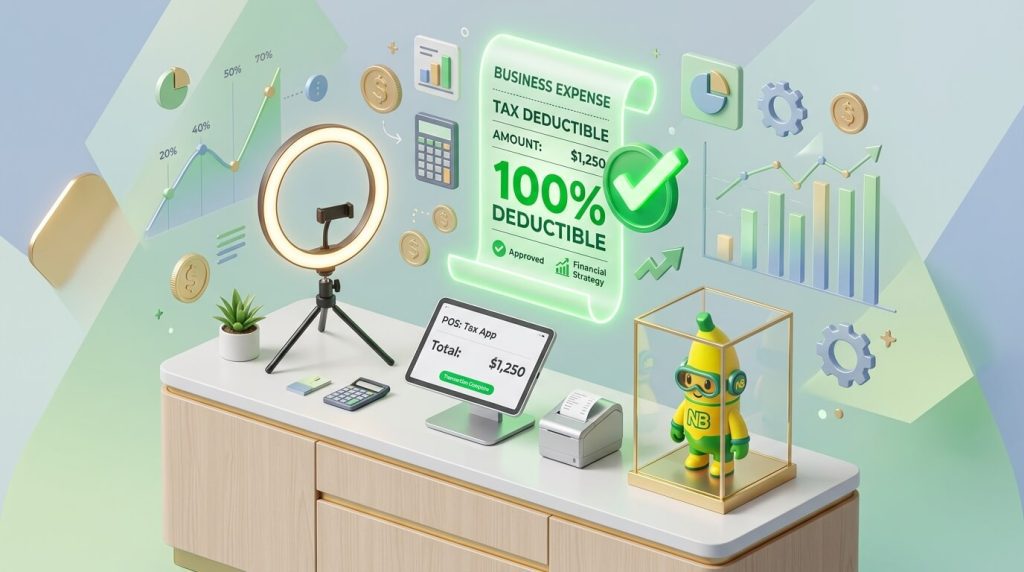
Opening an art toy boutique requires significant Capital Expenditure (CapEx). You cannot just throw $20 blind boxes on a cheap wire rack; you need premium acrylic cases, LED track lighting, and a custom cash wrap. Traditionally, the IRS requires you to depreciate (write off slowly) these assets over 5 to 7 years.
However, under Section 179 of the IRS Tax Code, you can deduct the full purchase price of qualifying equipment and/or software purchased or financed during the tax year.
| Store Asset Category | Deductibility Status | Tax Strategy Application |
|---|---|---|
| Acrylic Display Cases & Shelving | 100% Deductible (Section 179) | If you spend $10,000 building a custom “Blind Box Wall,” you can deduct the entire $10,000 from your gross income in Year 1. |
| The “Unboxing Station” Hardware | 100% Deductible | Ring lights, heavy-duty tables, and dedicated camera equipment used for your in-store unboxing stage are fully deductible business equipment. |
| Point of Sale (POS) Hardware | 100% Deductible | iPads, thermal barcode printers, and 2D barcode scanners required for processing KidultsBox inventory. |
| Structural Renovations (HVAC, Walls) | Amortized (Usually 15-39 Years) | Qualified Improvement Property (QIP). You cannot write off building a new wall in Year 1; it must be depreciated over time. Consult your CPA. |
3. The “Influencer Seeding” Deduction (Marketing & Advertising)
In 2026, handing out flyers does not sell toys. Giving free products to local TikTok and Instagram micro-influencers does. Many store owners view giving away a $150 Penny’s Box BJD as a “loss.” From a tax perspective, it is an Advertising Expense.
How to Log “Gifted” Inventory
If you give a toy to an influencer in exchange for a review or a post, you cannot leave it logged as “Inventory,” nor is it a personal gift. You must execute an inventory adjustment in your POS system (like Shopify or Square).
- Remove the item from active inventory.
- Log the wholesale cost (COGS) of that item as an “Advertising/Promotional Expense.”
- Audit Trail: Keep a spreadsheet linking the cost of the given toy to the specific URL of the Instagram Reel or TikTok video the influencer posted. This proves to the IRS that the giveaway had a legitimate commercial marketing purpose.
4. Shrinkage: Deducting Stolen, Damaged, and Dead Stock
In the physical retail of small, high-value blind boxes, shrinkage is inevitable. Whether a customer crushes a box trying to “feel” the toy, an employee steals a “Secret” figure, or a series becomes completely unsellable, you must legally capture this loss on your tax return to lower your taxable income.
The “Phantom Inventory” Audit Trap
If your Shopify POS says you have 500 blind boxes in stock, but a physical count reveals you only have 450 (due to theft or loss), you must adjust your books BEFORE the tax year ends (December 31st).
If you pay taxes on the assumption that you hold $10,000 in inventory, but $1,000 of it is stolen or destroyed, you are paying taxes on ghost assets. You must log the missing 50 boxes under “Inventory Shrinkage/Loss,” which acts as a direct deduction against your income.
Handling “Dead Stock” (Obsolete Inventory)
If you ordered a wholesale case of a highly obscure IP that hasn’t sold a single unit in 12 months, the IRS allows you to write down the value of obsolete inventory. You must prove the item is unsellable at normal prices. The best practice is to heavily discount the item (e.g., place it in a “Lucky Bag” or clearance bin below cost). The loss you take upon the sale is fully deductible.
5. Sourcing & Travel: The “Guanxi” Deduction

As your toy empire grows, you will eventually need to fly to major international conventions like DesignerCon, PTS Shanghai, or the Thailand Toy Expo to network with brands and see the upcoming trends.
Travel expenses are a massive tax deduction, provided they are “ordinary and necessary” to your trade.
- Airfare & Hotels: 100% deductible if the primary purpose of the trip is business (e.g., attending a toy fair or meeting with overseas suppliers).
- Business Meals: If you take an account manager from KidultsBox or an indie artist out to dinner to negotiate a regional exclusivity contract or discuss bulk pricing, 50% of the cost of that meal is currently deductible. (Note: Keep the receipt and write the name of the person and the business topic discussed on the back of it).
6. The “Open Sample” Loophole
To sell a blind box series effectively, you must sacrifice one unit to be the “Open Display Sample” so customers can see the paint quality and articulation.
When you take a Kimmon Plush Series box off the shelf for display purposes, it transitions from Inventory to Store Supply/Marketing Material. You expense the wholesale cost of that item immediately. If, two years later, you decide to liquidate the dusty open sample to a collector for $5, you simply log that $5 as “Other Income.”
7. Software, SaaS, and O2O Infrastructure
Running a modern Omnichannel (O2O) toy store requires a complex tech stack. Every software subscription you pay for is fully deductible. Ensure your bookkeeper is capturing:
- E-Commerce Platforms: Shopify or WooCommerce monthly subscription fees.
- Marketing Software: Klaviyo (Email Marketing), SMS bump, and social media scheduling tools.
- POS Subscriptions: Square for Retail or Lightspeed monthly terminal fees.
- Web Hosting & Domains: Namecheap, GoDaddy, and premium Shopify theme purchases.
8. The Home Office / Warehouse Deduction
If you are an e-commerce dropshipper or a weekend Comic-Con vendor who does not have a physical retail storefront, you likely hold your KidultsBox wholesale inventory in your house or garage.
You can take the Home Office Deduction for the portion of your home used exclusively and regularly for business. Furthermore, if your home is your sole fixed location of business, you can deduct the square footage of your garage or spare room used for Inventory Storage.
If your house is 2,000 square feet, and you use 400 square feet (20%) exclusively to store your pallets of Pop Mart and pack orders, you can generally deduct 20% of your rent, mortgage interest, utilities, and home insurance. This is a massive, legally protected deduction that drastically lowers your taxable income.
Frequently Asked Questions (FAQ)
Q: Can I deduct the cost of blind boxes I open for my personal collection?
A: No. If you take inventory from your business for personal use, you cannot deduct the cost of goods sold for that item. You must record it as an “Owner’s Draw” or personal use, effectively removing it from your deductible expenses. The IRS is very strict on mixing personal hobbies with business inventory.
Q: If a customer issues a chargeback, how do I record it for taxes?
A: The chargeback reverses the revenue, so you do not pay income tax on that sale. However, the $15-$25 penalty fee charged by Shopify/Stripe is fully deductible as a “Bank/Merchant Fee” or “Cost of Doing Business.”
Q: Are the packaging materials I use for shipping deductible?
A: Yes. 100% of your shipping supplies—including corrugated boxes, bubble wrap, custom branded tape, and thermal printer labels used to ship your blind boxes—are fully deductible as “Shipping and Packaging Expenses.”
Q: Can KidultsBox provide documentation for my CPA?
A: Absolutely. As a verified B2B wholesale distributor, KidultsBox provides clear, professional Commercial Invoices for every order. These invoices itemize the product cost, freight, and any DDP duties paid, giving your CPA a flawless paper trail for your COGS calculations.

