



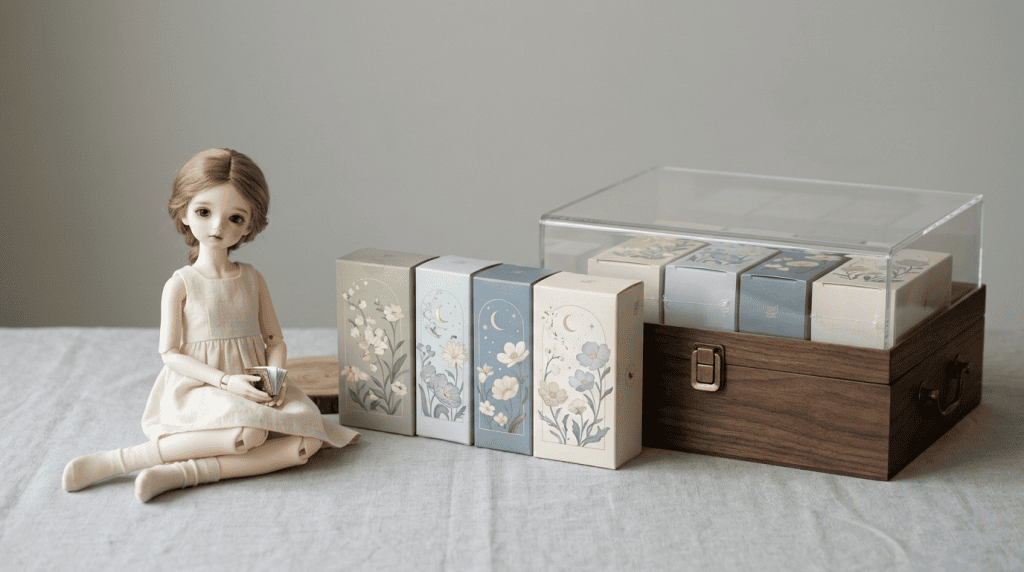
Product photos cannot tell a wholesale buyer whether an articulated doll series will arrive retail-ready, fit the intended price tier, or produce a workable assortment. Before judging the opportunity in a Meki Final Blessing order, you need to verify the doll configuration, case structure, packaging condition, and total inbound cost.
This guide focuses on the questions that matter when sourcing the Meki Final Blessing series. Because specifications, minimum orders, and availability can vary by quote, treat every unconfirmed detail as a question to put to the supplier rather than an assumption to build a listing on.
Which Retailers Are a Good Fit for Final Blessing?
BJD-style blind boxes generally require a more considered sales approach than low-cost impulse collectibles. Articulation, styling, display potential, and possible outfit or accessory components can attract collectors, but they also create more details for staff and customers to understand.
The Final Blessing series may be worth evaluating for:
- Designer-toy and blind-box stores that already explain series assortments and hidden-character mechanics.
- Anime, manga, and hobby retailers whose customers recognize articulated collectible dolls.
- Doll and miniature shops that can answer questions about scale, clothing, posing, and included components after confirming the specifications.
- Gift retailers looking for a more presentation-led collectible, provided the box design and retail price suit their audience.
- Online sellers able to publish clear variation, sealed-box, and return-condition policies.
Audience overlap should not be assumed. A shop selling vinyl figures may not automatically convert those customers to articulated dolls. Retailers comparing formats can review the Sakura 1/12 BJD blind box guide y el Guía de abastecimiento minorista de Bonnie 1/6 to see how scale and product presentation affect merchandising decisions.
What a Usable Meki Final Blessing Quote Must Confirm
A usable quote should identify exactly what is being purchased. Ask for a current specification sheet or written confirmation rather than deriving dimensions, materials, or assortment details from social media images.
| Point to verify | Pregunta para el proveedor | Por qué afecta al orden |
|---|---|---|
| Doll scale and dimensions | What are the doll height, box dimensions, and shipping-carton dimensions? | Scale affects shelf space, customer expectations, storage, and freight volume. |
| Body construction | Which joints move, and are any components removable or interchangeable? | Articulation influences perceived value and the risk of loose or detached parts. |
| Materiales | What materials are used for the head, body, hair, clothing, and accessories? | Material information may be needed for product descriptions, handling, and compliance review. |
| Contenido incluido | What comes with each blind box, including clothing, footwear, stand, cards, or accessories? | Buyers need an accurate contents list to prevent misleading listings. |
| Series assortment | How many regular designs and possible special designs are in the series? | This determines collection difficulty and how staff should explain the assortment. |
| Configuración de la carcasa | How many blind boxes are packed in one inner case and one master carton? | Case quantity drives order planning, freight calculations, and display setup. |
| Duplicate logic | Does an untouched sealed case have a stated assortment pattern? | A sealed case should not be described as non-duplicate unless the supplier confirms that rule. |
| Packaging version | Can the supplier provide current photos of the unit box, case markings, and carton? | Packaging versions can affect authenticity checks, language needs, and retail presentation. |
Ask the supplier to place these answers on the quotation or pro forma invoice where practical. Written specifications make it easier to compare offers and resolve discrepancies before payment.
How Case Packs Change Final Blessing Inventory Risk
MOQ and case quantity are different controls. A supplier may quote an order minimum in pieces, cases, cartons, or total order value. Ask whether the minimum applies to this series alone or can be combined with other products.
For planning purposes, consider an example in which a store wants to test 24 units. If the confirmed inner case contains 12 boxes, the order could equal two intact cases. If the supplier instead fulfills 24 loose units from opened cases, the assortment and packaging risk may be different. These figures are an example only; obtain the actual Final Blessing case configuration from the quote.
Decide whether the sales plan needs:
- Untouched sealed cases for collectors buying a full set;
- Individual blind boxes for counter or online sales;
- A display case plus reserve stock for replenishment;
- Mixed cartons containing several series to reduce concentration risk.
The distinction between intact cases and loose stock is commercially important. The guide to Conjuntos de series cerradas frente a surtidos mixtos en cajas sorpresa provides additional comparison logic for choosing an order format.
Soft next step: Before asking only for a unit price, send the supplier your preferred number of sealed cases, acceptable carton format, destination, and required arrival window. That produces a more useful response than a general request for “wholesale pricing.”
Build the Cost From the Carton, Not the Unit Price
The lowest quoted unit cost does not necessarily create the lowest landed cost. Articulated doll boxes may occupy more space than compact figure packaging, so carton dimensions and chargeable weight can materially affect the result. Calculate cost at both unit and shipment level.
A basic landed-cost worksheet should include:
- Product cost and any clearly stated payment fees;
- Export packing or carton reinforcement charges, if applicable;
- Freight to the destination country and final delivery;
- Cargo insurance where selected;
- Import duties, taxes, brokerage, and customs-related charges;
- Inspection or sample costs;
- An internal allowance for damaged, missing, or commercially unsellable packaging.
Use the destination market’s current tariff and tax rules rather than relying on a generic estimate. Classification and import treatment can vary, and buyers should verify requirements with an appropriate customs or compliance professional.
Compare quotations on the same basis. An EXW-style product quote, a freight-inclusive offer, and a delivered quotation cannot be ranked by the headline unit cost alone. Request the named shipping basis, carton count, gross weight, dimensions, and a list of included charges.
Protect Articulated Dolls and Gift-Ready Boxes in Transit
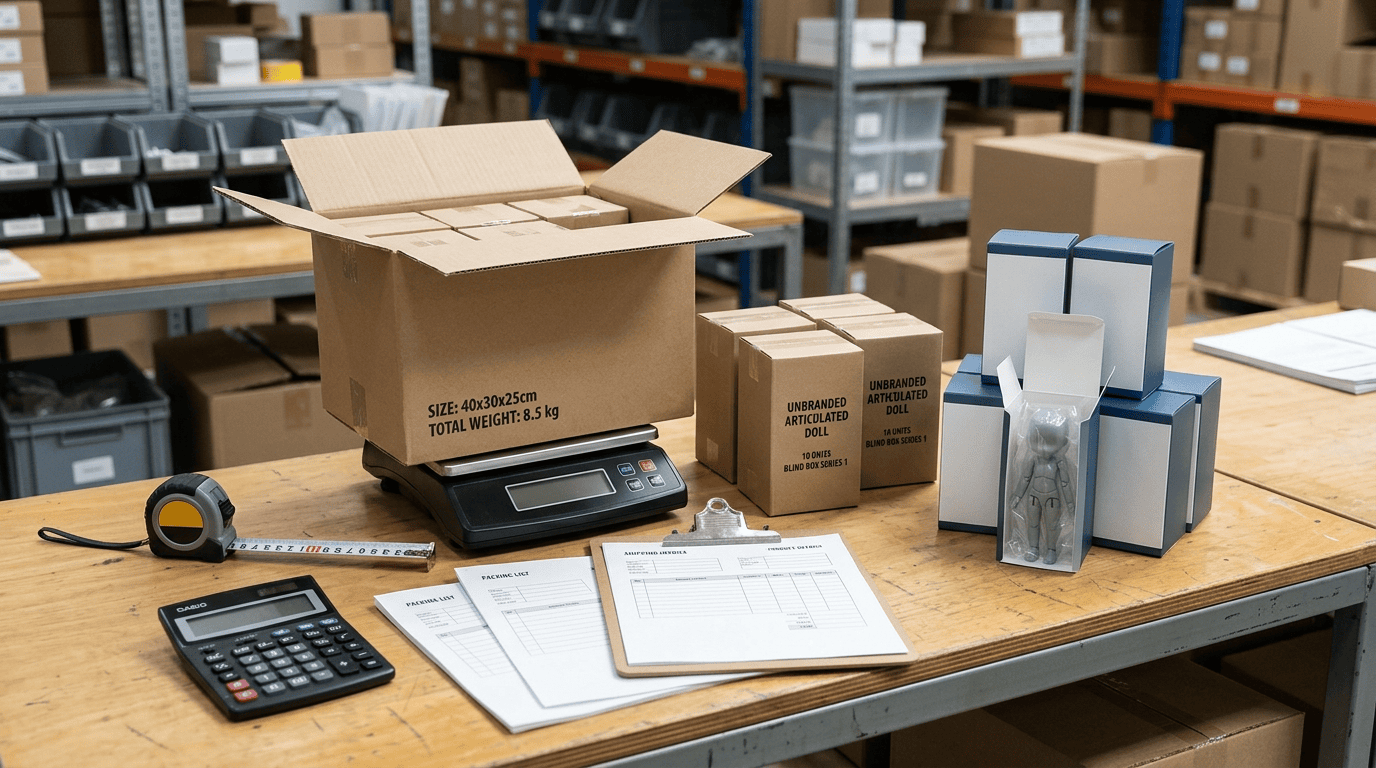
A BJD blind box has at least two quality layers: the item inside and the packaging customers see. A doll can be functional while the unit box is too crushed, punctured, faded, or sticker-damaged for full-price retail. Define acceptance expectations for both.
Ask for pre-shipment photos showing sealed unit boxes, inner cases, master cartons, carton labels, and protective packing. If order value and risk justify an inspection, a buyer-side checklist may sample:
- Carton count and case quantity against the order document;
- Random unit-box condition from different carton positions;
- Visible paint, hair, clothing, and accessory condition after opening approved samples;
- Joint movement and whether parts stay attached during normal handling;
- Contents against the confirmed packing list;
- Barcode, warning, age-grade, importer, and language details required for the destination market.
Do not assume that a product suitable for one market automatically satisfies another market’s labeling, chemical, toy-safety, or age-grading requirements. The importer should confirm which rules apply, what documents are required, and whether the product is being classified as a toy, collectible, or another category in the destination jurisdiction.
Also define how defects will be documented. Useful evidence can include the shipping label, carton mark, affected unit box, internal packaging, and the specific defect in one continuous photo set or video. Ask about the supplier’s claim process before ordering rather than after a problem occurs.
Timing the First Order Around Sales Evidence
Lead time should be separated into preparation time, production or allocation time if applicable, international transit, customs clearance, and final delivery. Ask which stages are estimates and what event starts the timeline, such as payment confirmation or order approval.
For a new series, a retailer may use a staged planning method:
- Estimate initial demand from comparable articulated-doll sales, not total blind-box sales.
- Reserve part of the first order for online listings, photography, and customer-service reference.
- Track weekly sell-through by sealed case and individual box.
- Set a reorder trigger that includes supplier preparation and freight time.
As an example planning rule, a buyer might review replenishment when remaining stock equals expected sales during the full reorder window plus a safety allowance. The threshold should be based on the retailer’s own sales rate and the supplier’s current written estimate, not a fixed industry number.
Confirm whether a repeat order will have the same packaging version and case configuration. Reordering based on an old specification can create listing errors or unexpected warehouse requirements.
When a Final Blessing Quote Is Not Yet Comparable
A quote is incomplete if it provides a unit price without identifying the unit, case structure, product version, shipping basis, or validity period. Other warning signs include reluctance to provide current packaging photos, inconsistent answers about assortment, pressure to pay before specifications are documented, and unsupported claims that every case includes a special design.
Common buying mistakes include comparing loose units with sealed cases, assuming a product image proves the included accessories, overlooking volumetric freight, and advertising a no-duplicate set without written confirmation. Buyers should also avoid promising a specific hidden-character probability unless the series rules are documented.
Copyable inquiry checklist
Please quote the Meki Final Blessing series for wholesale purchase. Confirm the product version, doll height and scale, materials, articulation, included contents, regular and special assortment structure, units per sealed case, cases per master carton, and MOQ basis.
Please also provide current unit-box and carton photos, package dimensions, carton dimensions, gross weight, quotation validity, payment terms, preparation estimate, shipping basis, available freight options, and the documents or labeling supplied with the goods.
Our destination is [country/postcode]. Our preferred order format is [sealed cases/individual units], and our target arrival window is [date range]. Please identify any charge not included in the quotation and explain the process for reporting shortages, packaging damage, or product defects.
Before committing funds, request a written, carton-level quotation for the exact Final Blessing configuration you intend to sell. Compare at least the specification, sealed-case status, landed-cost inputs, packaging evidence, and estimated arrival window. A lower price is not an advantage if the offer leaves those points unresolved.
PREGUNTAS FRECUENTES
What should a Meki Final Blessing wholesale quote include?
It should identify the product version, unit and case quantities, doll specifications, included contents, assortment structure, packaging dimensions, carton weight, MOQ basis, shipping terms, payment terms, and estimated preparation window.
Should retailers buy sealed cases or individual blind boxes?
Sealed cases can be useful for full-case collectors and controlled displays, while individual units may reduce the size of a test order. Confirm whether the cases are untouched and whether any assortment or no-duplicate rule is documented.
How can buyers compare Final Blessing supplier prices?
Normalize each offer by case quantity and calculate estimated landed cost, including freight, import charges, final delivery, inspection, and a packaging-damage allowance. Compare only quotations for the same product version and order format.
Which quality checks matter for a BJD blind box?
Check retail-box condition, confirmed contents, visible finish, clothing and accessories, normal joint movement, part attachment, case counts, carton protection, and destination-market labeling requirements.
When should a retailer reorder the series?
Use actual weekly sell-through and the supplier’s current end-to-end replenishment estimate. Consider reordering when remaining stock approaches expected demand during that window plus a buyer-defined safety allowance.
Before You Place the First Final Blessing Order
Treat the first purchase as a specification and demand test. Confirm what each box contains, how sealed cases are configured, which costs sit outside the unit quote, and what evidence will support a quality claim. A documented trial order gives buyers better information for assortment expansion, pricing, and replenishment than a large commitment based mainly on product images.