

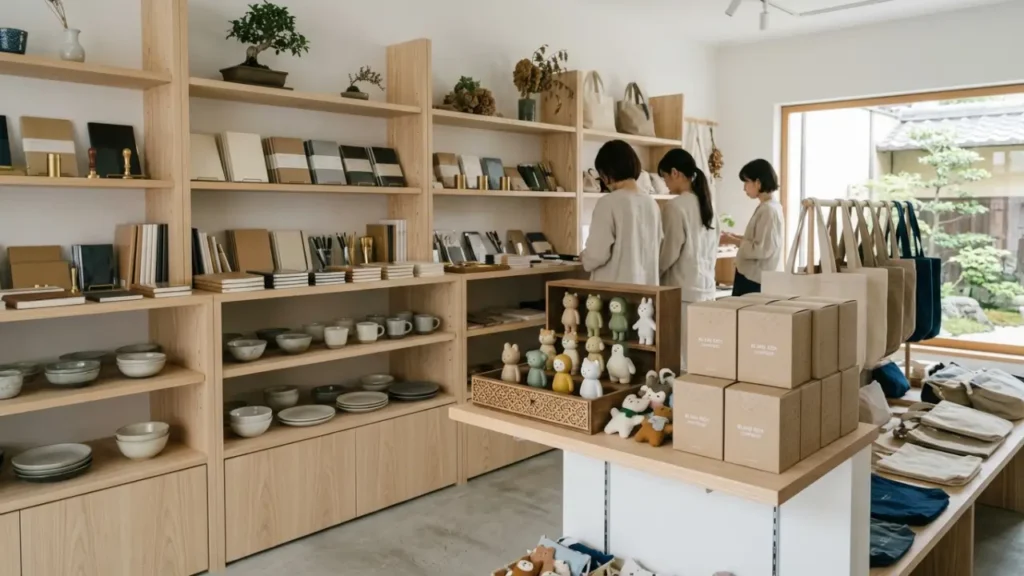
Adding collectibles to a lifestyle assortment can attract attention, but the wrong range ties up cash and competes with the core merchandise that already sells. The strongest blind box products for Japanese lifestyle stores complement existing stationery, homeware, bags, or everyday gifts—rather than simply chasing whichever character is trending this season.
This guide treats “Japanese lifestyle store” as a retail positioning, not proof of Japanese manufacture or licensing. Whether your store operates in Japan or sells Japanese-inspired merchandise elsewhere, confirm each product’s origin, rights documentation, and destination-market requirements separately.
Start With the Shelf Beside Your Blind Box Display
Choose a selling role before choosing a series. A stationery-led shop may test desk collectibles; a bag-and-accessory retailer may prefer portable charms; a homeware boutique may need restrained colors and compact displays. These are buying hypotheses to test, not guarantees of demand.
- Stationery stores: compare small figures that can be displayed near notebooks without blocking everyday products.
- Gift-led boutiques: assess presentable packaging and whether customers can understand the surprise format quickly.
- Bag and accessory stores: compare plush pendants and charms for attachment usability, wear, and visual compatibility.
- Collector crossover stores: evaluate character interest alongside your customers’ actual purchase history.
Write a one-sentence buying brief: “This range must work as an add-on gift beside our stationery wall.” Then reject candidates that require more shelf space, explanation, or customer familiarity than that location supports.
Compare Blind Box Products by Format, Not Just Character
The table below compares formats to investigate, not verified specifications of particular series. Ask suppliers for dimensions, materials, packaging details, and samples before deciding whether a candidate fits.
| Format to evaluate | Potential store fit | What to verify | Main buying risk |
|---|---|---|---|
| Compact display figures | Stationery and desk-accessory shelves | Actual height, base size, stability, and finish | Attractive photos conceal an oversized footprint |
| Plush pendants | Bag displays and soft gift assortments | Attachment type, seam finish, size, and care information | Bulky packaging or weak attachment hardware |
| Acrylic charms or keychains | Small-accessory checkout fixtures | Print finish, edge condition, protective film, and hardware | Scratching or disappointing perceived substance |
| Animal-themed collectibles | Stores testing character-neutral gift appeal | Full assortment images and consistency across designs | One appealing design masks a weak overall range |
| Food or miniature-object collectibles | Kitchenware and lifestyle gift displays | Scale, small parts, fragility, and intended use | Customers mistake decorative pieces for functional items |
| Recognizable character collaborations | Stores with demonstrated character demand | Authenticity evidence, sourcing chain, and territorial restrictions | Unverified rights or unsupported popularity assumptions |
For portable gifts, the comparison of plush pendants versus acrylic keychains offers a useful starting point. Choose the format your customers already use before expanding into unfamiliar collectible categories.
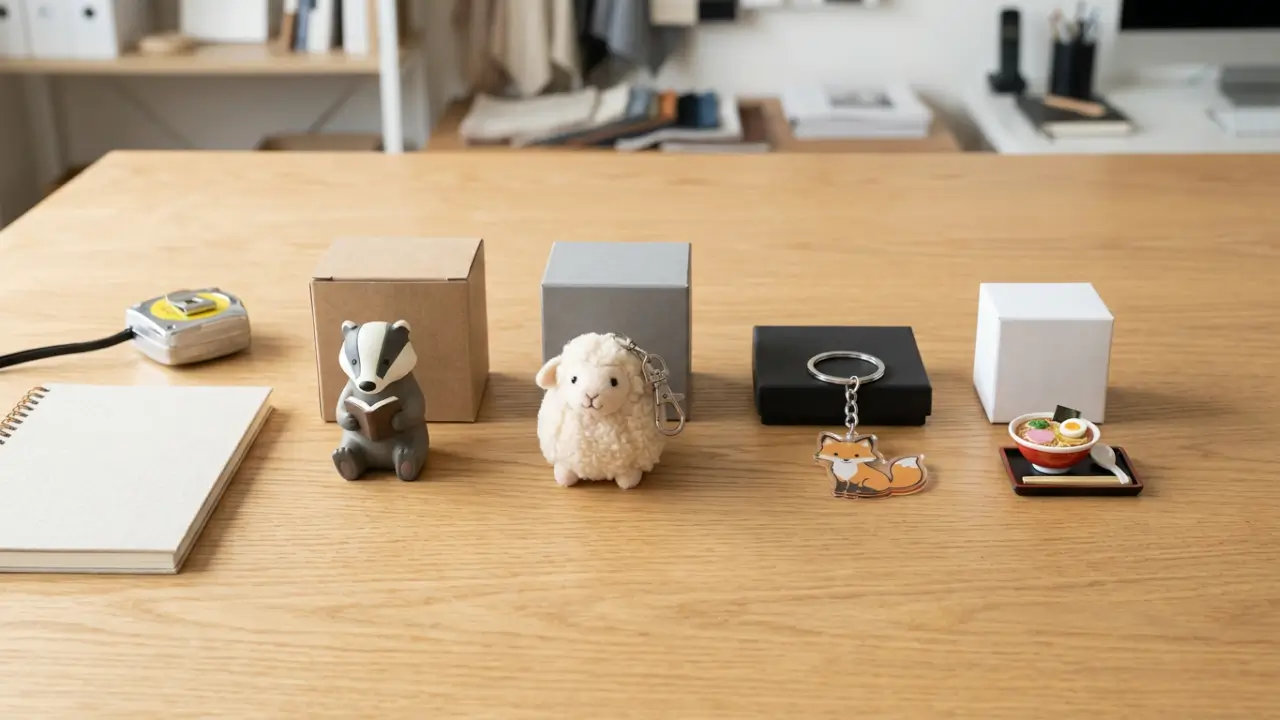
Place a sample and its retail box in the proposed fixture. Measure the space needed for stock, a display sample, and a clear explanation of the blind-box format. A product that fits individually may still need too much room as a complete retail presentation.
Build a Shortlist Without Treating Product Names as Evidence
Named series can anchor supplier discussions, but a listing title does not establish material, dimensions, case configuration, or selling performance. Use product pages to identify candidates, then request the missing information.
- Design-led candidate: review the Little Monster CUPA I Am Undefined series against your store’s colors, customer preferences, and available display space. Request the complete assortment rather than judging one featured image, and read the matching CUPA blind box buyer guide for specification context.
- Collaboration-led candidate: assess the Upsetduck x Carebears Secret Wish Duck figure listing if that character direction suits your customers. Verify the exact edition and supporting authenticity documentation before committing.
Neither candidate should be treated as Japanese-origin merchandise solely because it suits a Japanese lifestyle concept. If origin is part of your store promise, require documentary confirmation and describe products accurately.
Need help narrowing the range? Send a supplier your shelf dimensions, customer profile, and preferred formats, and ask which candidates can be supported with samples and complete specifications.
Make Case Packs Fit a Small Lifestyle Assortment
Ask whether the minimum order applies per series, per SKU, per display case, or across the whole order. Also confirm boxes per display case, cases per shipping carton, mixed-series rules, and whether display samples must be purchased separately.
A sealed case is not automatically a complete set. Obtain written confirmation of assortment rules, possible duplicates, and any stated rare-item allocation. Do not advertise a complete collection or specific odds without substantiation.
As a planning example, a retailer might compare 24 units of one series with 12 units each of two series, if supplier case rules permit. The first tests depth; the second tests preference. Choose according to the question you need answered and the cash you can leave in unproven inventory.
Allocate display space before ordering. The guide to blind box merchandise for limited shelf space can support fixture planning. Record sell-through by series and units sold per facing so larger packaging does not receive space without earning it.
Price the Shelf-Ready Unit and Plan Its Replacement
Compare quotes for the same edition, quantity, packaging configuration, destination, and delivery term. A lower unit quote may exclude freight, import handling, or protective packing that another supplier includes.
Estimated landed cost per sellable unit equals merchandise cost plus freight, insurance where applicable, duties, nonrecoverable taxes, clearance charges, and required preparation costs, divided by expected sellable units. Confirm tax treatment with your adviser and duties with your broker; do not assume all charges apply identically.
Keep purchased display samples and any explicitly budgeted damage allowance visible in the calculation. Use evidence from inspections and previous orders rather than inventing a standard defect rate.
- Request carton dimensions, gross weight, and carton count to obtain comparable freight estimates.
- Separate order preparation, dispatch, transit, clearance, and receiving stages rather than accepting one vague delivery estimate.
- For pre-orders, document release uncertainty and what happens if availability changes.
- Calculate reorder timing from observed sales and a confirmed replenishment estimate, with a buffer suited to your risk tolerance.
For unreleased ranges, consult the retailer guide to evaluating blind box pre-orders. Avoid building a fixed-date promotion around an unconfirmed arrival.
Protect the Unopened Gift Experience
The retail box is part of the purchase experience. Agree on acceptable condition before payment, especially if crushed corners, broken seals, or scuffed printing would prevent full-price sale in your store.
Ask how retail boxes are protected inside shipping cartons and request packing photos. For an agreed inspection sample, check packaging condition first, then compare opened contents with the approved specification.
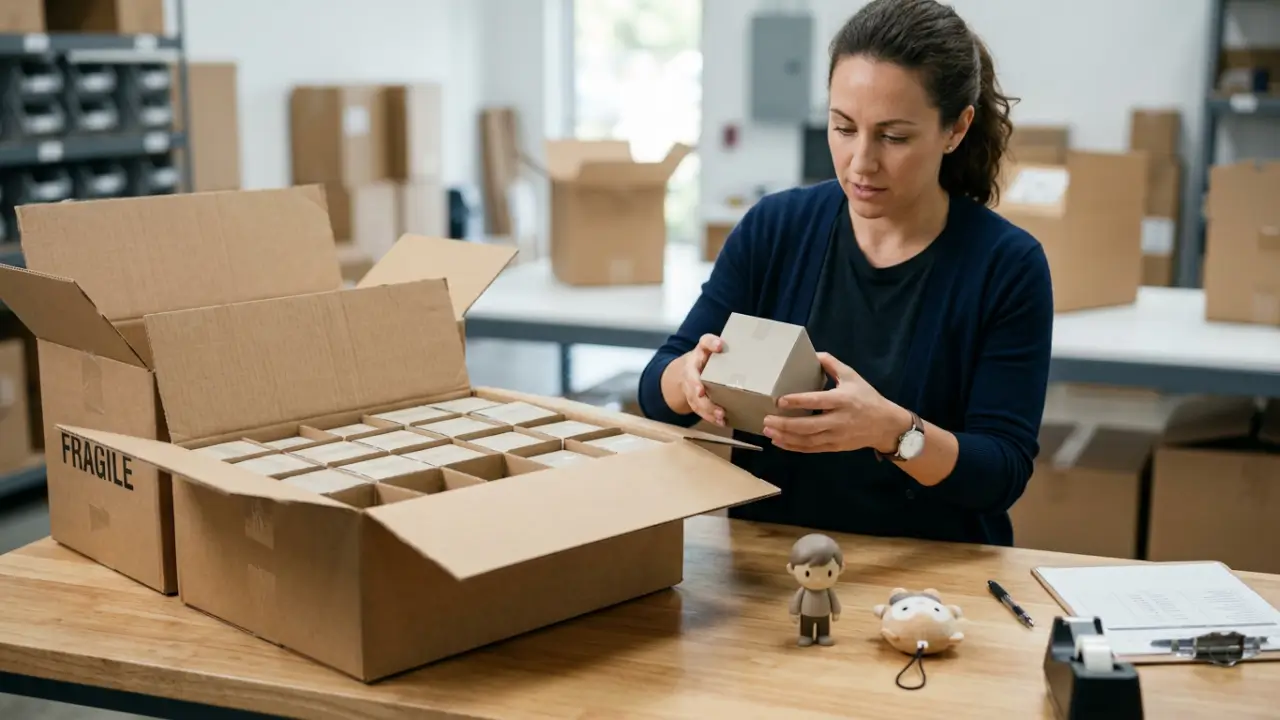
Use a format-specific inspection list rather than “quality looks good.”
- Figures: check paint alignment, visible marks, loose components, and stability.
- Plush: check seams, accessible filling, loose fibers, and attachment construction.
- Charms: check edges, print scratches, connectors, and surface protection.
- All formats: record series identifiers, quantities, seals, label information, and carton damage.
Visual checks do not replace required safety assessment. Buyers should verify applicable age grading, small-parts warnings, labeling language, traceability, and product documentation for the destination market. A “collectible” description alone does not determine legal classification. If selling in Japan, confirm Japanese requirements rather than assuming another market’s documents are sufficient.
Ask for a Quote That Resolves Blind Box Buying Risks
Pause when a supplier will not identify the exact edition, provides inconsistent case quantities, cannot explain sourcing, or uses another series’ documentation. Treat unsupported “no duplicates,” licensing, and delivery claims as unresolved questions—not purchasing facts.
Send the same brief to each shortlisted supplier:
Please quote the named series and edition for our Japanese lifestyle store assortment. Our destination is [country/postcode], intended selling window is [period], and proposed quantity is [units or cases]. Confirm materials, item and box dimensions, MOQ basis, case/carton quantities, assortment rules, sample options, available packaging photos, and relevant product documentation. Itemize delivery terms, freight assumptions, preparation and dispatch estimates, quote validity, and the process for shortages or damaged goods. Please state any unconfirmed details separately.
Attach fixture measurements and clarify whether origin claims or licensed characters are central to your merchandising. Ask for the claim-reporting deadline, evidence required, and proposed remedy for discrepancies; do not assume a standard returns policy applies to wholesale orders.
Before placing your opening order, request a written, itemized quote for your shortlisted series and resolve every missing specification. Approve the sample, case configuration, and packaging condition criteria before committing your purchasing budget.
PREGUNTAS FRECUENTES
Which blind box format should a Japanese lifestyle store test first?
Start with the format closest to existing purchases: compact figures near stationery, pendants near bags, or giftable collectibles in a gift department. Confirm sample quality and display fit before ordering depth.
Does buying a sealed case guarantee a complete set?
No. Case composition depends on the series and packing rules. Ask for written confirmation of assortment, duplicate possibilities, and any rare-item allocation before making customer-facing claims.
Are these products necessarily made in Japan?
No. Suitability for a Japanese lifestyle store does not establish origin. Confirm manufacturing origin and relevant sourcing documentation before using Japanese-made or similar descriptions.
How should retailers compare wholesale blind box quotes?
Compare the same edition, quantity, case configuration, destination, and delivery term. Include freight, applicable import costs, preparation, and purchased display samples rather than comparing unit prices alone.
Choose the Range Your Store Can Explain and Reorder
The strongest opening assortment has a clear shelf role, verified specifications, manageable case quantities, and a defensible landed cost. Test a focused range, track sales by series, and expand only when customer demand and replenishment information support the next order.