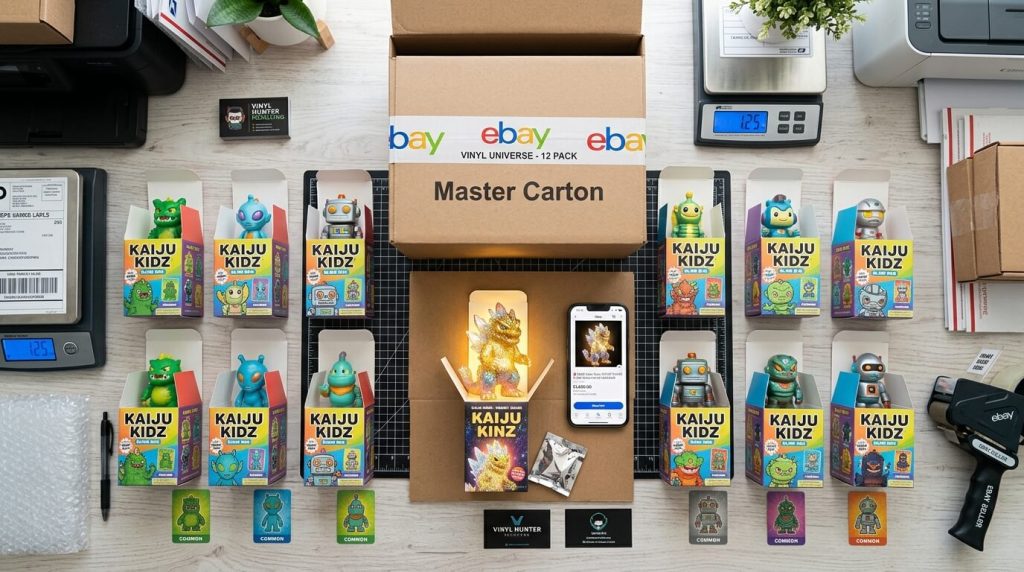




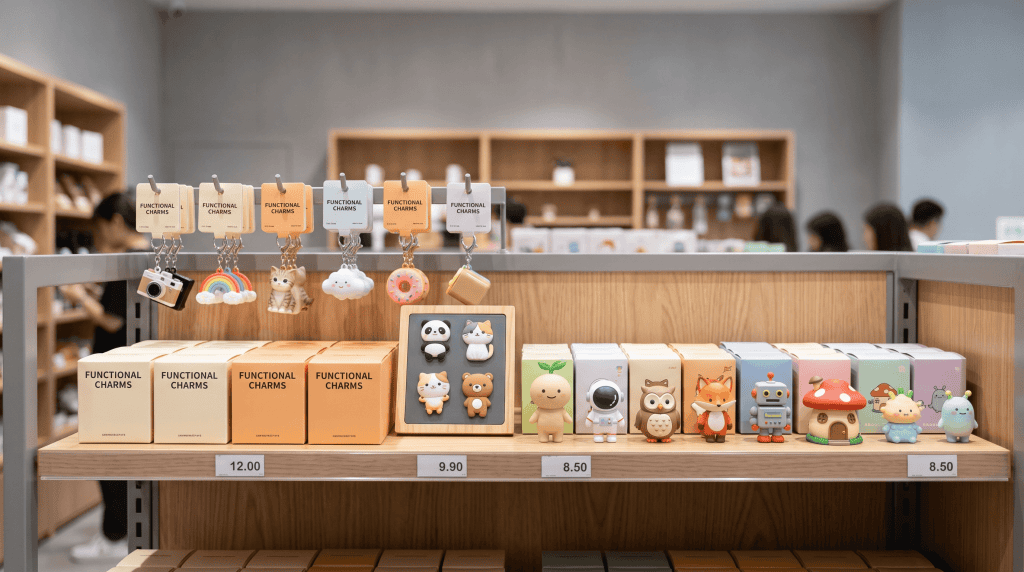
Shelf space and open-to-buy budget run out long before the collectible catalog does, so buyers have to decide which formats earn a spot. A balanced blind box assortment has to serve shoppers who want a decorative figure to display alongside those who want an item they can carry, attach, use, or hand over as a practical gift.
The hard part is that functional blind boxes and display figures behave differently after purchase. Utility can widen the gift audience, while display figures may support character collecting and series completion. That means buyers need to compare more than artwork. Case quantities, packaging durability, usable components, display footprint, landed cost, and reorder behavior all shape the final decision.
Build the Blind Box Assortment Around Shopper Intent
Begin by identifying why customers walk into the store. A specialist collectible shop may attract series collectors, while a lifestyle retailer may sell more products bought as small gifts or personal accessories. An anime retailer can serve both groups, but the right allocation may differ by location and sales channel.
Map each format to a specific buying occasion:
- Display collecting: Shoppers want a recognizable character, sculptural detail, or a series they can complete.
- Everyday use: Buyers want magnets, charms, clips, holders, or other items with a clear function.
- Impulse gifting: The product needs an understandable purpose and a price position that fits an add-on purchase.
- Desk and room decoration: Size, stability, and visual impact matter more than portability.
- Bag personalization: Attachment strength, weight, dimensions, and resistance to handling become important.
Do not assume one format automatically has broader demand. Ask staff to record whether customers request a character, a specific function, or simply “a small gift.” Online buyers can use product-page searches, filter usage, and pre-purchase questions as additional evidence.
For a closer comparison of two utility-led categories, review the guide to ímãs de geladeira x enfeites para bolsas. It illustrates why placement, attachment method, and gifting context should be evaluated separately.
Functional Collectibles and Display Figures Solve Different Retail Jobs
Use a scorecard rather than choosing by visual preference. The following table identifies what a buyer should confirm before assigning either format a role in the assortment.
| Ponto de avaliação | Functional blind boxes | Display figures | Buyer action |
|---|---|---|---|
| Primary purchase motive | Use, gifting, or personalization | Display, collecting, or series completion | Match the format to observed shopper requests |
| Product demonstration | Function may need to be shown | Appearance is usually the main message | Request images showing scale and actual use |
| Wear points | Clasps, magnets, clips, straps, or moving parts | Thin sculpted parts, paint, joints, or bases | Ask how vulnerable components are packed |
| Shelf presentation | Function should be understandable from packaging | Series art and character lineup are central | Confirm box dimensions and display-carton format |
| Repeat-purchase trigger | Different characters, uses, or gifting needs | Series completion and favorite characters | Track repeat purchases by format, not only series |
| Return risk | Function or attachment may not meet expectations | Finish, stability, or perceived scale may disappoint | Write accurate product descriptions and inspect samples |
| Shipping sensitivity | Components may move or press against the item | Projections and display boxes may be vulnerable | Review internal trays and master-carton protection |
| Cross-merchandising | Bags, stationery, gifts, or home accessories | Collectible shelves, anime goods, or desk décor | Plan placement before ordering case quantities |
Hybrid products require their own assessment. Plush collectibles with molded faces, for instance, may combine tactile appeal with a more figure-like appearance. The comparison of vinyl-face and standard plush blind boxes can help buyers decide whether such products belong with accessories, plush, or display collectibles.

A useful decision rule is to give each SKU one primary retail job. If the buying team cannot explain whether an item is meant to drive collecting, gifting, utility, or visual display, it may duplicate another product without adding meaningful assortment coverage.
How Much Shelf Space Should Each Format Earn?
There is no universal functional-to-display ratio. Start with a controlled test allocation based on customer type, then adjust using sell-through and repeat-purchase evidence.
As a planning example, a retailer testing 100 units across several compatible series may initially assign 60 units to its historically stronger format and 40 to the less proven format. This is not an ordering recommendation or supplier MOQ; actual case packs may make that exact split impossible. The point is to define the intended exposure before quotes dictate the assortment.
Measure each format using the same indicators:
- Units sold per week or per sales period
- Sell-through as a percentage of received inventory
- Gross sales generated per shelf section
- Repeat purchases and multi-unit transactions
- Damage, return, and customer-question patterns
- Sales after the initial launch period
A display series can produce strong launch sales and then slow, while a functional item may sell more steadily as a gift. Avoid judging both solely from the first few days. Set a review point before launch and document what would trigger a reorder, reduction, or replacement.
If a small display figure is under consideration, the small figure sourcing guide provides additional questions about scale, packaging, and merchandising.
Why Case Packs Can Override the Ideal Product Mix
An assortment plan must be translated into orderable units. Ask for the MOQ, units per inner case, units per master carton, and whether the quote applies to individual boxes, sealed sets, or complete cartons. These terms are not interchangeable.
For example, a buyer may plan an even split between four series, but the available case quantities may create substantially more inventory in one format. Before accepting that imbalance, calculate the cash committed and shelf space consumed by each complete case.
- List the intended unit quantity for every series.
- Replace that quantity with the nearest orderable case quantity.
- Calculate total units and cartons after rounding.
- Check whether display cartons fit the intended shelf or counter.
- Identify which series creates the most excess inventory.
- Ask whether mixed-SKU ordering is available, without assuming it will be.
Also confirm assortment composition. Buyers should ask whether a sealed case has a stated character distribution, whether secret designs affect that distribution, and whether case contents can vary. Do not advertise complete-set probabilities or character ratios unless they have been documented for the relevant series.
Before requesting several quotes, build a one-page assortment sheet listing each format, target quantity, preferred case structure, box dimensions, and planned retail placement. Suppliers can respond more accurately when the request clearly separates functional items from display figures.
Check Usable Parts and Display Finishes Before Committing
Functional items need inspection criteria tied to use, not only appearance. Depending on the item, buyers may need to review attachment closure, magnet retention, strap connection, edge finish, moving parts, product weight, and whether components contact or mark the collectible.
Display figures require different checks: base fit, standing stability, visible seams, paint boundaries, part alignment, surface marks, and protection for thin projections. A larger-format display collectible may also need more shelf depth than photographs suggest; the Mega Space Molly Series 3 listing is a useful example when comparing figure formats and presentation needs.

Ask for packaging specifications as well as product specifications. Confirm individual-box dimensions, internal tray or bag arrangement, display-carton configuration, master-carton dimensions, and gross carton weight when available. Packaging affects freight, receiving labor, shelf fit, and the chance of gift boxes arriving crushed.
A practical pre-order quality checklist should cover:
- Approved product images or a physical sample where feasible
- Dimensions and materials for the item and functional components
- Attachment, base, or accessory configuration
- Blind-box seals and package condition expectations
- Barcode and destination-language labeling requirements
- Process for reporting shortages, wrong items, or transit damage
Import, labeling, age-grading, material, and product-safety obligations vary by destination and product type. Buyers should verify applicable requirements with qualified local resources and request relevant documentation from the supplier. A product being described as a collectible does not automatically remove legal or safety obligations.
When Two Blind Box Quotes Are Not Yet Comparable
A lower unit quote may not produce the lower landed cost. Convert every offer to the same basis before deciding. At minimum, estimate product cost, shipment preparation, freight, insurance if used, duties or taxes where applicable, customs or brokerage charges, payment costs, and inbound delivery to the final receiving location.
Then divide the estimated landed amount by the number of saleable units—not merely the number ordered. If packaging damage, sample use, or other expected losses are built into internal planning, document that assumption rather than hiding it inside the margin calculation.
Lead time also changes the commercial value of a quote. Ask suppliers to separate production or order-processing time from transit estimates. Confirm when timing begins, what event marks shipment readiness, and whether the schedule changes for mixed products or larger quantities. Treat all estimates as planning inputs rather than guarantees unless the commercial agreement states otherwise.
For reorders, compare the replenishment cycle with actual sales velocity. As a planning reference, a retailer might review a SKU when remaining stock approaches the quantity normally sold during one full replenishment cycle, plus an internal buffer. The right buffer depends on demand variability, storage cost, and the consequences of selling out.
Warning Signs That Distort an Assortment Decision
Some mistakes happen even when the products themselves are appealing. Pause the comparison when:
- A quote omits whether pricing is per piece, sealed case, or carton.
- Case quantity, character assortment, or secret-edition treatment is unclear.
- Only promotional renders are available and scale cannot be verified.
- A functional component is shown but its material, dimensions, or attachment method are not specified.
- Packaging dimensions or carton weight are unavailable for freight planning.
- The buyer compares unit prices under different shipping terms.
- Compliance claims are broad but supporting documents cannot be identified or matched to the product.
- Pressure to pay replaces clear answers about specifications, quantities, packaging, or delivery terms.
Another common error is letting one successful character justify too many similar SKUs. Separate IP demand from format demand. A popular character on a magnet does not prove that every functional category will sell, just as demand for one display series does not validate every figure size.
Questions to Send With a Functional and Figure Quote Request
Use one standardized inquiry so responses can be placed side by side. Include the following details:
- Series names and whether each is functional, display-only, or hybrid
- Requested quantity and acceptable case-pack alternatives
- Units per inner case and master carton
- Individual package and master-carton dimensions
- Product dimensions, materials, and included components
- Character assortment and sealed-case information, if documented
- Available product and packaging samples
- Quote validity, payment terms, and applicable shipping term
- Estimated preparation or production timing and transit method
- Available labeling, testing, or compliance documentation relevant to the destination
- Procedure for shortages, incorrect goods, and visible damage
Modelo de consulta: Please quote the listed functional blind boxes and display figures using the requested quantities or the nearest available case packs. For each SKU, please confirm unit basis, case quantity, product and package dimensions, carton dimensions and weight, materials, included functional parts or display base, assortment information, estimated order-preparation time, shipping term, and available documentation for our destination market. Please also identify any assumptions or costs not included in the quote.
Before locking the final mix, send the same specification sheet to every shortlisted source and compare responses at case and landed-cost level. Resolve missing dimensions, unclear assortment language, packaging questions, and documentation needs before payment rather than after inventory is in transit.
PERGUNTAS FREQUENTES
Should a retailer stock more functional blind boxes or display figures?
The right balance depends on shopper intent, shelf space, case-pack constraints, and sales history. Start with a documented test allocation, then compare sell-through, repeat purchases, shelf productivity, and returns by format.
What counts as a functional blind box?
A functional blind box contains an item with a practical or wearable use, such as a magnet, charm, clip, holder, or accessory. Buyers should verify the exact function, dimensions, materials, and attachment method rather than relying on category labels.
How should case quantities affect assortment planning?
Convert the desired SKU mix into actual orderable case quantities before approving a purchase. Check how rounding to complete cases changes total units, cash commitment, storage requirements, and exposure to each series.
How can buyers compare the cost of functional items and figures?
Compare estimated landed cost per saleable unit on the same shipping and quantity basis. Include product cost, freight, applicable import charges, payment costs, inbound delivery, and any documented allowance for non-saleable units.
What quality checks differ between the two formats?
Functional items need checks of clasps, magnets, straps, clips, and other wear points. Display figures need checks of stability, bases, paint, alignment, surface finish, and protection for projecting parts.
Final Thoughts on a More Resilient Product Mix
Functional blind boxes and display figures should not compete for budget without a defined role. Assign each SKU a shopper mission, translate the plan into real case quantities, compare landed costs, and inspect the features that create risk for that specific format.
The strongest assortment is not necessarily the one with the most series. It is the one in which utility products, display collectibles, and any hybrid formats earn their shelf space through measurable demand and can be reordered without creating avoidable inventory imbalance.