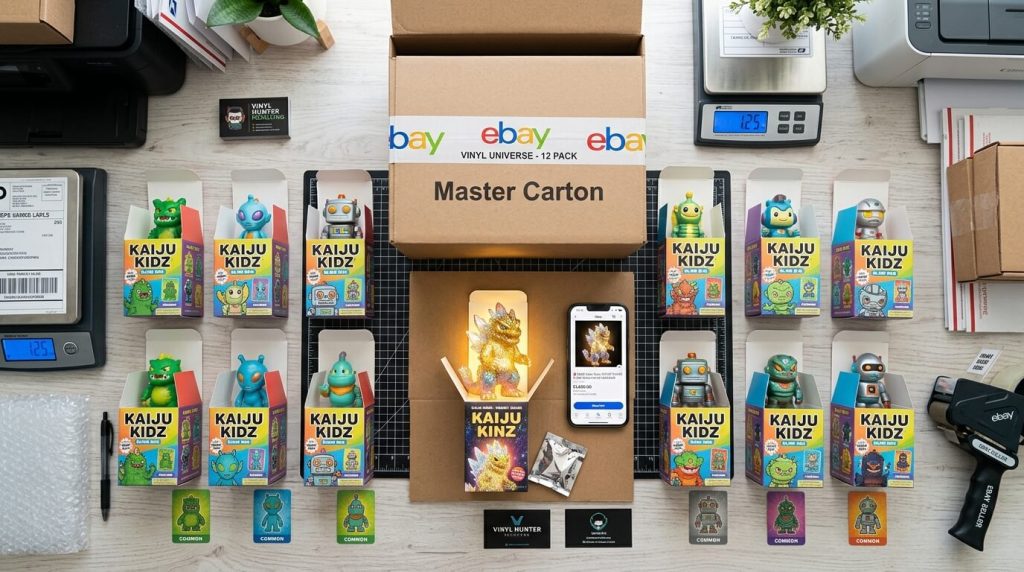




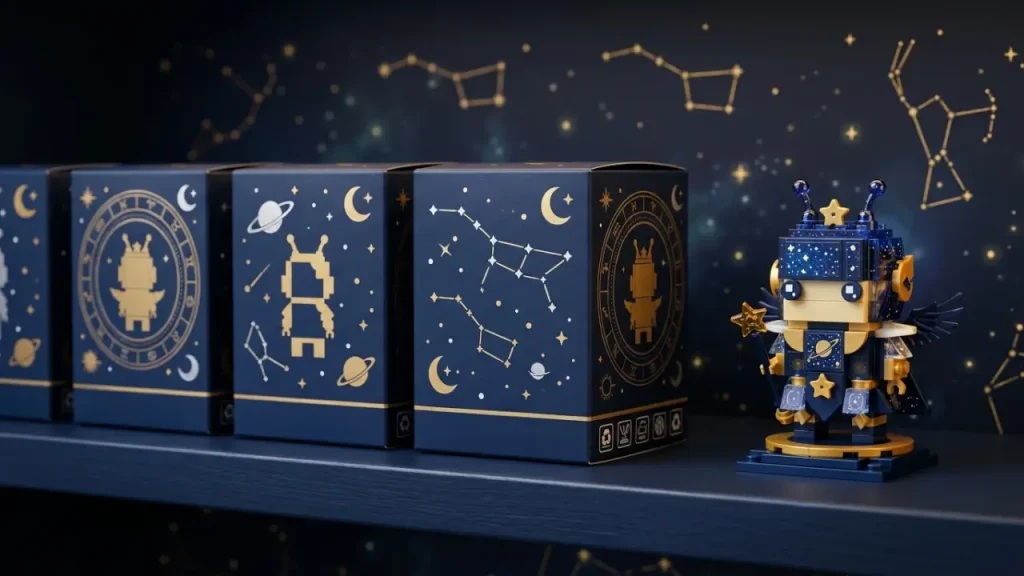
Appealing celestial artwork is not enough to justify shelf space for a buildable collectible. Before you commit an opening order, you need clear answers on assortment structure, component completeness, sealed-case terms, packaging resilience, and the total cost of getting saleable units into the store. The JAKI × tokidoki Astrology Celestial Wonders series raises all of these questions at once because it combines a licensed character theme with an assembly-based format.
This guide explains how to evaluate that building toy format without assuming unconfirmed specifications. It is intended for gift shops, designer-toy stores, hobby retailers, online sellers, and distributors preparing to request or compare wholesale quotes.
Will a buildable celestial collectible suit your customers?
A building toy blind box asks more of the customer than a conventional display figure. The buyer opens the package, identifies the components, follows any included instructions, and assembles the design. That interaction can be an advantage for stores serving collectors who enjoy construction, customization, or desk-display products. It can also create service issues if shoppers expect a fully assembled figure.
Match the format to a clear retail use case:
- Designer-toy stores: assess whether the celestial theme complements current character collectibles without duplicating an existing line.
- Hobby and building-toy retailers: confirm that the assembly experience and component scale suit the usual customer age profile.
- Gift shops: check whether the packaging communicates the buildable format clearly enough for an unfamiliar shopper.
- Vendedores online: prepare product copy that distinguishes a blind assortment from a selectable finished design.
- Distributors: document case configuration, assortment policy, and packaging dimensions before supplying downstream accounts.
A practical decision rule is to stock the series only when staff and product pages can answer three questions: Is the design random, does it require assembly, and what exactly is included? Ask the supplier for current product photographs and written specifications rather than inferring these details from promotional artwork.
Specifications that decide whether Celestial Wonders fits your shelf
Listings for collectible series can omit details that matter to commercial buyers. Use a structured comparison sheet so that two quotes describe the same product configuration.
| Item to verify | Por que isso afeta o pedido | Pergunta para o fornecedor |
|---|---|---|
| Series assortment | Determines display variety and duplicate exposure | How many regular designs are represented, and is any special design disclosed? |
| Sale unit contents | Prevents confusion over figures, blocks, accessories, or instructions | What components are included in one unopened blind box? |
| Assembly format | Affects customer expectations and after-sale questions | Is assembly required, and are illustrated instructions included? |
| Dimensões finais | Influences display, photography, and perceived value | What are the approximate dimensions after assembly? |
| Piece count or parts list | Supports completeness checks | Can you provide the declared piece count or packing list for each design? |
| Configuração do gabinete | Controls ordering multiples and assortment planning | How many individual boxes are in a sealed case? |
| Case assortment policy | Indicates whether regular designs may repeat | Is a sealed case curated, random, or otherwise configured? |
| Retail packaging size | Affects shelf capacity and freight volume | What are the unit and master-carton dimensions and gross weights? |
| Product identification | Helps receiving teams match the delivered version to the quote | Which product codes, markings, or batch references should appear? |
Do not treat a rendering as evidence of scale, color, contents, or packaging configuration. If intellectual-property presentation matters to the purchase, request clear images of the actual sale packaging and ask how authenticity and authorized supply can be documented. The same discipline applies when reviewing other collaboration-led products; this licensed-character blind box sourcing guide provides additional questions for retail buyers.
How sealed cases change assortment and duplicate risk
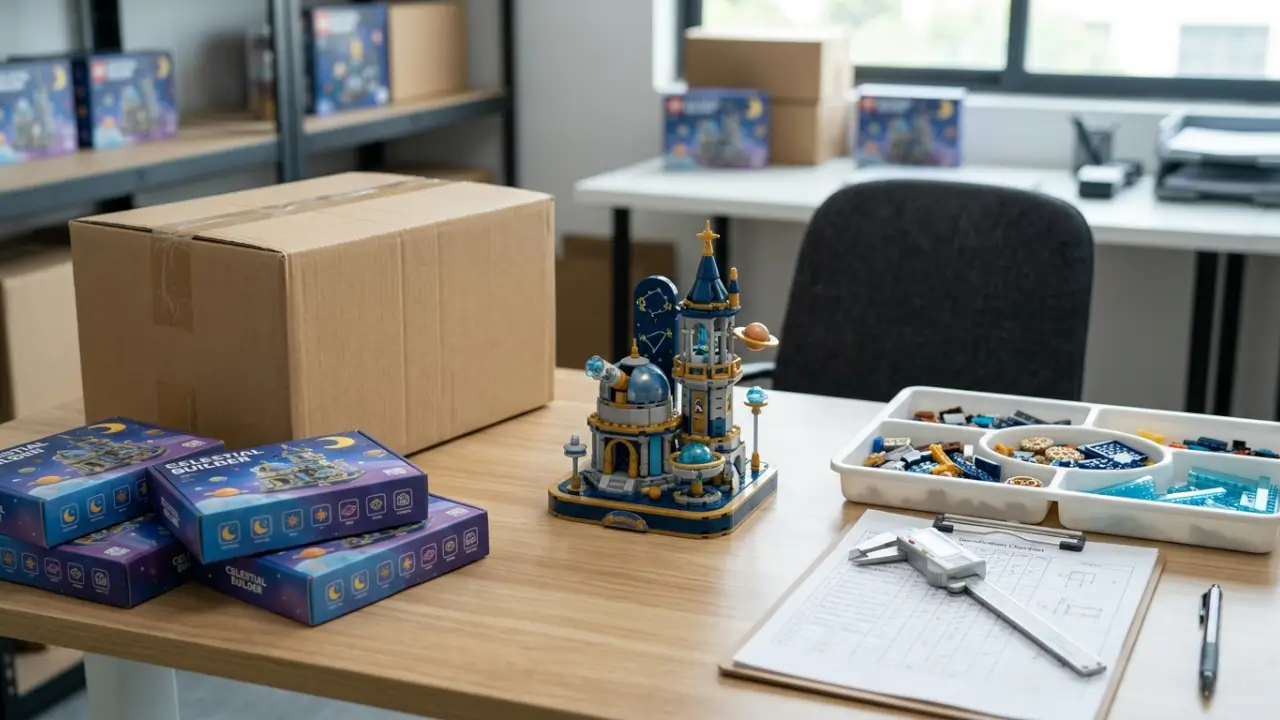
The phrase “full case” does not automatically mean one of every regular design. A supplier may use “case” only to describe a shipping quantity, while buyers may interpret it as a curated assortment. Put the expected configuration in writing before comparing unit costs.
Ask whether the quote covers manufacturer-sealed cases, opened cases, mixed loose boxes, or another packing method. The distinction matters because opened or recombined inventory may have a different duplicate profile and may be less suitable for collectors who expect intact packaging. For a deeper comparison, review the guide to sealed series sets versus mixed blind box assortments.
For planning purposes, suppose a retailer is considering an illustrative test of 24 units versus 48 units. Those figures should only be converted into an order after the supplier confirms the actual case pack. The buyer can then compare:
- how many complete sealed cases each option represents;
- whether any loose units are needed to reach the proposed quantity;
- the shelf capacity required for the opening order;
- the number of sales needed before a reorder decision; and
- the duplicate complaints or returns policy the store will communicate.
MOQ should also be defined precisely. Ask whether the minimum applies per series, per order, per carton, or across several products. A low headline MOQ may be less useful if it requires loose boxes or prevents the buyer from receiving the preferred case format.
Why unit price alone can misstate the Celestial Wonders cost
Building-toy blind boxes can be sensitive to both weight and carton volume. Compare quotes using landed cost per saleable unit, not merely the supplier’s unit price.
Fórmula de planejamento: landed order cost = merchandise + export packing + freight + insurance where applicable + duties or taxes + customs or brokerage charges + local delivery + inspection or handling costs.
Divide that total by the expected number of saleable units. If the supplier cannot yet confirm carton dimensions and gross weight, treat any freight figure as provisional. Also specify the currency, trade term, quote validity, payment stage, and which party is responsible for each logistics cost.
Packaging damage and incomplete component sets can reduce the saleable quantity. As a planning scenario, compare the landed cost using the full ordered quantity with a second calculation using a slightly lower saleable quantity. This is not an assumed defect rate; it is a sensitivity test showing how margin changes if several units require replacement or cannot be sold as new.
If Celestial Wonders is being compared with a conventional figure series, use the same landed-cost worksheet for both. The Guia do comprador de caixas surpresa da Cupa offers another example of evaluating a collectible line from a retail perspective.
Before requesting a final quotation, prepare the desired case format, destination, and estimated order quantity. These details allow a supplier to respond with a more commercially comparable offer.
Protecting small building components from packing errors
A missing decorative element or connector can prevent a customer from completing a build. Buyers therefore need quality checks that address component completeness as well as exterior appearance.
Request a written description of the supplier’s proposed packing and inspection process, but do not assume that an inspection report or replacement policy exists. Agree on the response procedure for missing pieces, damaged retail boxes, incorrect series, or crushed master cartons before payment.
A buyer-side receiving checklist can include:
- Photograph unopened master cartons and shipping labels on arrival.
- Count cartons and verify the stated number of retail units.
- Check a planned sample of boxes for crushing, moisture, punctures, or broken seals.
- Confirm packaging codes and artwork against the approved reference images.
- If permitted by the agreed inspection plan, assemble sampled units and compare contents with the instructions or parts list.
- Record component, print, fit, color, or packaging issues by batch or carton reference.
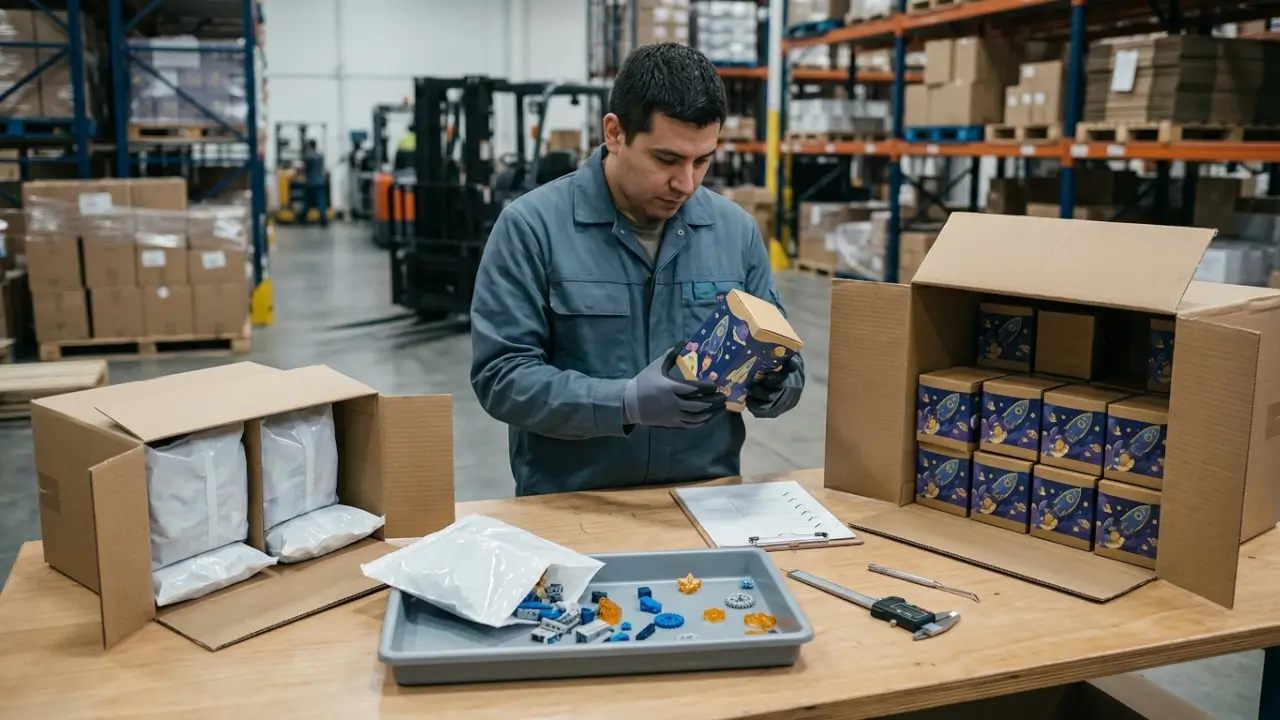
Confirm whether retail boxes are protected by inner cartons, dividers, or other suitable export packing. Do not request excessive packaging without reviewing freight impact, but do ask how movement and compression are controlled in the master carton.
Building an arrival and reorder timeline for an assembly series
Lead time is not one number. Ask the supplier to separate order confirmation, payment processing, preparation or production if applicable, inspection, export handling, transit, customs clearance, and final delivery. Availability and schedules should be confirmed for the specific quotation rather than assumed from an older listing.
Retail launch planning should also leave time to photograph an assembled sample, write assembly-aware product copy, brief staff, and resolve any specification discrepancy. For an illustrative reorder rule, a retailer might review sales when 40% to 50% of the opening quantity remains, then compare weekly sales against the supplier’s newly confirmed replenishment timeline. The percentages are planning references, not recommended stock levels for every store.
Importers should verify current customs classification, duties, toy or consumer-product requirements, age grading, warnings, labeling, and documentation for the destination market. A building set may contain small components, so buyers should not infer suitability for a particular age group. Obtain the applicable product information and consult qualified compliance or customs professionals where necessary.
When a JAKI tokidoki quote is not yet comparable
A cheaper offer can describe a different case format, packaging condition, product version, or logistics scope. Pause the purchase if the supplier avoids written answers to material questions.
Commercial warning signs include:
- using “sealed case” and “mixed assortment” interchangeably;
- quoting an MOQ without stating the case pack or allowed order multiple;
- providing only promotional images when actual packaging identification is requested;
- declining to state unit and carton dimensions before freight is calculated;
- promising a complete assortment without describing the case configuration;
- substituting a different version, language package, or packing method without written approval;
- making broad compliance claims without identifying the document and market concerned; or
- pressuring the buyer to pay before product, quantity, trade terms, and issue handling are recorded.
One common buyer mistake is comparing a loose-unit quote with a sealed-case quote. Another is approving the order from front-facing artwork alone. Use a line-by-line comparison covering product identification, packaging, assortment, quantity, logistics terms, and documentation.
Questions to send before ordering Celestial Wonders stock
A concise inquiry reduces follow-up and exposes differences between offers. Buyers can adapt the following template:
Hello, please quote the current JAKI × tokidoki Astrology Celestial Wonders building toy blind box for delivery to [city, country/postcode]. The estimated quantity is [quantity], preferably in [manufacturer-sealed cases or other required format].
Please confirm the exact product version, contents per blind box, assembly requirements, finished dimensions, piece count or parts-list information, designs in the series, case quantity, assortment policy, MOQ, unit and carton dimensions, gross weight, packaging condition, available product or compliance documents, trade term, payment terms, preparation timeline, and quote validity.
Please also provide current photographs of the retail box, seals, product identification, inner packing, and master carton. State how shortages, missing components, damaged packaging, or an incorrect version would be handled.
Attach the intended destination and required delivery window, but ask the supplier to distinguish estimates from confirmed commitments. If comparing quotations, send substantially the same request to each source.
Pronto para avaliar um pedido? Request a written quote using the checklist above and do not approve payment until the case format, product version, packing method, logistics scope, and issue-resolution terms are clear.
PERGUNTAS FREQUENTES
Is the JAKI tokidoki blind box sold as a complete assembled figure?
Buyers should not assume so. The Celestial Wonders listing describes a building toy blind box, so ask the supplier to confirm the required assembly, included components, instructions, and finished dimensions.
Does a sealed case guarantee one of every regular design?
Not necessarily. Request the case quantity and written assortment policy because “sealed case” can describe packaging without guaranteeing a non-duplicate set.
What should be included in a wholesale quote?
The quote should identify the exact version, quantity, case format, MOQ, unit price, currency, trade term, carton data, payment terms, preparation timeline, quote validity, and handling of shortages or damage.
How should retailers check a building toy blind box delivery?
Count cartons and units, document carton condition, verify packaging identifiers, inspect a planned sample, and record any missing components or assembly issues according to the agreed inspection procedure.
Which compliance details should an importer verify?
Verify the destination market’s current requirements for customs classification, labeling, warnings, age grading, small components, testing, and supporting documents. Requirements vary, so obtain professional guidance when needed.
Before placing the first Celestial Wonders order
The commercial decision should rest on confirmed specifications rather than theme appeal alone. Verify the buildable contents, sealed-case meaning, assortment policy, packaging, landed-cost inputs, destination-market requirements, and remedy for missing parts. A documented test order and measurable reorder rule can then provide better evidence for a larger commitment.