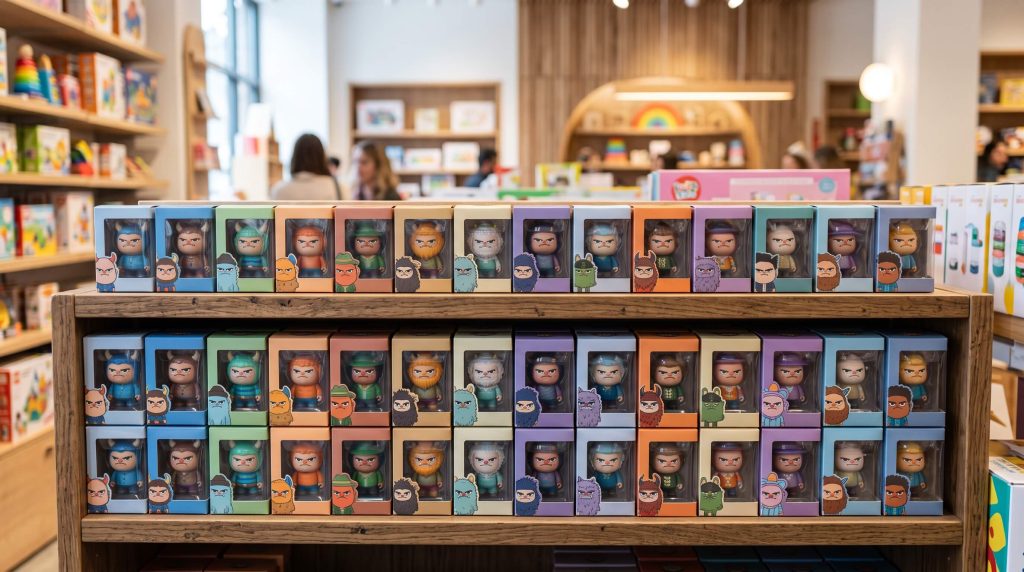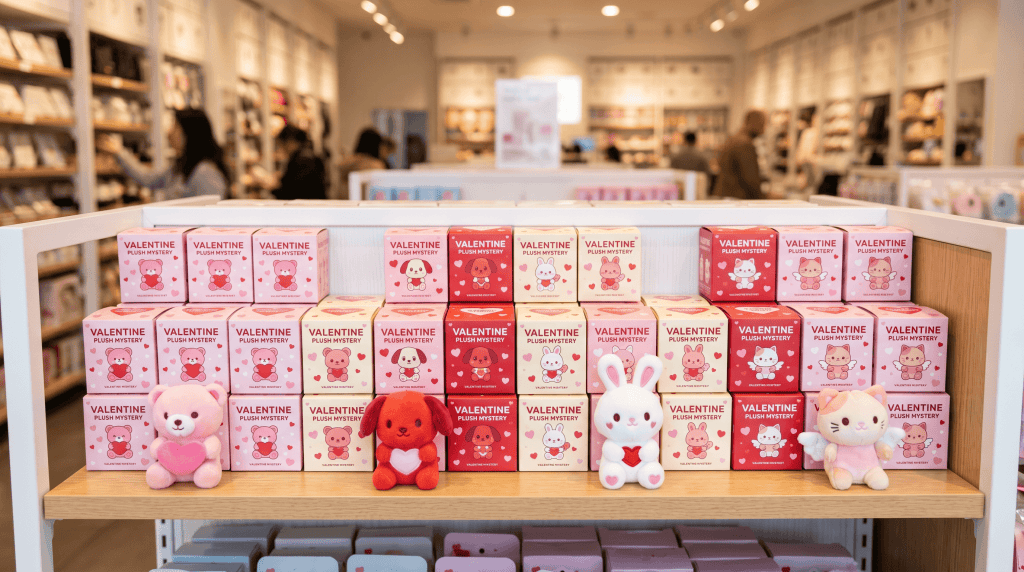




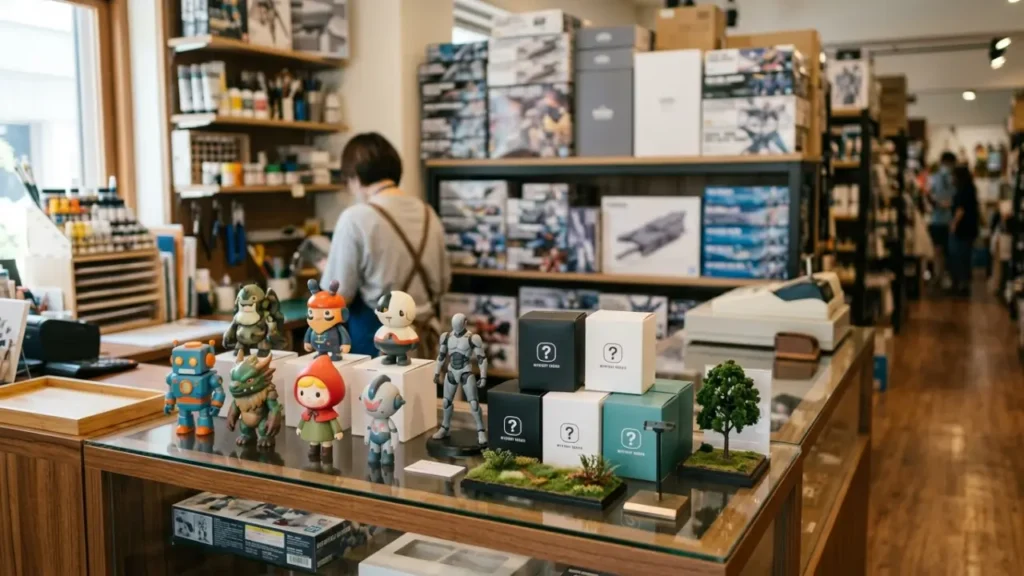
Adding collectibles can broaden a hobby shop’s offer, but the wrong assortment ties up cash and competes with core kits for display space. The best blind box products fit what customers already build, collect, customize, or display—not simply what looks popular in supplier photos.
For model-focused retailers, dimensions and compatibility matter. Anime-oriented shops need recognizable themes and documented sourcing. Mixed hobby stores may prioritize compact checkout products. Treat the formats below as a buying shortlist, not a sales ranking: the right choice depends on your customers, shelf capacity, and tolerance for random assortments.
Which blind box products fit your existing hobby customers?
Start with your strongest category and recent customer requests. A scale-model specialist and a character-collectibles shop should not automatically buy the same cases. Identify one core use case, then compare candidates against it.
| Formato do produto | Likely shop fit | Confirm before buying | Main buying risk |
|---|---|---|---|
| Static character figures | Anime and display-collectible retailers | Finished height, base footprint, assembly needs, exact series | Large bases consume more shelf space than photos suggest |
| Miniature props and scenery | Diorama and scene-building customers | Actual dimensions, stated scale, included components | Decorative miniatures may not match model scales |
| Articulated figures or doll-format collectibles | Posing, photography, and customization customers | Joint layout, accessories, stand inclusion, compatibility | Small parts and joints increase inspection needs |
| Creature and original-character figures | Fantasy and designer-collectible audiences | Finish, balance, size variation, assortment rules | Visual appeal may not translate into local demand |
| Mini construction or assembly formats | Customers who enjoy a small build | Whether building is required, instructions, parts list, missing-part process | Replacement support may be unclear |
| Blind-box pendants and compact accessories | Mixed hobby stores with checkout space | Attachment type, pack dimensions, hardware finish | Customers may value utility more than collectibility |
These are formats to investigate, not a statement of supplier availability. For a first purchase, favor products staff can explain alongside existing merchandise. Avoid launching several unrelated collectible themes before you know which customers will buy them.
Check scale and play value before shortlisting a series
Model-shop buyers need to separate display appeal from functional compatibility. A figure that looks suitable beside a kit may be too large, too stylized, or unable to hold the advertised pose without a support.
Request measurements for the figure and its base, plus photographs beside a ruler. If a scale is stated, ask what it refers to; stylized proportions can still make a nominally matching figure unsuitable for a realistic scene.
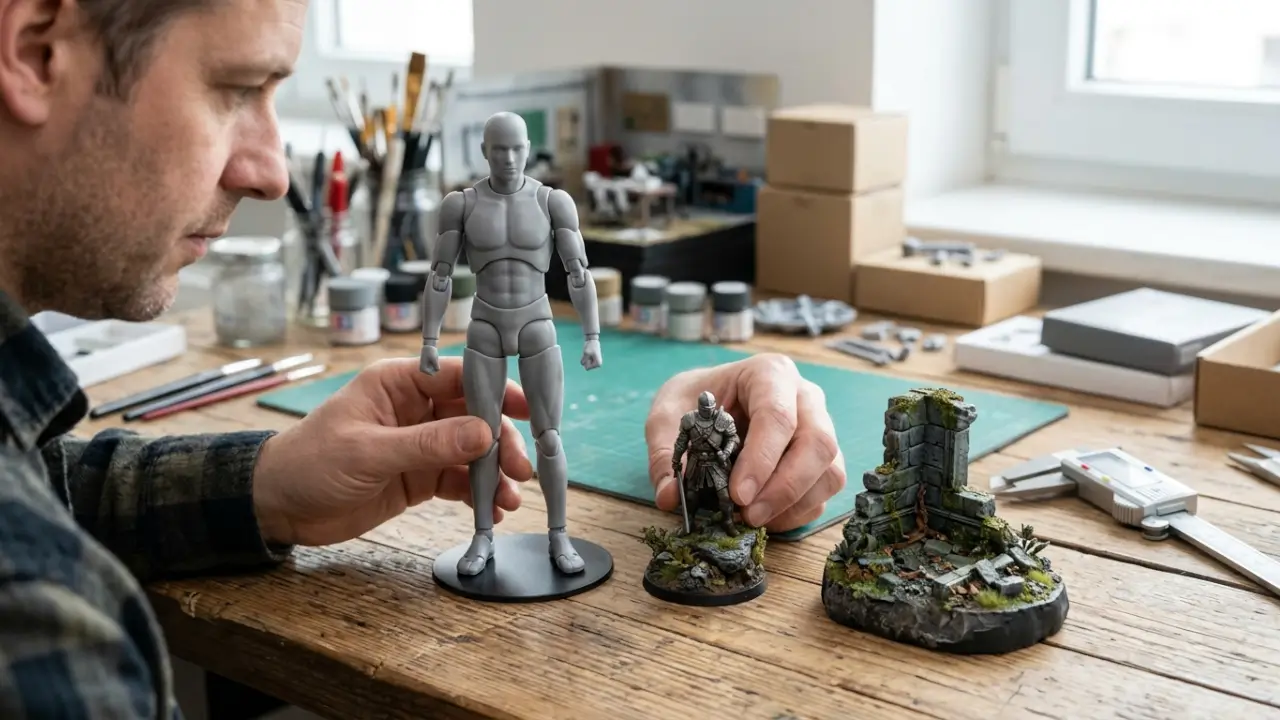
For articulated formats, document which hands, clothing, stands, and accessories are included rather than assuming every photographed item comes in the box. The Sakura Vision Reconstruction 1/12 buying guide is a relevant next read when evaluating that category; confirm current specifications for the exact SKU being quoted.
For a designer-character direction, use the Little Monster Cupa buyer guide to develop series-specific questions. Do not assume an original-character collectible serves the same customer as a scale miniature.
- Display buyers: check paint detail, stability, visible seams, and cabinet footprint.
- Customization buyers: confirm material, construction, and disassembly limitations; do not promise paint or solvent compatibility without evidence.
- Gift buyers: prioritize clear contents information, age guidance, and presentable sealed packaging.
If shelf depth is the limiting factor, compare the formats in this guide to small anime accessories for limited retail space before committing to larger display figures.
Turn blind-box case packs into a controlled test order
MOQ, display-box quantity, and master-carton quantity are different constraints. Ask for each separately, and confirm whether the minimum applies per series, per variant, or across the whole order.
Also distinguish a sealed display from a complete set. Do not advertise a full collection, duplicate-free case, or secret-figure probability unless the supplier provides applicable assortment information that you can verify.
- How many individually sellable boxes are in each display and shipping carton?
- Can series be mixed without changing the quoted unit cost or carton arrangement?
- Are cases factory sealed, or are individual boxes repacked by the seller?
- What documented assortment rules apply, including possible duplicates?
- Must a display sample be purchased separately or taken from saleable stock?
As a planning example, a retailer might test one display each of a static-figure series and an articulated series. Compare units sold per week, display space used, and customer questions. Reorder on observed demand rather than opening every available series at once.
Before expanding the shortlist: ask the supplier for a side-by-side specification sheet and case-pack breakdown for your two strongest candidates. This is a low-commitment way to expose differences hidden by product photography.
Why a cheaper figure can cost more on your shelf
Compare quotes at the same buying unit and delivery basis. A price per individual box cannot be compared directly with a display-case price, and a goods-only quote does not represent the cost of receiving stock ready for sale.
Estimated landed cost per sellable box is the total of merchandise, freight, insurance where applicable, duties, nonrecoverable taxes, brokerage, and handling, divided by the expected sellable quantity. Record any planning allowance for damage or display samples separately from confirmed charges.
Request outer-carton dimensions and gross weight. Bulky packaging can change freight economics even when the figures are small. Keep the original delivery terms in the comparison so you know who handles import clearance and which charges remain your responsibility.
Ask suppliers to distinguish stock confirmation, preparation, dispatch, transit, and possible customs processing. For new releases, the retailer guide to evaluating blind-box pre-orders can help structure availability and allocation questions. Avoid announcing a firm launch date from an unconfirmed estimate.
Once sales stabilize, estimate a reorder point from average weekly sales multiplied by replenishment time, plus a buffer suited to demand uncertainty. Confirm that the same series remains reorderable before building a permanent display around it.
Protect sealed-box value and inspect the figure inside
Blind-box packaging is part of the retail proposition. Customers need confidence that the contents have not been selected or swapped. Ask for photographs of seals, retail cartons, inner protection, and the shipping-carton arrangement.
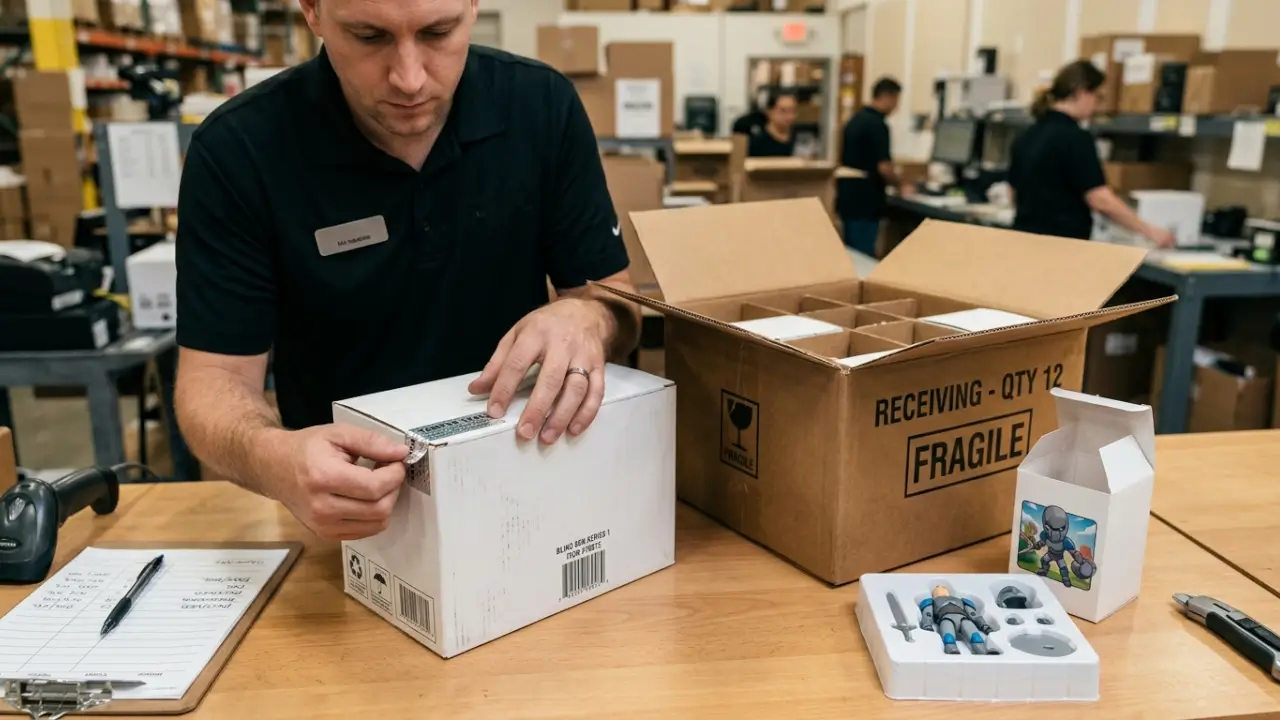
Agree on a sample-opening plan before inspection. Opening random boxes may help reveal product defects, but those units should not later be sold as untouched blind stock. Keep inspection samples identifiable.
- Outer packs: inspect crushed corners, moisture marks, broken seals, and mismatched series labels.
- Figures: check paint transfer, conspicuous scratches, loose components, and stable standing or base fit.
- Articulated items: review movement and accessory fit using agreed handling instructions.
- Parts-based products: reconcile contents with the supplied component list.
- Claims process: obtain the reporting deadline, evidence requirements, and proposed remedies in writing.
Buyers should verify destination-market requirements for product classification, age grading, small-parts warnings, traceability, and labeling. A collectible description alone does not settle whether toy-related rules apply. For branded characters, request sourcing documentation and verify any rights or authorization claims relevant to your market.
Reject quotes that hide the exact collectible you are buying
A low quote is not useful if the supplier cannot identify the version supplied. Series names, promotional images, and translated listings may be insufficient to distinguish releases or packaging variants.
- Vague identification: request SKU references and photographs of the actual packaging, not only concept art.
- Unwritten assortment promises: do not price a case as a complete set without documented terms.
- Substitution rights: require approval before another series or version replaces the ordered item.
- Unclear damage handling: resolve whether retail-box damage is covered separately from figure defects.
- Unverifiable branded stock: pause the purchase if sourcing questions remain unanswered.
A common retailer mistake is buying for collector excitement while overlooking ordinary customer needs. Track whether shoppers ask for a specific character, a usable miniature, or simply a surprise purchase. Random packaging may frustrate customers who need one exact component for a project.
Send a hobby-shop brief that produces comparable quotes
Give each supplier the same request. This reduces back-and-forth and makes missing information visible before payment.
We are evaluating blind-box stock for a hobby/model shop in [destination market]. Our main customers buy [kits, anime figures, miniatures, or other category]. Please quote [exact series/SKUs] for an initial test order and a potential repeat order.
Please confirm MOQ, individual boxes per display, displays per carton, assortment rules, product measurements, materials, included accessories, and retail packaging. State current availability, preparation estimates, delivery terms, carton dimensions and weight, payment terms, and defect/packaging-damage procedures. Please identify available labeling and product documentation for our destination and confirm whether substitutions require approval.
Request an itemized quote for your shortlisted series before placing the opening order. Attach your shelf dimensions and intended retail use, and ask for unresolved specifications to be answered in writing. Proceed only when product identity, case contents, delivery responsibilities, and claims terms are clear.
PERGUNTAS FREQUENTES
Which blind-box format should a model shop test first?
Test the format closest to existing demand. Diorama customers may prefer dimension-verified miniatures, while character collectors may prefer static or articulated figures. Validate compatibility before ordering.
Does a sealed display contain a complete collection?
Not necessarily. Ask for the exact series’ documented assortment rules, including duplicates and special variants. Do not describe a case as complete without confirmation.
How should a small hobby shop handle MOQ?
Confirm whether MOQ applies per series or across the order. Ask about mixed-series purchasing, then choose a test quantity that fits your shelf space and inventory budget.
What should buyers inspect besides the figure?
Check retail-box seals, corner damage, labeling, inner protection, accessory completeness, and carton condition. Agree in advance how packaging damage and product defects will be handled.
Before you commit shelf space
Choose a customer use case first, verify specifications second, and compare complete order costs third. A focused, measurable test gives a hobby shop a better basis for reordering than a broad assortment chosen from promotional images alone.