





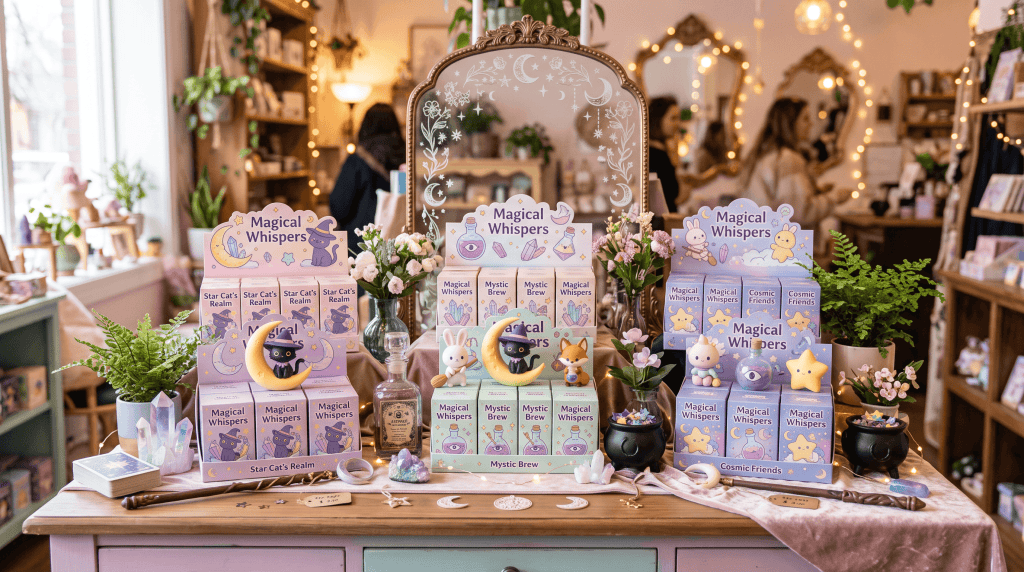
Before you commit budget to a character blind box, you have to judge whether the theme will earn shelf space, repeat purchases, and social attention. A witchy kawaii concept can look strong in product photos, but a sound buying decision also depends on assortment planning, carton handling, quote comparison, and destination-market compliance checks. This guide explains how to assess the Witch Ninita blind box and its Mirror Paradise theme from a practical sourcing perspective.
The goal is not just to ask, “Is it cute?” A better buyer question is: “Can this series fit my customer base, my display format, my cash flow, and my reorder schedule?” Use the sections below to prepare a clearer inquiry and compare supplier responses more accurately.
Where a witchy kawaii series fits in your retail assortment
Witch-themed kawaii collectibles usually appeal to buyers who already sell fantasy figures, anime-inspired gifts, gothic cute accessories, or blind box impulse items. The Mirror Paradise concept may be especially relevant for shops that want a softer magical aesthetic rather than a purely horror-style product.
Before requesting a quote, identify the role this item will play in your store. Different buyer types should evaluate it differently:
- Anime and collectible toy stores: Compare it with other character blind boxes by shelf footprint, display strength, and repeat purchase potential.
- Gift shops: Check whether the witchy theme is easy for casual shoppers to understand without staff explanation.
- Varejistas online: Confirm whether product photos, case images, and assortment details are available for building accurate listings.
- Pop-up sellers and event vendors: Consider whether the visual theme works as a quick impulse buy at conventions, markets, or seasonal events.
- Dark cute or fantasy boutiques: Compare the tone with related darker character lines, such as these dark aesthetic blind box buying considerations, to avoid overloading one narrow style.
A useful decision rule: if your customers already respond well to magical, pastel gothic, or character-driven mystery products, this type of series may be worth testing. If your shop focuses mainly on realistic figures or licensed mainstream characters, start with a smaller planning quantity and monitor sell-through carefully.
What to verify before assuming Mirror Paradise demand
Visual appeal drives blind box discovery, but retailers should not rely only on a single hero image. Ask for clear information about the visible product range, whether there are regular styles, whether any hidden or chase figure is included, and how the assortment is packed. Do not assume a full set ratio unless the supplier confirms it in writing.
For witchy kawaii products, buyers often compare three demand signals:
- Theme clarity: Can shoppers identify the witch, mirror, magical, or fantasy elements quickly?
- Character variation: Are the designs different enough that customers may buy more than one?
- Display strength: Does the outer box or tray create a strong shelf presentation without opening units?
If you carry fantasy dolls or art-doll style blind boxes, you may also want to compare this theme with more elaborate fantasy lines such as the Lunar Lore BJD blind box guide. That comparison helps clarify whether your customers prefer small mystery figures, larger doll formats, or a mix of both.
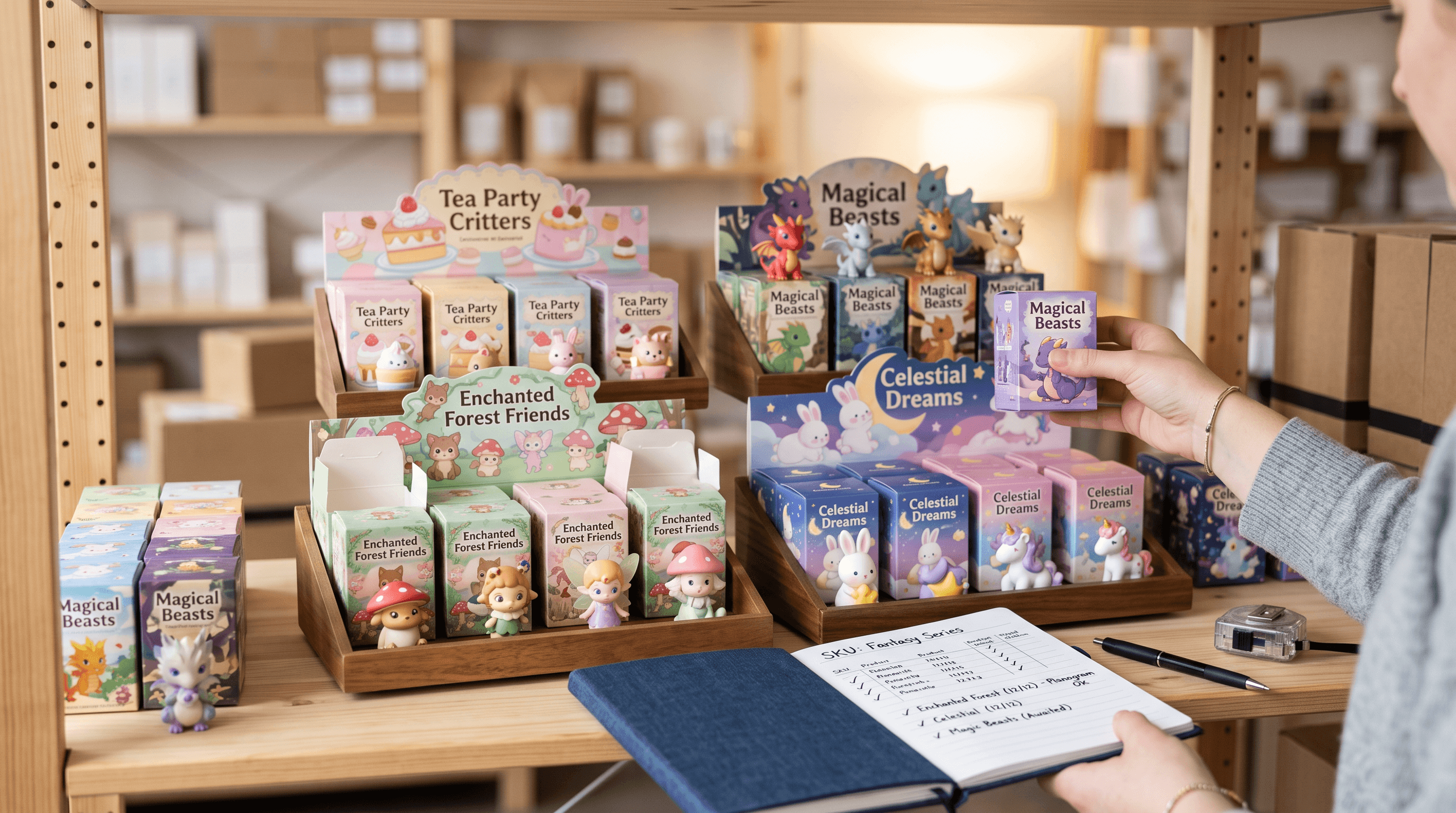
For first-time testing, a retailer may plan separate display areas for “cute magic,” “dark cute,” and “fantasy doll” items, then track which area produces the most add-on purchases. This is a planning method, not a fixed rule, but it prevents all fantasy products from being treated as interchangeable.
How to compare Witch Ninita quotes without guessing
Unit price is only one part of a blind box quote. A lower unit price can become less attractive if the case pack is awkward, packaging is weak, shipping terms are unclear, or the assortment ratio is not confirmed. Ask suppliers to quote the same specification so you are comparing like with like.
| Quote item to confirm | Why it matters for buyers | Question to ask |
|---|---|---|
| Series name and version | Prevents confusion with similar character or theme names. | “Please confirm this quote is for Witch Ninita Mirror Paradise.” |
| Assortment information | Helps plan full-set sales, random box sales, and customer expectations. | “How many regular designs are in the series, and is any hidden style included?” |
| Inner box and master carton quantity | Affects shelf planning, cash flow, and warehouse handling. | “What are the case pack, inner quantity, and carton dimensions?” |
| Packaging condition standard | Collectors often care about box corners, seals, and display quality. | “How are blind boxes protected inside the export carton?” |
| Product photos and listing assets | Online sellers need accurate images to avoid returns or disputes. | “Can you provide approved product images and packaging photos?” |
| Shipping basis | Different freight terms can change landed cost significantly. | “What shipping options and trade terms are included in the quote?” |
| Compliance and labeling details | Requirements vary by destination market and sales channel. | “What labels, warnings, and product information are available for review?” |
| After-sales handling | Damages, missing units, or carton discrepancies need a clear process. | “How should shortages or damaged cartons be documented?” |
A practical comparison method is to create one spreadsheet row per supplier and include unit cost, carton count, estimated freight, packaging notes, and unanswered questions. If one quote leaves multiple fields blank, treat it as incomplete rather than automatically cheaper.
Matching case packs and test orders to your sales format
Blind box buying becomes risky when order quantity is chosen only by budget. Instead, connect quantity to your sales format. Will you sell sealed singles, full sets, display trays, live-stream pulls, or event bundles? Each format changes how many units you need and how quickly you may reorder.
As a planning reference, a small shop might compare these scenarios:
- Low-risk shelf test: enough units to fill one display area and observe customer response.
- Online listing test: enough units to photograph, list, and fulfill early orders without overselling.
- Event launch: enough units for impulse purchases across the full event period, plus a small reserve for damaged boxes or display samples.
- Full-set selling: enough confirmed assortment information to avoid promising complete sets that cannot be supplied reliably.
Ask whether the supplier sells only by full case, whether mixed cartons are available, and whether the case pack supports your display plan. Do not assume you can order any random quantity. MOQ and case quantity should be confirmed before you calculate retail pricing or launch a preorder.
If you are building a broader character assortment, compare Witch Ninita Mirror Paradise with adjacent themes instead of buying too many units of one style. For example, a retailer may balance this witchy line with nature-inspired collectibles like the Echo Forest Whisper blind box to test whether customers prefer magical, forest, or dark cute aesthetics.
Preparing your inquiry: Before you request a quote, organize your target quantity, preferred sales format, destination country, and required packaging information. A clear inquiry usually produces a more useful supplier response than a one-line “price please” message.
Packaging checks that protect collectible value in transit
Blind boxes are not only products; the sealed box is part of the collectible experience. Dented corners, crushed trays, torn seals, or moisture-damaged cartons can reduce customer trust even when the figure inside is acceptable. Buyers should ask packaging questions before the goods move.
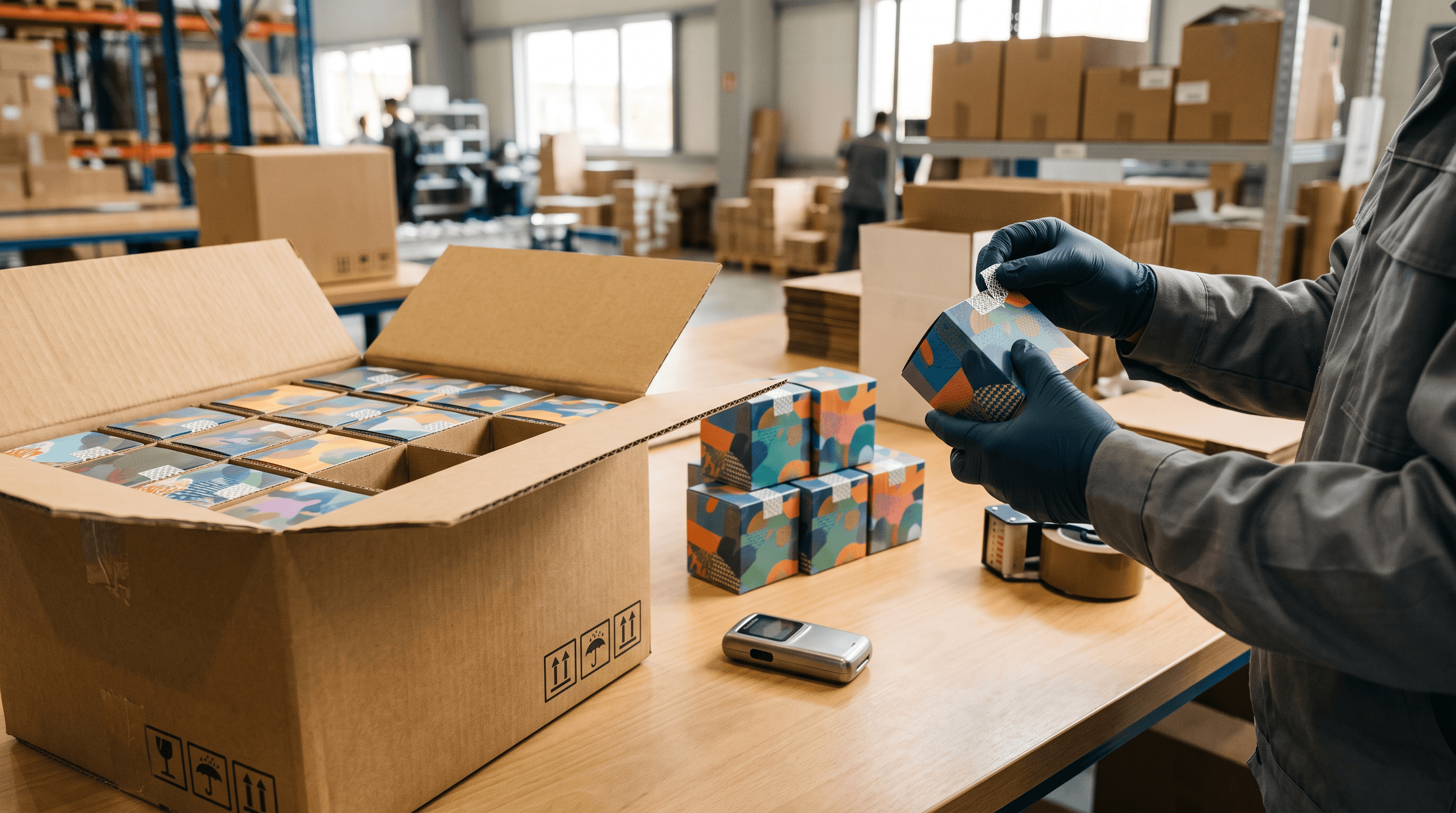
Useful packaging checks include:
- Request photos of the individual blind box, inner display, and master carton if available.
- Confirm whether the display box is shipped inside a stronger outer carton or directly exposed in transit.
- Ask how empty space inside cartons is managed to reduce movement and corner damage.
- Clarify whether cartons are marked with product names, quantities, or other information needed for receiving.
- For e-commerce, check whether individual boxes can survive secondary shipping to your customer after you receive them.
Packaging is especially important if your customers collect sealed boxes or expect gift-ready condition. For a similar discussion on small collectible presentation and shelf protection, the small figure sourcing guide for retailers gives useful comparison points.
Estimating landed cost and reorder timing for Mirror Paradise stock
A retail buyer should estimate landed cost before setting a selling price. Landed cost can include product cost, freight, import duties or taxes where applicable, payment fees, inspection costs, local delivery, damaged-unit allowance, and marketplace or platform fees. These costs vary by destination and sales channel, so buyers should verify details for their own market.
Ask the supplier which shipping options are available and what is included in the quoted amount. If a quote mentions only product cost, you still need freight and import estimates before judging margin. If a quote includes freight, clarify the destination, shipment method, carton count, and whether customs-related charges are included or excluded.
Reorder planning also matters. A blind box line can lose momentum if you sell out before a second order is possible. As a planning reference, some retailers set a reorder trigger when remaining stock falls below a chosen number of selling days. For example, if an online shop usually sells a collectible line steadily after launch, it may review reorder options while enough units remain to cover the next buying cycle. This is a planning approach, not a guaranteed lead time.
For seasonal or event-driven launches, build in more caution. Freight delays, customs review, local courier congestion, or incorrect paperwork can affect availability. Buyers should avoid promising launch dates until shipment status and receiving plans are realistic.
Quality, labeling, and compliance questions to ask early
Collectible toys may be subject to labeling, age grading, safety, packaging, and marketplace requirements depending on the destination country and sales channel. Buyers should not assume that a product suitable for one market automatically meets another market’s rules. Ask for documentation and verify requirements with appropriate advisors or local authorities where needed.
Quality checks should focus on both the product and the retail experience. Consider asking the supplier how the following issues are handled:
- Paint defects, loose parts, or visible manufacturing flaws.
- Incorrect assortment or missing units inside a carton.
- Damaged sealed boxes or crushed display trays.
- Barcode, SKU, warning label, or language label requirements.
- Photo consistency between product listing images and actual delivered items.
- Process for documenting claims with photos, carton labels, and receiving records.
If the product is intended for children, gifting, or marketplace sale, compliance questions become more important. Buyers should confirm age suitability, warning labels, and any required testing or documentation for their destination market before purchasing in bulk.
Red flags when sourcing a witchy collectible blind box
Not every attractive quote is ready for purchase. Slow communication is not always a dealbreaker, but missing product details, unclear terms, and pressure tactics can create avoidable risk. Watch for red flags that make the quote difficult to verify.
- Unclear product identity: The supplier cannot confirm the exact series name, version, or packaging shown.
- No case pack information: You cannot calculate display quantity, storage needs, or shipping volume.
- Vague assortment claims: The supplier promises “complete set” without explaining packing rules or limitations.
- Only one beauty photo: There are no packaging, carton, or real-product reference images.
- Unexplained freight charges: Shipping is quoted without destination, carton count, or method.
- No damage documentation process: The supplier cannot explain how receiving issues should be reported.
- Overpromising compliance: Broad claims are made without documents or destination-specific confirmation.
If your assortment includes darker cute characters, compare supplier detail level across products. For example, the buyer questions used for dark cute doll product sourcing can also help you evaluate how clearly a supplier explains theme, packaging, and buyer risk.
Message template for requesting a usable Witch Ninita quote
A good quote request reduces back-and-forth and makes suppliers easier to compare. You can adapt the template below for Witch Ninita Mirror Paradise or similar kawaii blind box products.
Hello, I am interested in sourcing Witch Ninita Mirror Paradise blind boxes for retail sale. Please confirm the current product version, available quantity basis, case pack, carton dimensions, assortment information, packaging photos, and quote terms.
Please include unit pricing based on the order quantities you support, MOQ or case order requirements, estimated carton count, shipping options to [destination country/city], payment terms, and any available product labels or compliance documents for review.
Also please explain how damaged cartons, shortages, or incorrect items should be documented after receiving. Thank you.
Before sending the inquiry, prepare these details:
- Target order size or test quantity range.
- Destination country and preferred delivery address type.
- Sales channel: physical store, online shop, marketplace, event, or wholesale resale.
- Whether you need sealed singles, full-case supply, or full-set planning.
- Packaging condition requirements for collectors or gifting.
- Any label, barcode, invoice, or import documentation requirements.
When you are ready to buy: Request a written quote that includes product identity, case quantity, packaging details, shipping basis, and documentation availability. Do not approve a bulk order until the unanswered questions that affect landed cost and retail risk are resolved.
PERGUNTAS FREQUENTES
What is the best way to test the Witch Ninita blind box in a small shop?
Start by matching the order quantity to one clear sales format, such as a shelf display, online listing test, or event table. Confirm case pack and assortment details first so the test is easy to track.
Should retailers sell Witch Ninita Mirror Paradise as singles or full sets?
Singles are usually easier for impulse purchases, while full sets require clearer assortment confirmation. Do not promise full sets unless the supplier explains packing rules and availability clearly.
What quote details matter most for blind box sourcing?
Confirm the exact series, unit basis, MOQ or case pack, carton details, assortment information, packaging condition, shipping terms, and any available labeling or compliance documents.
How can buyers reduce packaging damage risk?
Ask for packaging and carton photos, confirm inner protection, document carton condition at receiving, and clarify the supplier’s process for reporting crushed boxes or shortages.
Do compliance requirements differ by destination market?
Yes. Labeling, safety, age grading, customs, and marketplace requirements can vary by country and sales channel. Buyers should verify requirements for their own destination market before bulk purchasing.
Before placing a Mirror Paradise order
Witch Ninita Mirror Paradise can be a useful addition for retailers building a witchy kawaii, fantasy, or dark cute collectible assortment, but the strongest buying decisions are based on more than character appeal. Confirm the exact product, understand how the case pack supports your sales plan, estimate landed cost, and ask packaging and compliance questions early.
A well-prepared quote request gives you better comparison power and lowers the chance of surprises after payment. Treat the first purchase as both inventory and market research: track sell-through, customer reactions, damage rate, and reorder timing before scaling into larger quantities.

