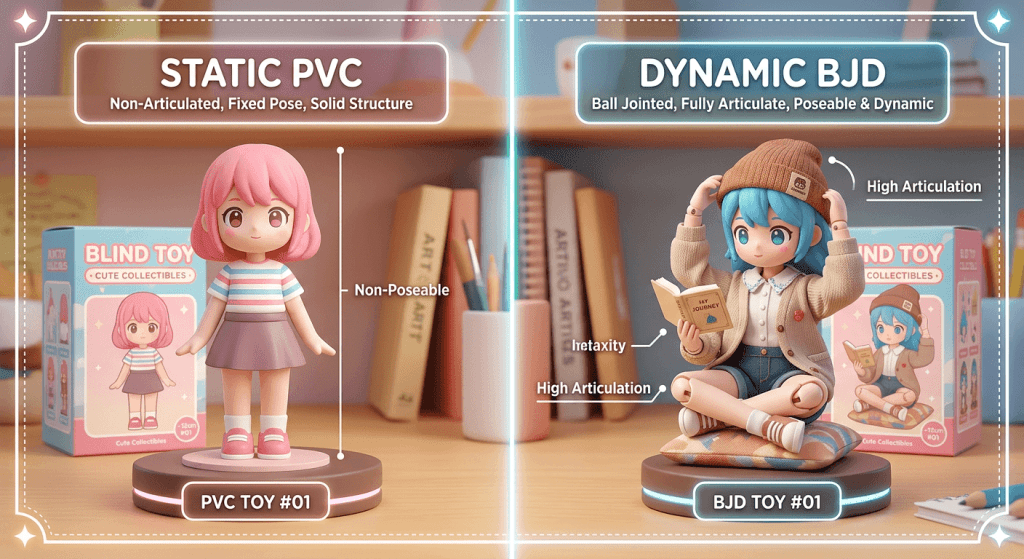



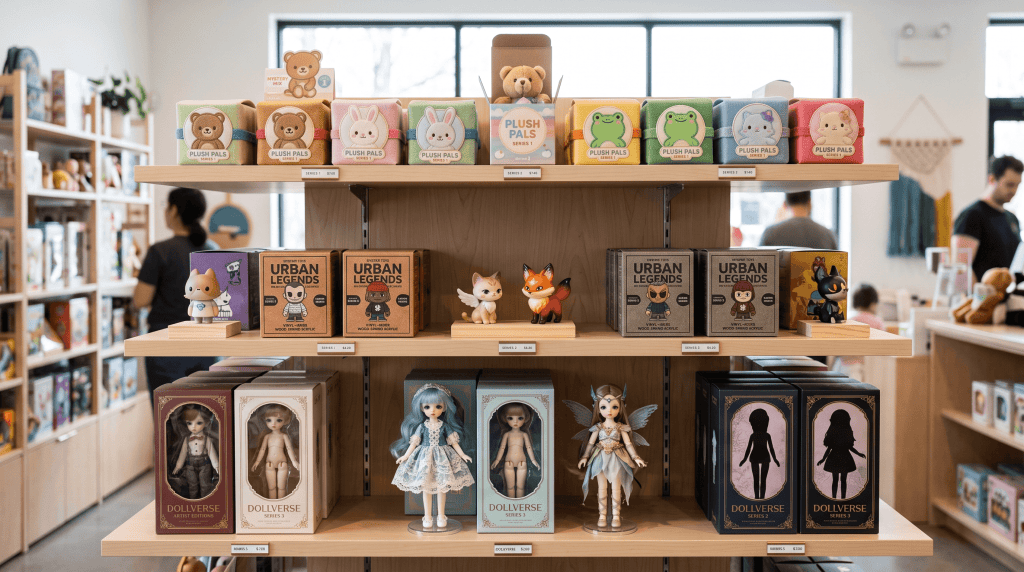
A collectible display can lose sales when shoppers see only low-cost impulse items or only expensive products that require a larger commitment. Combining entry-level plush with premium BJD blind boxes creates more purchase options, but only when each tier has a clear role and the cost difference is easy to understand.
Retail buyers therefore need to compare more than quoted unit prices. Articulation, materials, accessories, packaging, case configuration, freight exposure, and replacement procedures can all change where a series belongs in the assortment. The goal is not simply to stock a cheap line and an expensive line; it is to build a progression that helps shoppers trade up while protecting cash flow.
Match Each Collectible Tier to a Different Shopper Decision
Start by identifying the job each tier performs. Entry-level plush often suits gifting, casual fandom, checkout placement, and first-time blind box purchases. Premium BJD-style products may appeal more to collectors who value articulation, display options, outfits, accessories, or character customization. These are category-level tendencies, not guaranteed features, so buyers should confirm the construction of each proposed series.
- Impulse shopper: Needs an approachable product with packaging that communicates the character quickly.
- Gift buyer: Values presentation, recognizable themes, and a box that can survive handling without looking damaged.
- Plush collector: May compare fabric texture, facial construction, attachment points, and character variation.
- Doll or figure collector: Is more likely to ask about joints, removable components, outfits, stands, and display stability.
- Repeat buyer: Needs enough variation to make another sealed-box purchase interesting without creating an impossible completion goal.
A store serving mostly casual gift traffic may give plush more shelf space. A specialist anime, doll, or designer-toy retailer may support a deeper premium tier. Buyers comparing plush construction can also review the differences between vinyl-face plush and standard plush formats before deciding which product should occupy the opening price point.
Where BJD Blind Boxes Earn Premium Shelf Position
A higher quote does not automatically justify premium placement. The product should provide visible or demonstrable differences that staff and product pages can explain. Ask the supplier for a complete specification sheet and clear photographs of the doll outside its packaging rather than relying only on promotional artwork.
| Контрольная точка | Entry-level plush question | Premium BJD question | Действия покупателя |
|---|---|---|---|
| Primary material | What fabrics, filling, and rigid parts are used? | What materials are used for the head, body, hair, and accessories? | Record materials by component, not with a single broad label. |
| Construction | Are facial details embroidered, printed, or molded? | Which joints move, and how is the body assembled? | Request front, back, seated, and posed product images. |
| Размер | What is the finished height and packed size? | Is height measured with shoes, hair, or headwear? | Compare dimensions using the same measurement method. |
| Included parts | Does the item include a loop, charm, card, or removable accessory? | Are outfits, shoes, hands, props, or stands included? | Ask for a box-contents list for every regular design. |
| Assortment | How many regular designs are packed per case? | Are body types or accessory counts consistent across designs? | Confirm whether a sealed case has a stated assortment method. |
| Упаковка | Can the box support hooks, shelves, or counter display? | Are delicate parts immobilized inside the box? | Review inner tray, bag, and outer carton photos. |
| Quality risk | Check seams, loose attachments, stains, and face alignment. | Check joints, paint, hair placement, clothing, and small parts. | Define defect evidence and reporting procedures before ordering. |
| Retail explanation | Can staff explain the character and tactile appeal? | Can staff show why articulation and components add value? | Write one customer-facing reason for each price step. |
Hybrid products can blur the boundary between plush and figures. The guide to hybrid collectible construction provides additional comparison points when a rigid face, plush body, or mixed-material design sits between the opening and premium tiers.
Build a Three-Step Ladder Instead of a Price Cliff
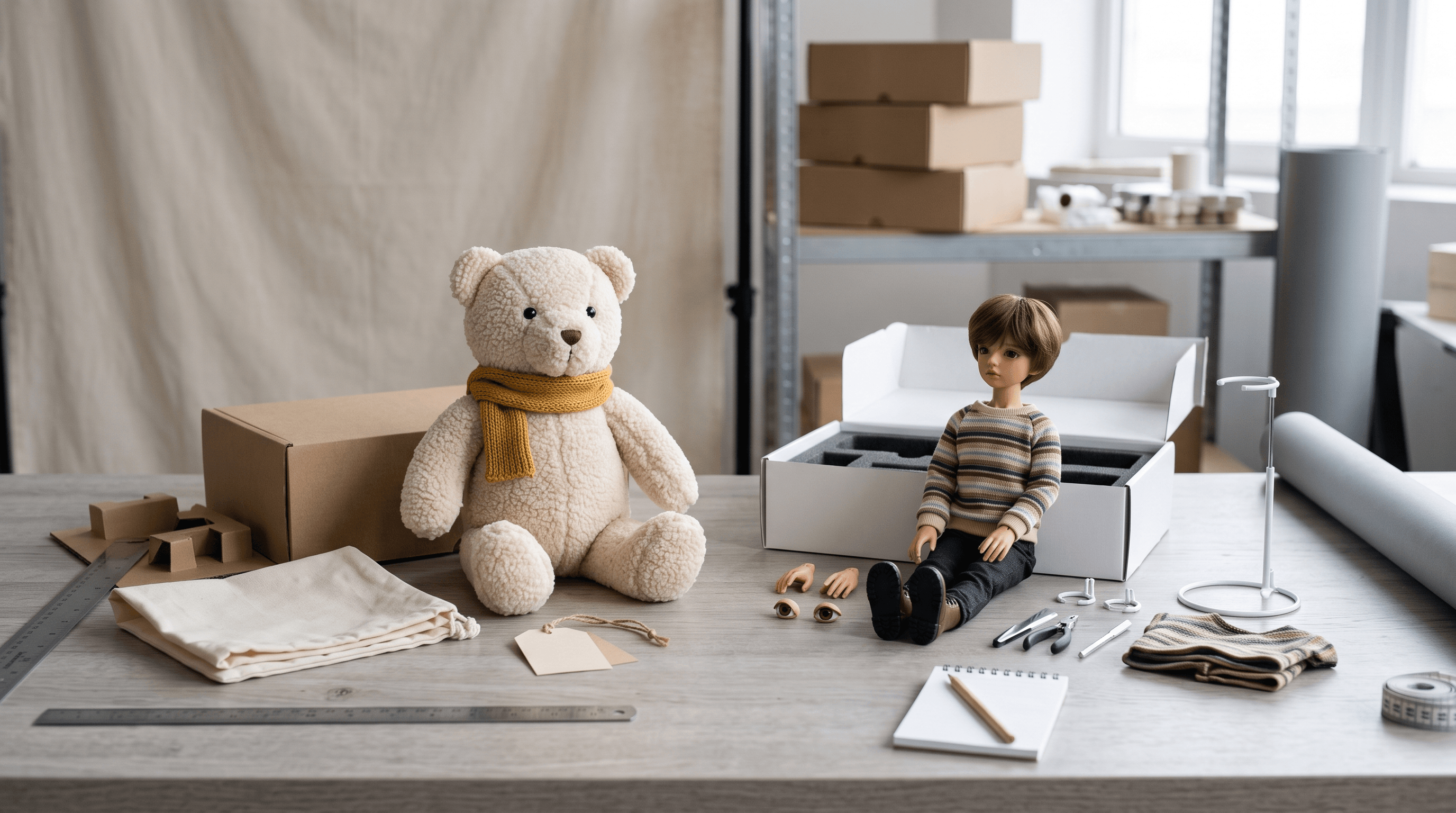
A two-tier assortment can create a sharp jump: the plush feels accessible, while the BJD feels too expensive for the same visit. A middle step gives shoppers a trade-up path. It might be a larger plush, a mixed-material plush, a better-accessorized design, or a simpler articulated collectible. The exact format should come from available specifications and quotes.
Use roles rather than arbitrary price labels:
- Entry tier: Encourages trial, gifting, add-on purchases, and character discovery.
- Bridge tier: Adds an obvious feature such as a larger format, rigid facial detail, additional accessory, or enhanced packaging.
- Premium tier: Delivers the most substantial display, articulation, outfit, or component experience in the planned assortment.
As an assortment-planning example, a retailer testing 10 facing positions may assign five to entry products, three to bridge products, and two to premium products. This is not a recommended order quantity; it is a way to keep the premium tier visible without assuming it will sell at the same velocity as an impulse plush line.
Before approving the ladder, cover the brand names and look only at the specifications. If staff cannot explain the move from one step to the next in a single sentence, the products may be too similar or the price gap may be too large. When you need a real product to anchor the premium tier, comparing a specific articulated or figure series against your plush anchor keeps the exercise concrete rather than theoretical.
Convert MOQ, Case Packs, and Freight Into Tier-Level Cost
Supplier quotes are not comparable until buyers know the minimum order basis, units per inner pack, units per master carton, assortment policy, carton dimensions, and gross weight. A low unit quote can still create high inventory exposure when it requires a deep case or multiple cases per design.
Calculate landed cost separately for each tier:
Planning formula: product cost + allocated freight + duties or taxes where applicable + payment or handling costs + inspection allowance + expected damage allowance = estimated landed cost per sellable unit.
Do not allocate freight evenly by unit if premium BJD packaging occupies substantially more space than a small plush box. Ask for carton-level measurements and allocate transport using the method most relevant to the shipment, such as carton volume, chargeable weight, or a forwarder estimate.
- Confirm whether the MOQ applies per series, per design, per case, or across the total order.
- Ask whether sealed cases are randomized, balanced, or packed under another stated assortment rule.
- Separate sample costs from repeat-order costs when comparing suppliers.
- Check whether spare packaging, replacement parts, or defect credits are available, without assuming they are included.
- Model the cash tied up in each tier, not only the projected gross margin per unit.
If you are narrowing a shortlist, send the same specification and carton questions to every supplier. A standardized request makes differences in case exposure, freight, and included components easier to identify.
Protect Plush Presentation and BJD Components Before Launch
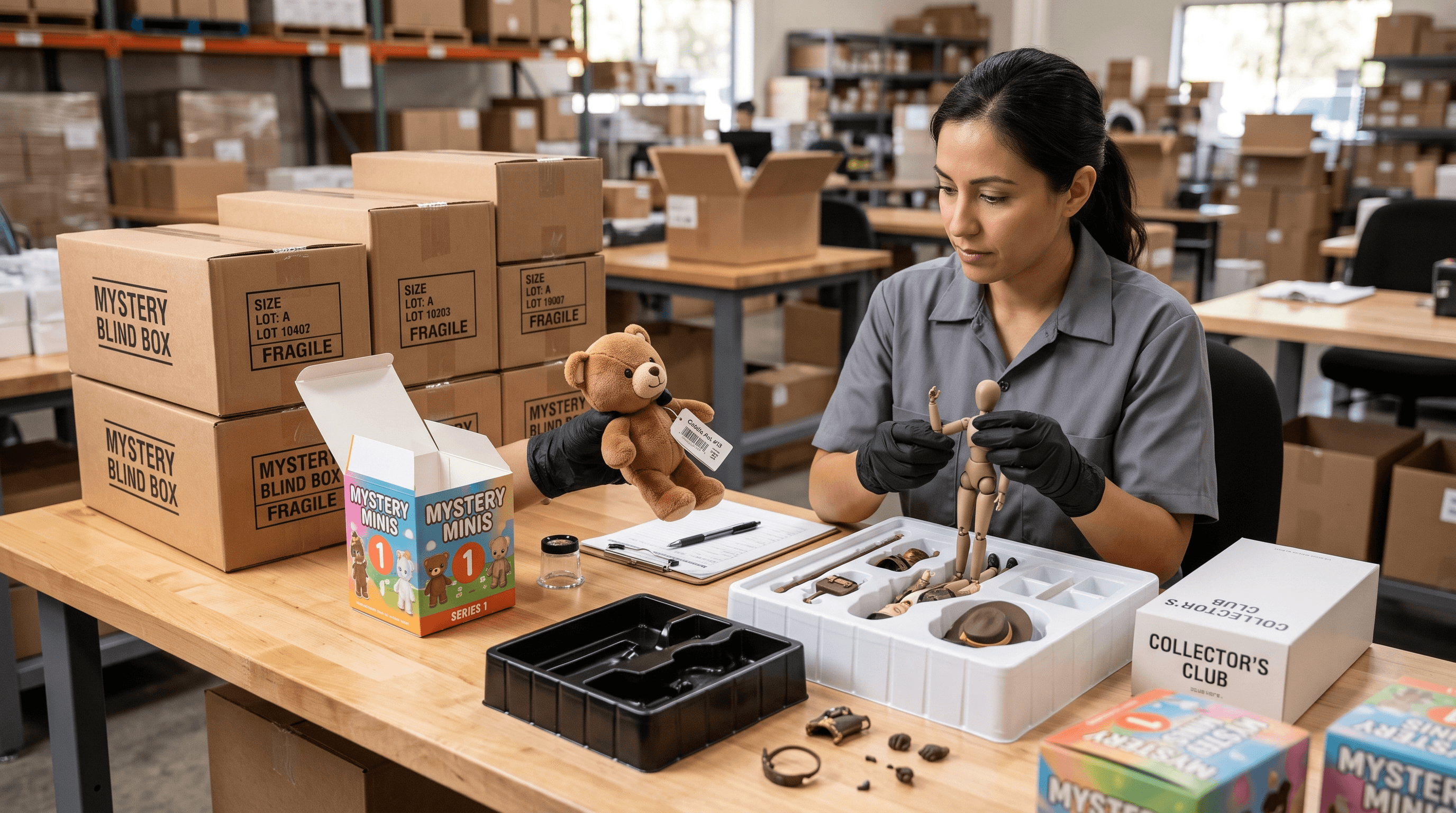
Plush and articulated dolls fail quality review in different ways. A plush unit may have uneven stuffing, open seams, stains, misaligned facial details, or weak attachment points. A BJD-style product may have loose or overly tight joints, paint inconsistencies, missing clothing pieces, damaged hair, unstable shoes, or small components that shift in transit.
Create a receiving checklist tied to the actual product specification:
- Match the received case count and assortment information to the packing list.
- Inspect outer cartons for crushing, moisture exposure, or punctures before opening.
- Photograph the case label and packaging condition when documenting a problem.
- Check a defined sample across different carton positions rather than opening only the top unit.
- Verify included parts against the supplier’s box-contents list.
- Keep sealed units separate from inspection units so sellable inventory remains clear.
Packaging is part of the product in a blind box category. Request images or samples showing seals, inner bags, trays, accessory compartments, warnings, and labels. For articulated products, check whether joints and delicate decorations are protected from repeated impact inside the box.
Buyers should also confirm applicable toy, consumer-product, labeling, age-grading, small-parts, chemical, and import requirements for the destination market. Requirements vary by product construction and jurisdiction. Ask for relevant documentation, but verify its scope, product identity, issuing party, and acceptance with appropriate compliance or customs professionals.
Plan Reorders Around Different Sales Speeds
Entry plush and premium BJD blind boxes should not automatically share one reorder trigger. Lower-priced units may sell faster but consume more pieces. Premium products may move more slowly while representing more cash per unit and potentially taking longer to evaluate, inspect, or replenish.
Track weekly unit sales, sell-through by tier, remaining weeks of cover, damaged units, and customer requests. As a planning example, a retailer may review the entry tier every week and the premium tier after each meaningful sales period rather than waiting until both are nearly sold out. The actual trigger should reflect supplier lead time, freight mode, selling season, and available cash.
- Ask before ordering: Is the quoted lead time measured from deposit, artwork approval, order confirmation, or another event?
- Confirm availability: Is the item ready stock, scheduled production, or subject to confirmation?
- Allow receiving time: Include customs clearance where applicable, inbound inspection, labeling, and shelf preparation.
- Set a decision date: Reorder while enough stock remains to cover the realistic replenishment window.
A tier may deserve more space because it sells quickly, while another deserves continued presence because it attracts specialist customers. Compare both unit velocity and the commercial role of the series. Retailers making similar series-level decisions may find the Labubu series stocking comparison useful for thinking through audience fit and inventory allocation.
Questions That Expose an Incomplete Blind Box Quote
Warning signs include a quote with no product code, unclear material descriptions, no carton data, missing accessory details, or case quantities that change between messages. Be cautious when promotional images are substituted for actual packaging photographs or when compliance documents cannot be matched to the quoted item.
Use this inquiry template and adapt it to the destination market:
Hello, we are comparing entry-level plush, bridge-tier collectibles, and premium BJD blind boxes for retail. Please quote each product separately and confirm the product code, materials by component, finished dimensions, included accessories, regular design count, assortment method, unit packaging, units per inner and master carton, carton dimensions and gross weight, MOQ basis, production or availability status, lead-time starting point, and payment terms. Please also provide current product and packaging images, the defect-reporting procedure, and any product-specific compliance documents available for review. Our destination market is [market], estimated order mix is [quantities by tier], and preferred delivery term or destination is [details].
Compare responses in a spreadsheet without filling missing cells with assumptions. If one quote includes freight and another does not, normalize them before ranking. If accessories or packaging differ, treat the items as different specifications rather than choosing solely by unit cost.
Before placing a first order, request an itemized quote using the same tier mix, carton questions, destination, and packaging requirements for every shortlisted product. Resolve unclear assortment, compliance, replacement, and lead-time terms in writing before payment.
ЧАСТО ЗАДАВАЕМЫЕ ВОПРОСЫ
Are BJD blind boxes always more expensive than plush blind boxes?
No. Pricing depends on the specific materials, size, construction, accessories, packaging, order quantity, and supplier terms. Buyers should compare complete specifications and estimated landed cost rather than assuming the format determines the price.
How many price tiers should a blind box retailer carry?
Three tiers often provide a useful planning framework: entry, bridge, and premium. The right number depends on shelf space, customer profile, available series, and how clearly each product offers a different reason to trade up.
Should plush and BJD blind boxes have the same order quantity?
Not necessarily. Entry plush may support broader trial, while premium BJD products can require more cautious testing because more cash is tied up per unit. MOQ, case packs, expected velocity, and replenishment options should guide the mix.
What specifications matter most for premium BJD blind boxes?
Confirm materials by component, finished size, articulation, included outfits and accessories, assortment method, packaging protection, and the procedure for reporting missing or defective parts.
How can a buyer compare quotes with different case sizes?
Convert each quote into landed cost per sellable unit, then compare minimum cash commitment, carton volume, assortment exposure, and units of inventory required. Do not compare unit prices in isolation.
Before You Approve the First Price Ladder
A workable ladder gives every tier a distinct customer, feature story, and inventory role. Confirm specifications first, normalize landed costs, inspect packaging risk, and set separate reorder rules for entry plush and premium articulated products. If the difference between tiers cannot be explained clearly to a shopper, revise the assortment before committing to full cases.