



A trending character line forces an awkward call: commit to a full case, place a small test order, or split the budget across a mixed assortment. That call gets harder with Labubu, because Have a Seat and Big Into Energy pull from overlapping fan bases while creating different shelf, packaging, and reorder risks. A rushed choice can leave you with slow duplicates or a display that looks empty during a trend spike.
This guide compares the two series from a buyer’s point of view: who may buy them, what to ask before quoting, how to compare cost beyond the unit price, and when stocking both may be safer than choosing one. Product specifications, official release details, and destination-market requirements should always be confirmed with the supplier before purchase.
What shelf job does each series need to do?
Before asking for a quote, decide what job the product needs to perform in your store. A retailer buying for impulse checkout traffic may evaluate the two series differently from a collectible toy shop building a character wall or an online seller preparing social media unboxing content.
Use these buyer questions first:
- Is the product meant to be a traffic driver? If customers already search for Labubu, either series may support discovery, but quote availability and authenticity checks become more important.
- Is it meant to increase basket size? A blind box near other character goods may work as an add-on if the price point, case pack, and packaging footprint fit the store.
- Is it meant to anchor a themed display? Compare how each series’ color palette, box design, and character poses sit beside plush, vinyl figures, dolls, or anime accessories.
- Will customers buy one box or chase a set? Set-chasing customers may care more about sealed cases, assortment integrity, and clear case quantity information.
For stores already carrying monster-style or designer-character collectibles, it can help to benchmark against nearby lines such as the Little Monster CUPA-I Am Undefined series. The goal is not to treat every character line as identical, but to compare how much space, risk, and customer explanation each series needs.
Who buys Have a Seat, who buys Big Into Energy, and who wants both?
Have a Seat and Big Into Energy should be compared by shopper behavior, not only product photos. Buyers often make better stocking decisions when they map each series to a customer segment and sales channel.
| Retail situation | Have a Seat buying logic | Big Into Energy buying logic | Buyer action before ordering |
|---|---|---|---|
| Collectible toy boutique | May suit customers who like displayable character pieces and recognizable series continuity. | May suit customers drawn to brighter themes, stronger visual contrast, or social content appeal. | Ask whether sealed cases, individual boxes, or mixed case options are available. |
| Gift shop or lifestyle store | Can be evaluated as a character gift item if packaging looks gift-ready. | Can be evaluated for color-driven gift displays or seasonal promotional tables. | Request box dimensions and carton photos to plan shelf and counter placement. |
| Online blind box seller | May work for collectors comparing series details and unboxing results. | May create stronger visual variety for product thumbnails and short videos. | Confirm whether product photos, barcode details, and case configuration can be documented. |
| Anime or pop culture shop | Can sit beside character collectibles where fans already understand blind box buying. | Can be tested as a higher-energy display near new arrivals. | Compare expected sell-through with other designer toy lines such as the POP MART Mega Space Molly 100% Series 3. |
| Small first-time buyer | A cautious test may reduce exposure if local demand is unknown. | A cautious test may reveal whether social trend interest converts into repeat purchases. | Ask for the minimum order structure without assuming exact MOQ from online chatter. |
| Repeat collectible account | May support collectors who want continuity across Labubu releases. | May support customers looking for a newer or more visually distinct addition. | Track sell-through by series, not only total Labubu revenue. |
A practical decision rule: if your customer base is already character-collector heavy, compare both series side by side. If your store is new to blind boxes, start by validating demand, packaging condition, and supplier communication before building a large Labubu program.
Why the louder design can quietly hurt your margin
Retailers sometimes choose the series that looks more exciting in photos, then discover that carton quantity, freight, damaged packaging, or slow-moving duplicates affect the real margin. A quote is not comparable until you know what is included in the case and how it lands at your door.
Ask each supplier to separate the quote into clear parts: product cost, case quantity, carton quantity, packing method, freight estimate, payment terms, and any destination charges that may apply. Buyers should verify customs, import duties, taxes, and labeling obligations for their own market instead of relying only on a supplier’s general statement.
As a planning reference, a retailer might compare three scenarios:
- Small test: enough units to measure local demand without overfilling the shelf.
- Balanced launch: enough units for display, online listing, and a short reorder window.
- Collector-focused drop: enough sealed case inventory to serve customers who care about assortment integrity.
Do not treat these as fixed quantities. They are planning structures. The correct order size depends on available cash, shelf space, freight efficiency, and how quickly you can reorder if demand spikes.
If you are comparing other figure categories at the same time, larger-format buying guides such as the Baby Three Sweet Dream 400% figure sourcing guide can help you think through size, display value, and capital tied up in inventory.
Before you email suppliers: If you are preparing a Labubu quote comparison, send one structured inquiry covering both Have a Seat and Big Into Energy. It is much easier to compare answers when every supplier responds to the same questions.
The spec questions that make two Labubu quotes actually comparable
Two quotes can look similar while describing different purchasing conditions. Before comparing price, confirm the exact product version and selling format. This is especially important for trending collectibles, where buyers may encounter mixed listings, resale inventory, region-specific packaging, or unclear product descriptions.
Use this checklist before you approve a pro forma invoice:
- Exact series name, product format, and item description.
- Whether the quote is for sealed individual boxes, sealed cases, opened items, or mixed lots.
- Case quantity and whether a full case has a defined assortment structure.
- Box and carton dimensions for shelf planning and freight estimates.
- Condition standards for retail packaging, including dents, crushed corners, scuffs, and seal issues.
- Photos of the actual packaging style being supplied, not only promotional images.
- Barcode, labeling, age grading, and destination-market compliance details to be verified by the buyer.
- Payment terms, cancellation rules, shortage handling, and damage claim process.
For stores that sell collectible toys across multiple aesthetics, compare how Labubu will sit beside related dark-cute, fantasy, or grumpy-character products. A shop that has evaluated the Sleepless Grumpipi figures, for example, may already know whether its customers prefer expressive character design or recognizable trend-driven releases.
How packaging condition protects collectible value
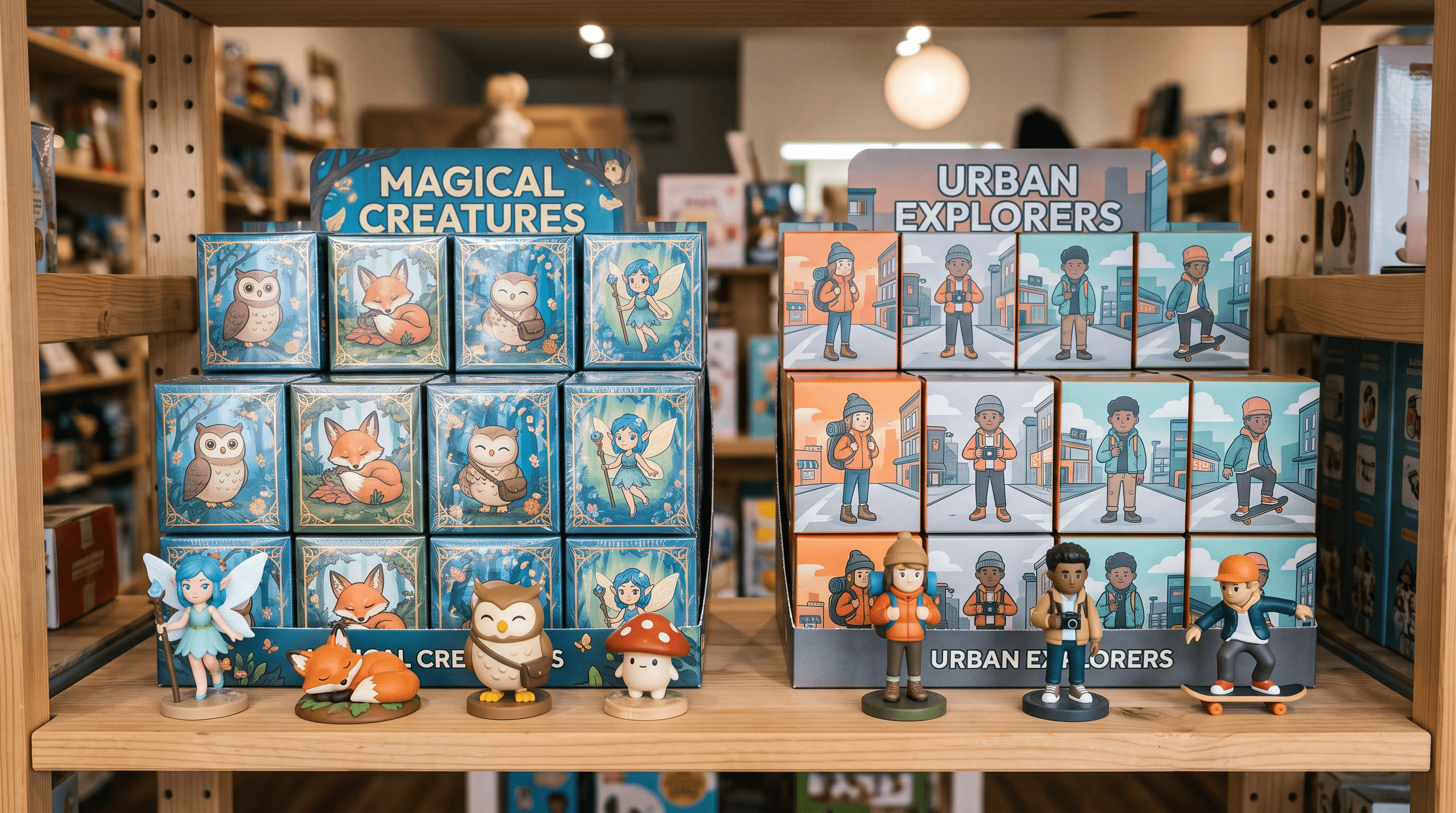
Blind box buyers often judge the product before opening it. A crushed box, weak seal, faded print, or dirty carton can reduce customer trust even if the figure inside is undamaged. For Labubu series, packaging condition should be treated as a buying specification, not an afterthought.
Ask the supplier how individual boxes are protected inside the master carton and whether additional outer packing is used for courier or freight movement. If the shipment will be resold online, packaging photos may be needed for listing accuracy and customer service preparation.
Consider setting a simple receiving inspection process:
- Check outer cartons for water marks, compression, punctures, and retaping.
- Open a sample carton and photograph the packing layout before removing units.
- Inspect a sample of individual boxes for crushed corners, loose seals, and visible surface damage.
- Separate damaged retail boxes from display-ready inventory.
- Document shortages or damage immediately according to the supplier’s claim process.
Packaging expectations should be agreed before payment where possible. A supplier may not treat minor box wear as a claim unless the buyer defines what is unacceptable for retail resale.
Setting reorder triggers before demand outruns replenishment
Trending collectibles can move unevenly. A series may sell slowly for several days, then accelerate after local customers post pulls, short videos, or restock alerts. Retailers should plan reorder triggers before the first shipment arrives.
A useful planning rule is to track three signals separately:
- Sell-through speed: How many boxes sell per week by series?
- Customer requests: Are customers asking for a specific series, sealed case, or restock date?
- Remaining display depth: Does the shelf still look full enough to attract impulse buyers?
As a planning reference, an online seller may set a reorder review when roughly half of the first test batch has sold, while a physical shop may reorder earlier if the display looks empty. These are not universal thresholds; they simply force the buyer to review demand before the last few units are gone.
Freight timing also matters. A cheaper shipping method may protect margin but arrive too late for a promotion, weekend event, or social media campaign. A faster method may make sense for a trend-driven launch, but only if the landed cost still supports your retail price. Always compare landed cost per sellable unit, not only product cost per box.
Red flags when sourcing trending Labubu series
Popularity can attract unclear listings and rushed buying decisions. Retailers should slow down when a quote is missing basic information or when a supplier pushes urgency without documentation.
- Unclear series description: The quote does not clearly state Have a Seat, Big Into Energy, product format, or packaging condition.
- No case information: The seller cannot explain case quantity, individual box status, or whether inventory is sealed.
- Only edited promotional images: There are no actual carton or packaging photos for the goods being supplied.
- Нереальная уверенность: The supplier promises outcomes such as guaranteed pulls, guaranteed resale margin, or guaranteed customs clearance without evidence.
- Vague damage policy: There is no written process for shortages, crushed boxes, or shipment issues.
- Pressure to pay before confirming details: Urgency is used instead of documentation.
This does not mean every incomplete quote is suspicious. Some suppliers may simply need a clearer inquiry. But if basic answers remain vague after follow-up, the buyer should consider reducing order size, requesting more proof, or comparing alternative collectible lines such as the Echo Forest Whisper nature-themed guide for a different theme and risk profile.
A ready-to-send inquiry for Have a Seat and Big Into Energy quotes
Use one message for every supplier so the replies are easy to compare. Edit the bracketed details for your store.
Hello, we are comparing Labubu Have a Seat and Labubu Big Into Energy for retail resale in [destination market]. Please quote both series separately and confirm:
1. Exact product name, format, and packaging condition.
2. Whether units are sealed individual boxes, sealed cases, or mixed lots.
3. Case quantity, carton quantity, and carton dimensions.
4. Available order structure or MOQ for a first purchase.
5. Product cost, estimated freight options, and any extra charges we should consider.
6. Photos of actual boxes and cartons available for this quote.
7. Expected preparation time and shipping method options.
8. Damage, shortage, and claim process.
9. Labeling, barcode, age grading, or compliance information available for buyer review.Please also confirm whether the quote validity is limited and whether the goods can be reserved after payment.
Before you place the first order: Prepare this inquiry, request comparable answers for both series, and review landed cost per sellable box. If one quote is incomplete, do not compare it against a complete quote as if they carry the same risk. A disciplined first purchase gives you cleaner data for the next Labubu decision.
ЧАСТО ЗАДАВАЕМЫЕ ВОПРОСЫ
Should retailers stock Labubu Have a Seat or Big Into Energy first?
Retailers should choose based on customer fit, quote clarity, packaging condition, and reorder access. If local demand is unproven, a smaller test or balanced comparison may be safer than committing heavily to one series.
Is unit price enough to compare two Labubu blind box quotes?
No. Compare landed cost per sellable unit, including case quantity, carton packing, freight, potential duties or taxes, packaging damage risk, and any extra handling costs.
What should buyers confirm before paying for Labubu inventory?
Confirm exact series name, sealed status, case quantity, packaging condition, carton dimensions, payment terms, shipment method, damage policy, and any compliance or labeling details needed for your market.
Can a retailer mix Have a Seat and Big Into Energy in one launch?
Yes, if budget and shelf space allow. Mixing can reveal which series your customers prefer, but buyers should track sales separately so reorder decisions are based on real demand.
What is the biggest sourcing risk with trending blind boxes?
The biggest risk is acting on an incomplete quote. Missing details about authenticity, sealed status, case structure, packaging condition, or shipping terms can turn a low unit price into a poor retail buy.
Before you stock the first Labubu case
Have a Seat and Big Into Energy can both make sense for retailers, but the better choice depends on the store’s customer base, buying format, and tolerance for trend-driven inventory risk. Treat the decision as a sourcing comparison rather than a popularity contest.
Confirm specifications, compare landed cost, protect packaging quality, and set reorder rules before launch. A disciplined first order gives retailers better data, fewer surprises, and a clearer path toward the next Labubu blind box purchase.