


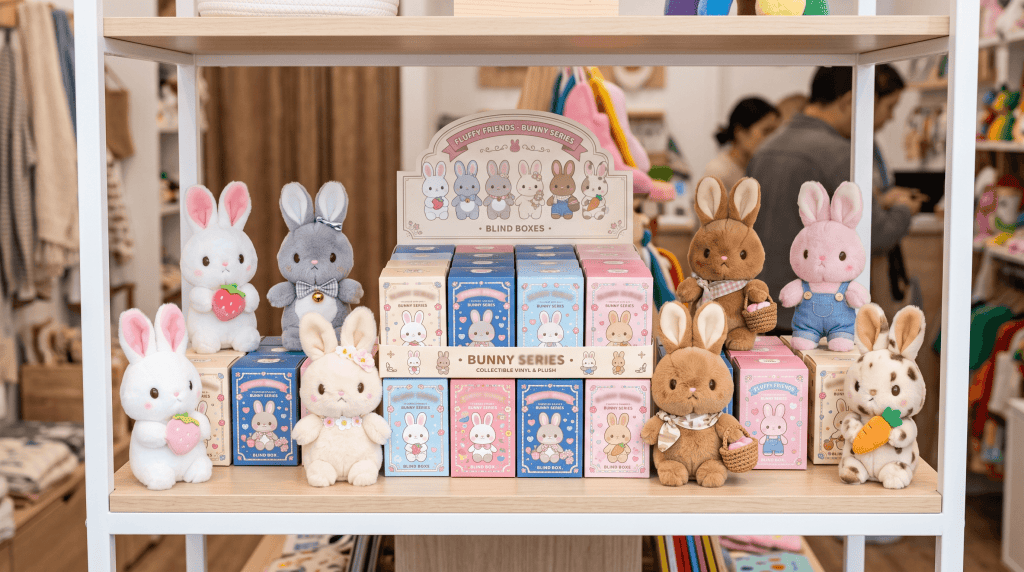
Cute product photos do not tell a buyer whether a collectible will arrive in saleable condition, fit the store’s price architecture, or create avoidable assortment risk. Judging the Bunny Alliance theme is the easy part; the harder work is confirming the exact product format, case configuration, packaging, landed cost, and reorder conditions before the LOVELY EMMA line ties up any inventory budget.
This guide provides a practical framework for gift shops, collectible retailers, online sellers, and multi-location buyers. Because specifications and commercial terms are not provided here, product details should be verified in writing with the supplier rather than inferred from images or series names.
Where the LOVELY EMMA Blind Box Fits on a Retail Shelf
The first decision is not how many units to buy. It is whether the series has a clear role in the assortment. A plush blind box may appeal to shoppers seeking a soft collectible, a small gift, or a character-led impulse purchase, but the intended merchandising position depends on its confirmed dimensions, construction, packaging, and price.
- Collectible and anime stores: compare the series with current character lines and identify whether it adds a different visual theme or merely duplicates existing stock.
- Gift and lifestyle shops: confirm whether the packaging looks complete and presentable when displayed as a single unopened gift.
- Интернет-магазины: plan how sealed individual boxes, complete sets, and opened-character listings would be handled without confusing customers.
- Pop-up sellers: check whether the display carton is durable enough for repeated setup, transport, and customer handling.
- Multi-store buyers: verify that a master case can be divided sensibly among locations without breaking any promised assortment structure.
If the store also carries figures or hybrid plush collectibles, review the differences between vinyl-face plush and standard plush formats. That distinction can affect shelf placement, customer expectations, perceived value, and inspection priorities.
Confirm the Bunny Alliance Format Before Comparing Quotes
A quote is useful only when it describes the same product configuration as competing quotes. Ask the supplier to identify the series version, material construction, dimensions, number of regular designs, whether a secret design exists, and how units are packed. Do not assume that a pictured assortment represents the guaranteed contents of every case.
| Item to verify | Question for the supplier | Why it changes the buying decision |
|---|---|---|
| Product construction | Is the item entirely textile plush, or does it include rigid components? | Construction affects handling, inspection, and customer expectations. |
| Finished dimensions | What are the approximate dimensions in the packed and unpacked states? | Buyers need this for shelf depth, photography, and freight estimates. |
| Series composition | How many regular designs are in the Bunny Alliance series? | The design count affects set-building and duplicate risk. |
| Hidden design | Is there a secret design, and how are its odds documented? | Retail descriptions should not promise unverified odds or contents. |
| Конфигурация корпуса | How many blind boxes are in a display case and master carton? | This determines order increments and store allocation. |
| Assortment status | Is the quotation for sealed series cases or mixed individual boxes? | The two formats create different duplicate and completeness risks. |
| Packaging condition | What carton protection and acceptable box-condition standard apply? | Dented retail boxes can reduce saleability even when the plush is intact. |
| Traceability | Which product identifiers or batch markings appear on the packaging? | Documented identifiers help with receiving and listing accuracy. |
The distinction between sealed cases and loose units deserves particular attention. Work through this guide to Наборы из серии «Sealed» против смешанных наборов в «слепых коробках» when deciding which format matches the store’s sales model.
How Case Quantity Changes Bunny Alliance Inventory Risk
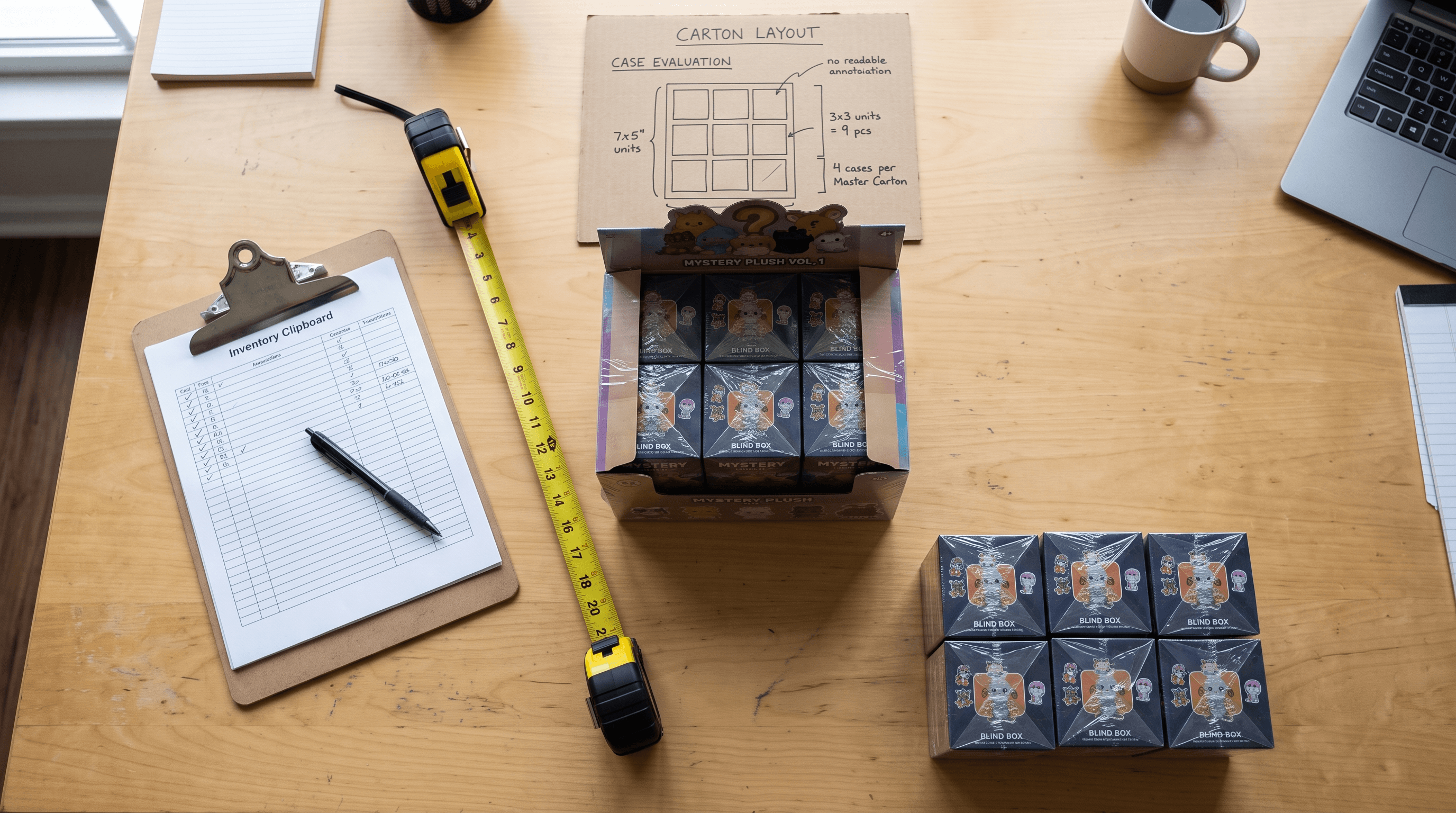
MOQ and case quantity are not interchangeable. A supplier may state a minimum order in units, display cases, master cartons, or total order value. Ask which measure applies and whether different series can be combined to reach the minimum. Also confirm whether ordering loose units changes the assortment or packaging condition.
Use a store-level allocation exercise before requesting a final quantity. For example, a buyer planning 24 units across three locations may allocate eight units per store as a planning reference. The buyer should then compare that plan with the actual display-case quantity. If a sealed case contains a different number, splitting it could remove the benefit of a sealed assortment.
For an initial test, define a review point rather than ordering solely on enthusiasm. A retailer might review sales after a clearly labeled example threshold, such as half of the test quantity sold, and record which store, channel, or display position performed best. This is planning logic, not a claim about the product’s actual MOQ or sales rate.
Calculate the Cost of a Saleable Plush Unit
The lowest quoted unit price may not produce the lowest usable cost. Compare quotes at the same trade term, currency, case configuration, and product specification. Then estimate landed cost using the product charge, packaging or handling fees, freight, insurance where applicable, import charges, payment costs, and local delivery. Buyers should verify customs classifications, duties, and taxes for their destination market.
It is also useful to distinguish landed units from saleable units. If outer boxes arrive crushed or units are missing, the cost is spread across fewer products. An internal planning formula can be written as: total landed order cost divided by the number of saleable units received. Use an estimated damage allowance only for scenario planning; replace it with actual receiving data after the first order.
Before asking a supplier to beat another price, send the same specification sheet to each source. A slightly higher quote may be more commercially useful if it clearly documents sealed-case status, carton dimensions, packing quantities, and issue-resolution procedures. Buyers comparing this line with other character assortments can also use the Cupa retail buyer guide to build a consistent evaluation process.
Before you send anything out: prepare one comparison sheet for every LOVELY EMMA quote so unit cost, case format, freight basis, and packaging assumptions can be reviewed side by side.
Protect Plush and Retail Boxes During Transit
Soft contents do not eliminate transit risk. The plush may tolerate minor pressure while the blind box, display tray, or master carton does not. Ask how retail boxes are arranged, whether empty space is controlled, and whether the supplier can provide current packing photos for the quoted configuration. Avoid treating sample packaging as proof that every production shipment will be packed identically.
Build a receiving check that separates product condition from packaging condition:
- Count master cartons and note visible exterior damage before opening.
- Confirm display cases and individual units against the packing list.
- Photograph carton labels, seals, dents, moisture marks, or compression.
- Sample units from different carton positions rather than only the top layer.
- Check seams, attachments, surface cleanliness, odor, and consistency against the approved reference.
- Record affected quantities before discussing replacements, credits, or other remedies.
Compliance should be handled separately from visual quality. Buyers should request the available product, material, labeling, and testing documentation, then verify which requirements apply to the intended age grading and destination market. Do not publish safety, age, authenticity, or certification claims that have not been supported by appropriate documentation.
Plan Reorders Before the First Display Case Sells Out
Lead time should be broken into stages: supplier confirmation, order preparation, carrier handoff, international transit if applicable, customs clearance, and local delivery. Ask which stages are estimates and what event starts the quoted timeline. A statement such as “ready in several days” is incomplete unless the buyer knows whether it refers to stock confirmation, packing, or dispatch.
Set a reorder trigger using sales velocity and replenishment time. For example, if a store uses a four-week planning horizon, it may review remaining stock when several weeks of average sales remain rather than waiting for the last unit. This is an example framework only; the actual trigger should include demand variability, freight method, and any supplier order increment.
Retailers should also decide whether a second order must match the first batch exactly. Ask how series version, packaging updates, product identifiers, and case configuration will be confirmed on a reorder.
When a LOVELY EMMA Quote Is Not Yet Comparable
Pause the comparison when a quote omits the series version, unit count, trade basis, carton information, or assortment status. Other warning signs include pressure to pay before specifications are documented, refusal to clarify whether cases are sealed, inconsistent product photos, and vague answers about damaged or missing units. None proves a problem alone, but each requires clarification.
Use this inquiry checklist:
- Exact LOVELY EMMA Bunny Alliance product name and version
- Product construction, dimensions, and included components
- Regular design count and documented secret-design information, if applicable
- Units per display case and display cases per master carton
- Sealed-case or mixed-unit status
- MOQ basis and permitted order increments
- Unit price, currency, trade term, and quote validity
- Packed carton dimensions and gross weight
- Estimated preparation timeline and shipping options
- Packaging photos and process for reporting shortages or damage
- Available labeling, material, and compliance documentation
Please quote the LOVELY EMMA Bunny Alliance plush blind box in the specified case configuration. Confirm the exact version, construction, dimensions, assortment structure, units per case, MOQ basis, currency, trade term, carton measurements, estimated preparation stage, and available product documentation. Please also state whether the cases are sealed and explain the procedure for reporting shortages or transit damage.
Merchandise planners weighing alternatives in the same impulse-gift space may also review this small-gift format comparison before assigning the entire budget to one collectible format.
Before placing an order, request a written quote using the checklist above and resolve every blank field. A documented, comparable quotation is the most useful next step toward choosing the right quantity and shipping plan.
ЧАСТО ЗАДАВАЕМЫЕ ВОПРОСЫ
Is the LOVELY EMMA Bunny Alliance assortment guaranteed in every case?
Do not assume a guaranteed assortment. Ask whether the quotation covers a sealed series case, how regular designs are packed, and whether any secret design changes the stated assortment.
What MOQ should a retailer expect for this plush blind box?
No exact MOQ is provided here. Confirm whether the supplier’s minimum is measured by individual units, display cases, master cartons, or total order value, and ask whether mixed series are permitted.
Should retailers buy sealed cases or individual blind boxes?
Sealed cases may offer clearer assortment control, while individual boxes can support a smaller test. The right choice depends on case quantity, duplicate risk, store allocation, and whether loose units retain saleable packaging.
What should be included in a LOVELY EMMA blind box quote?
A useful quote should identify the exact version, construction, dimensions, case quantities, assortment status, MOQ basis, price terms, carton measurements, preparation estimate, and available documentation.
How should buyers inspect a plush blind box shipment?
Count cartons, compare quantities with the packing list, photograph damage, sample units from different carton positions, and record both retail-box condition and product defects before submitting a claim.
Before You Add Bunny Alliance to the Range
Treat the series as an inventory decision rather than a visual impulse purchase. Confirm the product and assortment, model the cost per saleable unit, match case quantities to store demand, and document packaging and compliance questions. Those steps give buyers a stronger basis for requesting a quote and deciding whether the LOVELY EMMA line belongs in the next buying cycle.