



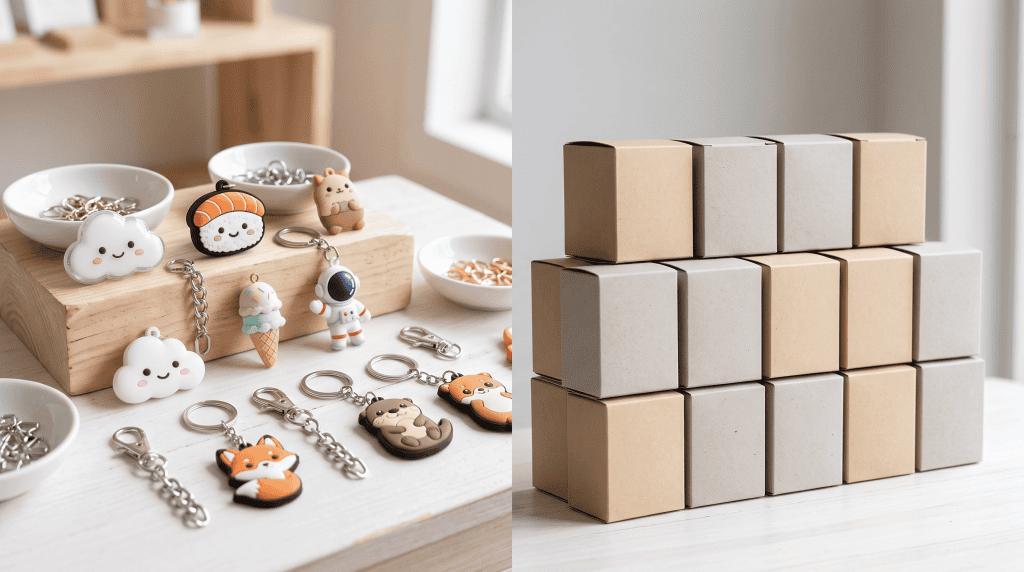
Two small-format gifts can look equally attractive in a supplier’s photos and still perform very differently on your shelf. When you weigh a fridge magnet against a bag charm, the decision hinges on where the customer uses the item, how they inspect it after opening the box, and whether the attachment hardware and packaging survive normal handling. Getting this wrong means an appealing unit quote can quietly turn into returns and dead stock.
Fridge magnets deliver a simple home-display use case, while bag charms turn the collectible into a visible personal accessory. Neither format is automatically the stronger choice. The right decision depends on your store’s audience, merchandising space, selling season, target retail price, and tolerance for component-related returns.
Which Accessory Fits Your Store and Customer?
Start with the purchase occasion rather than the artwork. A stationery or home-gift retailer may find fridge magnets easy to explain and display. Fashion-accessory, anime, campus, and lifestyle stores may see more customer interest in bag charms because buyers can attach them to backpacks, handbags, pouches, or key loops.
- Home and souvenir shops: Consider magnets when customers want compact, packable gifts with an obvious display function.
- Магазины аниме и коллекционных товаров: Compare character strength first. Either format can work if the design supports repeat purchases and series completion.
- Fashion and campus retailers: Bag charms may suit customers who want to personalize items they already carry.
- Bookstores and stationery shops: Test whether the accessory can be merchandised near journals, pencil cases, gift wrap, or checkout displays.
- Интернет-продавцы: Review packed dimensions, parcel protection, product photography needs, and the likelihood of customers misunderstanding scale.
Полезный вопрос со стороны покупателя: Will customers understand the item’s function and size within a few seconds? If not, you may need an opened display sample or a clear size reference placed near the sealed boxes.
Eight Buying Factors That Separate Magnets From Charms
Use the following table to turn a visual preference into a commercial comparison. Ask suppliers to confirm each point for the specific series under review; do not assume every magnet or charm uses the same materials or construction.
| Buying factor | Fridge magnet | Bag charm | Действия покупателя |
|---|---|---|---|
| Primary use | Display on a compatible magnetic surface | Attachment to bags, pouches, or loops | Match the use case to the store’s customer profile |
| Component risk | Magnet may loosen, shift, or be too weak for the item’s weight | Clasp, ring, chain, or cord may open or detach | Request construction details and inspect samples |
| Customer visibility | Mainly viewed at home or work | Potentially carried and seen in public | Decide whether display or wearable personalization drives demand |
| Packaging pressure | Surface finish and protruding parts need protection | Hardware can rub against the collectible or box interior | Check inner trays, sleeves, or component separation |
| Merchandising | Works near home gifts, souvenirs, and checkout areas | Works near bags, accessories, and character goods | Plan shelf placement before ordering |
| Shipping profile | Weight varies with magnet and decorative material | Hardware can add weight and irregular bulk | Compare packed carton data, not item photos |
| Post-opening inspection | Check hold, alignment, finish, and attachment | Check clasp operation, connection points, and finish | Create format-specific receiving checks |
| Repeat-purchase logic | Customers may build a display collection | Customers may rotate charms across bags or collect characters | Review character assortment and duplicate tolerance |
If you are evaluating other hybrid collectible formats, the same decision principles apply to vinyl-face plush versus standard plush blind boxes. The specific quality checks differ, but the central question remains the same: does the format fit the customer’s intended use?
Specifications That Decide Whether a Magnet or Charm Is Retail-Ready
“Magnet” and “bag charm” are not sufficient quote specifications. Two products with similar artwork may differ in size, weight, substrate, surface treatment, attachment method, box construction, and assortment configuration.
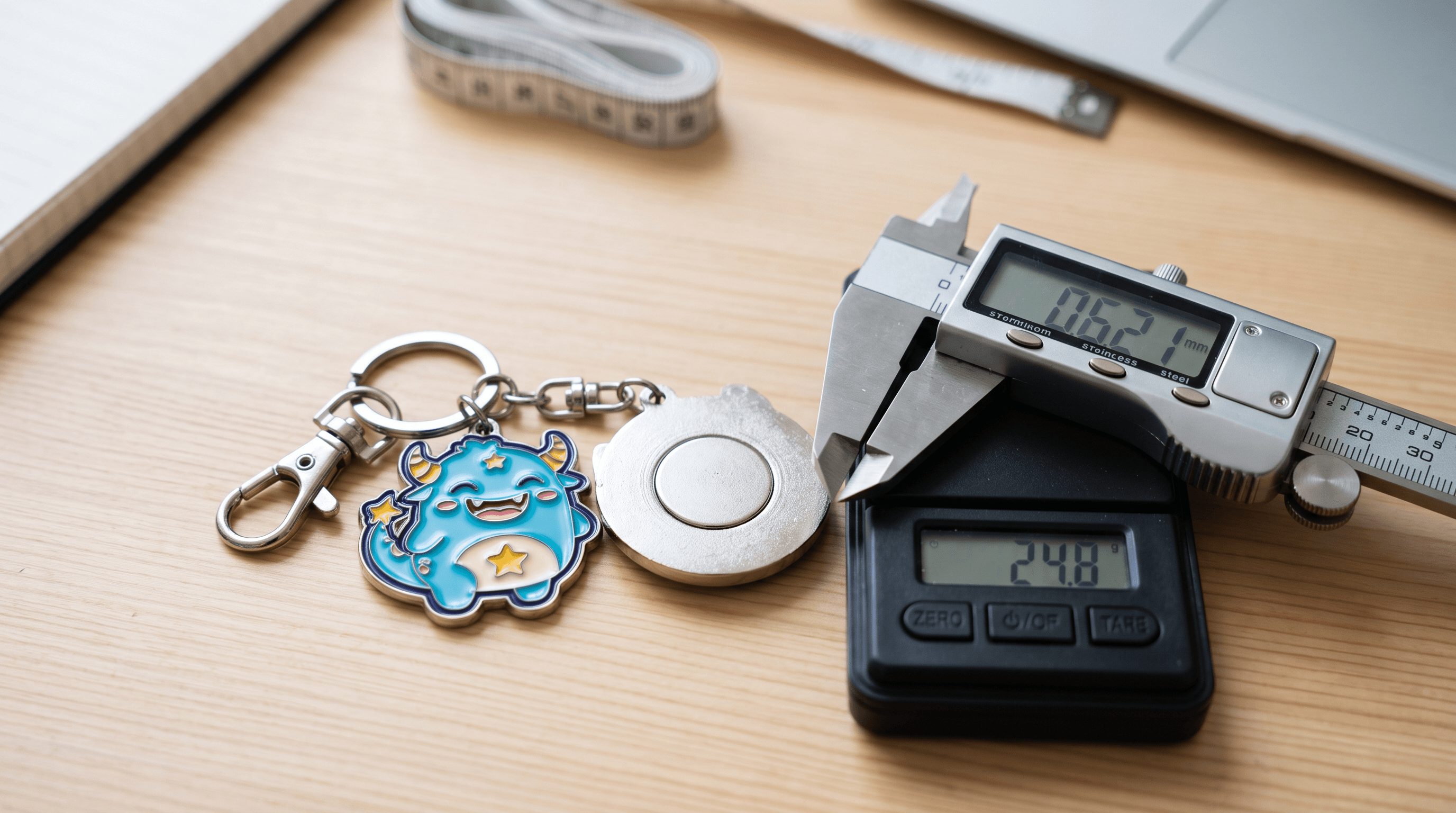
Ask the supplier to document the following before comparing offers:
- Finished item dimensions and approximate unit weight
- Main decorative material and surface finish
- Magnet placement and attachment method, where applicable
- Charm hardware type, color, connection points, and opening mechanism
- Individual box dimensions and packed unit weight
- Number of regular designs and whether secret designs are part of the series
- Assortment method for a sealed case and whether duplicates are possible
- Inner protection, such as a bag, tray, card, or protective film
- Outer-carton quantity, dimensions, and gross weight
For magnets, ask whether the sample holds securely on a representative compatible surface without sliding under its own weight. For charms, open and close the clasp repeatedly during sample review and apply light, reasonable handling pressure at each connection point. These checks do not replace formal testing, but they can reveal obvious design or assembly concerns before a larger order.
If character presentation is central to the purchase, the Руководство для покупателей «Cupa Blind Box» shows how to evaluate series identity, assortment, and retail positioning rather than buying from character images alone.
How Case Packs Can Change the Safer First-Order Choice
MOQ and case configuration can matter more than the nominal unit price. Request the MOQ by SKU or series, units per inner display, displays per carton, and rules for mixing formats. A low-looking MOQ may still create excess exposure if it must be purchased separately for every design or carton type.
As a planning example, a retailer considering 60 units might compare a 30-magnet and 30-charm test against a single-format order of 60 units. The mixed test provides format-level demand data, but only if the supplier permits that split and the case quantities support it. This is a planning illustration, not a suggested supplier MOQ.
Also confirm how sealed assortments are built. Ask whether a case contains a stated set, a random mix, or multiple display boxes. Do not advertise a no-duplicate case or a guaranteed secret design unless the supplier has explicitly documented that configuration.
A simple first-order scorecard can track:
- Units sold by format each week
- Full-price sell-through rather than discounted sales
- Customer requests for specific characters
- Damage, missing-component, or weak-attachment complaints
- Sales by location, channel, and merchandising position
If you are still building the broader character-gift assortment, review how an occasion-driven product is assessed in the good-luck gift product guide. It can help you separate general collectible demand from demand tied to a specific gifting message.
Before you commit to one format, request comparable samples and carton specifications for both. A small amount of structured evaluation prevents an attractive unit quote from hiding poor assortment or packaging fit.
Why the Cheapest Unit Quote May Produce the Higher Landed Cost
Compare the cost of getting a sellable unit into inventory, not just the quoted product price. Fridge magnets may be compact but can carry meaningful weight depending on construction. Bag charms may be lighter or heavier, while their hardware and protective packaging can increase carton volume.
Build a landed-cost worksheet with separate lines for product cost, sample cost, packaging changes, freight, insurance where applicable, customs-related charges, duties or taxes, payment fees, inspection, local delivery, and a reasonable allowance for damaged or unsellable units. Verify tariff classification and import requirements for your destination market with appropriate advisers or authorities.
Quotes are not comparable until they use the same specification and trade basis. Ask whether freight is included, which destination is covered, what carton data the estimate uses, and which charges remain payable by you. A lower unit price based on different packaging, hardware, or assortment terms is not a like-for-like offer.
Connect freight planning to the reorder point
Ask for production lead-time guidance, shipment preparation time, and carton measurements before finalizing the launch calendar. Treat every timing statement as an estimate until confirmed for the actual order.
As a planning reference, a retailer might review reordering when roughly 40% of test inventory remains rather than waiting for a stockout. The appropriate trigger depends on actual sales velocity, supplier lead time, transit method, seasonal demand, and available cash. Record the date of each milestone so the second order is based on evidence rather than memory.
Protect Decorative Surfaces and Small Components in Transit
Packaging has two jobs: preserve the blind-box reveal and deliver a product that still looks giftable. Decorative finishes can be scratched by loose hardware, while poorly restrained items may move inside the box and damage corners or internal components.
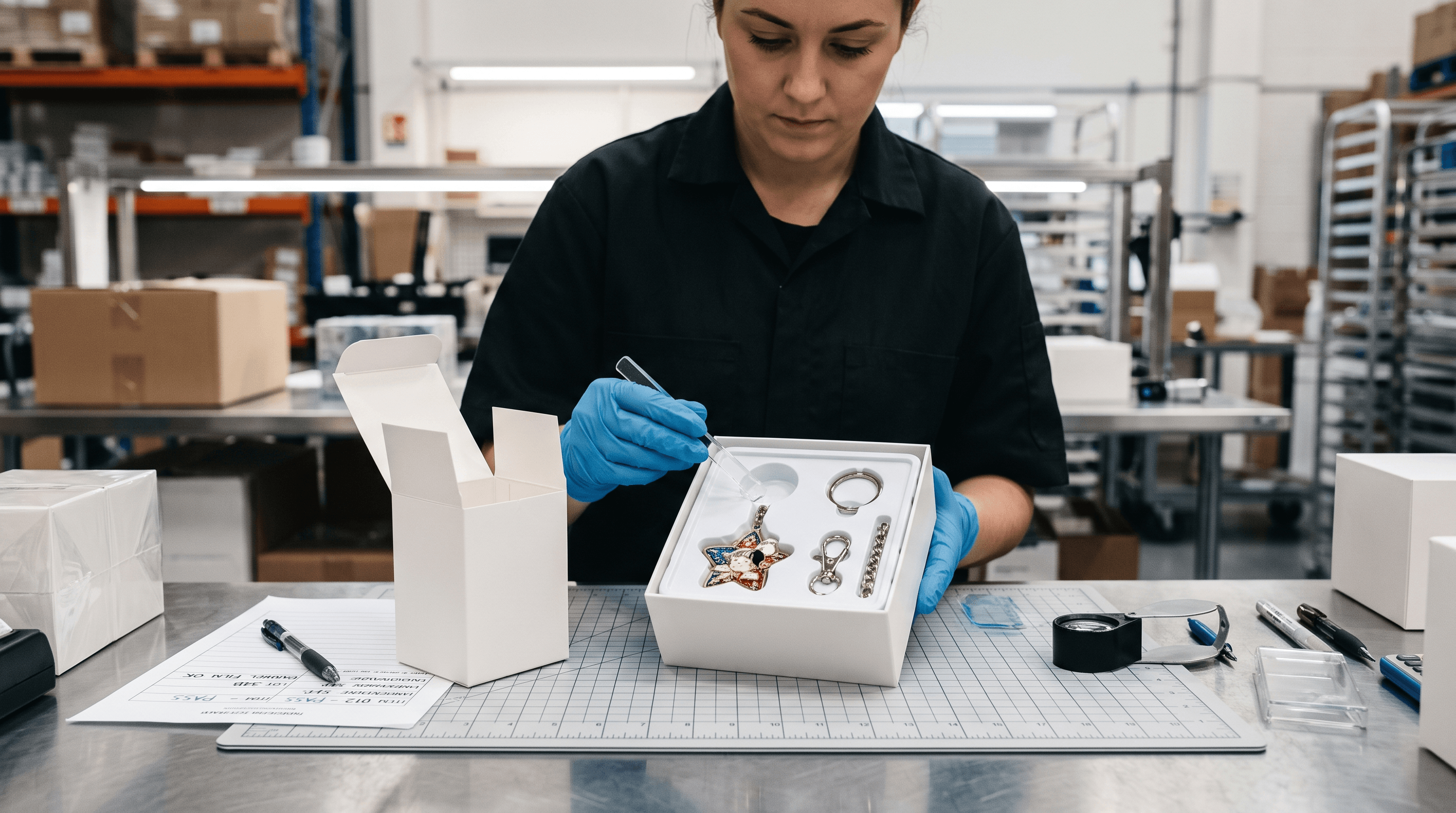
During sample and pre-shipment review, check:
- Whether the item moves excessively when the sealed box is gently handled
- Whether metal hardware touches painted or printed surfaces
- Whether protective film leaves residue or damages the finish
- Whether the outer box crushes easily under normal carton stacking pressure
- Whether the item, accessories, and inserts match the approved specification
- Whether barcodes, warnings, age grading, importer information, and language elements meet the intended market’s requirements
Magnets, small hardware, cords, chains, and detachable components may raise safety, labeling, or age-grading considerations. Requirements vary by product construction and destination. Obtain material and product information from the supplier, identify applicable rules, and arrange appropriate professional review or testing rather than relying on a general compliance statement.
When a Fridge Magnet or Bag Charm Quote Is Not Yet Comparable
A vague quotation creates purchasing risk. Warning signs include missing carton data, unclear assortment terms, refusal to identify the hardware or main material, product photos that differ across documents, and pricing that changes when basic specifications are restated. Another common mistake is approving artwork while leaving attachment construction and packaging undefined.
Send the same request to each prospective supplier. A practical inquiry template is:
Please quote the selected blind box fridge magnet or bag charm series and confirm: item dimensions and weight; main materials and finish; magnet or charm hardware specification; regular and secret design structure; MOQ; units per display and carton; assortment and duplicate rules; individual and master-carton dimensions; gross carton weight; packaging protection; sample availability and terms; estimated production timing after approval; quotation validity; trade terms; and available product or material documentation. Please identify any specification that remains provisional.
Before approving an order, make sure the pro forma invoice or purchase document matches the agreed format, quantity, packaging, assortment, shipping basis, and version of the sample. Keep approved photos and written specifications together so receiving staff know what to inspect.
Ready to compare stock options? Prepare your expected order quantity, destination, preferred format, target selling window, and required packaging information before requesting a quote. Ask for both unit-level and carton-level details so fridge magnets and bag charms can be evaluated on the same commercial basis.
ЧАСТО ЗАДАВАЕМЫЕ ВОПРОСЫ
Are fridge magnets or bag charms better for a first blind box order?
Neither is universally better. Fridge magnets may fit home-gift and souvenir settings, while bag charms may suit fashion, anime, and campus customers. A mixed test can provide useful evidence if supplier MOQ and case-pack rules allow it.
What should retailers ask about a blind box magnet?
Ask about dimensions, weight, magnet placement, attachment method, surface finish, packaging protection, assortment structure, and carton data. Review a sample on a representative compatible surface before committing to a larger quantity.
Which bag charm components need the closest inspection?
Inspect the clasp, ring, chain or cord, connecting hardware, and attachment point on the decorative item. Confirm that metal components do not rub against or damage the collectible during transit.
How should buyers compare wholesale quotes for these accessories?
Use the same specification, quantity, assortment, packaging, destination, and trade basis for every quote. Compare estimated landed cost per sellable unit rather than the quoted product price alone.
What compliance information should retailers request?
Request available material, construction, labeling, age-grading, and product documentation relevant to the item. Buyers should independently verify the safety, import, customs, and labeling requirements that apply in the destination market.
Choose the Format With the Clearest Retail Role
Fridge magnets are strongest when the customer values compact home display, while bag charms are compelling when visible personalization supports the purchase. Make the decision using samples, case configuration, packed freight data, component checks, and evidence from a controlled test order. The better product is the one whose use case, landed cost, and reorder profile fit your actual customers—not simply the format with the lowest initial quote.