






For years, the Art Toy industry was confined to two highly specific retail spaces: the glass cabinets of hardcore “Otaku” anime stores, and the office desks of young corporate professionals (the “Deskterior” trend). However, as we move through 2026, the ceiling on the target demographic has been shattered. Designer Art Toys have officially entered the living room.
Driven by the global rejection of the sterile “Sad Beige” minimalist aesthetic, homeowners are embracing “Dopamine Decor” and curated maximalism. They are replacing traditional, boring ceramic vases and generic framed prints with high-end, colorful, story-driven vinyl and plush figures. This represents a seismic shift for toy retailers.
For independent lifestyle boutiques, homeware stores, and traditional toy retailers sourcing wholesale from KidultsBox, cross-merchandising blind boxes as Premium Interior Decor is the ultimate strategy to capture the lucrative 30-to-45-year-old homeowner demographic. This whitepaper decodes the interior design psychology, the room-by-room curation matrix, and the specific B2B sales tactics needed to elevate your inventory from “toys” to “art pieces.”
1. The End of “Sad Beige”: The Psychology of Home Display
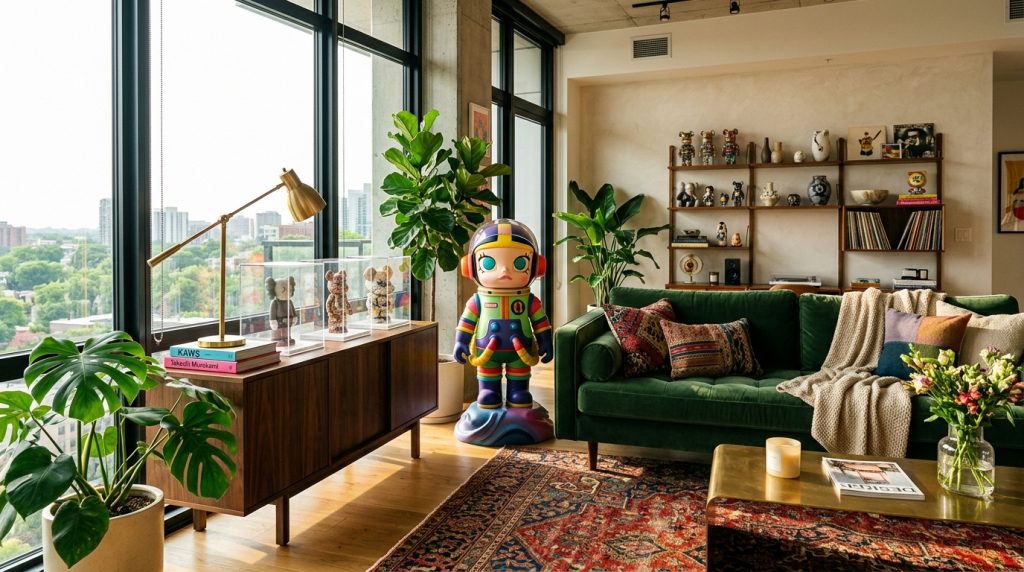
To sell a $20 Слепая коробка Pop Mart or a $1,500 1000% MEGA figure to a homeowner, you must understand the psychological shift in modern interior design.
The Shift to “Curated Personality”
In the 2010s, the ideal home looked like a sterile, beige hotel room. In the 2020s, a home that lacks personality is viewed as cold and uninviting. Homeowners today want their living spaces to act as physical mood boards of their interests, travels, and humor.
The Art Toy Advantage: Traditional art (paintings, bronze sculptures) is expensive and often feels intimidating or pretentious. Art Toys (like the melancholic ShinWoo Призрачные медведи or the peaceful Nanci figures) provide high-quality sculptural aesthetics at an accessible price point, while injecting a vital element of playfulness and cultural relevance into a room.
2. Repositioning the Product: Linguistic Retail Strategy
If you market your store as a “Toy Shop,” you instantly alienate the affluent home-goods buyer. Adults do not want to decorate their $5,000 mid-century modern credenza with “toys.” You must fundamentally alter your merchandising vocabulary.
- Stop saying “Plastic Toys.” Start saying “Designer Vinyl Sculptures.”
- Stop saying “Plushies.” Start saying “Textile Art Companions” или “Soft-Touch Decor.”
- Stop saying “Action Figures.” Start saying “Articulated BJD Display Pieces.”
By elevating the language, you elevate the perceived value, perfectly positioning your KidultsBox wholesale inventory alongside high-end candles, coffee table books, and indoor plants.
3. The Room-by-Room Merchandising Matrix
To successfully sell art toys as home decor, you must show the customer where the item lives in their house. Create in-store or website “vignettes” (mini-room setups) using this matrix.
| The Room | The Decor Vibe | Recommended Wholesale IPs | Merchandising Strategy |
|---|---|---|---|
| The Living Room (The Centerpiece) | Status, Conversation Starters, “Hype” Culture. | 1000% & 400% Pop Mart MEGA Space Molly, Large Лабубу vinyls. | These are floor-standing or coffee-table pieces. Display them next to a stack of art books or next to a high-end speaker system. |
| The Kitchen & Coffee Bar | Warm, Functional, Cozy, “Foodie” Aesthetic. | Lulu The Piggy, Baby Three Macaron Series, Dimoo Coffee/Bakery. | Place an unboxed figure directly on top of an espresso machine or clipping a plush magnet to a retro SMEG fridge. |
| The Bedroom & Nightstand | Calm, Healing, Pastel, Dreamy. | Rolife Nanci (Sleeping figures), Cino Dreamland Circus. | Market these as “Nightstand Guardians.” Display them next to a warm, dimmable LED lamp and a sleep-mask. |
| The Bookshelf (Dark Academia) | Intellectual, Moody, Goth-Lite, Curated. | Penny’s Box Antediluvian (BJD), ShinWoo, Hirono. | Use these as dynamic “bookends.” Pose an articulated BJD sitting on the edge of a stack of classic hardcover books. |
4. Cross-Merchandising for Homeware & Lifestyle Boutiques
If you run a store that primarily sells home goods (plants, ceramics, candles), adding blind boxes to your inventory is the ultimate margin booster. You do not need to build a “Toy Aisle.” You integrate them directly into your existing displays.
The “Plant Shop” Crossover Strategy:
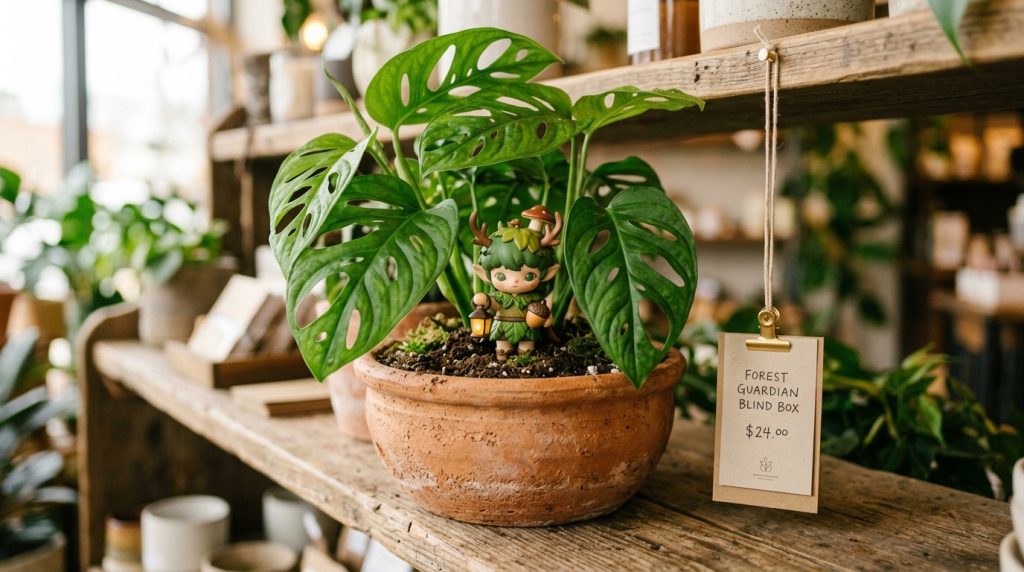
If you sell indoor house plants (Monstera, Pothos), your customers are already obsessed with aesthetics. Source the Серия «Киммон Флауэр» or Pop Mart’s nature-themed lines.
The Execution: Nestle an open blind box figure into the soil of a potted plant display. When the customer comes to the register to buy the $40 plant, you say: “Would you like to add the little vinyl Forest Elf companion? It looks so cute under the leaves!” You have just instantly increased your AOV (Average Order Value) by $15 with zero friction.
5. The Dust Dilemma: Selling the “Display Accessory” Economy
The number one objection from homeowners regarding displaying toys is: “They will get dusty, and I hate dusting.”
As a savvy retailer, this is not an objection; it is a cross-selling opportunity. You must build an ecosystem around your blind boxes by stocking premium display accessories. When you buy your wholesale toys from KidultsBox, ensure you are also sourcing acrylic solutions.
- The Museum Cube: Sell high-quality, UV-protected clear acrylic cubes. Place the toy inside. It elevates the toy into a museum piece and completely solves the dust problem. (Wholesale cost: ~$2. Retail: $10).
- LED Display Steps: Sell USB-powered, backlit acrylic stairs that fit inside Ikea DETOLF or Billy bookcases. Homeowners love “plug-and-play” lighting solutions that make their collection glow at night without requiring an electrician.
- Nano-Tape (No Damage): Keep rolls of double-sided, traceless acrylic tape at the register. Assure homeowners: “Use a tiny square of this to stick the figure to your dashboard or bookshelf. It holds it secure if someone bumps it, but peels off with zero sticky residue or damage to your furniture.”
6. B2B Strategy: Partnering with Interior Designers
This is the ultimate, untapped “Blue Ocean” strategy for large-scale toy retailers. Do not just wait for retail customers to walk in. Go to the source of home decor.
Modern interior designers and home stagers are constantly looking for unique, pop-culture items to make their clients’ modern apartments or real estate staging photos look “lived-in” and trendy.
The Outreach Plan: Create a digital catalog or PDF lookbook featuring your highest-end KidultsBox inventory (1000% figures, intricate BJDs, elegant series like Nanci). Email local interior design firms and high-end real estate stagers. Offer them a “Trade Discount” (15% to 20% off retail). When an interior designer buys a massive $1,500 Bearbrick or MEGA Molly from your store to stage a luxury condo, they often expense it to the client, and you just secured a massive, effortless B2B sale.
7. Marketing the Aesthetic: Pinterest and Architectural Digest
If you want to sell to home decorators, you must market where they live online. Stop relying solely on TikTok unboxing videos. You must transition to Pinterest and high-end Instagram lifestyle photography.
- Lighting is Everything: Do not photograph the blind boxes under harsh, white ring lights. Photograph them in natural, golden-hour sunlight casting long shadows across a marble kitchen counter or an oak coffee table.
- SEO Keywords for Home Decor: When tagging your products online, use interior design keywords. Instead of just tagging #BlindBox, tag #DopamineDecor, #EclecticHome, #BookshelfStyling, #MidCenturyModern, и #ApartmentTherapy.
- The “Before and After”: Post photos of a boring, empty shelf (The Before). Then post a photo of that same shelf beautifully curated with books, plants, and a vibrant row of designer art toys (The After). The contrast sells the product instantly.
Часто задаваемые вопросы (FAQ)
Q: Will home decor customers buy a “Blind” box if they don’t know what color matches their room?
A: This is a great point. Serious interior decorators hate randomness. For the home goods market, you MUST offer “Confirmed” (Opened) figures. Open the blind boxes, place them in clear acrylic cases, and sell them individually so the customer can pick the exact colorway (e.g., Pastel Pink vs. Monochome Black) that perfectly matches their living room palette.
Q: Do plush toys like Baby Three sell well for home decor?
A: Yes, but in specific zones. Plush blind boxes act as “Soft Decor.” They look incredible styled on a bedroom vanity, tossed on a decorative bed pillow setup, or hanging from a coat rack in the entryway. They add warmth and texture to a room that vinyl figures cannot provide.
Q: Are 1000% (Large) figures too expensive to stock for a small boutique?
A: They require capital, but they act as your store’s “Anchor.” You only need to stock one or two massive 1000% figures from KidultsBox. Place them in your storefront window. Even if it takes a month to sell to a wealthy homeowner, the figure serves as a free billboard that draws massive foot traffic into your store to buy the smaller $20 items.
Q: Can sunlight damage vinyl figures displayed in a home?
A: Yes. Prolonged exposure to direct UV sunlight will cause PVC and ABS plastics to yellow and fade over several months. You must act as an expert and advise your home-decor customers to place their expensive art toys in indirect light, or sell them UV-blocking acrylic display boxes to protect their investment.

