


Splitting a small buying budget across two collectible series can broaden a display or quietly spread your money across overlapping demand with no net gain. When you weigh HIRONO The Other One against Little Mischief, the decision should rest on who will buy each series, how the goods are packed, and what every saleable box actually costs to receive.
Neither series should win solely because of its name or a striking promotional image. Compare the actual lineup, documented packing terms, and real customer response before committing. This guide does not assume either series has a particular figure count, secret ratio, material specification, or current availability; confirm those details for the exact goods quoted.
Which Series Matches Your Customers’ Buying Occasion?
Start with the buying occasion. A collector-focused shop, a gift retailer, and a convention seller may need different assortments even when sourcing the same two series.
- Collector-focused stores: Ask customers which specific designs they want, and record requests separately for The Other One and Little Mischief. General interest in HIRONO does not establish demand for both.
- Сувенирные магазины: Compare how clearly each series communicates its character and mood through the closed retail box. Customers may buy without knowing the full lineup.
- Интернет-продавцы: Check whether accurate, permitted product imagery is available for each series and whether listings can explain random selection without implying a chosen figure.
- Convention booths: Evaluate display footprint, transport protection, and how quickly staff can explain the purchase format to passing traffic.
Use actual lineup images rather than interpreting “The Other One” as automatically suited to one audience or “Little Mischief” to another. If floor space is your main constraint, the guide to blind boxes for limited-space convention booths can help frame the display decision.
Compare The Other One and Little Mischief on the Same Evidence
Ask for separate specification sheets and quotations for each series. Promotional photography can support visual selection, but it cannot establish case contents, authenticity, or packing condition.
Use the table below as a two-column worksheet: enter the supplier’s answer for each series, then apply the decision rule. Treat unanswered fields as unresolved purchasing risks, not equivalent specifications.
| Comparison point | Evidence needed for each series | Buyer decision rule |
|---|---|---|
| Complete visual lineup | Current lineup image matched to the quoted edition | Assess appeal across regular designs, not only a highlighted figure. |
| Customer interest | Series-specific inquiries, reservations, or prior comparable sales | Give more weight to purchase intent than social engagement. |
| Retail format | Confirmation of sealed random boxes versus identified figures | Compare only equivalent selling formats. |
| Case composition | Units per display, displays per carton, and written assortment terms | Do not assume a sealed case completes the collection. |
| Figure specifications | Declared materials, dimensions, accessories, and intended age grading | Check shelf fit, handling needs, and destination requirements. |
| Состояние упаковки | Photos of retail boxes, seals, inner displays, and outer cartons | Separate gift-ready stock from any disclosed packaging-damaged goods. |
| Order commitment | MOQ by series and permission to mix cartons or displays | Favor a commitment that leaves room for testing and replenishment. |
| Replenishment terms | Availability basis, dispatch estimate, and repeat-order conditions | Do not build a continuing range around unconfirmed supply. |
For example, stronger interest in Little Mischief may justify making it the primary series, but only if its purchase commitment fits your budget. Conversely, The Other One may be the more manageable test if its verified packing terms allow a smaller exposure. These are decision scenarios, not claims about current supplier terms.
Test Both Lineups Before Splitting the Budget
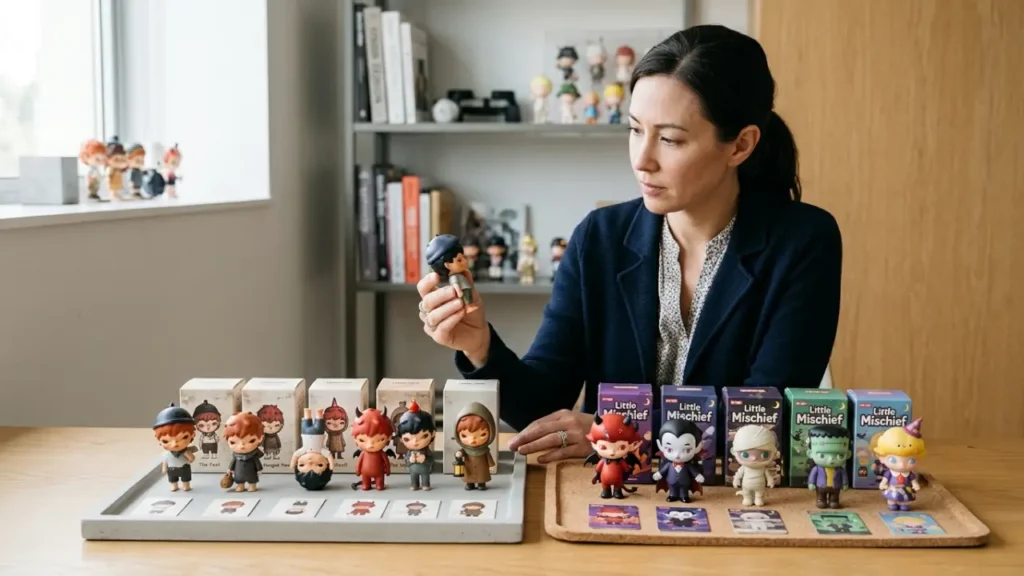
Show both full lineups under comparable conditions: similar image size, equal display space, and the same purchase explanation. Ask shoppers which series they would buy and which regular designs appeal to them. Interest concentrated on one featured design is weaker evidence for a random-box assortment than interest spread across the lineup.
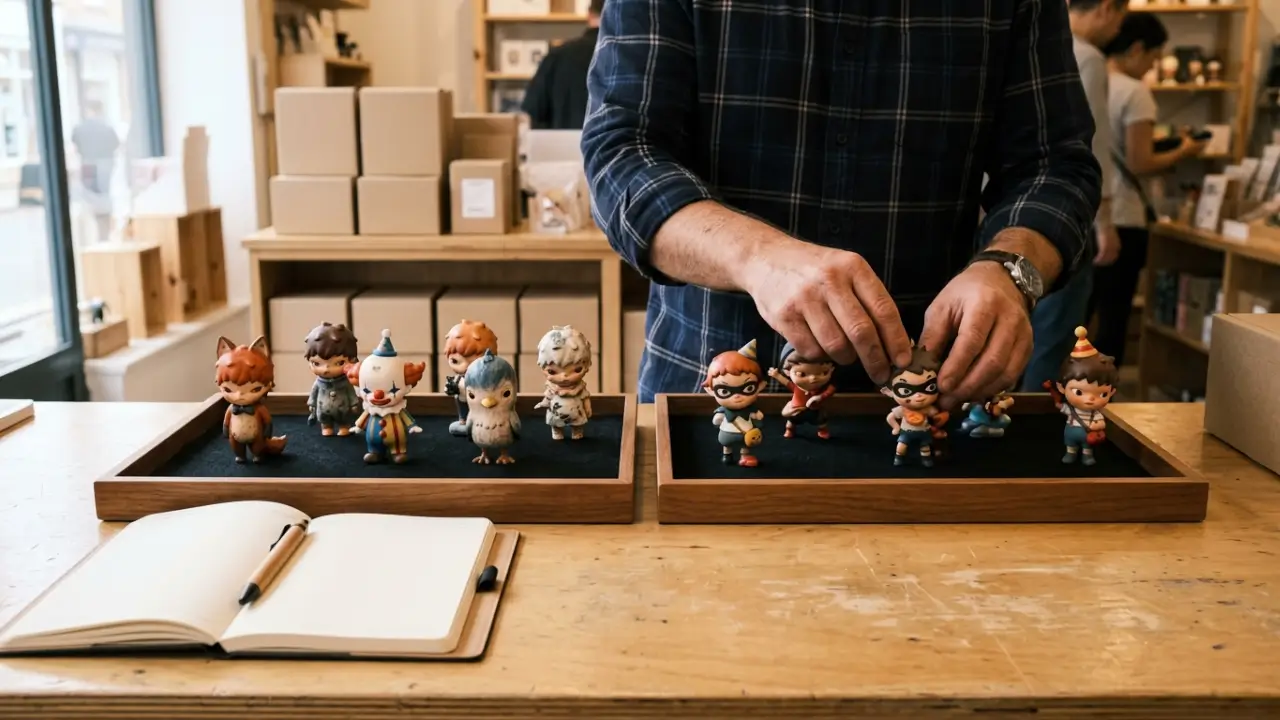
A collector may like one series more while still finding several possible outcomes disappointing. That matters because customers buying sealed boxes cannot necessarily select the figure pictured most prominently.
As a planning example only, a retailer might allocate two display units to the better-supported series and one to the challenger, provided the confirmed pack structure permits it. Treat that split as an illustration, not a recommended case quantity or supplier MOQ.
For a constrained opening budget, compare this approach with blind box selection for small stores with limited budgets. Preserve funds for freight, display samples, and a second purchase rather than spending everything on opening stock.
A useful next step: Ask your shortlisted supplier for both lineup sheets and a like-for-like quote before deciding the split. Missing pack information is a reason to pause, not to estimate.
Why a Sealed HIRONO Case Is Not Automatically a Complete Set
Words such as “case,” “display,” “set,” and “carton” can describe different quantities between suppliers. Require the seller to define each term and show the packing hierarchy on the quotation.
- How many sealed retail boxes are in one display?
- How many displays are in one shipping carton?
- Does the stated MOQ apply per series, per SKU, or across the whole order?
- Can The Other One and Little Mischief be combined without opening retail displays?
- What written terms describe duplicates and any special-figure substitution?
- Are any boxes opened, identified, resealed, or packaging-damaged?
Do not advertise “complete set” or “no duplicates” unless the exact format and supporting terms justify that statement. If special figures are part of the confirmed offering, ask how they affect regular-design completeness rather than assuming they are additional units.
Keep sealed retail inventory separate from inspection samples. An opened sample can support photography and checks, but should not later be sold as an untouched blind box.
Calculate What Each Saleable HIRONO Box Actually Costs
A lower unit quote can lose its advantage through larger cartons, a higher minimum commitment, or packaging damage. Compare The Other One and Little Mischief using the same delivery destination, currency, payment basis, and trade terms.
Формула планирования: Estimated saleable landed cost per box = total acquisition and inbound costs divided by expected saleable retail boxes. Include goods, freight, insurance where applicable, duties, nonrecoverable taxes, clearance, and local handling. Confirm tax treatment with your own adviser.
Document assumptions separately from confirmed charges. If the final carton dimensions and gross weights are unavailable, treat the freight figure as provisional. Do not use the ordered quantity as the saleable denominator if you plan to open some boxes for samples.
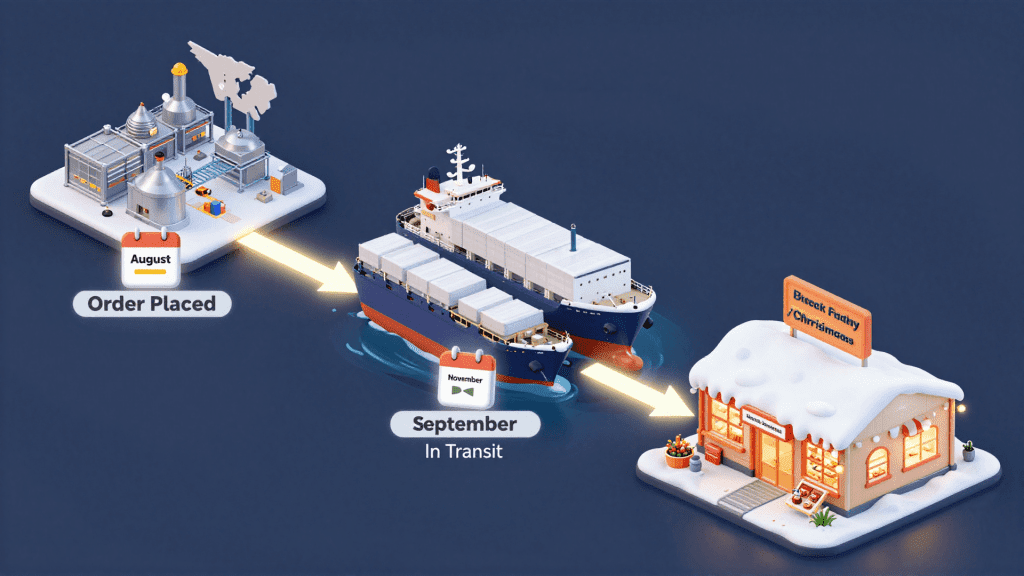
Also separate availability confirmation, dispatch preparation, transit, and customs clearance in your timeline. A dispatch estimate is not an arrival promise. For an event, work backward from the date you need inspected inventory on hand.
Track sales by series after launch. Reorder when remaining saleable units approach expected demand over the verified replenishment window plus your chosen buffer. Do not reorder both series equally simply because the first purchase was evenly split.
Protect Box Condition and Check the Supply Trail
Collectible packaging can influence whether buyers accept an item as gift-ready. Ask for photographs of the actual shipment’s retail-box corners, seals, display trays, and outer-carton protection—not just catalog renders.
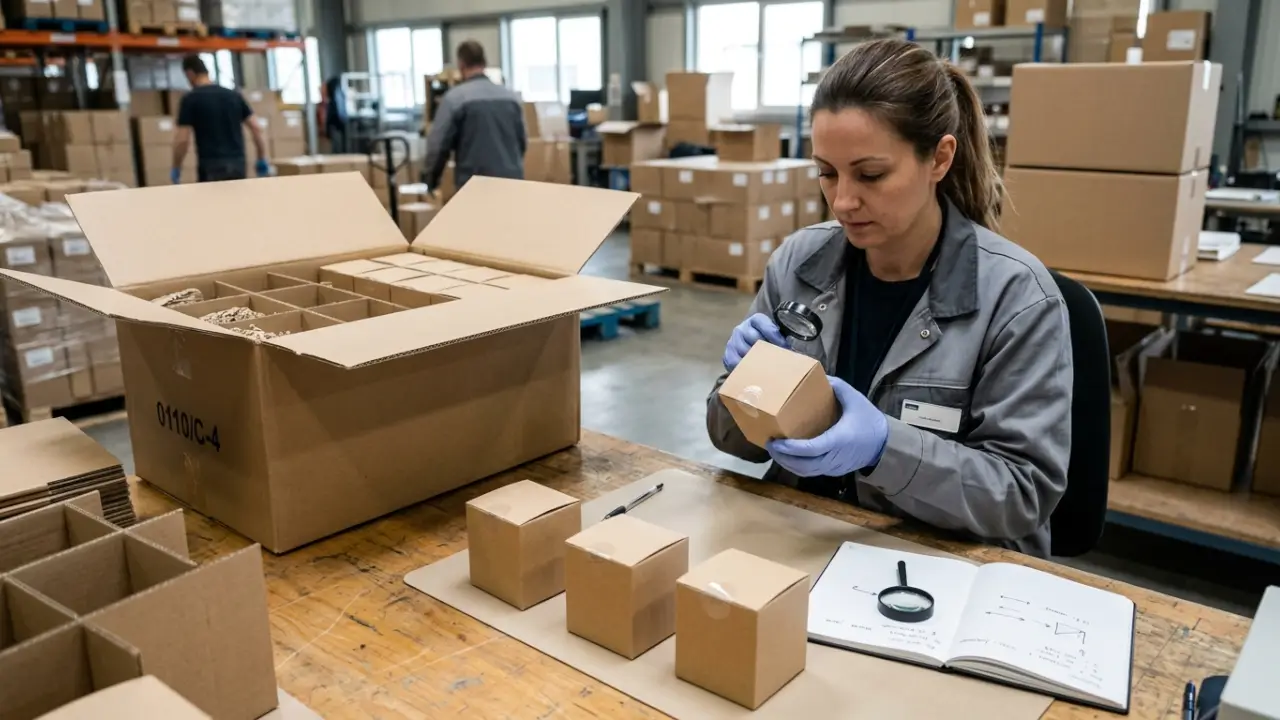
Where sampling is practical, inspect an agreed sample for visible paint inconsistencies, loose components, damaged accessories, and whether the figure stands or fits its base as intended. Agree on acceptance criteria and the reporting process before payment; a single sample does not prove every unit is defect-free.
Ask for traceable purchase documentation and a clear account of the supply channel. Packaging appearance alone does not establish authenticity. Verify intended age grading, warnings, material information, and any applicable safety or labeling documentation for your destination market. “Collectible” wording does not automatically remove regulatory obligations.
Pause if a supplier refuses to identify the quoted edition, changes the case definition between messages, promises undocumented set completeness, or cannot explain opened packaging. Another warning sign is a quotation that bundles freight into a total without identifying the delivery basis or destination charges.
Send One Comparable Inquiry for Both Series
A structured inquiry makes differences visible before a deposit creates pressure to proceed. Request separate line items even if both series will travel in one shipment.
Please quote HIRONO The Other One and Little Mischief separately for delivery to [destination]. Our sales channel is [channel], and our preferred opening allocation is [quantity per series], subject to confirmed packs. Please confirm exact edition, sealed retail format, MOQ, boxes per display, displays per carton, mixing rules, and documented assortment terms. Include unit and extended prices, currency, payment terms, trade terms, carton dimensions and weights, availability basis, dispatch estimate, freight options, and quote validity. Please provide actual packaging photos, declared specifications, supply documentation, applicable destination documentation, and the shortage or damage claim procedure.
If you are comparing a broader character range, the four-series CRYBABY figure buying comparison provides another assortment-planning reference.
Before authorizing the order, request a revised quotation with every unresolved field completed. Choose the series allocation only after case exposure, expected landed cost, and packaging acceptance terms are clear enough to approve in writing.
ЧАСТО ЗАДАВАЕМЫЕ ВОПРОСЫ
Is The Other One or Little Mischief better for a first order?
Choose the series with stronger customer purchase intent and a manageable confirmed order commitment. If demand is untested, compare full lineups and seek a small permitted trial rather than assuming either series will sell faster.
Does a sealed HIRONO case guarantee a complete set?
Do not assume so. Ask for written terms covering case quantity, duplicates, and any special-figure substitution for the exact edition and selling format.
Can both series be combined to meet the MOQ?
That depends on the supplier’s terms. Confirm whether the minimum applies per series, display, carton, or total order, and whether mixing changes the sealed packaging format.
How should buyers compare the two series on cost?
Compare estimated landed cost per saleable box using equivalent delivery and payment terms. Include inbound charges and account separately for opened samples or disclosed packaging-damaged stock.
What should be checked before listing the figures online?
Verify the exact series and edition, random-box description, permitted imagery, dimensions, materials, age grading, and applicable destination labeling. Avoid promises about particular figures or set completeness without supporting terms.
Before You Place That First Order
Select the assortment that matches documented demand and an affordable case commitment—not the most persuasive hero image. Keep The Other One and Little Mischief separate in your buying records, confirm shipment specifications, and use early sell-through to decide which series earns the next order.