


Two attractive plush collections can look almost equally appealing in a supplier catalog, yet only one may actually earn shelf space in your store. Customer fit, case configuration, packaging condition, total landed cost, and the ability to replenish a winning design usually matter more than which theme photographs better. That is why a MayMei comparison between Horoscope Stories and Poem of Spring should start with verifiable selling details, not assumptions drawn from the names alone.
This guide does not assume specific dimensions, materials, character counts, secret designs, or case quantities for either collection. Buyers should pull those details from the current product sheet and quote. The aim is to show how a gift shop, collectible retailer, online seller, or pop-up operator can decide which series better fits its customers and inventory plan.
Which Story Fits the Customers Already Shopping With You?
The titles suggest different creative directions, but a name alone does not establish the actual color palette, character styling, or sales appeal. Ask for clear images of every regular design, packaging artwork, and any special design before assigning either series to a customer segment.
Once the visuals are verified, compare them with the reasons customers visit your store:
- Gift and lifestyle shops: Review whether the colors coordinate with existing stationery, accessories, and seasonal displays.
- Collectible specialists: Check the number of designs, assortment method, display-box presentation, and whether customers can understand the collection structure quickly.
- Интернет-магазины: Confirm that each design can be photographed clearly and that the supplier can provide accurate identification details for listings.
- Pop-ups and event sellers: Favor a series with packaging that is easy to display, count, transport, and explain during short customer interactions.
- Repeat-purchase stores: Consider whether the collection complements existing plush lines instead of duplicating the same colors, moods, or price position.
A useful decision rule is to choose the series that fills a documented gap in the assortment. If the store already carries several pastel, spring-oriented collections, a visually different range may create more incremental demand. If shoppers mainly purchase soft, gift-ready designs, visual harmony may be more valuable than contrast.
Build One Verified Comparison Sheet for Both Series
Do not compare Horoscope Stories and Poem of Spring from separate social posts or differently formatted quotations. Request the same information for both, then place it in one worksheet. Blank or ambiguous fields should remain unresolved until the supplier confirms them in writing.
| Comparison point | What to request | Retail decision it supports |
|---|---|---|
| Complete lineup | Images and names of all regular and special designs, if applicable | Shows whether the full range is visually varied enough for repeat purchases |
| Product format | Confirm whether items are blind-packed, identifiable, or supplied in another format | Determines listing language, display method, and customer expectations |
| Dimensions | Product and retail-package measurements | Supports shelf planning, parcel estimates, and product photography |
| Materials and components | Declared outer material, filling, attachments, and removable parts | Helps buyers plan quality checks and review destination-market requirements |
| Конфигурация корпуса | Units per display and displays per shipping carton | Reveals the true inventory commitment and receiving workload |
| Assortment method | Sealed-series logic, random assortment details, and treatment of special designs | Helps assess duplicate risk and whether complete-set claims are appropriate |
| Розничная упаковка | Photos of all sides, seals, inserts, labels, and barcode placement | Supports merchandising, authenticity review, and listing accuracy |
| Quote basis | Unit basis, included packaging, trade term, and quotation validity | Prevents misleading comparisons between differently structured offers |
Buyers weighing other character-led collections can borrow the customer-fit approach in this Nommi plush series comparison for gift stores. The characters differ, but the questions about visual fit, assortment depth, and sell-through stay relevant.
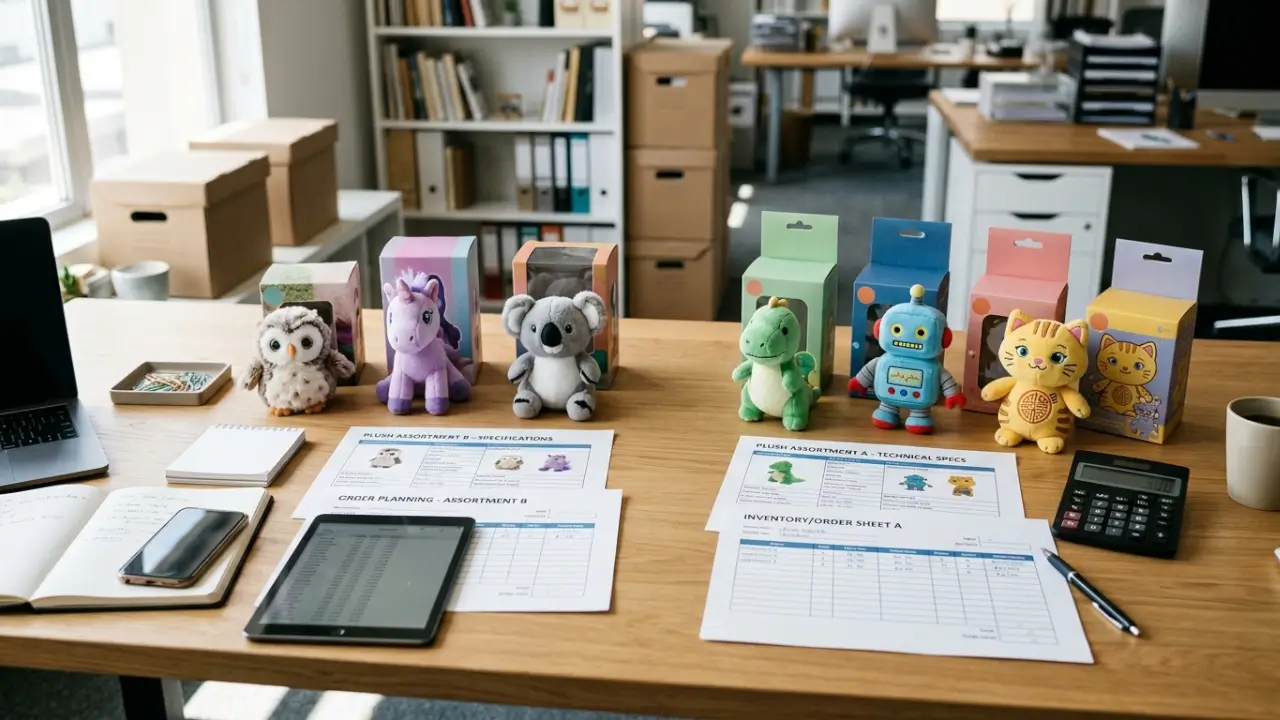
Turn Case Packs Into a Safer First-Order Plan
MOQ and case quantity are not interchangeable. A supplier may quote a minimum by unit, display box, sealed set, or shipping carton. Ask which level applies to each MayMei series and whether cartons can be mixed across the two collections. Do not assume a quoted unit quantity lets you cherry-pick individual designs.
For planning purposes, a retailer might weigh three hypothetical allocations:
- Single-series test: Put the available test budget into one collection to create a stronger display and obtain clearer sell-through data.
- Balanced test: If mixed ordering is permitted, divide the planned units equally between Horoscope Stories and Poem of Spring.
- Weighted test: Allocate, for example, 60% of the test units to the theme that best matches current customers and 40% to the alternative.
These are planning ratios, not recommended order quantities. The workable option depends on the supplier’s current MOQ and packing rules. Record sales by series, but also track damaged units, customer requests, and the number of days required to sell the first portion of each allocation.
If the products use sealed or randomized configurations, review the operational differences between sealed series sets and mixed blind box assortments before finalizing the order. A low unit count is not automatically low risk if the assortment produces hard-to-sell duplicates.
Protect Plush Presentation From Carton to Shelf
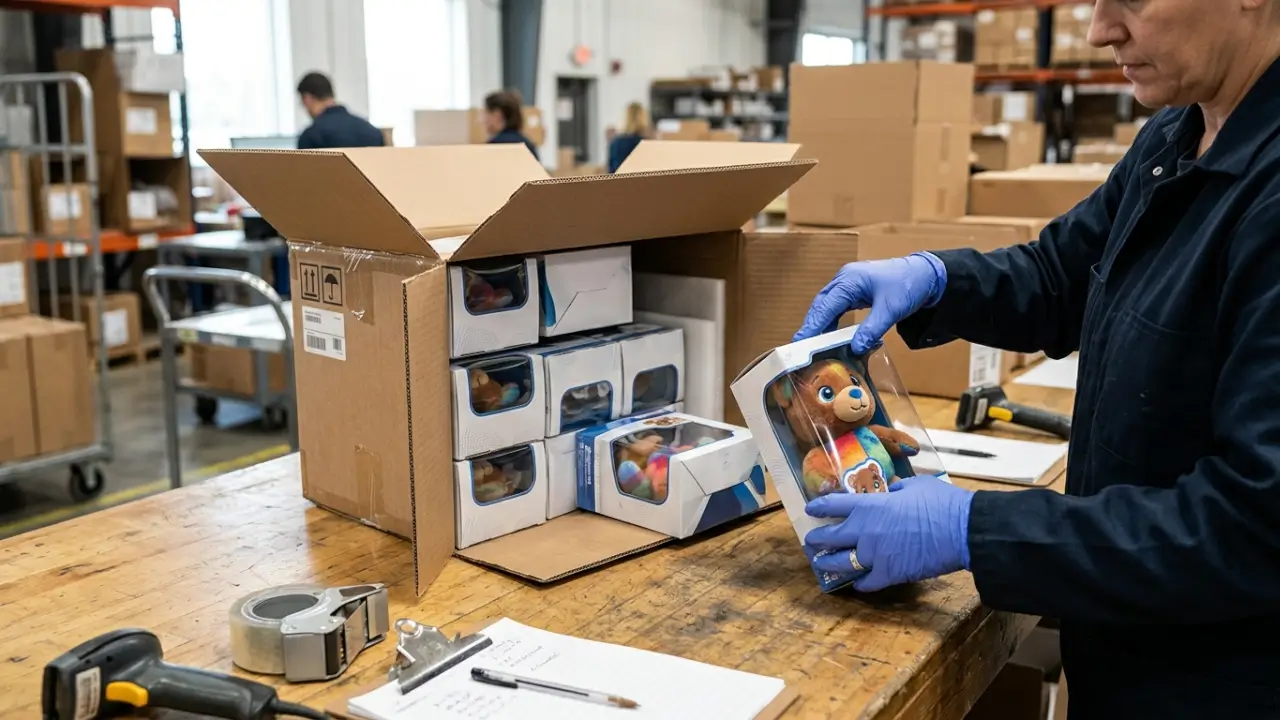
Plush products are tactile, but customers often judge them first through the retail box or bag. Compression, bent hang tags, crushed corners, surface marks, uneven stitching, and loose attachments can reduce shelf appeal even when the main item remains usable.
Ask for current packaging photos and a packing diagram showing how retail units sit inside the master carton. For a pre-shipment or receiving check, create a repeatable inspection sequence:
- Compare received carton counts and case markings with the packing list.
- Open samples from different carton positions rather than checking only the top layer.
- Review retail packaging for crushing, moisture exposure, broken seals, or inconsistent print.
- Check plush surfaces, seams, embroidery, attachments, and visible symmetry against approved reference images.
- Photograph issues with carton identifiers and retain counts by defect type.
- Confirm how discrepancies must be reported and what supporting evidence is required.
Where products are marketed to children or include small, detachable, magnetic, electronic, or functional components, buyers should verify applicable testing, age grading, warnings, labeling, and import requirements for the destination market. Requirements vary, and a product being sold elsewhere does not establish compliance in every jurisdiction.
Compare Horoscope Stories and Poem of Spring by Landed Unit Cost
The lowest quoted product price may not produce the lower retail cost. Compare both MayMei collections at the same trade term and order basis. A practical landed-cost worksheet should include the merchandise amount, retail and export packaging, inland transport where applicable, international freight, insurance if used, duties and taxes, customs or brokerage charges, payment costs, inspection expenses, and local delivery.
Then divide the applicable total by the number of saleable units, not merely the number ordered. If damaged packaging or quality issues make some units unsuitable for full-price sale, the effective cost of the remaining inventory rises.
Planning formula: estimated landed unit cost = total acquisition and import costs divided by expected saleable units.
Also compare carton volume. Two products with a similar merchandise price can carry different freight costs if package dimensions or carton utilization differ. Ask for master-carton dimensions, gross weight, net weight, and carton quantity before accepting a freight estimate.
At this stage, send the same specification list to every quoting source. If you are also evaluating another plush collection, the checks in the Siinono plush blind box sourcing guide can help standardize the comparison. A buyer can then request an itemized quote instead of relying on a headline unit price.
Plan the Reorder Before the First MayMei Shipment Arrives
A successful test can still lead to lost sales if replenishment starts too late. Ask separately about order preparation, production or availability status, export handling, transit, customs clearance, and final delivery. Do not treat an estimated transit period as the complete lead time.
Use a reorder trigger based on sales velocity and total replenishment time. As a planning example, if a retailer reviews sales weekly, it may set an internal alert when remaining stock is only modestly above the quantity expected to sell during the supplier’s confirmed replenishment window. Add a buffer for promotions or seasonal peaks, but avoid presenting that buffer as guaranteed demand.
For Poem of Spring, buyers may consider whether the verified artwork is intended for year-round sale or will be merchandised around a spring window. For Horoscope Stories, consider whether the confirmed designs support evergreen display, gifting occasions, or another calendar plan. These are merchandising decisions, not inherent claims about the products.
Before ordering, ask whether a future reorder will use the same packaging version, assortment structure, and item specification. A substitute edition or revised case configuration can disrupt product listings and make historical sales data less useful.
When Two MayMei Quotes Are Not Yet Comparable
A vague quote transfers risk to the buyer. Warning signs include missing case quantities, unclear product format, cropped packaging photos, inconsistent item names, pressure to pay before specifications are documented, or a freight charge without carton data. Another common mistake is comparing a sealed display price with a loose-unit price as if they cover the same assortment.
Use this inquiry checklist for both series:
- Exact series name, item reference, and packaging version
- Product and retail-package dimensions
- Declared materials, filling, and included components
- All regular designs and any special-design mechanism, if applicable
- MOQ, units per display, displays per carton, and mixed-order rules
- Unit or case price, trade term, quote validity, and payment stages
- Master-carton dimensions, gross weight, and available shipping options
- Estimated preparation timeline and basis for that estimate
- Packaging photos, labeling details, and available compliance documents
- Process for samples, quality discrepancies, and reorder confirmation
Inquiry template: “Please quote MayMei Horoscope Stories and MayMei Poem of Spring on the same trade-term basis. For each series, provide the MOQ, case configuration, assortment method, current packaging photos, product and carton dimensions, declared materials, estimated order-preparation timeline, and shipping data. Please also identify any specification or packaging differences between the two series.”
Do not choose until unanswered fields are resolved in writing. Retailers wanting another product-specific comparison framework can review how Lovely Emma Bunny Alliance and Bear Alliance are evaluated.
Ready to compare offers? Prepare one worksheet containing both MayMei series, request itemized quotations on identical terms, and ask the supplier to confirm assortment, packaging, carton data, and timeline before payment. This produces a buying decision you can defend with evidence rather than theme preference alone.
ЧАСТО ЗАДАВАЕМЫЕ ВОПРОСЫ
Which MayMei series is better for a gift store?
Neither series is automatically better. Compare verified design images with the store’s customer profile, existing color stories, gifting occasions, available display space, and target price position before choosing.
Should a retailer test both series in the first order?
Testing both can produce useful comparison data if mixed ordering is permitted and each range receives enough visibility. If the MOQ would create excessive inventory, a focused test of the better-matched series may be safer.
What case-pack details should buyers confirm?
Confirm units per display, displays per master carton, whether the assortment is sealed or random, whether cartons can be mixed, and how any special design affects the stated configuration.
How should buyers compare MayMei wholesale quotes?
Use the same product specification, quantity basis, trade term, packaging requirement, and destination for every quote. Compare estimated landed cost per saleable unit rather than merchandise price alone.
What quality checks matter for collectible plush?
Review retail packaging, seams, embroidery, surface condition, symmetry, attachments, labels, and consistency with approved reference images. Buyers should also verify destination-market safety and labeling requirements where applicable.
Before Choosing the First Series
Horoscope Stories and Poem of Spring should be judged through customer fit, verified specifications, assortment risk, landed unit cost, packaging resilience, and reorder feasibility. Build the same evidence sheet for both, resolve inconsistencies before payment, and use a measured first order to learn which theme earns stronger full-price demand.