


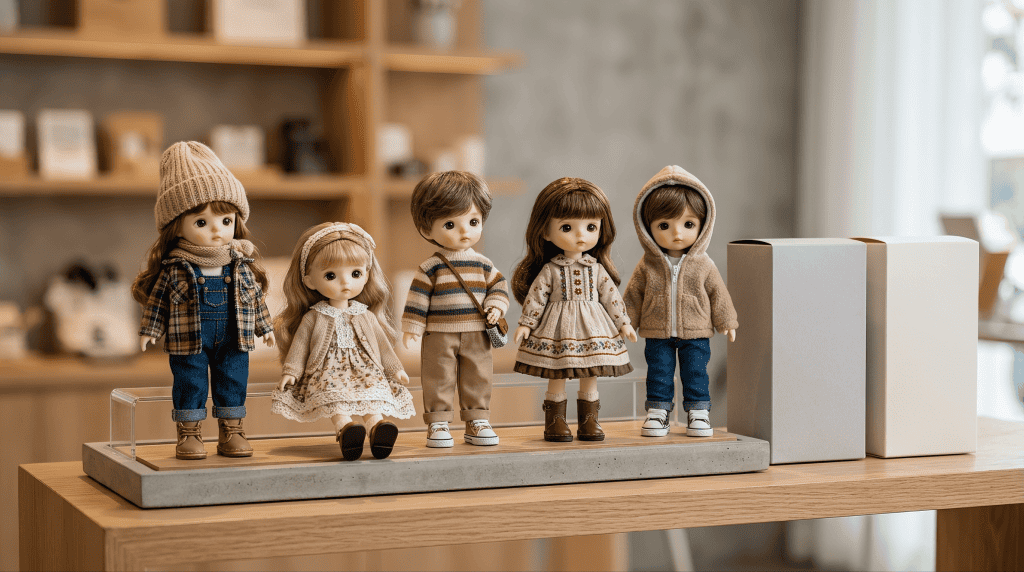
Getting a customer to buy a second time is the real test of a collectible line, and an attractive character alone rarely delivers it. A fabric outfit blind box may add dress-up play, display variation, and collecting incentives, but repeat sales still depend on assortment design, garment execution, price positioning, and reliable replenishment.
The category can suit collectible stores, gift shops, anime retailers, lifestyle boutiques, and online sellers. Before requesting a quote, buyers should establish whether the clothing is removable, how variants differ, what is included in each box, and whether the case structure fits the intended sales channel.
Why Dress-Up Dolls Give Customers More Reasons to Return
A conventional figure usually offers one primary interaction: open it and display it. A doll with fabric clothing can add styling, photography, outfit swapping, or scene-building. These activities may keep the character visible after unboxing and give customers a reason to consider another variant.
However, fabric alone does not guarantee repeat purchases. Buyers should look for distinct silhouettes, colors, themes, or accessories across the assortment. If every doll has a similar outfit and expression, shoppers may see limited value in buying again.
- Character collectors may return to complete a visually coherent series.
- Dress-up customers may value removable garments and compatible accessories.
- Gift buyers often need packaging that communicates the theme without opening the box.
- Social-content buyers may prefer dolls that are easy to pose, photograph, and restyle.
Ask the supplier for a full assortment image and an item-by-item inclusion list. This reveals whether the series offers meaningful variation rather than minor color changes.
Match the Dress-Up Format to the Retail Customer
The right assortment depends on why customers visit the store. A fashion-led boutique may favor coordinated garments and display appeal, while an anime retailer may place more weight on character identity and series completion.
Compare the proposed dolls with products already selling in the same account. For example, the visual merchandising considerations in this witchy kawaii blind box buying guide can help retailers consider how a strong aesthetic theme affects shelf placement. Buyers assessing broader character appeal can also review the คู่มือการจัดหาสินค้าสำหรับขายปลีกของ UpSetDuck as a contrasting product-positioning example.
A practical decision rule is to identify one primary sales reason before ordering: collecting, dress-up activity, gifting, character fandom, or visual décor. If the product description cannot support that reason clearly, the line may be difficult for staff and product pages to explain.
Specifications to Confirm Before Comparing Dress-Up Dolls
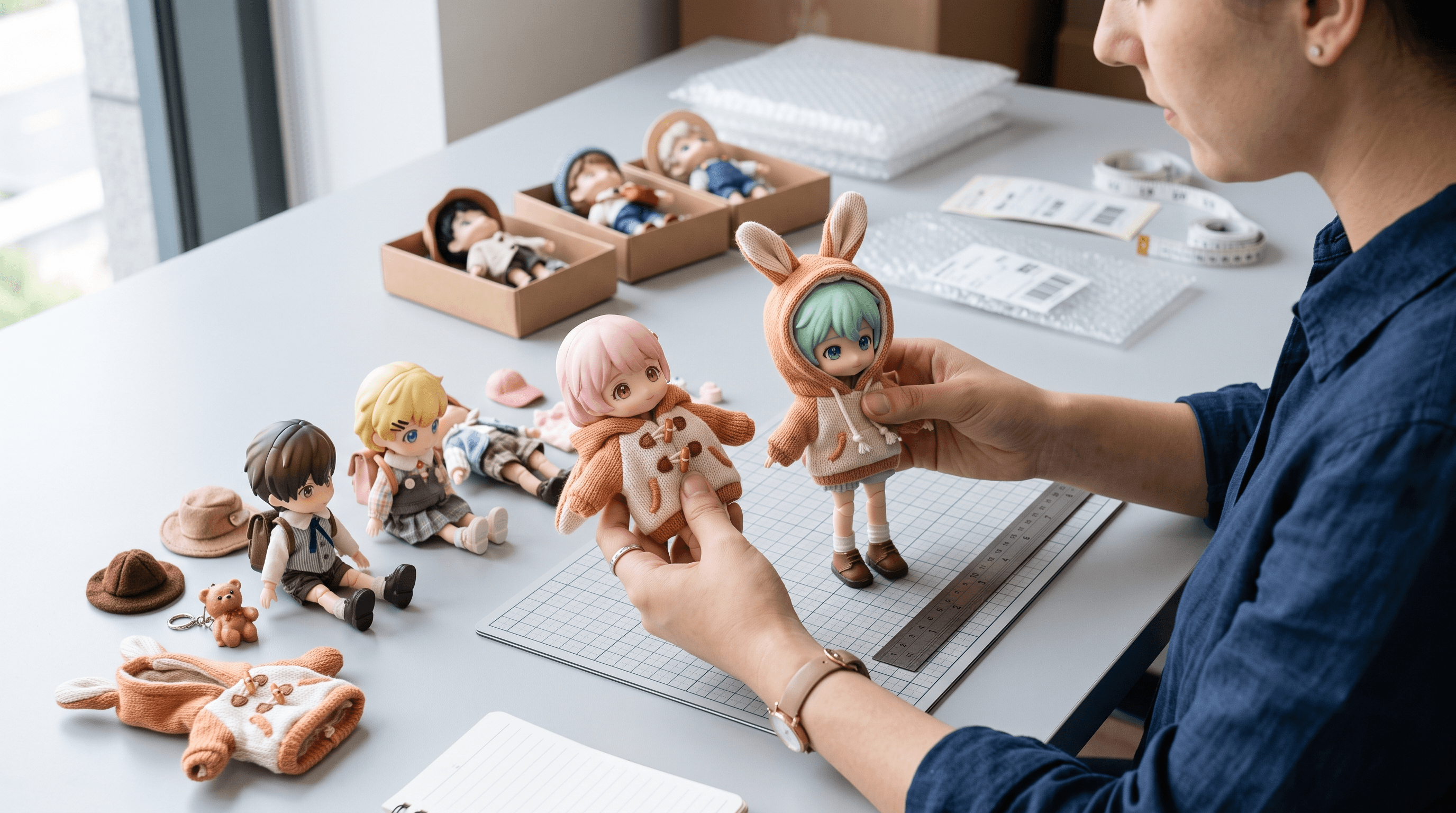
The phrase “fabric outfit” can refer to a fully removable clothing set, a partly sewn-on costume, or a small textile accent attached to a standard figure. Buyers should not compare quotations until this distinction is documented.
| ข้อมูลจำเพาะ | What to ask | ทำไมมันถึงส่งผลต่อลำดับ |
|---|---|---|
| Garment attachment | Is each piece removable, fixed, or partly fixed? | Determines whether genuine dress-up play is possible. |
| ขนาดของตุ๊กตา | Request dimensions with and without headwear. | Affects display fixtures, photography, and shipping volume. |
| Outfit compatibility | Can garments move between variants in the same series? | Compatibility may increase styling and multi-purchase value. |
| Included pieces | List garments, shoes, stands, props, and other accessories. | Prevents misleading comparisons between differently equipped dolls. |
| Pose and balance | Does the doll stand independently or require support? | Influences display use and customer expectations. |
| โครงสร้างการจัดกลุ่มสินค้า | How many regular variants and possible special variants exist? | Supports case planning and completion-set messaging. |
| Garment finish | Ask about closures, raw edges, stitching, and printed details. | Small construction differences can change perceived quality. |
| Box identification | Confirm whether outer boxes are intentionally indistinguishable. | Protects the blind-box format and informs staff handling. |
Request current product photos or a sample where practical. A specification sheet is useful, but close-up inspection is better for checking seams, closures, loose threads, color transfer, and how the clothing sits on the body.
How Case Packs Control Duplicate and Assortment Risk
MOQ and case quantity are separate questions. A supplier may quote a minimum order containing several cases, while each case has its own variant distribution. Confirm both figures, along with whether ordering must be by sealed case or can include individual boxes.
As a planning example, a retailer considering 24 units could compare one 24-unit case with two 12-unit cases. The total unit count is identical, but the expected assortment, duplicate exposure, display options, and ability to split inventory between locations may differ. This is planning logic only; the actual case configuration must come from the supplier.
- Ask whether a sealed case is expected to contain a complete regular set.
- Confirm whether special variants replace a regular design or appear in addition to it.
- Document case dimensions and gross weight before estimating freight.
- Check whether repeat orders can use the same case configuration.
Retailers comparing series structures may also find the assortment questions in the คู่มือสำหรับผู้ซื้อกล่องเซอร์ไพรส์ Cupa useful when preparing a case-level evaluation.
Counting Garment Complexity in Your Landed Cost
Unit price is only one part of the commercial decision. Fabric clothing can add packaging volume, handling sensitivity, and inspection points. Compare quotes using an estimated landed cost per sellable unit:
Quoted product cost + freight allocation + duties or taxes where applicable + payment and handling costs + expected damage or defect allowance = estimated landed cost.
Buyers should verify tariff classification, import charges, and customs requirements for the destination market rather than relying on a general estimate. Doll materials, textile elements, accessories, and intended age grading may affect the information an importer needs to review.
Lead-time planning should begin with the intended selling date. Work backward to include production or preparation time, inspection, freight, customs clearance, receiving, and merchandising. Also ask whether a reorder would follow the same process as the first order.
If the line appears suitable, prepare a comparison sheet with the same unit basis, case basis, inclusions, and freight terms for every supplier. This is the fastest way to identify which quote still needs clarification before you commit.
Protecting Fabric Garments From Box to Display
Textile details create quality risks that are less visible in standard product photos. Garments may arrive wrinkled, displaced, stained, or compressed even when the doll itself is undamaged. Ask how the doll and loose accessories are held inside the inner packaging.
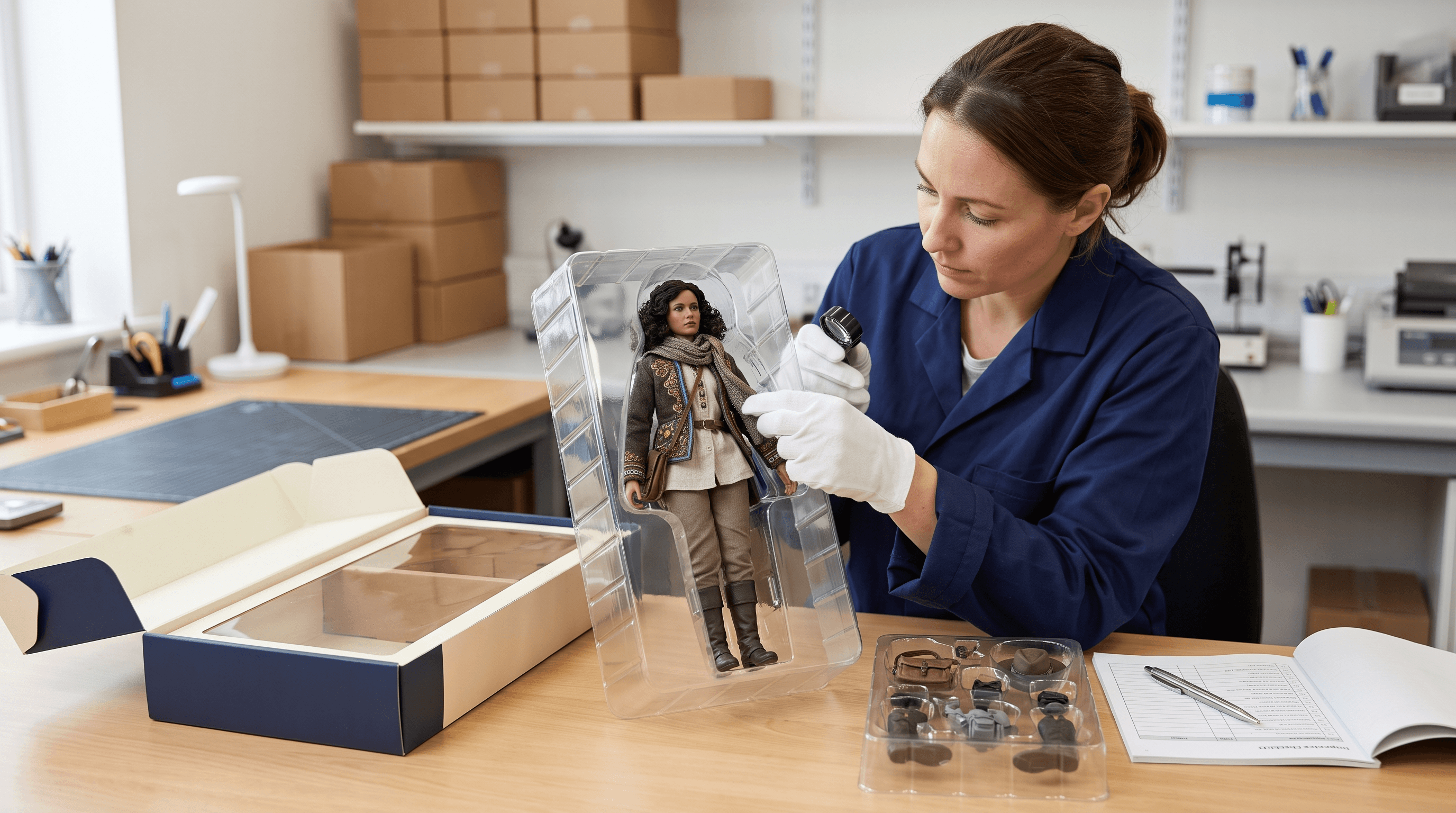
A sample or pre-shipment review can use a simple inspection sequence:
- Check the retail box for crushing, moisture exposure, and seal consistency.
- Confirm the doll matches the stated variant and inclusion list.
- Inspect visible seams, closures, decoration, and loose threads.
- Test removable pieces carefully for normal dressing and undressing.
- Review the doll for marks, color transfer, unstable parts, or missing accessories.
Buyers should also confirm what labeling, warnings, age grading, material documentation, and testing information may be required in the destination market. Requirements vary, and a product being sold elsewhere does not automatically establish compliance for a new country or sales channel.
When Two Fabric Doll Quotes Are Not Yet Comparable
A low quotation may exclude accessories, use a different case basis, omit freight, or cover a partly fixed costume rather than a removable outfit. Treat unclear inclusions as an unresolved cost rather than a saving.
Warning signs worth resolving
- The quote states a unit price but not units per case or the order basis.
- Product photos do not show garment closures, back views, or included accessories.
- The supplier cannot explain whether variants are mixed, balanced, or random by case.
- Packaging dimensions or gross weight are unavailable for freight estimation.
- Descriptions of materials, warnings, or intended age group are inconsistent.
- Substitution rules and the process for reporting shortages or defects are not documented.
Inquiry template for a dress-up blind box order
Please quote the fabric-outfit doll series based on the following requirements: product and series name; doll dimensions; removable and fixed garment pieces; all included accessories; number of regular and possible special variants; units per sealed case; MOQ in units and cases; packaging dimensions and gross weight; available product and packaging photos; quote validity; trade terms; estimated order schedule; sample options; and the process for documenting shortages or defects. Please also identify any information the buyer should review for labeling and destination-market compliance.
For another approach to comparing variant-led inventory, see this retailer stocking comparison of two collectible series.
Before paying for an initial order, request a written quote tied to a dated specification sheet and case configuration. Compare the landed-cost assumptions, inspect garment details where practical, and confirm how a reorder would be handled.
คำถามที่พบบ่อย
Do fabric outfits automatically make blind box dolls more collectible?
No. Collectibility also depends on character appeal, meaningful variant differences, assortment structure, price positioning, and availability. Fabric clothing can add interaction, but buyers should confirm that it creates a clear reason to collect or restyle the dolls.
Should removable clothing be preferred over fixed clothing?
Removable clothing is useful when dress-up play is central to the product, but it also adds small-piece, fit, and durability considerations. Fixed clothing may suit display-led products. The better choice depends on the target customer and product positioning.
How should retailers plan a first order?
Start with the supplier’s actual MOQ and case configuration, then compare the quantity with expected store traffic, online demand, duplicate risk, and reorder flexibility. Use example quantities only for internal planning, not as assumptions about supplier terms.
What quality points matter most for fabric doll outfits?
Check stitching, closures, loose threads, stains, color transfer, fit, symmetry, decoration placement, and resistance to normal dressing and undressing. Buyers should also inspect how the outfit is protected inside the box.
What information is needed for a useful wholesale quote?
Request dimensions, included pieces, outfit attachment, variant count, case quantity, MOQ, packaging data, trade terms, schedule assumptions, sample options, and the process for reporting defects or shortages. Compliance and labeling requirements should be verified for the destination market.
Before Testing the First Dress-Up Series
Repeat sales are more likely when the outfit changes how customers use, display, or collect the doll. Confirm that interaction at sample and specification level, not from front-facing photos alone. A controlled initial order, documented case structure, and realistic landed-cost calculation will make the reorder decision easier to evaluate.