



Deciding whether to stock a surprise collectible or a clearly specified construction kit affects far more than the shelf display. When you compare a mystery building format with a named building set, the real question involves customer expectations, assortment control, assembly quality, and after-sales support—not just which box looks more exciting.
Neither format is automatically cheaper, easier to sell, or better made. A blind box can contain a substantial build, while a traditional set can be small and inexpensive. Start with what the customer knows before purchase, then compare the actual specifications and wholesale terms.
What the Customer Knows Before Buying: The Core Difference
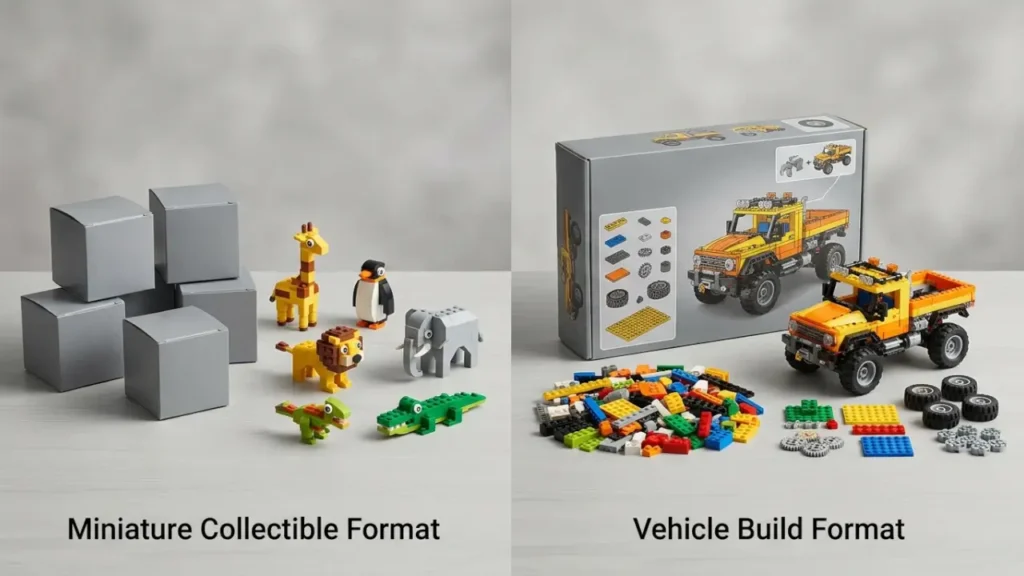
The defining difference is disclosure. A blind box normally conceals which model or variant the customer receives; a traditional set normally identifies the intended build. Neither format alone determines piece count, material, block compatibility, or difficulty.
Use this comparison when reviewing catalogs. Treat each point as something to verify for the specific SKU, not a universal rule.
| Buying factor | Building block blind box | Traditional building set | สิ่งที่ต้องตรวจสอบ |
|---|---|---|---|
| Model selection | Individual model is usually concealed. | Model is usually identified before purchase. | Which contents are fixed and which are randomized? |
| Assortment control | Buyer may order by series or sealed display. | Buyer can usually select model-specific SKUs. | Can models be ordered separately? |
| Duplicate exposure | Repeat models may occur. | Repeated models are normally intentional purchases. | Is any non-duplicate assortment documented? |
| Build complexity | Can differ between concealed variants. | Can be assessed against the named model. | What are the piece count and instructions for each model? |
| Parts compatibility | Depends on block dimensions and connection design. | Also depends on the specific block system. | Are blocks standard-size, miniature, or proprietary? |
| Retail presentation | Packaging must explain the surprise format. | Packaging should identify the build and contents. | Are product photos and disclosures accurate? |
| Service requirements | Missing-part claims may require identifying a hidden variant. | Model identification is generally more direct. | How are replacement parts requested? |
| Reordering | Demand may concentrate on certain series or variants. | Reorders can target individual models where available. | What remains consistent between production batches? |
Match the Format to the Shopper, Not Just the Shelf
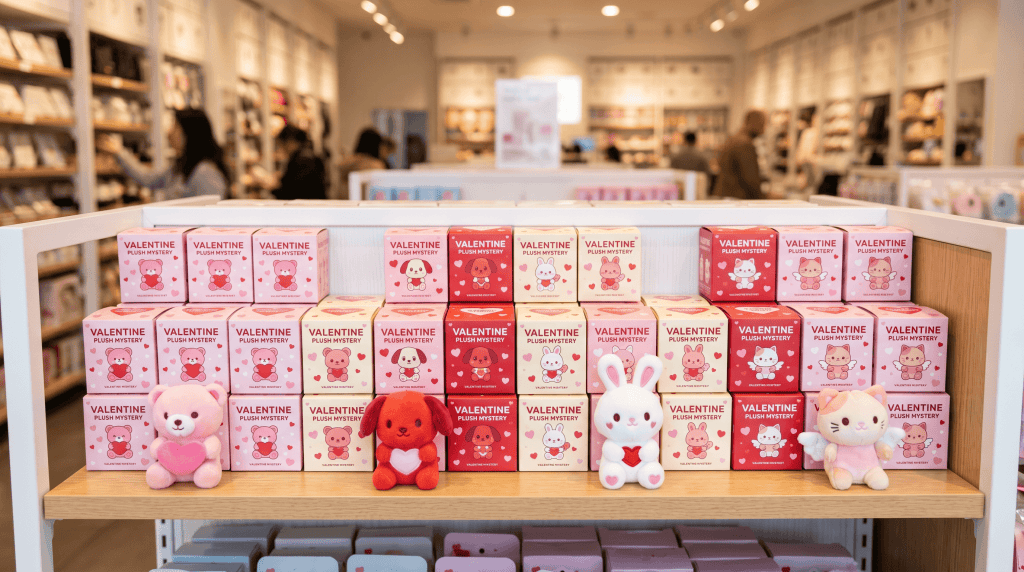
Collectible and hobby retailers may find the surprise element useful when customers enjoy discovering variants. Confirm that the series artwork, display sample, and sales explanation make the random format clear. Do not imply that buying several loose boxes produces a complete collection.
Gift stores should distinguish surprise-friendly purchases from gifts requiring a specific model. A customer shopping for a particular animal or vehicle may prefer a named set, even when the blind box theme looks suitable.
Educational buyers and activity organizers should compare repeatability, instruction clarity, and replacement-part access. Identical traditional sets may simplify group instruction; random builds may suit an activity only if different outcomes and assembly demands are acceptable.
For small-footprint stores, compare actual package dimensions rather than assuming every blind box is compact. The guide to blind box products for limited shelf space offers a related starting point for assortment planning, although construction kits need their own build-quality checks.
Decode the Case Pack Before Choosing an Opening Order
MOQ, display quantity, and master-carton quantity are different numbers. Ask whether the minimum applies to the whole order, each series, or each SKU. Also establish whether a quoted unit means one sealed blind box, one display, or one complete building set.
For blind boxes, ask the supplier to separate these claims:
- Sealed display: a packaging format, not proof of a complete assortment.
- Non-duplicate display: a distribution claim that needs written confirmation.
- Complete regular assortment: confirmation that all stated regular models are included.
- Special variant: if present, clarify whether it replaces a regular model and what distribution information is documented.
As a planning example, a retailer comparing 24 blind boxes with 24 named sets should map the named sets by model and the blind boxes by confirmed assortment rules. Equal unit counts do not provide equal inventory control.
Ask whether mixed-series orders are allowed and whether carton splitting changes pricing or packaging. If neither distribution rules nor model-level specifications are available, keep the opening commitment limited until samples and documentation resolve the uncertainty.
Test the Build Before Approving the Collectible
Attractive box artwork does not establish construction quality. Request representative samples and assemble them using only the supplied instructions. For a randomized series, ask how samples cover different models rather than assuming one successful build validates every variant.

Document the sample model, packaging identifier, piece inventory, and any assembly problem. This creates a clearer approval record than a general comment that the blocks “feel good.”
- Connection fit: check for excessively tight joints, loose assemblies, and pieces that separate during ordinary handling.
- Parts condition: inspect for sharp edges, distortion, inconsistent molding, and damaged decorative surfaces.
- Instructions: check orientation cues, color distinctions, missing steps, and whether the finished model stands as intended.
- Contents: reconcile the included parts against the inventory, distinguishing listed spare pieces from missing components.
- Support: ask what evidence is required for missing-part claims and whether replacements are parts, sets, or credits.
Do not advertise compatibility with another block system without verification. Similar-looking bricks can differ in dimensions, fit, or connection strength.
Buyers should also verify applicable toy-safety, small-parts warning, age-labeling, language, and importer information requirements for the destination market. Request documentation tied to the actual product; a generic report or a “collectible” label is not sufficient evidence of suitability.
Before expanding the assortment, ask the supplier for samples, model-level specifications, and a written case-pack explanation. These make the next quote much easier to evaluate.
Calculate Cost per Sellable Build, Not per Carton
Compare equivalent purchasing units first. A low per-box quote may exclude the retail display, use a different piece count, or refer to miniature blocks rather than the construction system your customers expect.
Estimate landed cost by combining merchandise, relevant packing charges, freight, insurance where applicable, duties and taxes where applicable, clearance, and local delivery. Divide by the expected sellable units, and distinguish recoverable taxes where relevant. Confirm the shipping term and named delivery point before comparing offers.
Keep uncertain costs visible. Missing-part service, damaged retail boxes, sample assembly, and slow-moving duplicates can affect commercial results even when the purchase price looks competitive. Do not assume every duplicate becomes unsellable, but plan how it will be handled.
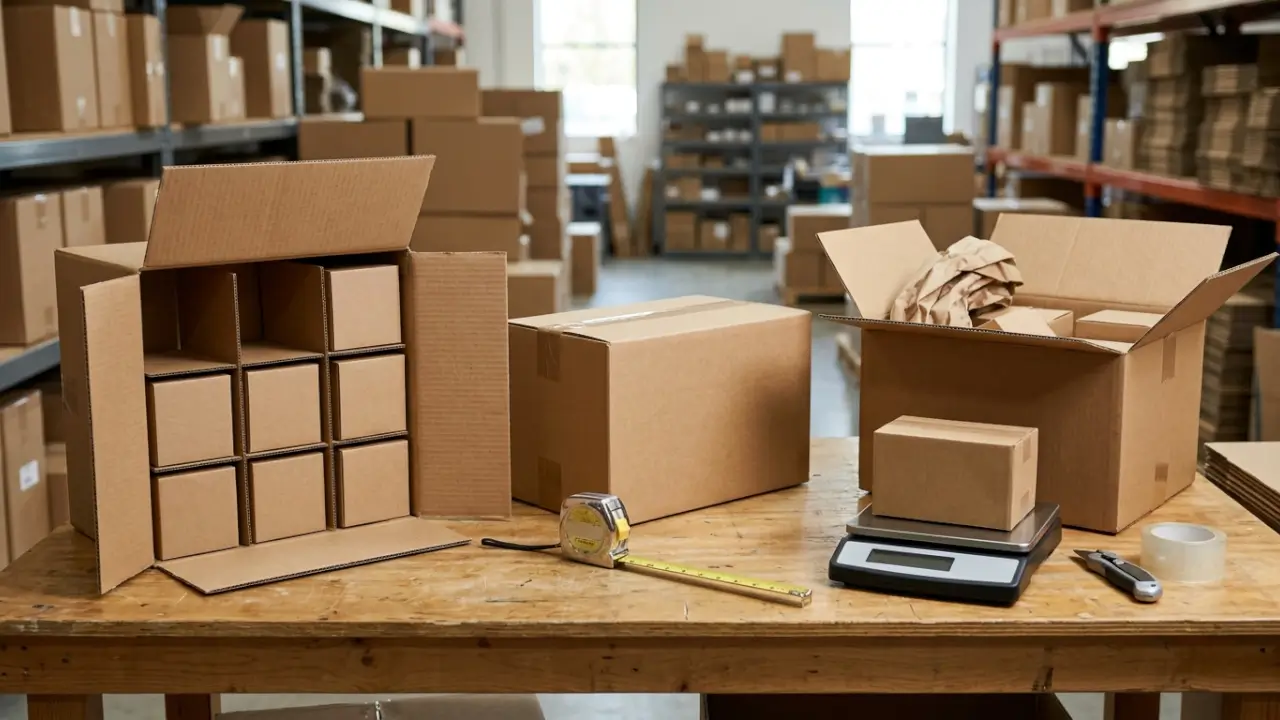
Ask for retail-box dimensions, display dimensions, carton dimensions, gross weight, and packing photos. Small products do not necessarily produce low freight costs when display packaging occupies significant space.
For blind boxes, confirm how seals and concealment are protected. For traditional sets, check that bags cannot escape a damaged carton and that model identification remains readable. In both formats, agree on how crushed packaging and missing contents will be documented.
Separate order preparation, dispatch, transit, customs clearance, and local delivery when discussing timing. Reorder against actual sales and confirmed replenishment availability, not an assumed repeat of the first shipment. For advance purchases, the retailer guide to evaluating blind box pre-orders provides related questions about release uncertainty and supplier commitments.
Request Two Comparable Quotes and Challenge Vague Claims
Request blind-box and traditional-set quotes against the same destination, currency, shipping basis, and packaging expectations. Where specifications differ, record the difference instead of forcing a misleading price comparison.
Pause approval when a supplier calls a display a “full set” without defining its contents, promises compatibility without supporting specifications, or provides safety documents that do not identify the quoted product. Unexplained changes between samples and order specifications also need resolution before payment.
Another mistake is treating licensed character artwork as proof of authorized sourcing. For branded designs, request evidence supporting the supply chain and confirm any market-specific resale or import concerns with a qualified adviser where needed.
Use this inquiry template to obtain a decision-ready quotation:
Please quote the identified building block blind box series and traditional building-set alternatives for delivery to [destination]. Our intended channel is [store type or sales platform], and our proposed opening quantity is [planning quantity].
Please confirm the order unit, MOQ by SKU or series, display quantity, carton quantity, assortment rules, and whether mixed orders are permitted. Include model-level piece counts, block dimensions, materials, instructions, age labeling, relevant product documentation, and the missing-part policy.
Please provide sample terms, retail and carton dimensions, gross weight, packing photos, preparation estimates, shipping options, quote validity, payment terms, and the shipping term with its named place. Identify any specification or assortment detail that is not yet confirmed.
Send this brief to your shortlisted supplier before committing to an opening order. Request written clarification of unresolved points and approve the sample, assortment terms, and delivered-cost basis together—not as separate assumptions.
คำถามที่พบบ่อย
What is the main difference between building block blind boxes and traditional sets?
Blind boxes usually conceal the model or variant until opening. Traditional sets usually identify the model before purchase. Size, complexity, and quality depend on the specific product, not the format.
Does a sealed display contain every building block model?
Not necessarily. Ask for written confirmation of the assortment, duplicate rules, and whether a special variant can replace a regular model. A sealed display alone does not establish completeness.
Are building block blind boxes compatible with standard bricks?
Compatibility cannot be assumed. Confirm block dimensions and connection design, then test samples before making compatibility claims to customers.
Which format is better for a first retail order?
Choose according to customer intent. Named sets suit shoppers seeking a specific build; blind boxes suit shoppers who accept random variants. Test a limited assortment and track sell-through and service issues before expanding.
What should buyers compare beyond the wholesale price?
Compare piece count, block size, case rules, packaging, freight, applicable import costs, missing-part support, and replenishment terms. Calculate costs on the same sellable-unit basis.
Make the First Order a Controlled Comparison
Select the format that matches how your customers want to buy, then validate the build and supply terms. A clear sample approval, documented assortment, and comparable landed-cost estimate provide a stronger purchasing basis than either surprise appeal or a low headline price.