



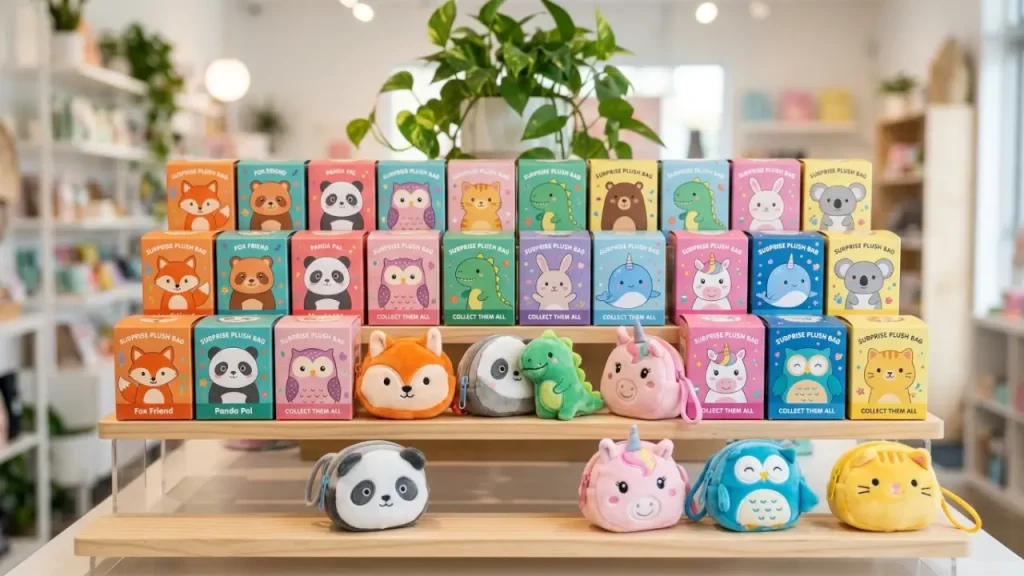
A plush blind box that doubles as a zipper bag looks easy to sell, but the buying decision is harder than the character art suggests. Before committing budget to the Migo Animal Party format, a buyer needs confirmed dimensions, a sound zipper build, clear assortment terms, packaging that survives transit, a full landed cost, and a supplier willing to document the exact goods being quoted.
This guide is for gift shops, toy and hobby retailers, lifestyle stores, online sellers, and distributors deciding whether a functional plush format fits their assortment. Use it to prepare a comparable inquiry, spot avoidable risks, and plan a test order without assuming specifications that still need confirmation.
Does a Zipper Bag Actually Fit Your Shelf and Your Shopper?
A zipper bag changes the buying conversation. It is not only a soft collectible; depending on its size and construction, it may also hold small personal items, sit on a desk as display, work as a gift, or serve as casual carrying. That added function can help a retailer explain the product to shoppers who like plush but do not consider themselves collectors.
Before requesting a quote, define the intended use:
- Gift and novelty retail: The product may work where shoppers want an affordable surprise with a practical feature they can point to.
- Character and collectible retail: Confirm whether the assortment includes distinct designs, an identifiable series structure, or repeat-purchase appeal that drives a second sale.
- Lifestyle and accessory stores: Dimensions, carrying comfort, zipper operation, and usable interior space matter more than a front-facing product photo.
- Online marketplaces: Listing accuracy is the whole game. You need confirmed measurements, materials, packaging dimensions, and clear images of the actual assortment before you write a description.
Ask the supplier to explain what makes each item different, what a single blind box contains, and whether the zipper bag is intended as a functional container or primarily as a decorative plush accessory. That answer shapes your product claims, photography, and the expectations you set with customers.
Specifications to Lock Down Before You Compare Any Two Quotes
Quotes are almost impossible to compare when one supplier describes the product by character name and another provides a full commercial specification. Ask every source for the same data.
| Specification or issue | Why it matters to the buyer | What to request |
|---|---|---|
| Finished dimensions | Determines shelf space, shipping volume, and whether the bag has practical capacity. | Height, width, depth, and measurement method for both the plush bag and its retail package. |
| Materials and filling | Influences hand feel, appearance, care instructions, and product-page wording. | Material description, filling details, and any available care or handling guidance. |
| Zipper and pull construction | A weak closure can drive returns even when the plush itself looks great. | Closure type, pull detail, seam attachment, and whether the zipper is cycle-tested during inspection. |
| Assortment structure | Determines display variety, duplicate risk, and how many designs you can actually show. | Design list, assortment method, repeat ratio if applicable, and whether cases arrive sealed. |
| Retail and outer packaging | Protects the product and affects shelf presentation, storage, and carton planning. | Individual packaging, case quantity, carton dimensions, and packaging photographs. |
| Product and carton weight | Supports freight estimates and exposes differences hiding between two quotes. | Net weight, gross weight, unit count per carton, and estimated carton measurements. |
| Labels and warnings | Destination-market requirements may vary, particularly for products treated as toys or accessories. | Existing labels, age guidance if applicable, care information, and buyer customization options. |
For a broader comparison of plush construction and product positioning, review this look at vinyl-face plush versus standard plush blind boxes. It can help you decide whether the Migo format should sit with soft accessories, collectible plush, or another category in the store.
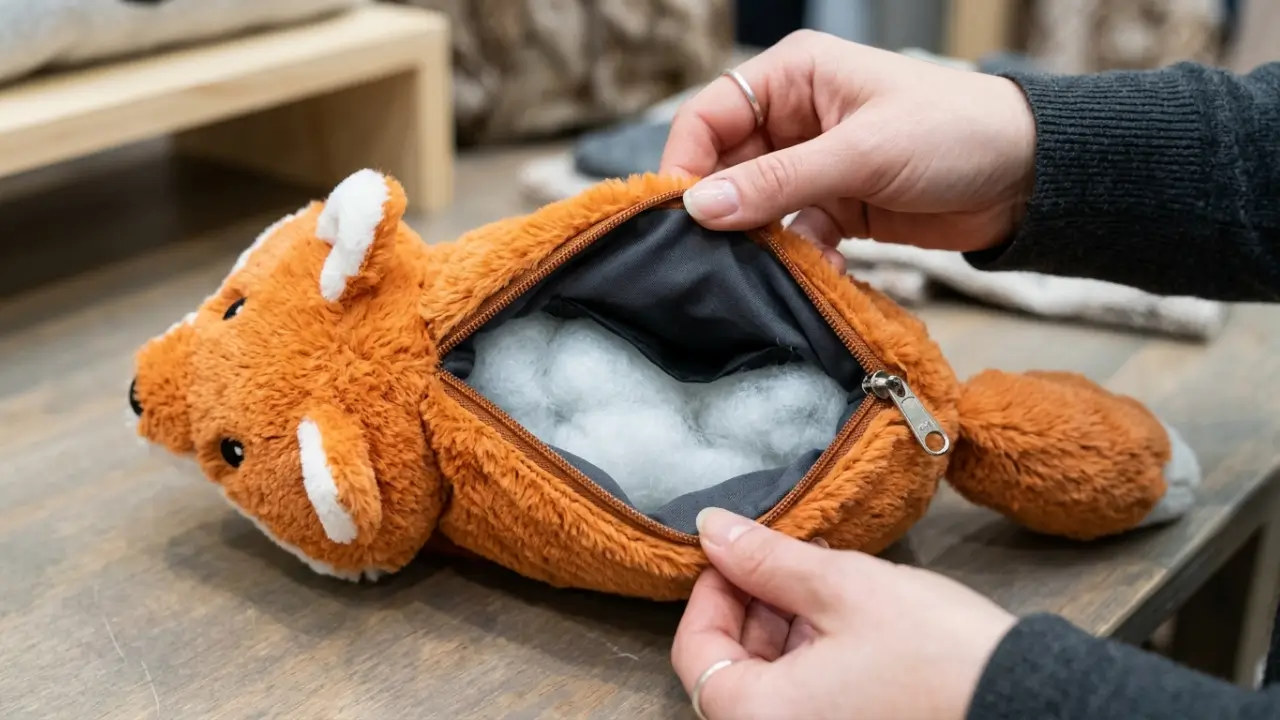
How to Inspect the Zipper, Seams, and Interior — Not Just the Face
Product photos tend to sell the face, the colors, and the character details. A purchasing inspection should focus on the parts that create the functional value.
- Open and close the zipper repeatedly. Check for snagging, exposed ends, uneven stitching, and a pull that is hard to grip.
- Inspect seam transitions. Look hardest at corners, zipper ends, handles, ears, tails, and other protruding elements where stress concentrates.
- Review shape recovery. If the item ships compressed, confirm how it is expected to regain its form and whether shoppers need handling instructions.
- Check decoration attachment. Embroidered or attached features should be reviewed for loose threads, misalignment, and inconsistent placement.
- Test the usable interior. A bag that looks functional but holds almost nothing produces disappointed customers and reviews to match.
- Compare the sample against the approved reference. Keep photographs and written specifications in the purchase record so later deliveries can be checked against the same standard.
Ask whether a pre-production or representative sample is available before you commit to a larger order. If the item is sold to children or marketed as a toy, confirm which destination-market safety, labeling, and age-related obligations apply. Those requirements differ by market, so the importer or responsible seller should verify them with the relevant authorities or a qualified compliance adviser rather than relying on the factory’s word.
Case Packs, MOQ, and the First-Order Assortment Math
The real commercial risk is not only the supplier’s stated minimum order quantity. It is the number of units you must take per design, case, or assortment. A low-looking MOQ can still leave you with dead stock if a case contains more pieces than the store can sell during its planned test period.
Ask these questions in writing:
- Is the minimum order counted by total units, sealed cases, or individual designs?
- Can the first order be a mixed assortment, or must you select a single design?
- What is the unit count per inner pack and master carton?
- Are cases factory-assorted, seller-assorted, or open for buyer selection?
- Can the supplier provide a design breakdown before payment?
- What happens if the delivered assortment differs from the confirmed breakdown?
As a planning example, a retailer might weigh a small mixed test allocation against a larger design-specific allocation. The mixed option creates more visual variety on the shelf; the design-specific option can simplify replenishment if one character sells faster. Neither is automatically better — the call should reflect shelf capacity, sales channels, and your ability to reorder the designs that move.
For more on this trade-off, see the comparison of sealed series sets versus mixed blind box assortments, and apply the same logic to the Migo Animal Party inquiry rather than accepting “assorted” as a complete description.
Why a Cheaper Migo Quote Often Isn’t the Cheaper Deal
Unit price is one line in the buying decision, not the decision itself. A useful comparison shows whether the quoted products carry the same contents, packaging level, case quantity, and shipping basis.
Build a landed-cost worksheet with separate lines for:
- Product price by unit, design, or case.
- Individual packaging and any requested label or insert.
- Inspection, sampling, or preparation charges if applicable.
- Freight, insurance, customs-related charges, duties, taxes, and destination handling.
- Currency conversion, payment fees, storage, and marketplace or fulfillment costs where relevant.
Do not estimate margin from a product price alone. A zipper bag may need more protective packaging than a small standard blind box, and the larger finished volume can hurt carton efficiency. Request both unit and carton data, then compare the expected landed cost per sellable unit.
If a supplier offers an attractive price but cannot say whether packaging, assortment, or freight is included, mark the quote as incomplete rather than treating it as the lowest offer.
At this stage you have enough to send a real inquiry: the product name, intended market, sales channel, target assortment, and the quotation fields you need answered. A precise first request almost always pulls better answers than a short note asking for “best price.”
Packaging and Shipping Questions That Protect Your Reorder
Functional plush is vulnerable to crushing, moisture, surface dirt, and zipper damage during storage or transit. Packaging belongs in the product specification, not in an afterthought.
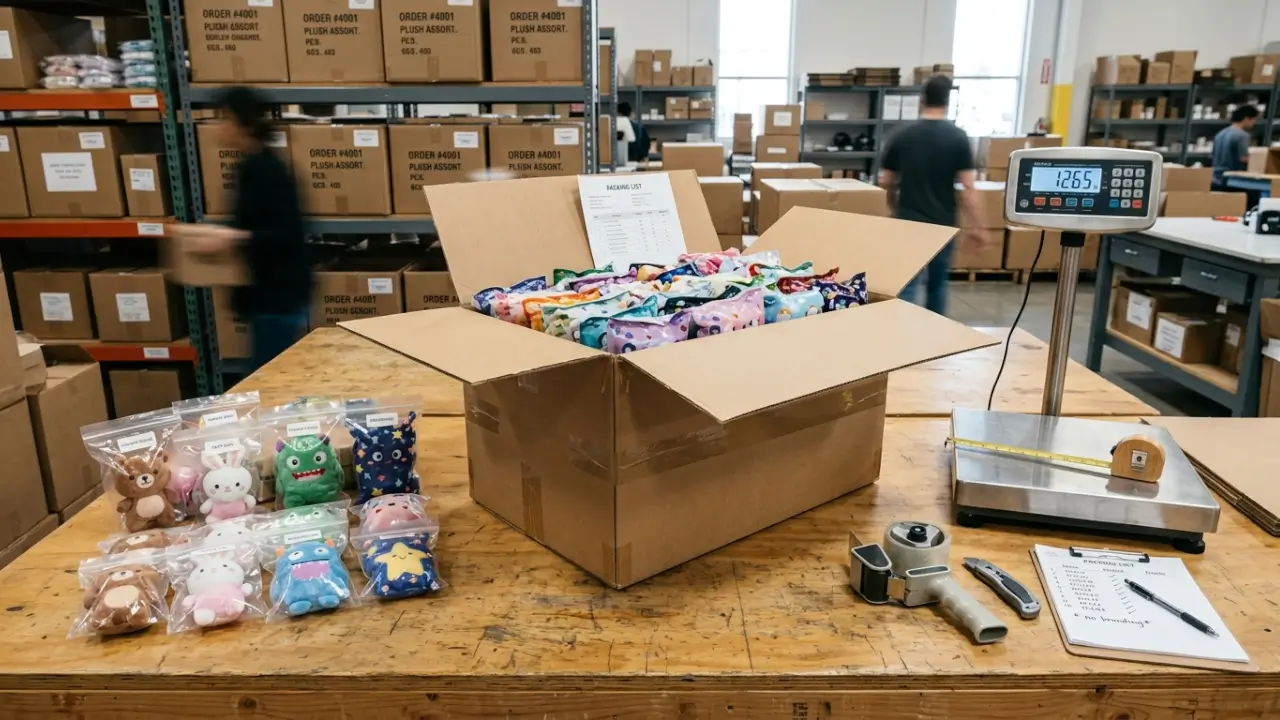
Confirm whether the individual unit is bagged, boxed, tagged, or otherwise protected; whether retail packaging ships flat or assembled; and how units are arranged inside the master carton. Request carton dimensions and gross weight before you finalize a freight estimate.
Discuss lead time in stages, not as one broad promise. Ask the supplier to separate sample approval, production preparation, packing, dispatch, and estimated transit. Also confirm the quote’s validity period, payment milestones, shipping term, destination responsibility, and the documents you’ll need for import clearance.
For reorder planning, record the date stock becomes sellable, not just the date the order is placed. You might set a reorder review point after watching early sales, but the trigger should account for production and transport time that still needs confirmation. Seasonal or event-based sellers should leave extra room, because a late arrival can cut straight into the product’s selling window.
Red Flags Hiding Behind Strong Product Photos
Several warning signs are easy to miss when a product has strong visual appeal:
- Unclear product identity: The quote names a product but does not state dimensions, assortment, packaging, or included components.
- Unverifiable photographs: Images show polished displays but no close-ups of the zipper, seams, labels, or retail package.
- Unspecified assortment: “Random mix” arrives with no design list, case structure, or explanation of duplicate expectations.
- Non-comparable pricing: One quote bundles packaging or delivery while another lists product-only pricing.
- Pressure to skip confirmation: The supplier discourages sample review, written specifications, or approval of packaging artwork.
- No stated responsibility for defects: The discussion never explains how shortages, damaged cartons, or material deviations are documented and handled.
None of these prove a supplier can’t fulfill an order. They signal that you need more information before comparing offers or sending payment. Keep every approved image, specification, assortment detail, and packaging instruction in one purchase file.
The Quote Brief to Send Before Any Supplier Names a Price
Send a structured request that makes the expected response easy to compare. Adapt this template:
Please quote the Migo Animal Party zipper bag blind box for [destination market] and [sales channel]. Please confirm: available designs; unit and case quantity; MOQ by unit, case, and design; finished dimensions; materials and filling; zipper and decoration details; individual and master-carton packaging; net and gross weight; carton dimensions; sample availability; production and dispatch stages; shipping terms; payment terms; available labeling or inserts; and the process for reporting shortages or quality deviations. Please identify every cost included in and excluded from the quoted price.
Also request a photo or video showing the zipper opening, internal space, seams, and packaging. If you need a specific assortment, state it before the quote is issued. If the supplier can’t provide that configuration, ask for the nearest alternative and record the difference.
For retailers weighing functional plush against smaller accessory products, the guide to blind box fridge magnets versus bag charms is a useful way to think about display footprint, perceived utility, and purchase context. You can also review how other functional plush products are positioned before finalizing where the Migo format belongs in your range.
Before You Place the First Order
Work through a staged decision: first confirm the product specification and intended use, then compare assortment and case economics, then calculate landed cost, and finally review packaging, quality, compliance, and shipping. A sample or representative approval step is especially worth it for a zipper format, because the closure and seams feed directly into customer satisfaction.
When you’re ready to compare suppliers, send the completed quote brief and ask for a response against each line. Approach a supplier for a formal quotation only after you’ve fixed your destination market, expected order structure, packaging needs, and acceptable assortment. That gives both sides a clearer basis for discussing the Migo Animal Party format and planning a responsible first order.
FAQ
What should buyers confirm first when sourcing the Migo Animal Party zipper bag?
Confirm the exact product configuration, dimensions, materials, zipper details, available designs, packaging, and case quantity. The product name alone is not enough to compare wholesale offers.
Is a mixed assortment or a design-specific order better?
A mixed assortment may provide wider display variety, while a design-specific order may simplify replenishment. The better choice depends on shelf space, sales history, and the supplier’s case and MOQ rules.
How should buyers calculate the landed cost of a plush blind box?
Add product, packaging, freight, insurance, customs-related charges, duties, taxes, handling, payment fees, and other destination costs. Compare the total against the number of sellable units, not just the quoted unit price.
What quality checks matter most for a functional plush bag?
Inspect zipper operation, seam strength, decoration attachment, shape recovery, usable interior space, packaging protection, and consistency with the approved sample or written specification.
Do plush zipper bags require compliance checks?
Potential requirements depend on the destination market, intended age group, materials, and how the product is marketed. Buyers should verify applicable safety, labeling, packaging, and import obligations before ordering.
Final Buying Takeaway
Assess the Migo Animal Party format as both a collectible plush product and a functional zipper accessory. A disciplined buyer compares the actual specification, assortment, case economics, landed cost, packaging, inspection plan, and reorder timing before treating any quote as ready for purchase.