



Choosing between two collectible plush lines takes more than comparing hero photos. Attachment strength, packed size, assortment structure, case quantity, packaging condition, and landed cost can all change which series is easier to sell profitably. This plush pendant comparison examines the Alien Stage Rabbit Series and AAHS Mini Plush Pendants as retail buying options without assuming specifications that must still be confirmed with the supplier.
The goal is not to crown a universal winner. It is to surface the questions that reveal the better fit for a gift shop, collectible store, online seller, pop-up vendor, or accessory-focused retailer.
Match Each Plush Line to a Specific Retail Job
Start with where and how the pendants will be sold. A series that performs well in a collector-focused online launch may not be the easiest choice for an impulse display near a physical checkout.
- Collectible and fandom stores: Ask whether the Alien Stage Rabbit Series has documented authorization, consistent character identification, and packaging suitable for collectors. A recognizable theme can support targeted demand, but never infer licensing status from a product name alone.
- Gift and lifestyle shops: Compare how easily shoppers understand the design without prior knowledge of a series. Evaluate AAHS Mini Plush Pendants as compact gift accessories, subject to confirmed dimensions and presentation.
- Bag-accessory retailers: Inspect the hanging hardware, attachment method, weight, and visibility when displayed on a bag. The broader choice between small gifts such as bag charms and magnets can also help clarify the intended customer.
- Online sellers: Check whether every variation can be photographed and identified clearly. Ambiguous assortments increase listing errors and customer service work.
- Pop-ups and market stalls: Favor packaging that is quick to count, display, and replenish without occupying excessive table space.
Decision rule: choose the line whose format matches the selling environment, not simply the one with the strongest hero image.
Score Both Series on the Same Confirmed Specifications
Request the same information for both lines before scoring them. If one quotation omits dimensions, assortment details, or case quantity, the offers are not yet comparable.
| Evaluation point | What to confirm | Why it affects the decision |
|---|---|---|
| Product dimensions | Height, width, depth, and whether measurements include ears or attachments | Determines display density, parcel size, and whether “mini” means the same thing in both quotes |
| Weight | Net product weight and packed unit weight | Affects bag usability and freight calculations |
| Attachment hardware | Clip, chain, loop, ring, or another mechanism; material and finish | Influences perceived value, durability, and customer use |
| Assortment structure | Number of regular designs, possible special designs, and assortment method | Changes duplicate risk and set-completion appeal |
| Unit packaging | Blind box, bag, window box, card, or other format | Affects display, tamper control, and collector expectations |
| Case configuration | Units per inner and master carton; sealed or mixed status | Controls order increments and inventory exposure |
| Carton data | Carton dimensions, gross weight, and carton count | Needed for meaningful freight and landed-cost estimates |
| Documentation | Product labeling, material information, and authorization evidence where relevant | Supports marketplace review and destination-market checks |
| Defect process | Evidence required, reporting window, and proposed remedy | Prevents assumptions after damaged or incomplete goods arrive |
Use a simple weighted score rather than treating every row equally. For example, an online collector shop may give assortment accuracy and packaging condition more weight, while an accessory kiosk may prioritize attachment security and compact display size.
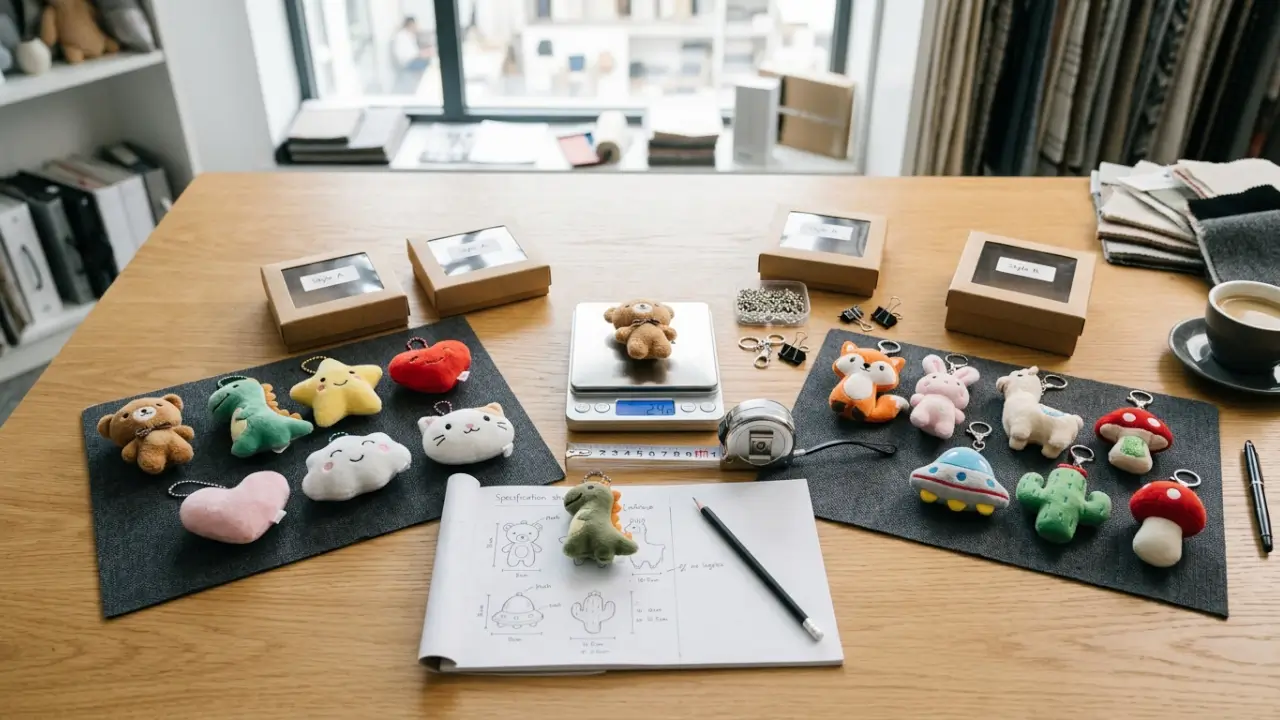
How Rabbit Styling and Mini Scale Change Merchandising
The Rabbit Series name suggests a clear visual theme, while the AAHS Mini name emphasizes format. Those names can guide initial merchandising ideas, but the actual characters, colors, sizes, and packaging must be verified from current product materials.
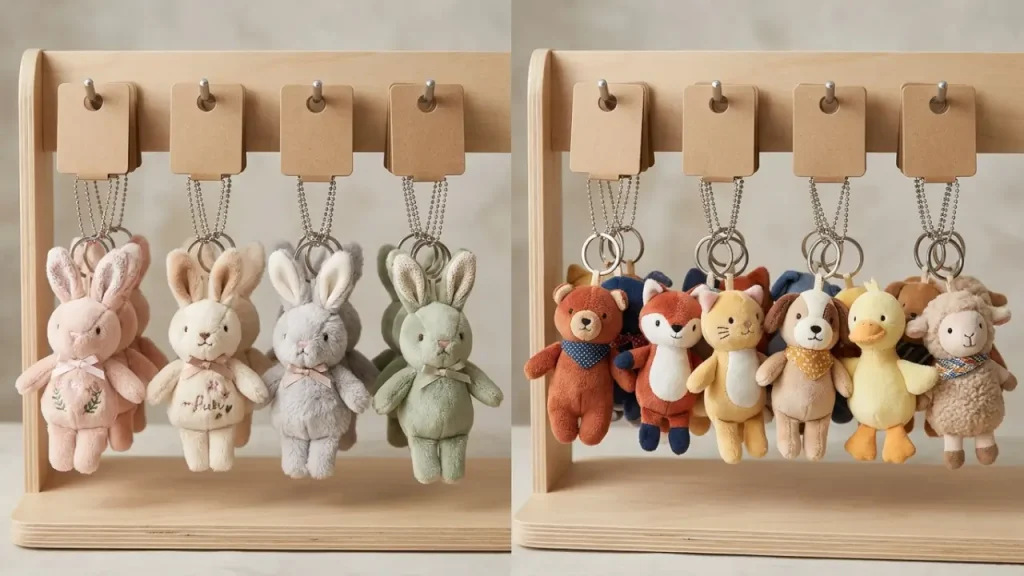
A visually unified rabbit assortment may create a coherent shelf block or themed gift display. However, retailers should check whether variations are distinct enough for repeat purchases. Compare ear shapes, facial details, colors, outfits, and accessories using a full assortment image rather than a single sample.
A mini pendant format may suit hooks, countertop baskets, or add-on sales if its packaging and attachment support those placements. Confirm the packed dimensions before allocating fixtures; a small plush can still ship in bulky retail packaging.
Retailers weighing adjacent collections can use the Nommi plush series comparison to see how format and store positioning affect selection. For another rabbit-oriented buying decision, review the Lovely Emma Bunny Alliance comparison.
Case Quantities Can Decide Which Series Is Safer to Test
Do not ask only for the minimum order quantity. Ask how that minimum converts into cases, assortments, and individual designs. An acceptable unit minimum can still produce awkward inventory if orders must be placed in large sealed-case increments.
Use the following planning sequence:
- Confirm units per retail assortment, inner carton, and master carton.
- Ask whether the quoted order must contain full cases.
- Verify whether a sealed case follows a stated design ratio or remains random.
- Identify whether special or hidden designs are guaranteed, possible, or excluded. Do not assume their presence.
- Calculate how many complete display locations the order can fill.
As a planning example, a retailer testing four locations may allocate one case per location and retain part of the order for replenishment. This only works if the confirmed case configuration supports that split. Buyers unfamiliar with assortment terminology should compare sealed series sets and mixed blind box assortments before approving the order structure.
Before you narrow the choice: once both case configurations arrive, drop them into the same worksheet and ask the supplier to fill every blank field so you are comparing complete offers.
Turn Both Quotations Into a Delivered Cost per Sellable Unit
A lower quoted unit price does not automatically create the lower-cost retail option. Compare the estimated landed cost for the same destination and shipping basis.
A practical calculation is:
Estimated landed cost per sellable unit = product cost + freight + applicable duties or taxes + handling + inspection or preparation costs + expected loss allowance, divided by sellable units.
Request carton dimensions and gross weight for both products. Plush can be light but space-consuming, so volumetric freight may matter. Packaging that protects the item also adds volume; reducing that protection without testing can shift savings into damage and returns.
Ask whether quotations use the same currency, trade terms, packaging level, and destination assumption. Verify tariff classification, duties, taxes, import documentation, and customs requirements with qualified parties for the destination market rather than relying on a product title.
For reorder planning, record three dates separately: order confirmation, expected dispatch readiness, and estimated arrival. Treat any timing as an estimate until the supplier confirms the order and shipping arrangement. A reasonable internal reorder trigger should account for sales velocity, remaining stock, production uncertainty, and transport time.
Inspect the Plush, Attachment, and Retail Packaging Together
A pendant is a combined product: plush body, decorative details, hardware, seams, labels, and packaging. Inspecting only softness or appearance misses common operational risks.
- Compare the approved sample with production goods for dimensions, color, face placement, and accessory position.
- Check seams around ears, limbs, loops, and other stress points.
- Open and close the attachment hardware repeatedly as a practical functional check.
- Review embroidery or printed details for alignment and consistency.
- Check for loose components, exposed sharp areas, stains, odors, crushed boxes, and missing labels.
- Confirm barcode placement and whether each design needs separate inventory identification.
- Photograph cartons before opening and document the inspection method.
For an example of additional plush-specific sourcing questions, see the Siinono plush blind box buying guide.
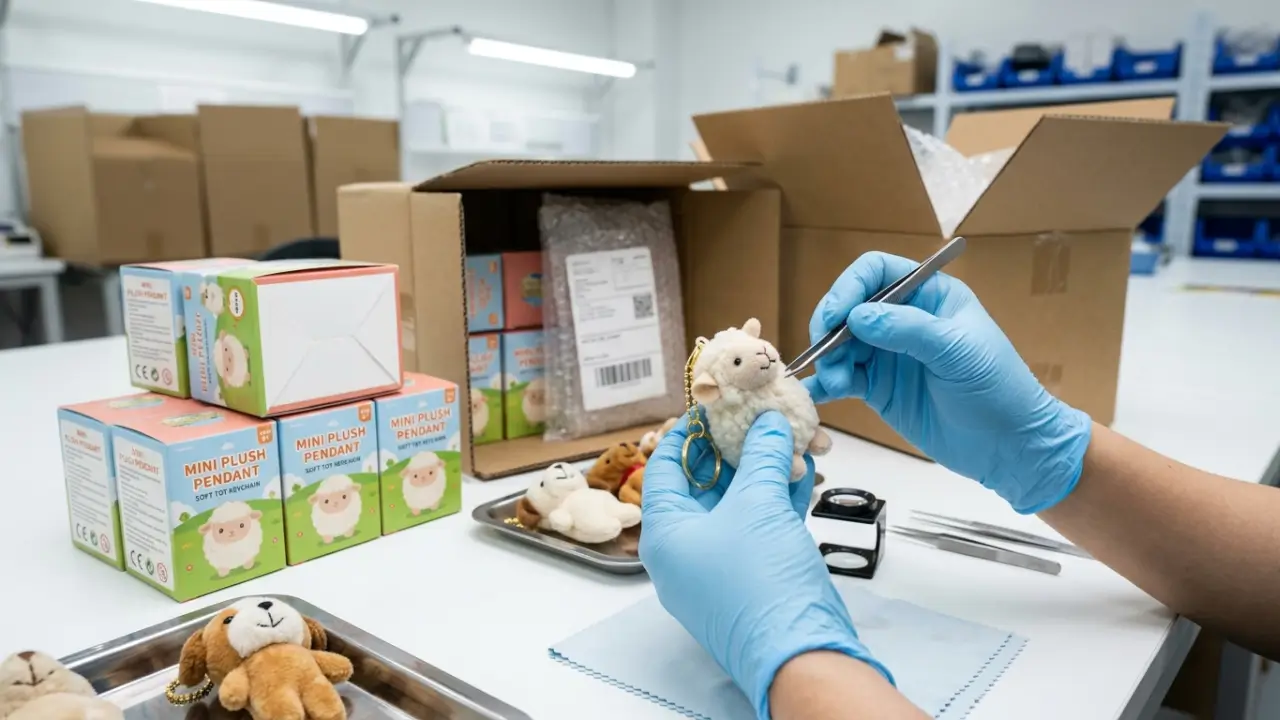
Requirements for labeling, age grading, materials, product safety, intellectual property, and testing vary by destination and sales channel. Request available documentation and independently verify which rules apply. A statement such as “standard quality” is not a substitute for named documents or agreed inspection criteria.
Missing Details That Signal a Weak Plush Pendant Quote
Warning signs usually appear as missing details rather than dramatic claims. Pause the comparison if the supplier will not identify the exact edition, sends photos that conflict with the description, or changes the assortment explanation between messages.
Other risks include a quote that excludes retail packaging without saying so, no carton data for freight planning, vague use of “set,” pressure to pay before specifications are recorded, or no written process for shortages and visible defects. Also question unusually broad claims about licensing, compliance, or guaranteed special designs when no supporting documentation is provided.
Copyable inquiry checklist
- Exact product and edition: Alien Stage Rabbit Series or AAHS Mini Plush Pendants
- Current product and packaging photos for the quoted edition
- Plush dimensions, net weight, and attachment type
- Materials and available product documentation
- Design count and assortment method
- Units per assortment, inner carton, and master carton
- Order minimum and required order increments
- Unit packaging included in the price
- Carton dimensions, gross weight, currency, and trade terms
- Estimated order-readiness basis and factors that could change it
- Sample availability and whether it matches the quoted production version
- Inspection, shortage, damage, and defect-reporting procedure
Before paying for either series, request itemized quotations using this same checklist. Compare the answers line by line, obtain written confirmation of the selected edition and case structure, and calculate delivered cost per sellable unit. The better retail buy is the option with the strongest fit and clearest documentation—not necessarily the lowest headline price.
FAQ
Which series is better for a gift store?
The better choice depends on confirmed size, packaging, visual accessibility, attachment type, and case quantity. A gift store should favor the series that shoppers can understand quickly and that fits its fixtures and typical purchase occasion.
Should retailers order a sealed case or a mixed assortment?
Choose only after confirming the design ratio and duplicate risk. Sealed cases may simplify counting, while mixed assortments may offer flexibility, but these terms can differ between suppliers and must be defined in writing.
What specifications matter most for a plush pendant?
Confirm overall dimensions, packed weight, plush materials, attachment mechanism, seam construction, design count, unit packaging, and case configuration. Carton dimensions and gross weight are also essential for freight estimates.
How should buyers compare Alien Stage and AAHS Mini prices?
Compare estimated landed cost per sellable unit using the same currency, destination, packaging level, order quantity, trade terms, and freight assumptions. Include, rather than exclude, damaged-unit risk and handling costs.
What documentation should a retailer request?
Ask for available material, labeling, safety, and product-authorization documentation relevant to the item. Buyers should then verify destination-market and sales-channel requirements independently because they vary.
Choose the Series With Fewer Unanswered Questions
Alien Stage Rabbit Series may suit a retailer building a themed collectible presentation, while AAHS Mini Plush Pendants may suit a compact accessory program—but only confirmed specifications can support either conclusion. Score both offers against the same retail use case, assortment needs, delivered cost, packaging checks, and documentation requirements before placing the first order.