



Buying character plush blind boxes is a different problem than picking standard plush toys: the sale depends on character appeal, mystery packaging, repeat purchase potential, and carton-level economics. A Grumpipi plush blind box can look promising in photos, but the real buying decision starts with assortment clarity, packaging protection, landed cost, and whether the ugly-cute style fits your customer base.
This guide is written for shop owners, anime and designer toy retailers, gift stores, pop-up sellers, and online resellers comparing the Sleepless Grumpipi V2 plush blind box against other collectible blind box formats. Use it to prepare quote questions, avoid non-comparable offers, and decide whether the line deserves a test order or a deeper seasonal buy.
Why Ugly-Cute Plush Needs a Different Buying Filter
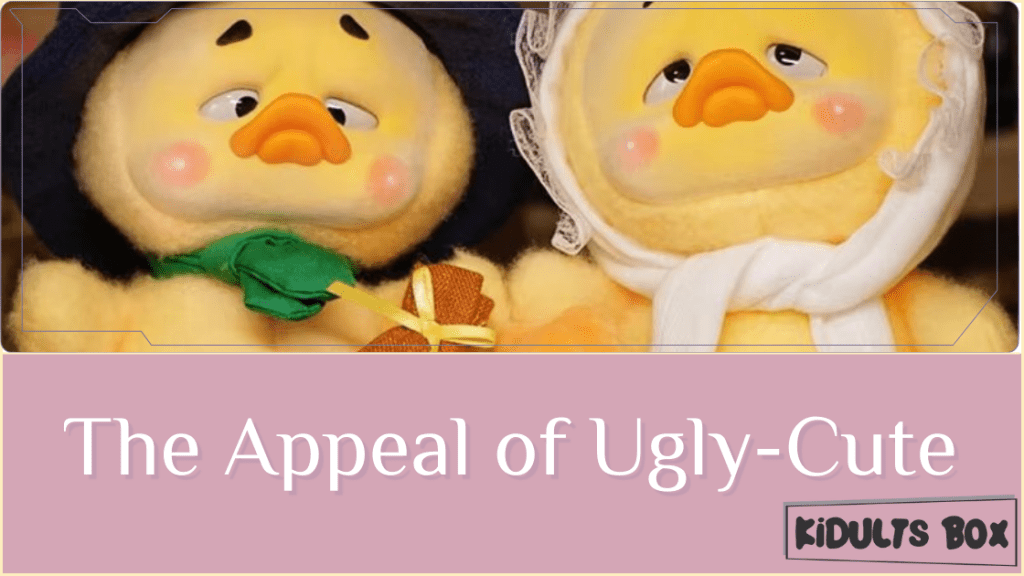
Ugly-cute plush characters are not purchased only because they are soft. Buyers are usually reacting to expression, attitude, meme potential, and how the character photographs on shelves or social feeds. That means the buying filter should include both product quality and visual distinctiveness.
Before asking for a quote, decide where the product will sit in your assortment. Is it a main collectible line, a counter-display impulse item, a giftable plush, or an add-on beside figures and accessories? The answer affects how many units you test, how much packaging damage you can tolerate, and whether you need full sealed cases or mixed loose boxes.
- Designer toy stores: compare the character style with darker or art-toy blind boxes.
- Anime and fandom shops: check whether the expression and packaging work beside character goods and badges.
- Gift retailers: focus on gift-ready presentation and shelf readability.
- Online sellers: prioritize carton condition, box photos, and SKU naming consistency.
- Pop-up vendors: test whether the ugly-cute look creates quick recognition from a small display.
If your store already carries grumpy or moody character products, compare buyer response with related lines such as Sleepless Grumpipi figures. Plush and figure buyers may overlap, but the reasons for purchase can differ: tactile gift value for plush, display value for figures.
How to Read a Grumpipi Plush Blind Box Assortment Before You Quote
A blind box assortment is not just a list of designs. It affects perceived value, reorder planning, customer complaints, and how you explain the product at retail. Ask for the assortment structure before comparing supplier offers.
Key questions include:
- How many regular designs are in the series?
- Is there a hidden, rare, or special design, and how is it distributed?
- Can the supplier provide sealed cases, or only individual blind boxes?
- Does a sealed case reduce duplicate risk, or is distribution still random?
- Are product photos, box photos, and character names available for retail listing?
Do not assume that every case contains a complete set unless the supplier confirms it in writing. For example, a retailer may plan merchandising around a full display set, but if the case distribution is random, the shop should avoid promising customers a complete run from one case.
Carton Math for Sleepless Grumpipi V2 Plush Orders
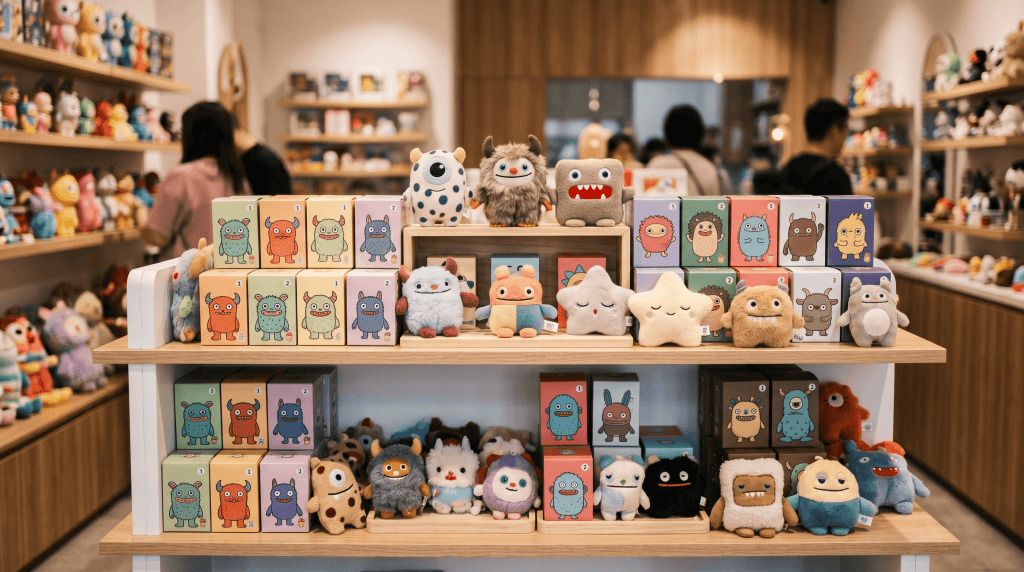
Plush blind boxes take more space than small vinyl or resin-style figures, so carton math matters early. Even when the unit price looks acceptable, oversized cartons can change storage, freight, and shelf replenishment decisions.
Ask suppliers to confirm box dimensions, inner pack details, master carton quantity, carton measurements, and gross weight. If the offer does not include these details, your landed cost estimate is incomplete.
| Buying Check | What to Ask | Why It Matters |
|---|---|---|
| Series structure | Regular designs, possible hidden designs, and case distribution | Helps plan customer expectations and duplicate risk |
| Unit packaging | Blind box size, bagging, tags, and outer box protection | Affects shelf display and damage claims |
| Case quantity | Units per inner box and master carton | Supports order planning and warehouse handling |
| Carton data | Carton dimensions and gross weight | Needed for freight and landed cost estimates |
| Product identity | SKU, series name, character names, and version naming | Prevents listing confusion and reorder mistakes |
| Quality standard | Acceptable plush defects, stitching checks, and packaging condition | Reduces disputes after arrival |
| Compliance documents | Labeling, age grading, and destination-market requirements | Buyers should verify import and retail obligations |
As a planning reference, a small retailer might compare a test order of several sealed cases with a smaller mixed quantity. The sealed-case route may help display consistency, while the smaller mixed quantity may reduce first-order risk. The right choice depends on cash flow, storage, and expected sell-through.
When the Plush Box Looks Cheap but the Landed Cost Does Not
For plush blind boxes, the lowest quoted unit price is not always the best commercial option. A light but bulky carton can still create freight pressure, especially when boxes must arrive without crushing. Buyers should compare quotes on landed cost, not only on unit cost.
Build a simple landed-cost worksheet with these fields:
- Quoted product cost per unit
- Case quantity and carton count
- Estimated freight or forwarding cost
- Import duties, taxes, customs brokerage, or local charges where applicable
- Inspection, labeling, or repacking cost if needed
- Expected damage allowance or replacement policy, if offered
For example, Supplier A may quote a lower unit price but ship in larger cartons with weaker protection. Supplier B may quote slightly higher but provide clearer carton specs and stronger retail box protection. Without freight and carton data, those offers are not yet comparable.
Soft buying step: if you are comparing multiple plush blind box lines, prepare one standard quote sheet and ask every supplier to fill in the same fields. This makes the Grumpipi offer easier to compare with other collectible plush or figure lines before you commit budget.
Retailers that also sell darker character collectibles may want to benchmark shelf appeal against products such as the Light Nightmare Twins blind box. The aesthetics are different, but both rely on a strong visual theme rather than generic cuteness.
Packaging Checks for a Grumpy Plush That Must Still Look Giftable
Ugly-cute does not mean damaged, dusty, or poorly packed. The character can look intentionally grumpy, but the retail package still needs to look clean and giftable. This is especially important for blind boxes because customers cannot inspect the plush before purchase.
Ask for real packaging photos from multiple angles, not only polished product renders. Confirm whether each plush is individually bagged inside the blind box, whether hangtags or labels are included, and whether the outer box is sealed. If your store sells online, ask whether the retail box can survive parcel handling or whether you should add protective mailers.
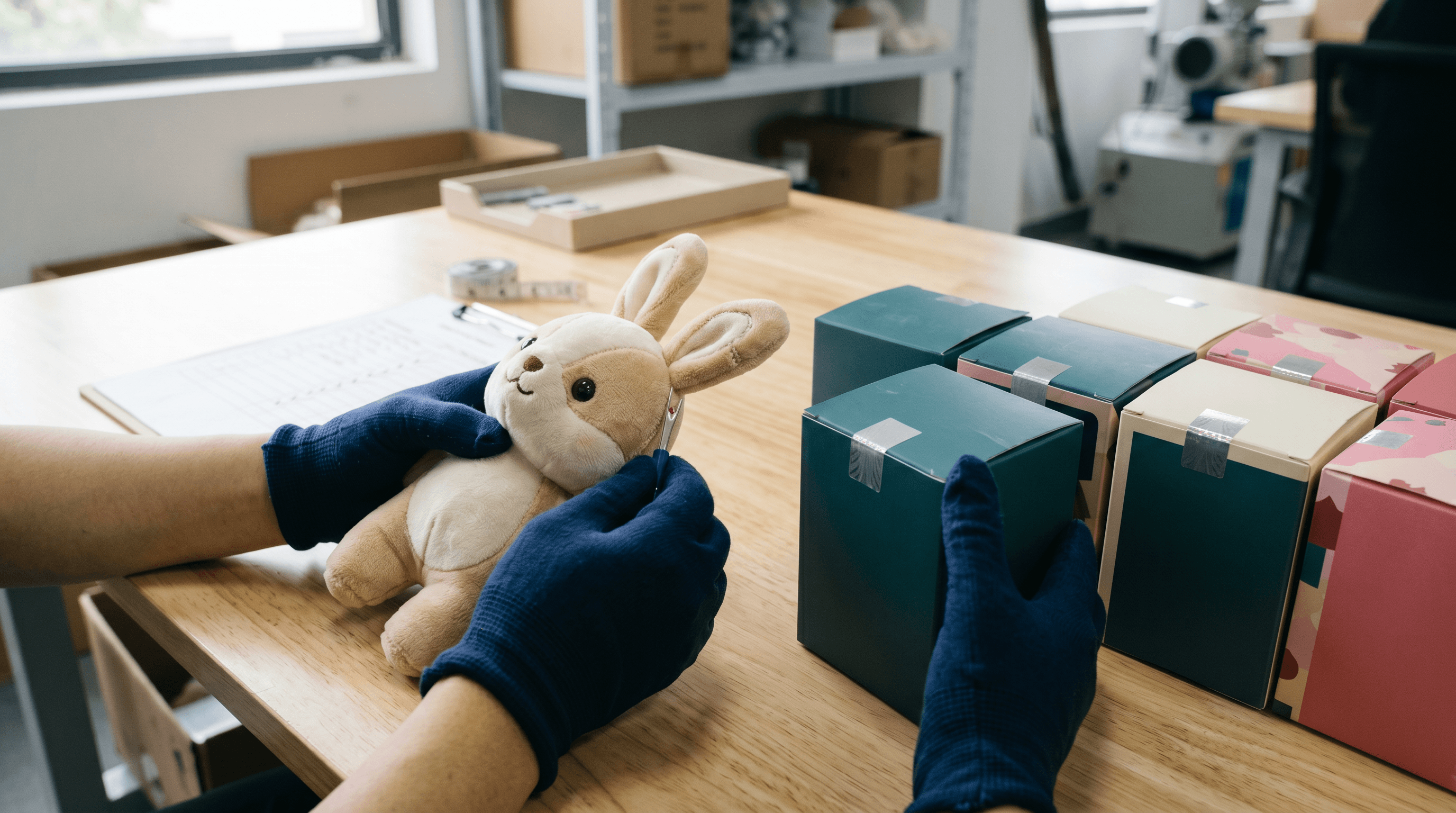
Before approving a larger order, buyers often request a sample or first small batch to review:
- Outer box printing clarity and color consistency
- Box corners, seals, and crushing risk
- Plush shape recovery after unpacking
- Stitching around face, limbs, ears, or accessories
- Loose threads, odor, stains, or stuffing irregularity
- Hangtag, barcode, warning label, or age-grade information if required
Compliance and labeling rules vary by destination market. Buyers should confirm local requirements for toy safety, fiber content, age grading, warnings, language labels, and import documentation with their compliance advisor or customs partner. Do not rely only on product photos for compliance decisions.
Sizing a Test Run Instead of Guessing on MOQ
MOQ is not just a supplier number; it is a risk decision. For a Grumpipi plush blind box, buyers should think in terms of case quantity, display needs, and reorder timing rather than choosing a random unit count.
Start by mapping your selling channels. A single boutique shelf may only need a small test quantity. A convention booth may need enough sealed boxes to support impulse purchases across several days. An online launch may need backup stock if social content performs well.
Use this planning logic:
- Display quantity: how many boxes must be visible to make the line look intentional?
- Backstock: how many units can you hold without tying up too much cash?
- Duplicate tolerance: will customers buy multiples, trade, or complain about repeats?
- Reorder gap: can you restock before momentum drops?
- Assortment balance: does this plush line crowd out figures, dolls, badges, or accessories?
As a planning reference, a shop might test one ugly-cute plush line beside one softer romantic plush line, such as the Nommi Amaryllis Sweetheart Series. The comparison can reveal whether customers prefer moody character humor or gift-focused sweetness.
Freight Timing and Reorder Risk for Bulky Blind Box Plush
Plush blind boxes can create two opposite problems: ordering too little and losing momentum, or ordering too much and filling storage with slow-moving cartons. Reorder planning should begin before the first shipment leaves the supplier.
Ask suppliers for the estimated production or preparation time, shipping method options, carton count, and documentation timing. Treat any timeline as an estimate until confirmed for your order and destination. Freight can also change during peak seasons, holidays, or port congestion, so build a buffer where possible.
For reorder planning, track sell-through by week rather than waiting until the shelf is empty. For example, if a small test batch sells most units within the first two weekends, the buyer may prepare a reorder inquiry before the final few boxes are gone. If sales are slow after the initial display push, it may be better to reduce reorder quantity or pair the plush with lower-cost add-ons such as plush badges for anime shops.
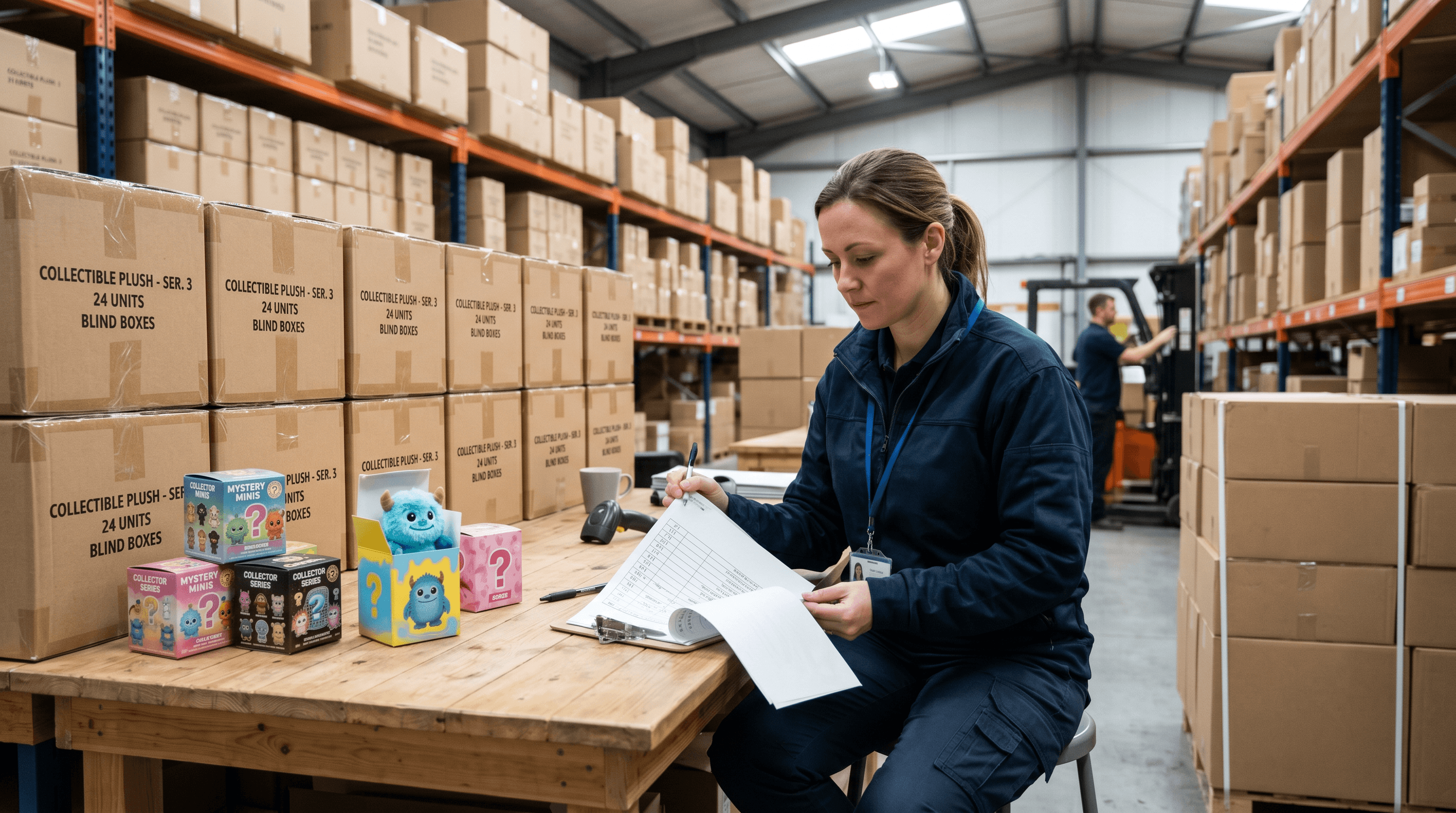
Keep reorder records simple: supplier name, series version, SKU or item code, case quantity, carton size, order date, arrival condition, and customer feedback. These details prevent confusion if another version or similar character line appears later.
Grumpipi Plush Blind Box Quote Questions Buyers Should Send
A quote request should make it easy for the supplier to answer clearly. Vague inquiries like “How much for Grumpipi?” often lead to incomplete offers. Use a structured message so every quote can be compared side by side.
Inquiry template:
Hello, I am evaluating the Sleepless Grumpipi V2 plush blind box for retail purchase. Please quote based on the quantity options below and confirm the following details: available version, number of designs, case quantity, whether cases are sealed, retail box dimensions, master carton dimensions and gross weight, packaging condition, product photos, labeling information, estimated preparation time, shipping options, payment terms, and any sample option. Please also confirm whether the assortment distribution is random or case-based.
Include your destination country or region, preferred shipping method if known, and whether you need the goods for a specific selling window. If you are comparing with figure or doll blind boxes, mention that you need carton data for landed-cost comparison. Buyers sourcing across formats may also find it useful to compare with BJD or art doll buying guides, such as the Creator’s Essence BJD blind box guide, because doll-style products often raise different packaging and inspection questions.
Warning Signs Before Paying for Ugly-Cute Plush Stock
Most sourcing problems show up before payment if buyers know what to look for. Be cautious when a supplier cannot identify the version, avoids carton questions, or sends only low-resolution images without packaging details.
- Version confusion: the quote does not clearly state Sleepless Grumpipi V2 or mixes photos from different releases.
- No carton data: the supplier gives unit price only and cannot provide dimensions or gross weight.
- Assortment overpromising: the seller promises complete sets without explaining case distribution.
- Packaging uncertainty: no photos of retail boxes, seals, or master cartons are available.
- Compliance silence: the supplier cannot discuss labels or documentation needed for your market.
- Unclear replacement process: there is no stated approach for damaged cartons, missing units, or obvious defects.
- Pressure without details: urgency is used to push payment before specifications are confirmed.
Before placing an order, ask for written confirmation of the product version, quantity, packaging format, carton specs, and shipping basis. A stronger buying process is simple: document the quote, confirm the sample or photos, compare landed cost, then approve payment only when the offer is specific enough to manage.
Ready to move from browsing to sourcing? Prepare your quantity range, destination, preferred shipping method, and retail requirements, then request a detailed quote for the Grumpipi plush blind box. The more specific your inquiry, the easier it is to compare offers and avoid surprises after arrival.
FAQ
What should retailers confirm before buying a Grumpipi plush blind box?
Retailers should confirm the exact version, assortment structure, case quantity, retail box size, master carton dimensions, gross weight, packaging condition, and any labeling or documentation needed for their destination market.
Is a sealed case better than buying loose blind boxes?
A sealed case may be better for display consistency and assortment planning, but buyers should not assume it contains a full set unless the supplier confirms the distribution. Loose boxes may reduce first-order risk but can make assortment control harder.
How can buyers compare quotes for plush blind boxes?
Compare quotes by landed cost, not only unit price. Include product cost, carton quantity, freight estimate, duties or local charges where applicable, packaging protection, inspection needs, and the supplier’s ability to confirm specifications.
What quality issues are common with collectible plush blind boxes?
Buyers should check for crushed retail boxes, loose threads, uneven stuffing, stitching issues, stains, odors, unclear labels, and inconsistent character details. A sample or small first batch can help identify these risks.
Can ugly-cute plush work in gift shops as well as collectible toy stores?
It can, but the buying logic differs. Gift shops should focus on packaging presentation and broad visual appeal, while collectible toy stores may place more weight on character identity, series structure, and repeat-purchase behavior.
Before You Place That First Order
A Grumpipi plush blind box order should be treated as a retail test with measurable assumptions, not a simple character purchase. Confirm the version, case pack, packaging, carton data, compliance needs, and reorder path before you commit to volume.
The ugly-cute style can be commercially useful when it fits your audience and is supported by clean packaging, clear assortment information, and realistic landed-cost planning. Buyers who document each step are in a much better position to negotiate, compare suppliers, and decide whether to reorder after the first sell-through data arrives.