


Small-ticket accessories can lift basket size, but they also expose buyers to avoidable problems: unclear licensing, weak packaging, lopsided character assortments, and landed costs that quietly erase margin. For anime retailers, plush badges work best when they are planned as a controlled add-on program rather than a random impulse buy.
This guide is written for shop owners, pop-up sellers, online anime stores, convention vendors, and wholesale buyers comparing plush badge suppliers. It focuses on practical sourcing questions: what to confirm before quoting, how to think about MOQ and carton math, what packaging risks to check, and when a cheap badge offer is not really comparable.
Why plush badges can work as low-risk anime counter items
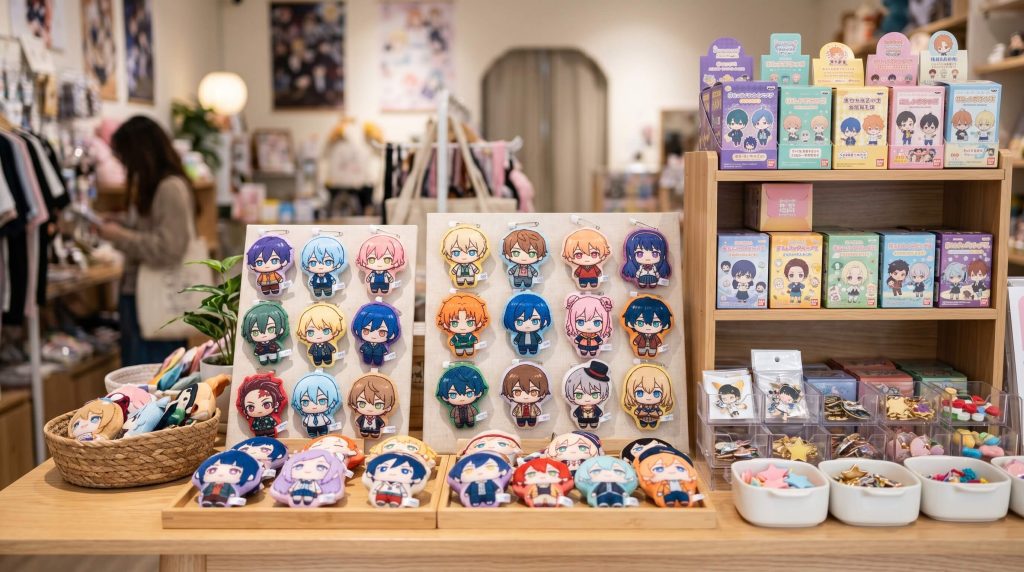
Plush badges sit in a useful retail zone: they are small, easy to display, and often easier for shoppers to add to an existing purchase than a larger figure or plush toy. A customer who came in for a blind box, keychain, or stationery item may add a badge if the design is recognizable and the price point feels casual.
The buyer action is simple: decide what role the badge must play before requesting quotes. Is it a checkout add-on, a bundle gift, a convention table item, or an online cart threshold product? Each role changes the packaging, case quantity, and reorder plan.
- Anime specialty stores: place badges near checkout or next to related fandom shelves.
- Online retailers: use badges as bundle add-ons, mystery accessories, or low-weight upsell items.
- Convention sellers: prioritize easy visual display, compact transport, and quick restocking.
- Gift shops with anime corners: test small badge assortments before expanding into larger IP goods.
If your shop already sells fandom blind boxes, compare badge buying with other anime-adjacent product categories. For example, the Alien Stage Baby Series blind box sourcing guide shows how retailers can think about character demand, assortment risk, and buyer expectations in a related fandom product format.
Where Link Click plush badges fit in a fan merchandise shelf
Treat these badges as part of a wider anime merchandise assortment, not as a standalone product decision. Buyers should ask whether the badge designs match the audience already visiting the store. If customers mainly buy cute plush characters, bag charms, or blind boxes, plush badges may be easier to test. If the store focuses only on figures or model kits, badges may need a smaller first order and clearer display support.
A useful decision rule: place badges beside products with similar purchase behavior. Bag charms, zipper bags, acrylic stands, pins, and small plush items all compete for the same impulse-accessory budget. Retailers studying the charm and bag accessory trend may also find the Baby Three Take Me Out Zipper Bag retail trend guide useful when planning cross-merchandising displays.
Before adding the item to a purchase plan, prepare three assumptions:
- Who is the expected buyer? Existing Link Click fans, general anime shoppers, gift buyers, or convention visitors?
- How will the badge be displayed? Pegboard, counter tray, hanging card, acrylic bin, or bundle pack?
- What will it be compared against? Pins, keychains, mini plush, blind boxes, or bag charms?
These answers help prevent over-ordering a badge design simply because the unit price looks low.
Which Link Click badge specs to lock down before asking for quotes
A quote is only useful when every supplier is quoting the same version of the product. Buyers should avoid comparing one supplier’s loose badge with another supplier’s individually packed retail-ready badge. Small specification differences can change cost, shelf appeal, and customer complaints.
| Specification | Buyer question to ask | Why it affects the order |
|---|---|---|
| Badge size | What is the approximate height and width of each plush badge? | Size affects perceived value, shipping volume, display density, and customer expectations. |
| Attachment type | Is it a pin, clip, safety pin back, chain, or mixed attachment? | Different attachments suit bags, clothing, shelves, or collector display differently. |
| Outer fabric | What plush or textile material is used? | Fabric feel influences giftability and whether the badge matches other plush items. |
| Embroidery or print | Are facial details embroidered, printed, appliqued, or mixed? | Detail method affects appearance consistency and inspection criteria. |
| Character assortment | Which designs are included, and can the ratio be confirmed in writing? | Unclear assortments create sell-through imbalance if one design is much less popular. |
| Retail packaging | Is each badge individually bagged, carded, tagged, or bulk packed? | Packaging changes labor needs, display readiness, and damage risk. |
| Carton quantity | How many units are in an inner pack and master carton? | Case packs affect test-order size, freight cost, and storage planning. |
| IP and labeling status | What authorization, label details, and market requirements can be documented? | Buyers should verify rights, customs, and local labeling obligations before resale. |
As a soft next step, create a one-page spec sheet before contacting suppliers. Include target quantity range, preferred packaging, destination market, required documentation questions, and whether substitutes are acceptable. A supplier’s response will become much easier to compare.
How to plan a first badge order without overloading inventory
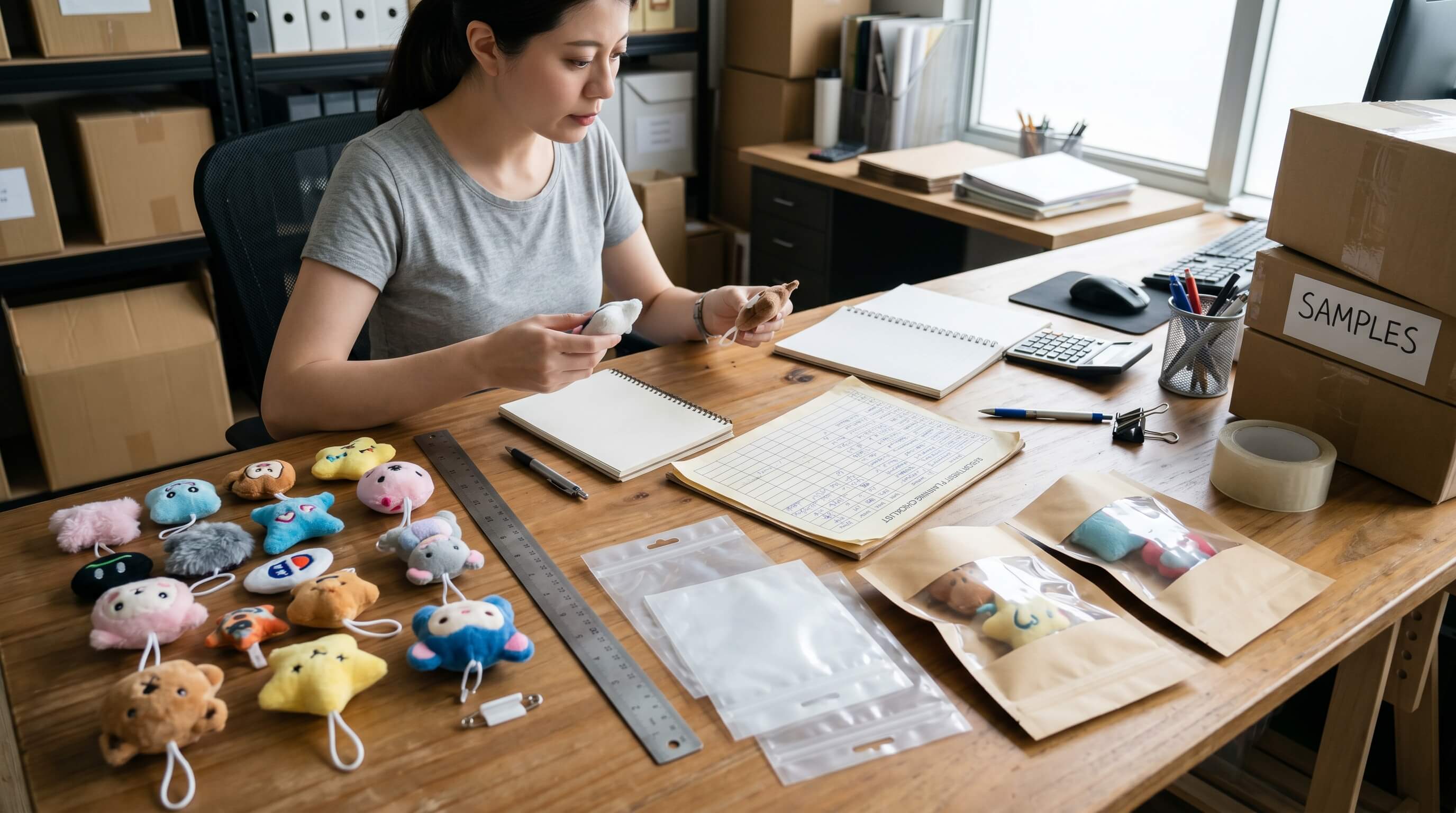
Low-cost accessories can still create inventory drag if the first order is too broad or poorly balanced. Buyers should separate the test quantity from the reorder quantity. The first order is for learning: which designs sell, what packaging customers accept, and whether defects or attachment complaints appear.
As a planning reference, a small retailer might compare three test structures instead of asking only for the cheapest total quote:
- Narrow test: fewer designs, more units per design, easier to read sell-through.
- Wide test: more designs, fewer units per design, better for fandom discovery but harder to reorder accurately.
- Bundle test: badges paired with blind boxes, plush, or bag charms to measure add-on behavior.
Do not assume the supplier’s MOQ is the right buying quantity. Ask whether the MOQ is per design, per assortment, per carton, or per order. A quote that looks low may require a design mix that is too large for your shelf space.
For buyers who already use plush blind boxes to attract collectors, plush badges can be tested as a lower-cost companion item. The Nommi Amaryllis Sweetheart Series buying guide offers useful comparison points for plush presentation, gifting appeal, and assortment planning.
Carton-level math matters more than the badge unit price
The cheapest badge unit price is not automatically the best purchasing decision. Because plush badges are small and relatively low-ticket, small changes in freight, packing, payment fees, receiving labor, and unsold designs can have an outsized effect on final margin.
Before approving an order, calculate landed cost at carton level. Buyers should request gross weight, carton dimensions, units per carton, and packing method. Then compare quotes using the same destination, shipping method, and delivery terms. If one supplier quotes only product cost and another includes export packing, the numbers are not yet comparable.
Use this simple buyer-side formula:
Estimated landed cost per badge = product cost + allocated freight + import/customs-related costs + payment/handling costs + receiving and repacking labor.
Compliance, customs, duties, and tax treatment vary by destination and product classification. Buyers should confirm requirements with their freight forwarder, customs broker, marketplace, or local advisor before importing or listing merchandise.
A practical warning: if the master carton is mostly air because the retail packaging is bulky, the freight cost per badge may be higher than expected. Ask for carton photos or packing diagrams when available, especially for larger orders.
Packaging checks before badges reach the checkout counter
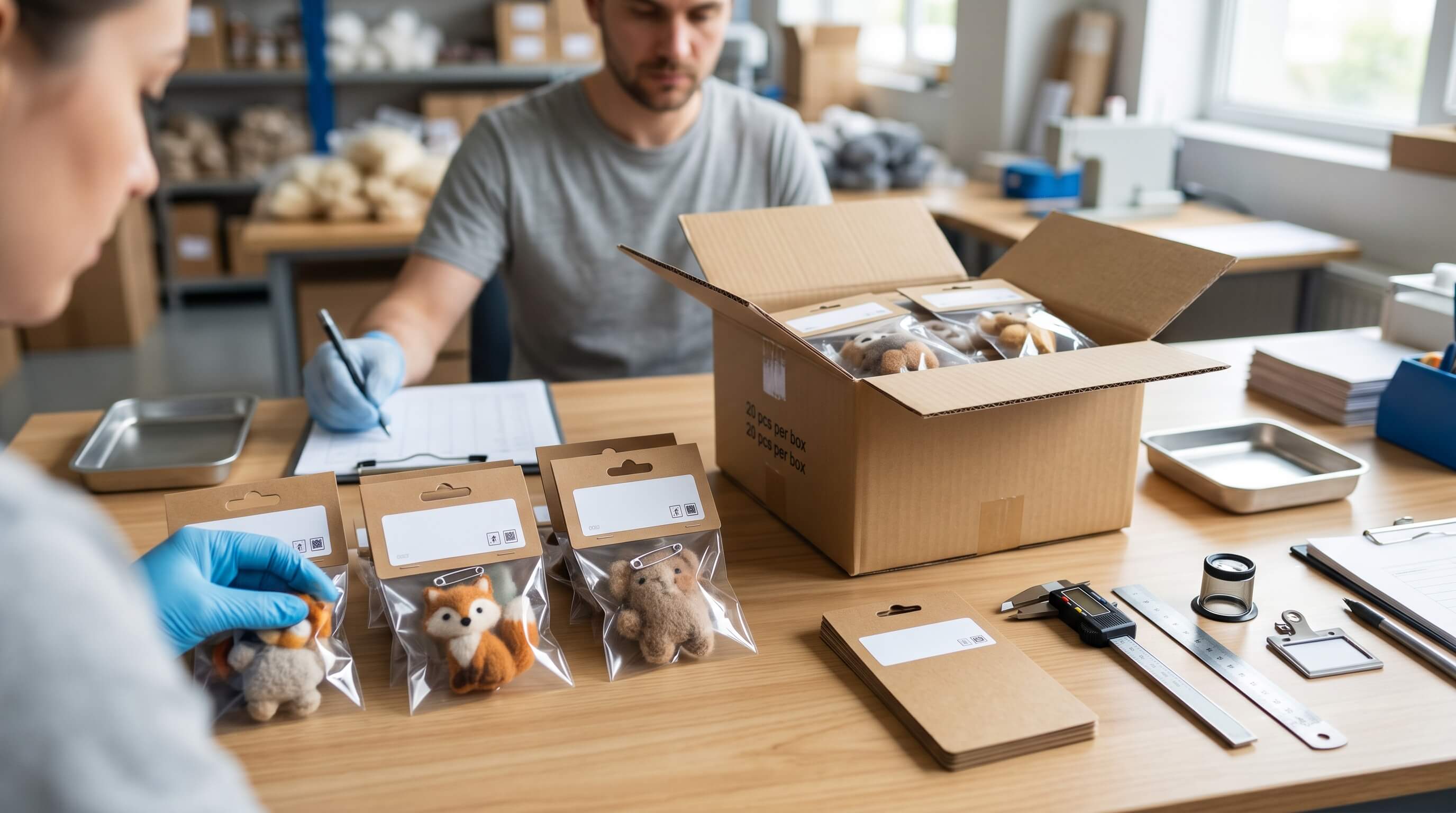
Packaging is not only about appearance. For plush badges, packaging affects dust protection, deformation, barcode handling, shelf display, and customer confidence. A loose bulk-packed badge may be acceptable for a convention bin but less suitable for a gift shop or marketplace listing.
Ask suppliers to clarify the packaging level in plain language:
- Is each badge individually packed?
- Does the package include a hanging hole, backing card, tag, or barcode area?
- Are designs visible without opening the package?
- How are badges protected from crushing or moisture during transit?
- Can inner packs be counted quickly during receiving?
For quality checks, define visible inspection points before shipment when possible. Typical buyer checks include stitching alignment, loose threads, pin or clip strength, fabric stains, missing parts, crushed packaging, incorrect character ratio, and barcode or label errors.
IP status is also a serious commercial issue. Link Click is an identifiable entertainment property, so buyers should not assume that every online offer is authorized. Ask what documentation is available and verify whether the goods can legally be imported and resold in your destination market. For children’s product rules, labeling, warnings, and small-part concerns, buyers should confirm applicable local requirements rather than relying on general supplier statements.
How to time reorders once you have real sell-through data
Plush badges often sell unevenly by design. One character, pose, or colorway may move faster than the rest. That means reorder planning should be based on design-level data, not only total units sold.
A simple example: if a shop receives several badge designs and one design sells through much faster during the first launch weekend, the buyer should separate that design’s reorder demand from the slower designs. Reordering the same mixed ratio may create dead stock in weaker designs while still running out of the strongest one.
Ask the supplier whether reorder ratios can be adjusted. If not, build that limitation into your first order plan. Also confirm whether the same design version will remain available for reorders. Do not promise customers an exact restock unless you have written confirmation from the supplier.
Seasonal timing can matter too. Anime accessories often sell well around holidays, conventions, school breaks, and gift periods. Retailers planning holiday shelves can compare the timing logic with the Nanci Christmas Gift Series seasonal buying guide, especially around display deadlines and clearance risk.
Warning signs when a Link Click badge quote looks too easy
Red flags are not always dramatic. In low-cost accessories, the biggest risks often appear as missing details. A supplier may provide attractive photos and a low quote, but if the attachment, packaging, assortment ratio, or authorization status is unclear, the buyer is carrying the risk.
- No clear product photos: only promotional images, no real product or packaging views.
- Vague assortment language: design mix described as random without ratio or confirmation.
- MOQ not defined: unclear whether the minimum applies per style, per carton, or total order.
- Packaging changes after quoting: retail packaging removed to keep the price low.
- No carton details: freight estimate cannot be checked without dimensions and weight.
- Unsupported IP claims: broad statements without documents buyers can review.
- Pressure to pay quickly: urgency before specifications are confirmed in writing.
The common mistake is treating badges like a no-risk filler product. They are small, but they still need the same sourcing discipline as larger merchandise.
Questions to send before approving a Link Click plush badge order
Use the following inquiry template to make supplier replies easier to compare. Adjust it for your market, sales channel, and order size.
Hello, we are evaluating Link Click plush badges for retail resale. Please confirm the available designs, size, attachment type, material details, individual packaging, inner pack quantity, master carton quantity, carton dimensions, gross weight, MOQ terms, sample availability if applicable, and whether the MOQ is per design or per assortment. Please also provide real product photos, packaging photos, available documentation related to IP authorization or labeling, and any destination-market cautions we should verify before import. Our destination market is [country/region], and our expected first order is [quantity range for planning]. Please quote using the same packaging and assortment described above.
Before paying for stock, request a written quote that includes product specification, assortment ratio, packing method, payment terms, shipping basis, and any documents the supplier can provide. If those details are missing, pause the order and clarify them. A low unit price is not enough protection for a commercial buyer. If you are also building out a broader fandom shelf, you can compare badge sourcing logic against a collectible item like the Little Monster CUPA-I Am Undefined blind box when planning your assortment mix.
FAQ
Are Link Click plush badges good add-on products for anime shops?
They can be, especially when the shop already serves anime fans who buy small accessories, blind boxes, bag charms, or plush items. Buyers should test demand by design and confirm packaging, attachment type, and IP-related documentation before ordering.
What should I ask a supplier before buying plush badges wholesale?
Ask for badge size, material, attachment type, design assortment, packaging format, MOQ terms, carton quantity, carton dimensions, gross weight, real product photos, and any documentation relevant to authorization, labeling, or import requirements.
How should a retailer plan the first order quantity?
Treat the first order as a test rather than a full rollout. Compare narrow, wide, and bundle test structures, then choose a quantity that matches shelf space, expected traffic, and the ability to reorder stronger designs.
Why is landed cost important for low-cost badges?
Freight, packaging volume, payment fees, import-related costs, and receiving labor can change the real cost per badge. Buyers should compare quotes at carton level, not only by unit price.
Do buyers need to verify licensing or compliance for Link Click merchandise?
Yes. Because Link Click is an identifiable entertainment property, buyers should verify authorization and confirm applicable import, labeling, safety, and marketplace requirements for their destination market before resale.
Final thoughts before adding badges to your anime shelf
Link Click plush badges can be useful low-cost add-ons, but they should still be sourced with discipline. Confirm the specs, compare carton-level costs, verify packaging, review IP and labeling questions, and build a test order that gives you real sell-through data.
The strongest buying decision is not the cheapest quote. It is the quote that makes the product, assortment, packaging, shipping, and resale risks clear enough for your store to plan confidently.