



A sealed collectible can look excellent on the shelf and still disappoint once a customer starts assembling it. When you buy blind box building toys for a store, the decision has to cover both the surprise reveal and the finished build: missing pieces, unclear instructions, or wobbly models can turn an attractive line into repeated service work at the counter.
The right pick depends on your customers, your display space, and how much replacement handling you can absorb. Instead of trusting an unverified brand list as a buying recommendation, use the format comparisons below to shortlist suitable sets and to define exactly what a supplier must confirm before you order.
Which blind box building toys fit your store’s customers?
Start with how customers will actually use the product. An impulse buyer usually wants a recognizable miniature with straightforward assembly. An experienced builder may welcome tiny components and more intricate steps. A gift buyer needs packaging that signals the assembly requirement clearly without spoiling the mystery design.
The notes below are format-level buying guidance, not claims that any specific series is in stock or outperforms another.
| Format to shortlist | Strongest potential fit | What to confirm | When to pass |
|---|---|---|---|
| Compact character builds | Character-focused collectible stores | Finished appearance, model stability, and any applicable IP authorization | The assembled sample looks substantially different from promotional images |
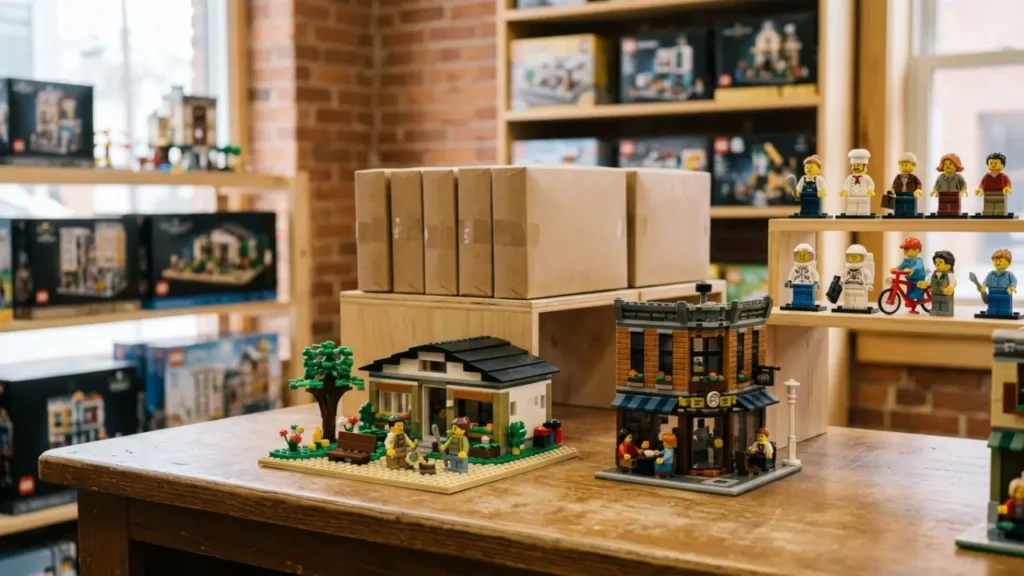
| Miniature room or shop scenes | Lifestyle stores and display-oriented collectors | Finished footprint and whether each box creates a complete scene | Essential scene components require undisclosed additional purchases |
| Tiny-piece display models | Experienced hobby customers | Component dimensions, instructions, and intended age guidance | Your main audience expects easy, casual assembly |
| Connecting scenery modules | Collectors interested in expanding a display | Connection method and standalone appeal of each variant | Duplicates have little display value and case allocation is unclear |
| Creature or vehicle builds | General collectible and gaming shops | Balance, joint fit, and any claimed moving functions | Normal handling repeatedly loosens important parts |
| Small desk-display builds | Gift counters and compact retail spaces | Base stability, finished size, and packaging efficiency | The completed model needs more shelf space than your customers expect |
For a limited-budget launch, favor a format that is complete in one box and easy to demonstrate. The guide to blind box products for small stores with limited budgets gives broader assortment-planning context, and if your shelves lean toward scene-building collectors, the breakdown for Japanese lifestyle stores covers display-oriented formats in more detail.
Build a sample yourself before buying the mystery
Request a sealed sample that the supplier confirms represents the proposed supply, then build it using only the enclosed instructions. A photo of a finished model cannot reveal confusing assembly steps or poor component fit.
Record the real build experience so staff can set accurate expectations at the counter. Separate assembly difficulty from defects: a detailed set is not automatically unsuitable, but it needs the right customer and clear merchandising.
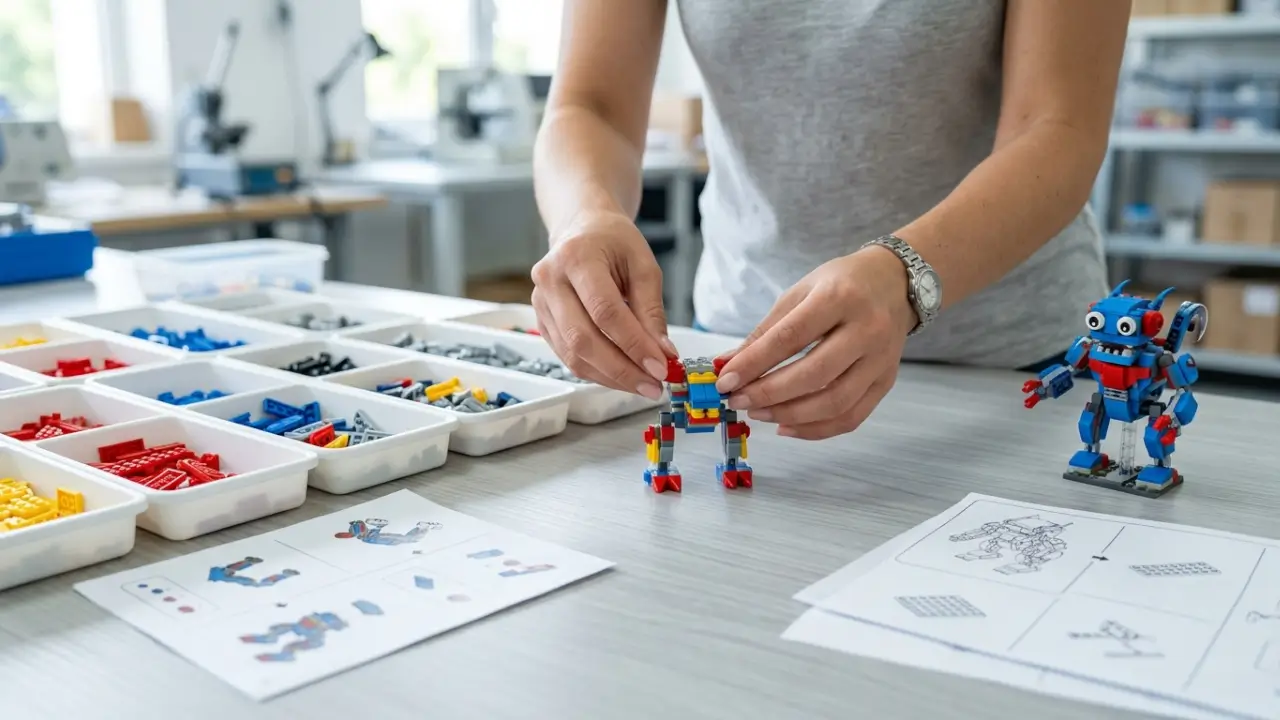
Run this sample checklist before approving any series:
- Parts completeness: Compare components against the supplied inventory, distinguishing spare pieces from missing essential pieces.
- Instructions: Check orientation cues, similar-looking colors, and access to any required digital guide.
- Fit: Look for connections that repeatedly detach or need excessive force during normal assembly.
- Display stability: Place the finished model on an ordinary shelf and confirm it stays upright.
- Finish: Inspect visible surfaces, printing, and color consistency under your usual store lighting.
- Service route: Ask whether a missing-part claim needs a component number, batch reference, photographs, or the full box.
Do not promise compatibility with another building system unless the supplier substantiates that claim in writing. If your customers value shared, hands-on activities, compare the format against other blind box options for game cafes, and check whether loose small parts suit that kind of venue.
Why sealed case rules matter more than the variant count
A series showing several designs does not necessarily deliver one of each in a case. Ask whether case contents are fully random, follow a stated allocation, or carry a documented non-repeat arrangement. Confirm how any secret variant affects the regular assortment, if one exists.
Keep three quantities separate: the individual retail box, the display case, and the shipping carton. A supplier’s minimum order may apply to total units, to a single series, or to full cartons, and mixed-series orders may carry different conditions.
- What is the MOQ for each selected series?
- How many retail boxes sit in a display case and in a shipping carton?
- Can different series share one order without opening retail packaging?
- Does a case include a counter display, or is that billed separately?
- How are opened samples and defective units handled?
As an example, a store might compare two unopened cases of one approachable format against one case each of two formats. The first plan simplifies merchandising; the second tests audience preference. Neither is meaningful until actual case quantities and costs are confirmed.
Once your shortlist is ready, ask suppliers for case configuration and sample details before discussing a larger order. Resolving these points early makes the quotations far easier to compare.
Calculate the true cost of a sale-ready building set
The quoted unit price is only the starting point. Compare quotes on the same specification, quantity, currency, delivery basis, and destination. Ask which freight, clearance, tax, and handling charges are included rather than assuming that “shipping included” means delivery to your store.
Planning formula: landed cost per saleable box = product cost plus inbound freight, applicable duties and non-recoverable taxes, clearance, handling, and necessary preparation costs, divided by the number of saleable boxes.
If you open a box to build a display, exclude it from sealed saleable inventory unless you have a separate open-box sales plan. Track staff assembly time and customer support as added operating costs when assessing whether the line is commercially worthwhile.
Request carton dimensions and gross weight. Large presentation boxes can change freight economics even when the models inside are small. For online sales, test an outbound shipping pack as well; the retail box alone may not adequately protect collectible packaging in transit.
Separate stock confirmation, order preparation, transit, and receiving inspection in your launch plan. Ask when each stage can begin and what could delay it. Reorder against observed sales and the supplier’s current replenishment estimate, not an assumed permanent availability, and confirm the replacement batch keeps the approved specifications.
Protect the reveal, the pieces, and the retail box
Packaging here does three jobs: it preserves the mystery, contains small components, and presents a collectible worth buying. Check that retail seals are consistent, that internal bags keep loose pieces from escaping, and that instructions stay protected during transport.
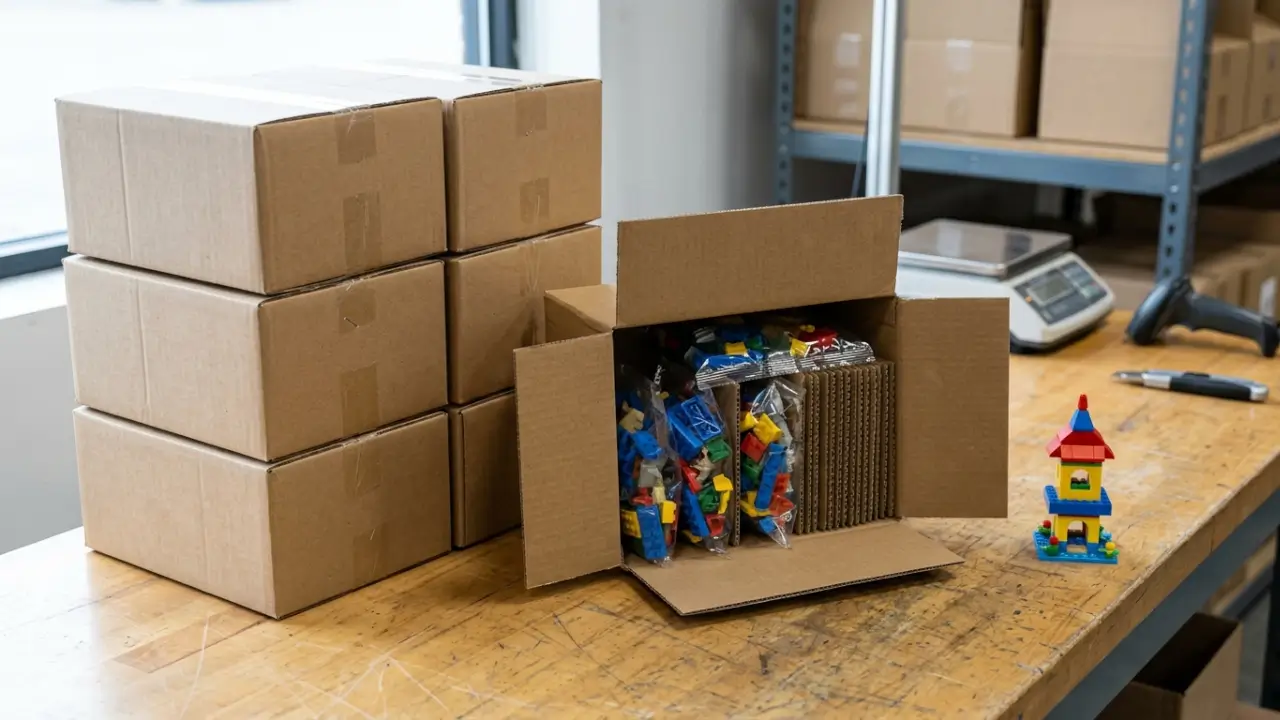
Agree on acceptable packaging condition before payment. Ask how crushed corners, torn seals, incomplete contents, and cosmetic defects are documented and resolved. Keep receiving photographs and carton identifiers so any claim can be traced to the relevant delivery.
For a compact counter or event setup, measure both the display case and an assembled sample. A narrow box can hide a surprisingly wide finished scene. These blind box display considerations for limited-space booths also help when planning temporary retail layouts.
Verify destination-market requirements for product classification, age grading, small-parts warnings, labeling, traceability, and applicable safety documentation. A “collectible” label alone does not establish that toy requirements are inapplicable. Ask for documents that correspond to the actual product you are buying, and obtain qualified advice where needed.
If a series uses recognizable characters, confirm the relevant authorization and any sales-territory restrictions. An attractive listing or a familiar logo is not evidence of permission.
Turn building-toy supplier claims into a comparable quote
Pause when a supplier cannot identify the exact series, provide actual packaging photographs, or explain the difference between a retail box and a carton. Another warning sign is a “complete set” claim with no written explanation of duplicates and secret variants.
A vague replacement promise is also hard to value. Ask whether the remedy is individual components, replacement boxes, store credit, or another agreed process, and clarify claim deadlines and evidence requirements.
Use this inquiry template to request comparable information:
Please quote the selected blind box building toy series for delivery to [destination]. Our store serves [customer type], and we are considering [trial order scope]. Please confirm the exact series/version, component material, approximate part count or range by variant, finished dimensions, intended age guidance, and instruction format.
Please include MOQ by series, retail boxes per case and carton, assortment rules, sample terms, unit price and currency, delivery basis, carton measurements, gross weight, current availability, preparation estimate, and shipping options. Please also provide actual packaging photographs, relevant destination-market documentation where applicable, and the missing-part or damaged-box claim process.
Before committing funds, send this brief to your shortlisted suppliers and request an itemized quotation plus a representative sealed sample. Approve the order only when the build, packaging, case allocation, and delivered-cost assumptions are clear enough to support your retail plan.
FAQ
Which blind box building toys are best for a small collectible store?
Start with complete standalone builds that fit your customers’ skill level and available display space. Approve a sealed sample and confirm case quantities before choosing the opening assortment.
Does a full case guarantee every design?
Not necessarily. Request written case-allocation rules, including duplicate possibilities and whether a secret variant replaces a regular design. Do not advertise a complete set without confirmation.
What should buyers check in a building-toy sample?
Check parts completeness, instruction clarity, component fit, finished stability, surface finish, and packaging condition. Also confirm how missing essential pieces would be replaced.
How should stores compare wholesale quotations?
Compare the same product version, case quantity, delivery basis, and destination. Include inbound costs and account for opened display units when calculating landed cost per saleable box.
Can building blind boxes be marketed as adult collectibles?
Verify classification and marketing requirements for the destination market. An adult-collectible label alone may not remove applicable toy safety, warning, or labeling obligations.
Before you place the first building-toy order
Choose a format your customers can enjoy, build the sample yourself, and document what actually arrives in each case. Start with a manageable trial, record sales and service issues, and use that evidence—not promotional images—to decide which series earns a reorder.