



Retailers choosing an art doll line have to judge more than photos. A BJD blind box can attract collectors, gift buyers, and display-focused shoppers, but the buying decision depends on assortment clarity, packaging condition, quote comparability, and reorder timing. Creator’s Essence BJD blind box products should be evaluated as a commercial SKU with inventory risk, not only as a visually appealing collectible.
This guide is written for toy shops, anime and lifestyle retailers, gift stores, online sellers, and pop-up buyers who need to compare suppliers or prepare a quote request. It does not assume fixed pricing, MOQ, stock, materials, or certifications. Instead, it gives practical questions and checks buyers can use before placing a first order.
Where a BJD blind box fits in a retail art doll assortment
Before asking for a quote, decide what role the series should play in the store. A BJD-style art doll may work differently from low-ticket accessories, plush charms, or seasonal gift boxes because customers often care about display value, face design, outfit detail, and the excitement of mystery selection.
Algunas preguntas útiles que puede plantear el comprador son:
- Is the target shopper a collector, gift buyer, or impulse buyer? Collectors may compare sculpt, articulation, and series completeness. Gift buyers may care more about packaging and visual appeal.
- Will the product sit near designer toys, anime goods, or premium gifts? Placement affects expected price range and packaging standards.
- Does the shop need a test SKU or a deeper collectible program? A first order may focus on testing sell-through, while a larger plan may require restock visibility and series continuity.
- Will the blind format help or hurt sales? Mystery selling can increase repeat purchases, but some buyers may ask about full sets or duplicate risk.
If your store already carries darker or character-led doll themes, compare the positioning with related lines such as the Cooze Devil Horns BJD Doll Blind Box guide. The goal is not to copy the assortment, but to understand whether Creator’s Essence fills a different design mood or overlaps too closely.
Match Creator’s Essence to the right buyer type before ordering
Different retailers should evaluate the same product differently. A boutique gift shop may prefer a smaller, safer test. An online blind box seller may need more units to support livestream selling, bundle offers, or full-series purchases. A convention vendor may care most about eye-catching display and carton durability during travel.
| Buyer type | Likely priority | Question to confirm before quote |
|---|---|---|
| Anime or collectible shop | Series design, repeat purchase appeal | Can the supplier confirm assortment structure and case configuration? |
| Gift boutique | Packaging presentation and shelf appeal | Are retail boxes clean, giftable, and suitable for front-of-store display? |
| Online marketplace seller | Listing accuracy and defect handling | Can product images, dimensions, and package condition expectations be documented? |
| Pop-up or convention seller | Portable inventory and visual merchandising | How are inner boxes and cartons protected during transport? |
| Subscription box curator | Consistency and delivery planning | Can order timing support the planned monthly or themed box schedule? |
| Livestream seller | Quantity depth and unboxing experience | Is the case pack suitable for live sales without excessive duplicate risk? |
As a decision rule, avoid treating all blind boxes as interchangeable. If the product is intended to be a premium art doll item, confirm whether the customer experience supports that expectation from carton opening to shelf display.
To lift average order value, some shops pair a higher-ticket art doll with inexpensive impulse items at checkout. The Link Click plush badges guide shows how low-cost add-ons can support a doll-led display without competing for the same budget.
How to compare Creator’s Essence visuals without overbuying
Product photos can be persuasive, but a commercial buyer should translate the visuals into sellable details. Ask for clear information about figure height, package dimensions, number of regular designs, whether any rare or hidden design exists, and whether the supplier can identify case composition rules. Do not assume these details from images.
For planning, buyers often score a series before ordering. A simple internal scorecard can help avoid buying only because the first image looks attractive.
- Face and sculpt appeal: Would the doll photograph well for listings and social posts?
- Outfit detail: Does the styling look distinctive compared with existing stock?
- Color balance: Are the designs varied enough to make multiple pulls exciting?
- Display stability: Ask whether stands, accessories, or special handling are involved, if relevant.
- Customer clarity: Can staff explain the blind box concept and possible styles quickly?
- Price expectation: Does the perceived value match the shelf neighborhood where it will sit?
For comparison, buyers evaluating character-driven blind boxes may also review the Ten Thousand Escape Plans BJD buying guide to see how theme, audience, and assortment logic can change the purchase decision.
Case packs and first-order quantities for art doll blind boxes
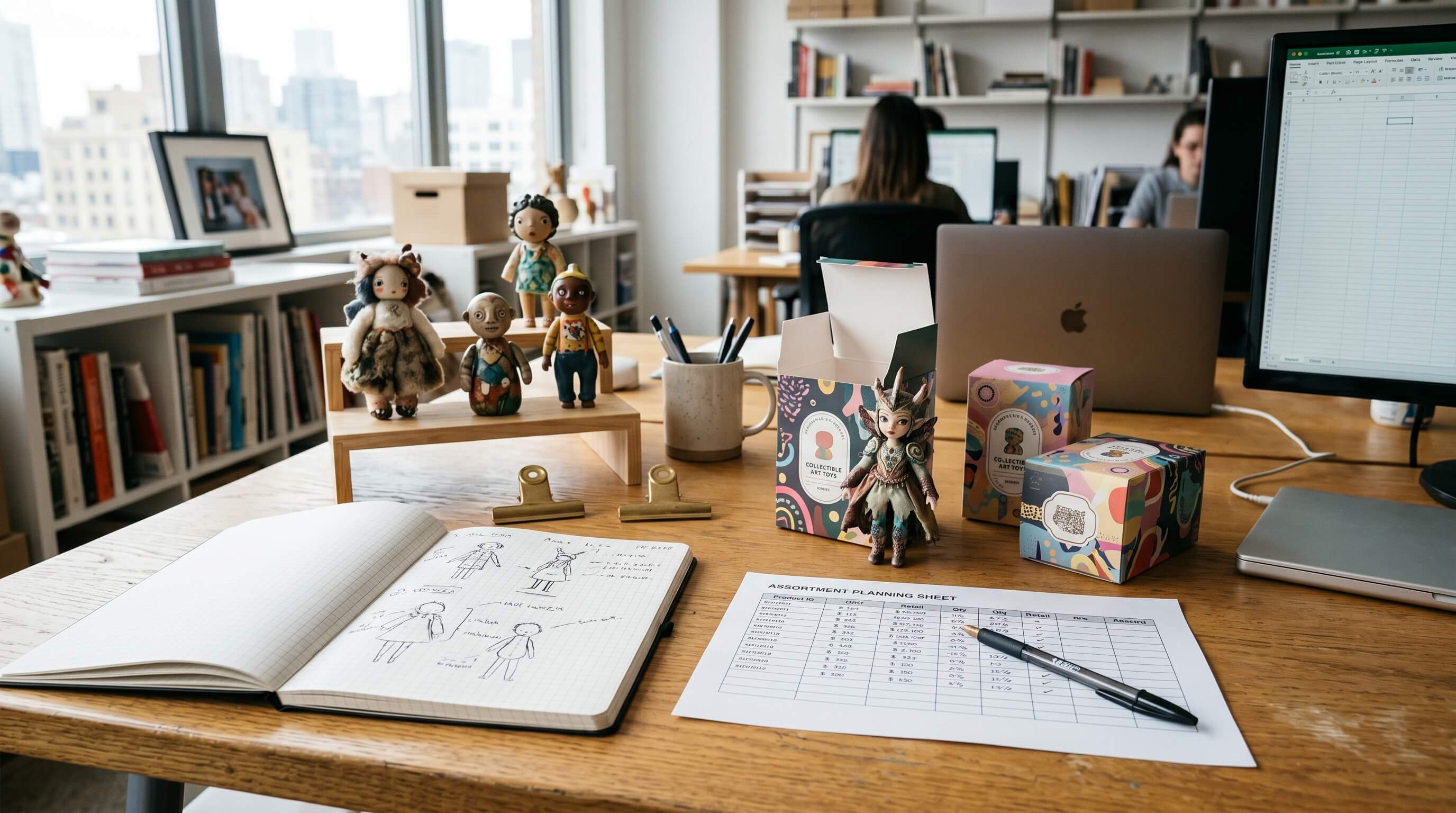
MOQ and case quantity affect both cash flow and customer experience. Buyers should ask whether units are sold as individual blind boxes, sealed cases, mixed cartons, or another format. The correct buying unit matters because a retailer may want to protect case integrity for collectors or split inventory across locations.
As a planning reference, a small shop might compare three possible approaches:
- Display test: enough units to create a shelf presence and measure interest without tying up too much budget.
- Collector test: enough depth to support customers trying for multiple designs.
- Launch push: enough cartons to support online listings, social content, and in-store display at the same time.
These are planning categories, not recommended quantities. The right order depends on available capital, supplier MOQ, expected sell-through, and how often replenishment is possible.
When requesting a quote, ask:
- What is the selling unit: single box, inner case, outer carton, or full set?
- How many retail boxes are in each inner case and master carton?
- Are case packs fixed, or can mixed quantities be quoted?
- Is the assortment random, balanced, or unknown?
- Can the supplier quote by carton to reduce handling confusion?
Soft CTA: If you are comparing Creator’s Essence with other BJD doll lines, prepare one shared RFQ sheet and send the same questions to each supplier. Comparable answers make it easier to see which quote is actually usable.
Why the lowest unit quote may not be the best art doll cost
A BJD blind box quote is only meaningful when the buyer understands the cost basis. The unit price is one part of the decision, but landed cost can change the result once cartons, freight, duties, marketplace fees, damage allowance, and payment charges are considered. Buyers should avoid comparing one supplier’s unit-only quote with another supplier’s delivered or carton-based quote.
Use this landed-cost checklist when comparing offers:
- Product cost: unit price and currency used in the quote.
- Packing unit: whether the quote is per blind box, inner case, or carton.
- Carton data: carton quantity, gross weight, and dimensions for freight estimates.
- Shipping terms: confirm what is included and what remains buyer responsibility.
- Import charges: buyers should verify duties, taxes, and customs requirements for their destination market.
- Damage allowance: estimate how many units may become unsellable due to crushed packaging or defects.
- Sales channel cost: marketplace commissions, payment fees, returns, and promotional discounts.
A practical rule is to compare quotes at the same point in the supply chain. If one quote includes freight to your door and another does not, convert both into an estimated landed cost before making the decision.
Protecting collectible packaging from shelf to shipment
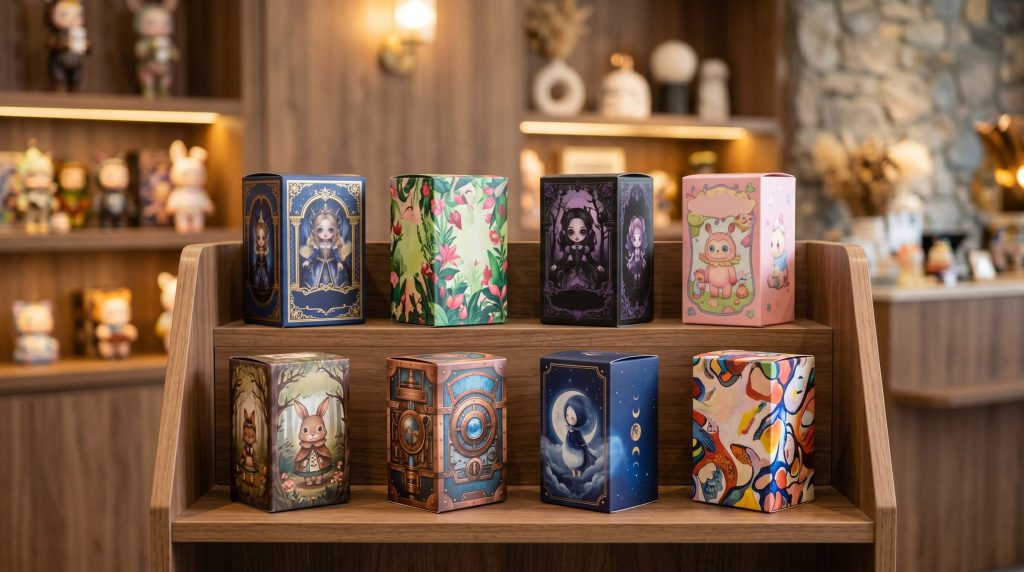
For art doll blind boxes, packaging is part of the product. A crushed retail box may be unacceptable to collectors even if the doll inside is intact. This makes packaging checks especially important for retailers selling online or to collectors who expect clean boxes.
Before payment, ask for packaging photos that show the retail box, inner case, master carton, and any protective materials. If possible, request confirmation of how boxes are arranged inside cartons. For online sellers, consider whether the retail box can survive another outbound shipment to the final customer.
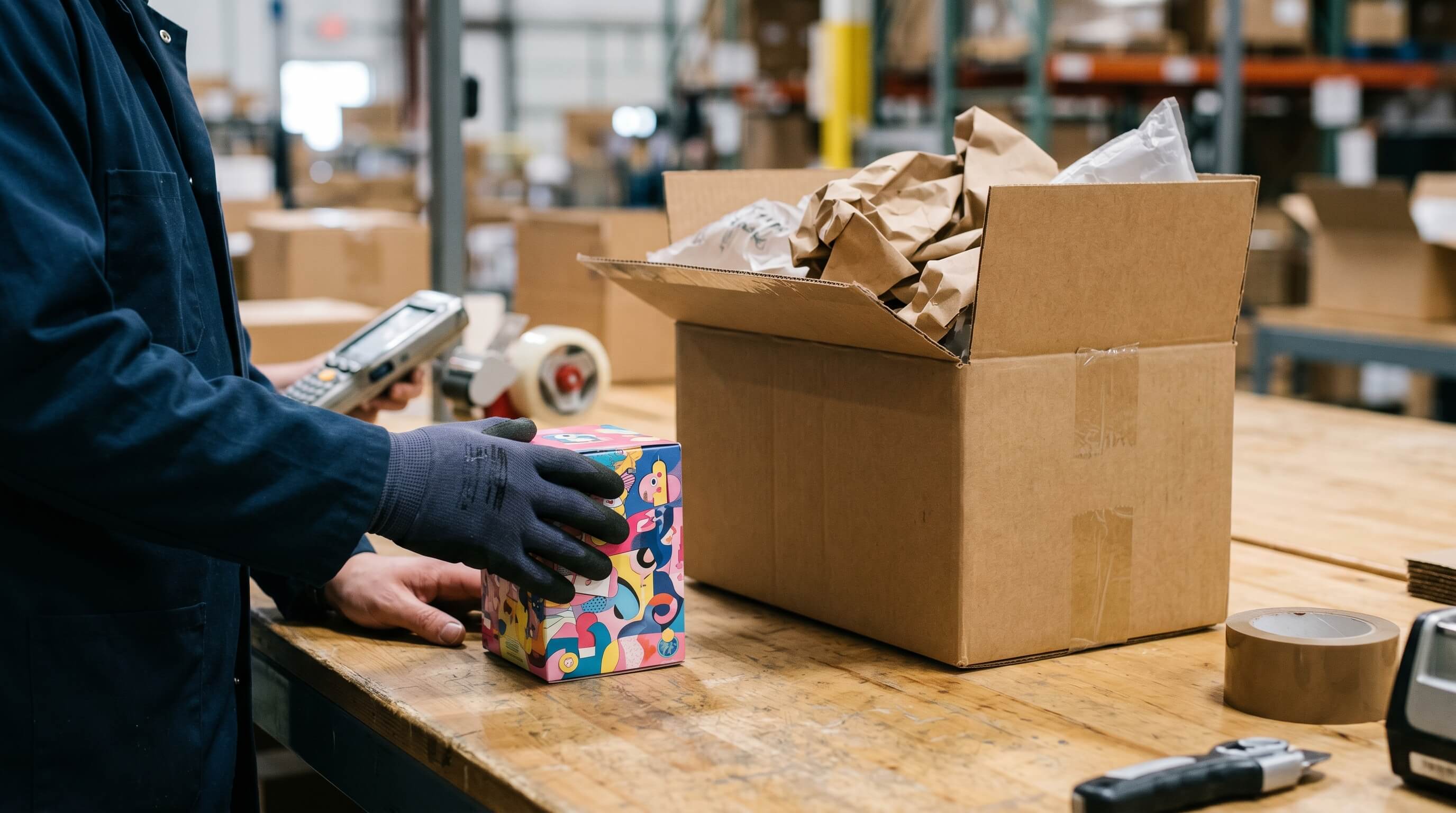
Quality checks should be specific rather than vague. For example, a buyer may inspect a sample or first carton for:
- visible dents, corner damage, or crushed retail boxes;
- paint flaws, loose joints, missing accessories, or mismatched parts if the product includes movable elements;
- barcode or labeling consistency, if required by the sales channel;
- sealed blind box condition and signs of tampering;
- carton count accuracy against the packing list;
- photo consistency between quoted product and received product.
Compliance also needs caution. Buyers should verify age grading, small-parts warnings, labeling language, import rules, and marketplace requirements for their own destination market. Do not assume one supplier’s packaging automatically satisfies every country or platform.
Freight timing matters when dolls are tied to launches or events
Blind box sales often benefit from timing: a new shelf launch, convention weekend, influencer content, holiday gift period, or online campaign. If the product arrives late, the same inventory may still be sellable, but the promotional window can be weaker.
Ask suppliers for realistic stages rather than one vague date. Useful milestones include order confirmation, payment confirmation, packing readiness, dispatch date, estimated freight transit, customs clearance, warehouse receiving, and store allocation. Buyers should also leave buffer for inspection and product photography.
As a planning reference, an online retailer launching a new collectible series may need inventory in hand before publishing paid ads or opening preorders. A physical store may need stock earlier to train staff, set displays, and create signage. A convention seller may need extra time to repack cartons for booth transport.
Reorder planning should start before the first order sells out. Track sell-through by week, duplicate complaints, customer requests for specific styles, and damage rate. If restocking depends on overseas freight or uncertain availability, set a reorder trigger before inventory reaches the last few units. As the category shifts toward phygital and digital formats, it also helps to track where demand is heading; the future of blind boxes in 2027 overview outlines trends worth weighing before committing to long-term reorders.
Red flags when comparing Creator’s Essence supplier quotes
Many quote problems are not obvious at first. A supplier may answer quickly but still leave out the information needed for commercial buying. Buyers should watch for gaps that make the offer difficult to compare or risky to receive.
Common red flags include:
- No carton details: without carton quantity, weight, and dimensions, freight estimates are unreliable.
- Unclear assortment: if the supplier cannot explain selling unit or case structure, duplicate risk may be hard to manage.
- Only lifestyle images: ask for actual packaging and product photos where possible.
- Changing product names: inconsistent naming can create listing confusion or receiving errors.
- Pressure to pay before details are confirmed: important specifications should be documented before purchase.
- No defect or shortage process: ask how discrepancies should be reported and what evidence is required.
- Unsupported compliance claims: request documents when needed and verify requirements for your market.
If your store also buys IP-led or fandom-driven blind boxes, the same quote discipline applies. The Alien Stage blind box sourcing guide is useful for thinking through audience demand, product positioning, and listing clarity in a different collectible category.
RFQ details that make a Creator’s Essence quote usable
A strong inquiry reduces back-and-forth and makes supplier responses easier to compare. Instead of asking only for price, send a structured request that covers product, packing, freight, and documentation needs.
Sample inquiry template:
Hello, I am evaluating Creator’s Essence BJD blind box products for retail resale. Please quote based on the available selling unit and include: unit price, MOQ, case pack, master carton quantity, carton size and weight, available assortment details, packaging photos, estimated readiness timing, shipping options, payment terms, and any product labeling or compliance documents available for review. Please also explain the process for reporting shortages, damaged boxes, or product defects after receiving the shipment.
Buyers can add channel-specific requirements. For marketplace selling, ask about barcode visibility and product dimensions. For gift retail, ask about retail box condition and case presentation. For livestream selling, ask whether sealed cases can be supplied in a way that supports fair random opening.
When comparing multiple art doll series, consider nearby alternatives such as the Pequeño monstruo CUPA-I Am Undefined Series to judge whether your assortment needs another doll-led collectible or a different visual style.
Stronger CTA: Before placing a first order, compile the supplier’s answers, carton data, packaging photos, and landed-cost estimate in one file. If any key detail is missing, request clarification before payment rather than solving the issue after cartons arrive.
PREGUNTAS FRECUENTES
Is Creator’s Essence BJD blind box suitable for first-time collectible retailers?
It can be, if the retailer starts with clear order planning and understands blind box selling. First-time buyers should confirm case pack, assortment details, packaging condition, landed cost, and defect handling before committing to a larger order.
What should I ask before buying a BJD blind box in bulk?
Ask for MOQ, selling unit, case quantity, carton dimensions and weight, assortment structure, packaging photos, estimated readiness timing, shipping options, payment terms, and the process for reporting damages or shortages.
How can retailers reduce duplicate complaints with blind boxes?
Retailers can explain the blind format clearly, avoid promising specific styles unless confirmed, track customer feedback, and ask suppliers whether cases are random, balanced, or structured. The exact assortment rules should be confirmed before ordering.
Why is packaging condition important for art doll blind boxes?
Collectors often value the retail box as part of the product experience. Crushed corners, opened seals, or dirty packaging can reduce sellability, especially for online orders and gift purchases.
Should I compare only the unit price when choosing a supplier?
No. Compare estimated landed cost, carton data, shipping terms, packaging protection, defect process, documentation, and quote completeness. A lower unit price may not be better if freight, damage, or missing information increases total risk.
Before you place that first Creator’s Essence order
Creator’s Essence can be evaluated as an art doll opportunity, but a good buying decision depends on documentation rather than excitement alone. Confirm the assortment, pack structure, carton data, packaging protection, compliance needs, and landed-cost assumptions before you compare suppliers.
The safest approach is to treat the first purchase as a measured retail test. Track sell-through, customer reactions, duplicate concerns, and packaging damage. Those notes will make the next reorder decision faster, more accurate, and easier to defend commercially.