


The unboxing experience is the lifeblood of the Art Toy industry. But once the dopamine rush fades and the customer walks out of your store clutching their new Pop Mart o Bebé Tres figure, you are left with the dark side of the blind box economy: a mountain of trash.
Shrink wrap, glossy cardboard, mylar foil bags, silica gel packets, and plastic clamshells. If you run a high-volume physical boutique or an unboxing kiosk, managing this waste is a daily logistical nightmare. Commercial trash pickup is expensive, and overflowing bins destroy the premium aesthetic of your retail space.
Furthermore, in 2026, Gen Z and Millennial consumers suffer from severe “Eco-Anxiety.” If your store is perceived as a wasteful polluter, you will lose their loyalty. For B2B partners sourcing from KidultsBox, transforming waste management from a costly chore into a Circular Retail Marketing Strategy is the ultimate hack. This whitepaper will teach you how to sort, recycle, upcycle, and monetize the packaging your customers leave behind.
1. The Anatomy of Blind Box Waste: What Can Actually Be Recycled?
Before you can build a recycling program, you and your staff must understand material science. Not all blind box packaging can go into the blue municipal recycling bin. Mixing non-recyclables (like mylar) with recyclables (like paper) can result in your commercial waste management company fining your store for “contamination.”
| Packaging Component | Tipo de material | Recyclability Status | Retailer Action Protocol |
|---|---|---|---|
| Outer Cardboard Box | Paperboard (Often coated in thin plastic laminate) | Mixed. Standard matte boxes are recyclable. Highly glossy/holographic boxes are often rejected by paper mills. | Flatten immediately to save bin space. Check local municipality rules on laminated paperboard. |
| The Inner Mystery Bag | Mylar (Foil / Plastic composite) | Zero. Cannot be recycled in standard facilities. | Must go into general landfill waste. Compress tightly to save volume. |
| Clear Plastic Clamshells | PET or PVC Plastic | Alto. PET (Resin Code 1) is highly recyclable. | Stack them together (they nest easily) and place in the plastics recycling bin. |
| Desiccant / Weight Coins | Silica Gel / Blank Metal Slugs | Zero / High. Silica is trash. Metal coins are fully recyclable scrap. | Throw silica away. Keep a small jar for weight coins and recycle as scrap metal (or give them to customers as tokens). |
| Wholesale Master Cartons | Corrugated Cardboard (from KidultsBox shipments) | 100% Recyclable. | Break down flat. This is clean, high-value recyclable material. |
2. The “Unboxing Station” Ecosystem
If you encourage customers to open their toys in your store (which you absolutely should, to drive FOMO and social media content), you cannot just provide one generic garbage can. A single generic bin will fill up with un-flattened boxes in 20 minutes, overflowing onto your floor.
Building a Tri-Bin Sorting Station
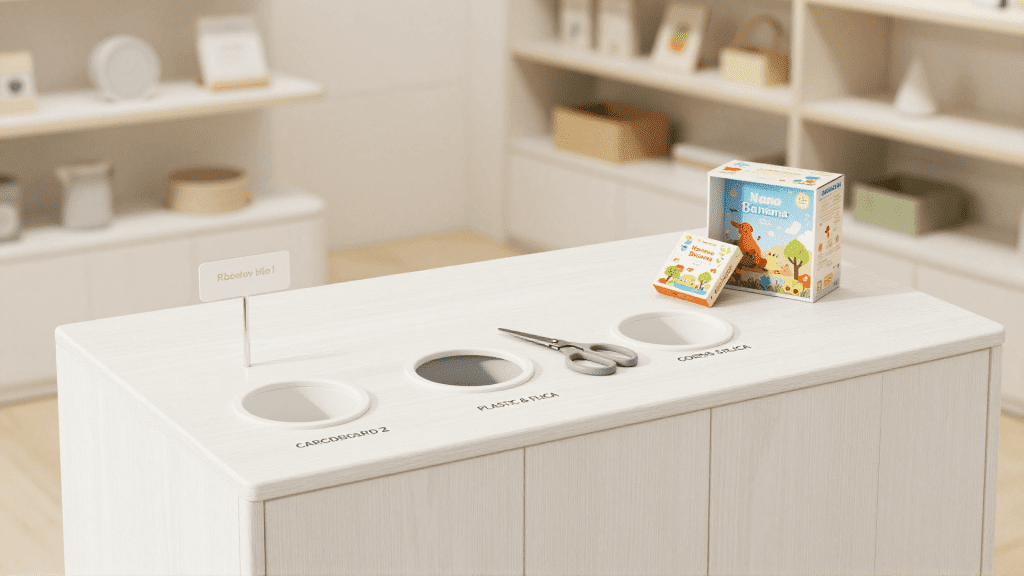
Your Unboxing Station must have a highly aesthetic, clearly labeled Tri-Bin System built into the cabinetry.
- Slot 1 (The Slit): A thin, rectangular slot labeled “FLATTENED CARDBOARD ONLY.” By making the slot thin, you force the customer to physically flatten the box before discarding it. This saves you 80% in dumpster volume.
- Slot 2 (The Hole): A circular hole labeled “PLASTIC TRAYS & WRAPPERS.”
- Slot 3 (The Drop): A small bin labeled “WEIGHT COINS & SILICA GEL.”
The Psychology: Customers actually enjoy sorting their trash if you gamify it and make the instructions incredibly clear. It makes them feel like they are doing a “good deed” to offset the guilt of buying a plastic toy, increasing their affinity for your store.
3. The “Empty Box Bounty” Program (Driving Foot Traffic)
What about the customers who take their Kimmon Plushies home? They open the toys in their bedroom, and the trash goes into their home bins. This is a missed marketing opportunity.
You want to force that customer to walk back into your physical retail store. To do this, implement the Empty Box Bounty.
- The Offer: Place a sign at your register: “Bring back 10 empty blind box packages (Cardboard + Foil) to our store for proper eco-recycling, and receive 15% off your next single blind box purchase!”
- The Economics: A 15% discount on a $15 box costs you $2.25. If a customer brings back 10 boxes, it implies they are a highly active collector (a “Whale”). When they walk into your store to drop off their trash, they will inevitably see the new Penny’s Box BJD series you just stocked from KidultsBox. They came to recycle; they leave having spent another $45.
- The ESG Win: You can accurately market your store as a “Zero Waste Initiative Retailer” on your local Instagram page, building massive community goodwill.
4. Upcycling: Turning Trash into Visual Merchandising
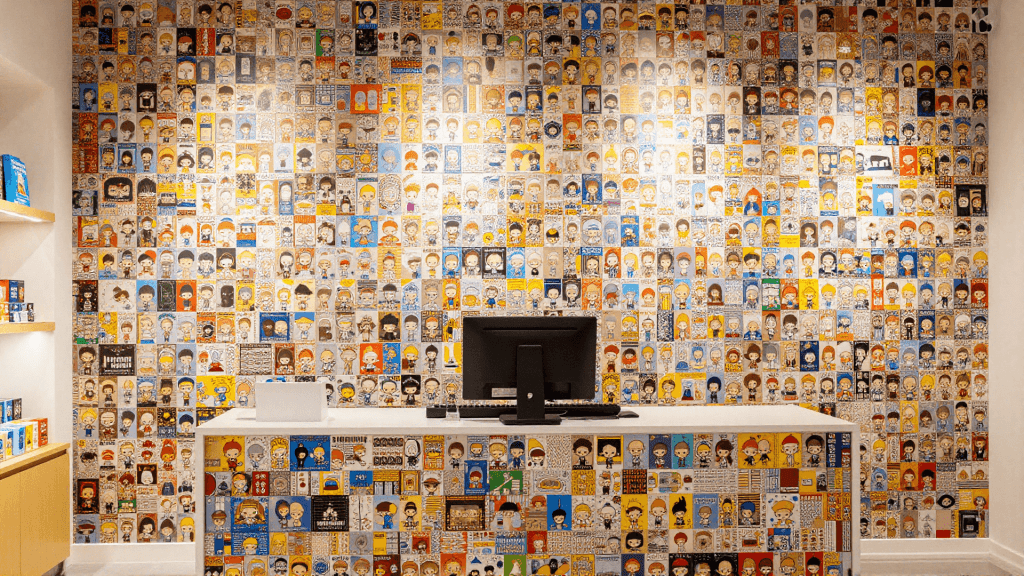
In the Art Toy world, the packaging itself is often a work of art. Tossing it in the recycling bin is a waste of graphic design assets. Smart retailers Upcycle (repurpose) the waste to enhance their store’s visual merchandising.
A. The “Wallpaper” Display
Instead of painting the wall behind your cash register, carefully flatten the empty cardboard boxes from your display samples. Tape or glue them in a massive, colorful mosaic covering the entire wall. This creates a hyper-vibrant, recognizable backdrop that screams “Blind Box Culture.” It costs zero dollars in materials and provides the ultimate selfie background for your customers.
B. The “ID Card” Trading Board
Every blind box comes with a beautiful collectible ID card. Many casual buyers throw these away. Keep a bin at the register asking customers to donate their unwanted cards. Use these cards to build an “ID Card Wall” or use them as price tags/shelf talkers for the open sample figures you display on your acrylic risers.
C. The “Capsule” Claw Machine
If you sell Gachapon (capsule toys) alongside your blind boxes, do not throw the empty plastic spheres away. Keep them in a massive acrylic bin. You can repack these empty capsules with small candies, discount coupons for your store, or dead-stock keychains, and place them inside a physical claw machine or a “Lucky Dip” bowl at the register. You are creating a new revenue stream out of literal plastic waste.
5. Managing B2B Logistics Waste (The Backroom)
The waste problem isn’t just on the retail floor; it’s in your stockroom. When you receive a massive DDP wholesale shipment from KidultsBox, it arrives in corrugated Master Cartons, wrapped in pallet stretch film, and bound by plastic strapping.
The Retailer’s Backroom Protocol:
1. Do not hoard cardboard. Space is money. The moment you unpack a KidultsBox Master Carton, use a box cutter to break it down flat.
2. Sell the Corrugated: If you are a high-volume retailer, do not pay for municipal cardboard removal. Clean, dry corrugated cardboard is a commodity. Local recycling centers will often pick it up for free, or even pay you a small stipend per ton, turning a waste expense into a minor revenue stream.
3. Reuse for Dropshipping: If you run an omnichannel store (physical + Shopify), slice the large Master Cartons into smaller custom mailers to fulfill your online e-commerce orders, saving you hundreds of dollars a month on Uline shipping supplies.
6. Avoiding “Greenwashing” in Your Marketing
If you implement these recycling programs, you must market them carefully. The modern collector is highly cynical.
Do not claim you are “saving the planet.” You are selling plastic toys; claiming to be an eco-warrior will trigger severe backlash and accusations of “Greenwashing.”
Instead, focus on “Responsibility.” Your marketing copy should read: “We love art toys, but we hate the clutter. As your local dealer, we’re taking responsibility for our footprint. Drop your empty wrappers in our sorting bins so we can ensure the plastics are routed to the correct municipal facilities, keeping our city clean.” This is honest, community-focused, and highly respected by the Gen Z demographic.
Preguntas más frecuentes (FAQ)
Q: Should I remove the foil bags before selling the box to reduce waste in my store?
R: Para nada. Unless you are selling an “Opened/Confirmed” figure, removing the foil bag destroys the “Blind” aspect of the toy and instantly devalues the product. The foil protects the paint from scratching and prevents customers from peeking inside. You must let the customer open the foil.
Q: What do I do with the “Weight Coins” found in some boxes?
A: Weight coins are inserted by factories (like Pop Mart) so scalpers cannot use digital scales to find the Secret figure. They are usually stamped from cheap zinc or iron alloys. You can recycle them as scrap metal, or better yet, collect them and give them to kids as “Store Tokens” or pirate treasure.
Q: If I use the empty boxes for store “Wallpaper,” will they fade?
A: Yes, if exposed to direct sunlight. The UV rays will bleach the vibrant inks on the cardboard within 6 months. If you build a cardboard display wall, ensure it is located away from the front windows or cover your store windows with a UV-blocking window film to protect both your decor and your live inventory.
Q: Does KidultsBox offer any wholesale packaging that uses less plastic?
A: The industry is transitioning. While many major IPs still rely on foil and PVC clamshells, we are actively expanding our catalog to include progressive indie brands that utilize molded pulp trays and opaque paper envelopes. Speak to your account manager about sourcing “Eco-Conscious” series for your boutique.