



A doll series can photograph beautifully and still create problems at the buying stage if its scale, assortment, packaging, or case configuration is unclear. Retailers evaluating a Kiseki MJD doll blind box need enough detail to judge display appeal, customer expectations, landed cost, and inventory risk—not simply a unit price and several promotional images.
This guide focuses on the questions commercial buyers should ask about the Kiseki Vintage Treasures series before requesting a quote, approving a test order, or planning a larger retail launch. Because specifications can vary by series or production batch, buyers should confirm all product details directly in the current supplier documentation.
Which Stores Actually Sell the Vintage Treasures Look
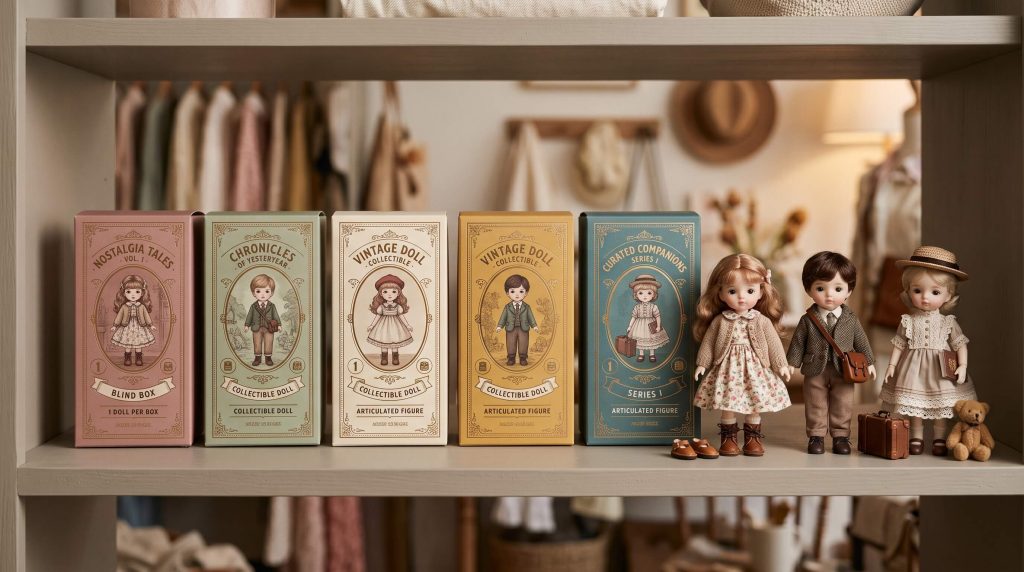
The vintage-inspired concept may suit stores whose customers already buy character dolls, articulated collectibles, fantasy figures, or display accessories. The commercial question is whether the series complements the store’s existing audience rather than whether the artwork is attractive in isolation.
- Tiendas de juguetes de colección: Compare the series with existing figure price tiers and the amount of shelf space available for a complete display.
- Anime and kawaii retailers: Check whether customers favor doll-like proportions, fashion details, or more conventional vinyl figures. The Guía de compra de cajas sorpresa de Ninita offers another way to assess a strongly themed assortment.
- Doll and hobby shops: Ask whether customers expect articulation, removable components, customization potential, or display-only construction.
- Tiendas de regalos y estilo de vida: Review whether the outer box communicates the vintage theme clearly without staff needing to explain the line.
- Vendedores en línea: Prepare accurate listings for dimensions, materials, included parts, age grading, and random-selection terms.
A useful decision rule is to identify the intended shopper before ordering. If buyers cannot describe whether the likely customer is a doll collector, blind-box fan, gift shopper, or completion-focused collector, the opening quantity may be too speculative.
What “MJD” Should Force You to Ask the Supplier
“MJD” should not be treated as a complete technical specification. Ask the supplier what the term means for this particular product and request written confirmation of construction, movement, materials, scale, and included components.
| Asunto pendiente de confirmación | Por qué afecta al sector minorista | Question for the quote |
|---|---|---|
| Cartelera de series | Determines assortment depth and completion behavior | How many regular designs and hidden designs are in the current series? |
| Doll dimensions | Affects perceived value, shelving, photography, and shipping | What are the assembled product and retail-box dimensions? |
| Materiales | Supports listing accuracy and destination-market review | Which materials are used for the body, hair, clothing, and accessories? |
| Movement or joints | Shapes customer expectations about posing | Which parts move, and are any joints removable or replaceable? |
| Included components | Prevents disputes over outfits, stands, cards, or props | What is included with every design, and what varies by character? |
| Assortment method | Influences duplicates and full-case selling | Is a sealed case fixed, random, or subject to duplicate regular designs? |
| Hidden-design policy | Affects how retailers describe odds without overpromising | Are hidden odds documented, and does a hidden replace a regular design? |
| Packaging identifiers | Helps receiving teams distinguish editions or batches | What series, batch, barcode, or carton markings should be visible? |
Request current photos of the retail box, inner protection, doll, accessories, and master carton rather than relying only on styled images. Retailers comparing another articulated format can also review the Lunar Lore BJD blind box guide for related specification questions.
How Case Packs Change the Risk of a Doll Series
MOQ and case quantity are different purchasing controls. The MOQ states the minimum accepted order, while the case pack shows how units are physically and commercially grouped. Buyers should ask whether the minimum applies by piece, sealed inner case, master carton, or total order value.
For planning purposes, imagine a retailer testing 24 units. If the confirmed inner case contains 8 units, that test represents three cases. If the assortment is not guaranteed, however, those three cases may not produce three balanced lineups. The numbers are only an example; use the supplier’s current case data when planning.
- Confirm units per inner case and inner cases per master carton.
- Ask whether a full inner case has a defined assortment.
- Check whether split-case orders are allowed and whether packaging changes.
- Separate the launch quantity into display stock, sellable stock, and a small allowance for damage review.
- Decide in advance whether sealed cases, individual blind boxes, or both will be sold.
Do not advertise a complete set from a sealed case unless the current assortment policy supports that statement. Hidden designs can also change a case composition, so any set-building promise should be documented carefully.
Why the Unit Quote Does Not Reveal the Retail Cost
A comparable cost calculation should use the same trade terms, carton quantity, product specification, and shipping basis. A lower unit quote may become less attractive after freight, payment charges, import costs, inspection, labeling work, or damaged packaging is considered.
Build an estimated landed cost per sellable unit using: product cost, export or origin charges where applicable, international freight, insurance if used, destination duties and taxes, customs or brokerage expenses, local delivery, and an allowance for non-sellable units. Tax and import treatment varies, so buyers should verify the rules in their destination market.
Compare quotes only after every supplier has stated the same product version, quantity, case structure, trade term, currency, and packaging requirement.
Ask for carton dimensions and gross weight before selecting a shipping method. Doll boxes with dimensional volume can produce a different freight result from denser miniature figures, even when the unit counts look similar.
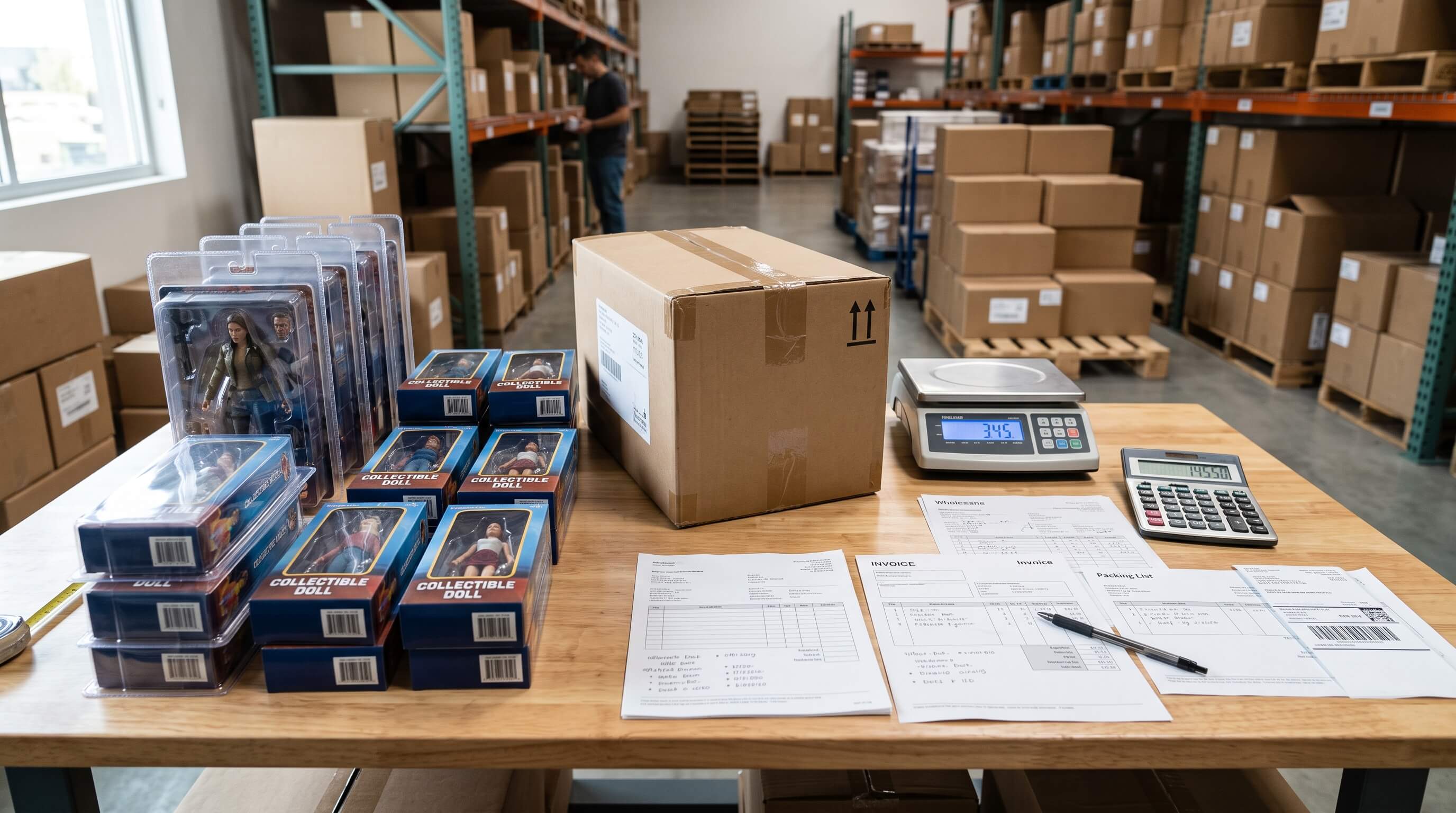
If the series appears suitable for your customers, send the supplier a structured specification request before discussing a larger quantity. That creates a clearer basis for comparing the Kiseki line with alternatives such as the Echo Forest Whisper collectible series.
Keeping Vintage-Style Doll Boxes Sellable in Transit
For a display-led collectible, crushed corners, scuffed windows, moisture exposure, or loose internal parts can make an otherwise functional product difficult to sell. Packaging review should therefore cover both presentation and protection.
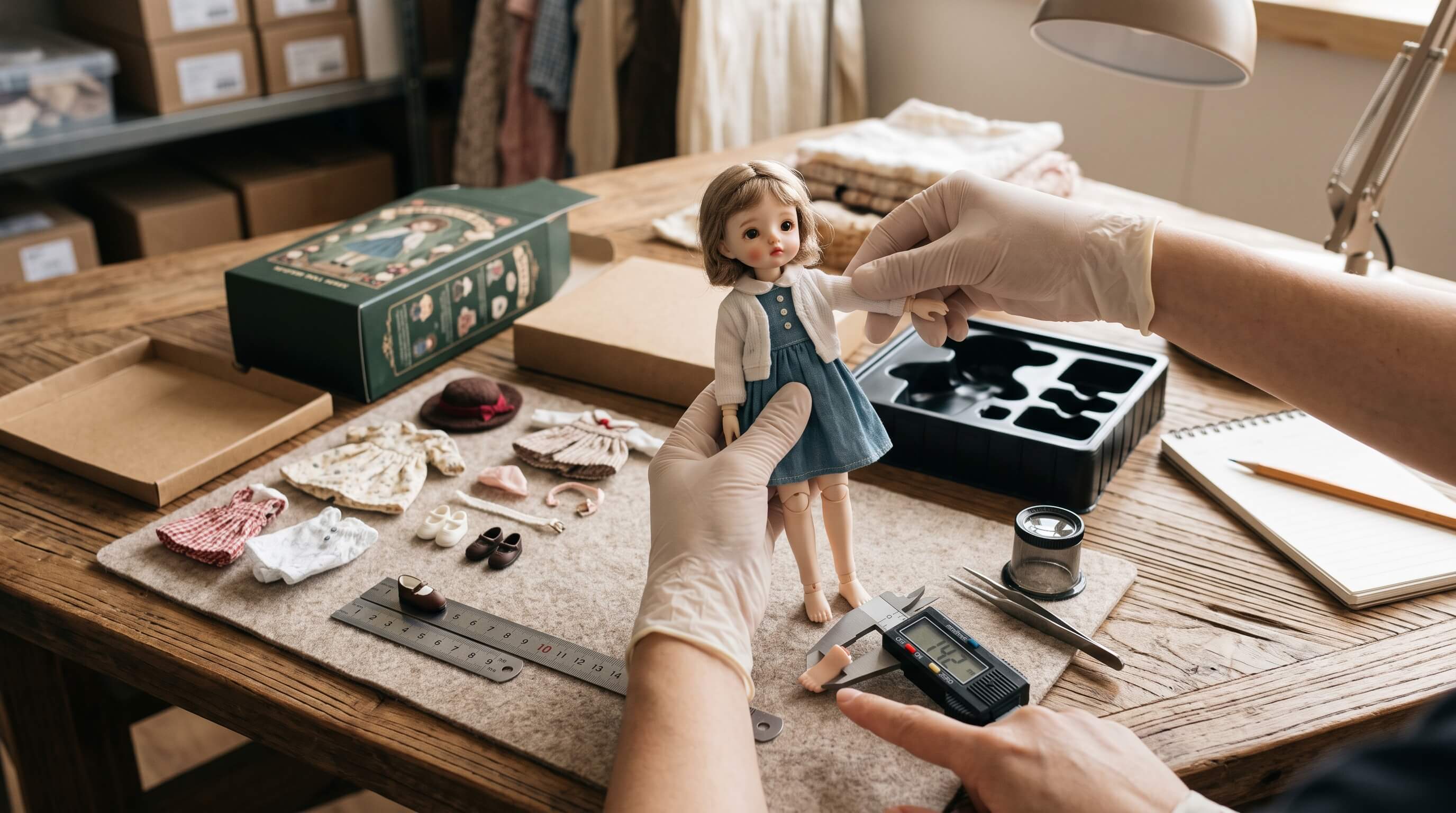
- Review a sample: Check sealing, print alignment, surface condition, accessory containment, joint stability, clothing finish, and whether the doll moves inside the box.
- Document acceptance criteria: Define which issues are cosmetic, which affect saleability, and what evidence is required if a problem is found.
- Confirm carton protection: Ask about dividers, void fill, carton strength, moisture protection, and master-carton markings.
- Plan receiving checks: Photograph unopened cartons, count units, inspect boxes across multiple carton positions, and record recurring defects by batch marking.
Buyers should also request the current labeling, age grading, warnings, material information, and available testing documentation relevant to the destination market. Do not assume that a product acceptable in one country automatically satisfies another country’s toy, collectible, chemical, consumer-labeling, or import requirements. Verification may require a qualified compliance or customs professional.
Reordering Before the Series Loses Momentum
Blind-box demand can be uneven: early collectors may buy several units, while later sales depend on new shoppers and completion attempts. Establish a reorder trigger based on sales velocity and replenishment uncertainty rather than waiting until the display is empty.
As an example of planning logic, a retailer might review sales after the first 25%, 50%, and 75% of test stock has sold. At each point, record weekly unit sales, duplicate-related feedback, online conversion, remaining sealed cases, and the supplier’s updated availability. These percentages are planning references, not a forecast for this series.
Before reordering, reconfirm the production or dispatch estimate, batch consistency, carton configuration, and transport estimate. Allow time for supplier preparation, freight, customs review, receiving inspection, and listing updates. If dark or fantasy dolls already perform well, comparison with the Guía de venta al por menor de «Light Nightmare Twins» may help determine whether the Kiseki theme expands the assortment or duplicates it.
When a Kiseki Quote Is Not Yet Comparable
Pause the purchase decision if a quote omits the exact series name, product dimensions, material details, case quantity, trade term, or packaging information. Other warning signs include pressure to pay before specifications are confirmed, inconsistent product photos, unexplained substitutions, unclear source documentation, or refusal to show current carton markings.
Use the following inquiry template to turn an incomplete offer into a comparable quotation:
Hello, please quote the Kiseki Vintage Treasures MJD doll blind box for retail resale. Please confirm the current series lineup, regular and hidden-design structure, doll and box dimensions, materials, moving parts, included accessories, units per inner case, inner cases per master carton, assortment method, MOQ basis, and available order increments. Please also provide the unit price and currency, applicable trade term, quote validity, carton dimensions and gross weight, packaging photos, estimated preparation or dispatch schedule, payment terms, batch identification, and available labeling or compliance documents for review. Please state whether samples are available and whether sample packaging matches bulk-order packaging.
Before paying, create a one-page comparison sheet and mark every missing field. Ask how shortages, transit damage, incorrect goods, or material deviations are documented and handled; do not assume a remedy that is not stated in writing.
Ready to assess an order? Send a complete inquiry with your destination, intended quantity, preferred shipping basis, sales channel, and required documentation. Request a revised written quote if any specification changes, then approve the product version and packaging before committing to bulk stock.
PREGUNTAS FRECUENTES
What does MJD mean for the Kiseki blind box?
The term alone does not confirm a particular joint system, material, or level of articulation. Ask the supplier to define MJD for this series and provide photos or video showing which parts move.
Should retailers buy individual boxes or sealed cases?
Sealed cases may simplify handling and can appeal to serious collectors, while individual boxes support lower-cost customer purchases. Confirm the case assortment and duplicate policy before deciding how to divide inventory.
How should buyers compare Kiseki Vintage Treasures quotes?
Compare the same series version, quantity, case configuration, currency, trade term, packaging, and shipping basis. Then calculate an estimated landed cost per sellable unit rather than comparing unit prices alone.
Which quality details should be checked on a sample?
Review the retail box, seals, print finish, joint movement, visible surface marks, clothing or accessory finish, component count, internal protection, and consistency with the supplier’s written specification.
What compliance documents should a retailer request?
Request available test reports, material information, age grading, warnings, labels, and product or batch identification relevant to the destination market. Buyers should independently verify which requirements apply before import or sale.
Before You Place the First Kiseki Order
Treat the first purchase as a controlled retail test. Confirm what the doll is made from, how it moves, what every box includes, how cases are assorted, and what the shipment will cost after arrival. A complete written quote, sample review, receiving plan, and realistic reorder trigger provide a stronger buying basis than promotional images or unit price alone.