



Shelf space is a bet, and the choice between a familiar character property and a visually driven original series is decided by more than which product photographs better. An Eeveelutions blind box may pull recognition-led demand, while a Starry Dream series may lean on design, display impact, and the pleasure of discovery. The stronger stock decision comes down to the exact SKUs, your customer base, case configuration, landed cost, and the evidence a supplier is willing to put in writing.
Do not assume that similarly named listings share the same materials, dimensions, assortment ratios, licensing status, or packaging. Get those details in writing before deciding which series earns space.
Eeveelutions or Starry Dream: The Decision in One View
The simplest decision rule is to match the product’s selling mechanism to the store’s existing traffic. Recognition can reduce the amount of explanation needed at the shelf, but a distinctive original design can work well in boutiques where shoppers expect to discover unfamiliar characters.
| Buying factor | Eeveelutions may suit | Starry Dream may suit | Qué hay que confirmar |
|---|---|---|---|
| Customer motivation | Character recognition and collection completion | Visual style, gifting, or design discovery | Which motivation matches recent store sales? |
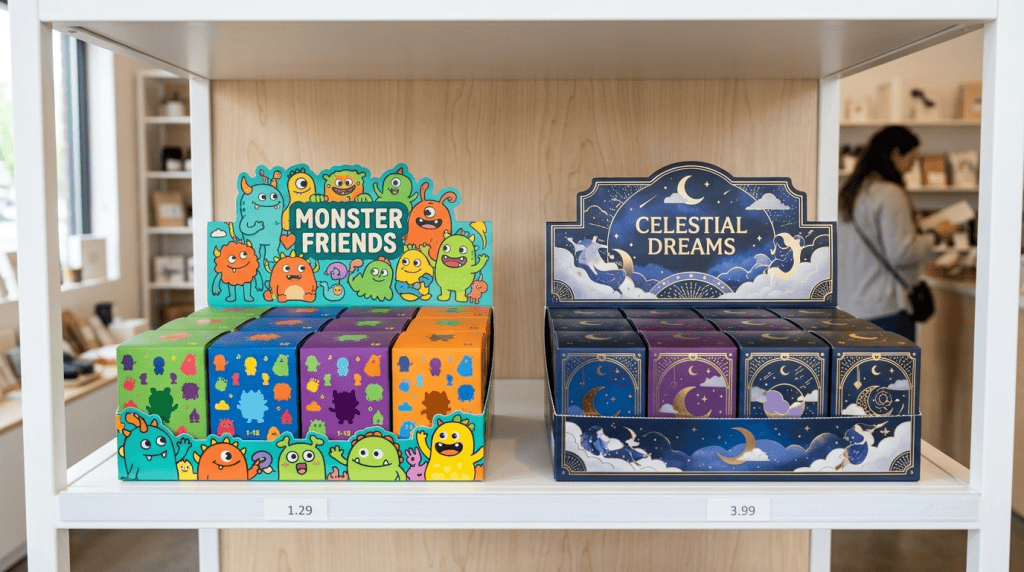
| Merchandising | Character- or franchise-led displays | Celestial, dreamy, or coordinated color displays | Actual packaging artwork and display-box dimensions |
| Staff explanation | Potentially less explanation for customers who know the characters | May need a sample or open display to establish appeal | Whether display samples can be ordered |
| Assortment risk | Demand may be uneven across individual characters | Demand may depend on consistency across the full series | Character lineup and assortment method |
| Authenticity checks | Licensing and supply-chain documentation are especially important | Brand ownership and authorized imagery still require confirmation | Invoice description, rights information, and packaging photos |
| Repeat purchase | Collectors may pursue specific characters or a complete set | Repeat sales may depend on cohesive designs and hidden variants | Published lineup and probability disclosures, if any |
| Gift suitability | Useful when the recipient’s character preference is known | Useful when shoppers buy by mood, palette, or occasion | Box condition, size, and gift-ready presentation |
| Reorder choice | May favor proven character demand | May favor small tests before deeper replenishment | Reorder availability and whether later cases match the same edition |
You do not have to choose one series exclusively. If the budget allows, a controlled split test can reveal whether recognition or aesthetic discovery drives more conversion in that particular store.
Match Each Series to Your Store and Your Shopper
Specialty toy stores, comic shops, game stores, gift boutiques, lifestyle retailers, and online collectible sellers do not serve identical audiences. Before comparing quotes, write down the likely buyer and the reason that person would purchase.
- Franchise-focused stores: Ask whether customers already request Pokémon merchandise and whether Eeveelutions are represented in current inventory.
- Design and gift boutiques: Review whether Starry Dream’s confirmed colors, scale, and presentation coordinate with existing displays.
- Vendedores en línea: Check whether the supplier can provide authorized, accurate product images and complete specifications for the exact SKU.
- Pop-up and event sellers: Prioritize compact case handling, easy price communication, and packaging that tolerates repeated transport.
- New blind box retailers: Favor the series whose case structure, variant list, and replacement process are easiest to document.
If you are testing an unfamiliar aesthetic line, the evaluation approach in the Guía para compradores de cajas sorpresa de Cupa helps you separate visual novelty from practical retail considerations.
Compare the Exact SKUs, Not the Names on the Listing
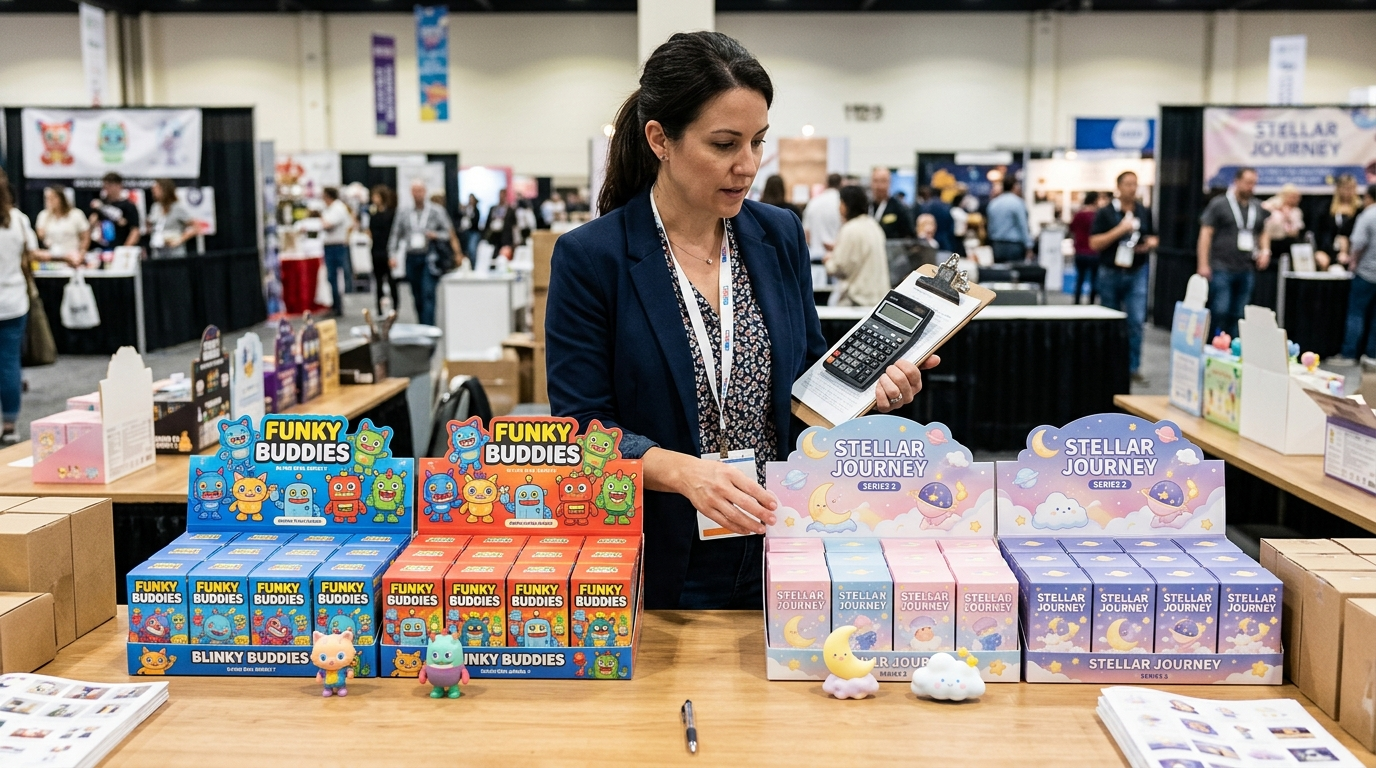
Product names are not specifications. A quote should identify the manufacturer or brand, series edition, item code, material, figure dimensions, box dimensions, number of regular designs, possible special designs, and case configuration. Without those fields, two unit prices are not comparable.
Use this sequence when reviewing listings:
- Match the item code on the quotation to the retail-box or master-carton photos.
- Confirm whether the offer is for one random box, a sealed display case, or a mixed assortment.
- Request the complete lineup image and ask how the assortment is packed.
- Ask whether a sealed case is intended to contain non-repeating regular designs; do not infer this from promotional artwork.
- Document material, dimensions, included accessories, and assembly requirements.
- Confirm whether the quoted edition and packaging language match the destination market’s needs.
The distinction between a sealed case and a supplier-created mix affects both collector expectations and inventory control. Review the guide to Conjuntos de series cerradas frente a surtidos mixtos en cajas sorpresa before accepting a quote described only as an “assorted carton.”
If the supplier cannot connect the quotation, product photographs, and carton label to one identifiable SKU, pause the comparison and request clarification.
If you already hold specification sheets or competing quotations, use these criteria to build a side-by-side review before requesting a final commercial offer.
Case Configuration Can Flip the Safer Stock Choice
MOQ and case quantity should be treated separately. A supplier may quote a minimum number of pieces, display cases, or master cartons. Ask which unit controls the order and whether breaking a sealed display changes the assortment.
As a planning example, a retailer considering 48 units might compare three possible allocations: 24 units of each series, 36 recognition-led units plus 12 design-led units, or a smaller initial test followed by a documented reorder trigger. These numbers are planning examples only; the actual allocation should be built from the supplier’s confirmed case pack.
Before selecting the split, answer four questions:
- How many units fit in the planned shelf or counter display?
- Will opening several cases create loose duplicates that are difficult to present?
- Can unopened cases be retained for collectors who request a full set?
- What sales level would trigger a reorder before the display looks depleted?
A useful test is to record weekly sell-through by series rather than combining both under a single blind box category. For example, you might set a planning trigger when roughly half of the test allocation has sold, then review reorder availability and remaining weeks of cover. The trigger is your internal rule, not a supplier promise.
Why Character Recognition Does Not Replace Landed-Cost Math
Purchase price is only one part of the stock decision. Compare estimated landed cost per sellable unit using the same cost categories for both series:
- quoted product value and any required outer packaging;
- freight allocation based on packed carton size and weight;
- customs duties, taxes, brokerage, and destination charges where applicable;
- payment, currency-conversion, inspection, and labeling costs;
- an internal allowance for damaged or unsellable packaging.
Ask for master-carton dimensions, gross weight, units per carton, and shipping terms before comparing totals. A lower unit quote can become less attractive if the packaging is bulky, the carton contains an inconvenient quantity, or replacement handling is unclear.
Licensed-character demand can be commercially useful, but a Pokémon name or image does not prove authorization. Request documentation that supports the offered product and verify whether the supplier is permitted to sell it into your intended market. Avoid listings that obscure packaging marks, use inconsistent product names, or cannot issue an invoice with a clear product description.
Packaging Checks for Gift Shelves and Collector Customers
Blind box packaging is part of the product. Crushed corners, broken seals, faded printing, or labels covering key artwork can reduce sellability even when the figure inside is undamaged. Request current photographs of the retail box, display case, protective packing, and master carton rather than relying only on rendered promotional images.
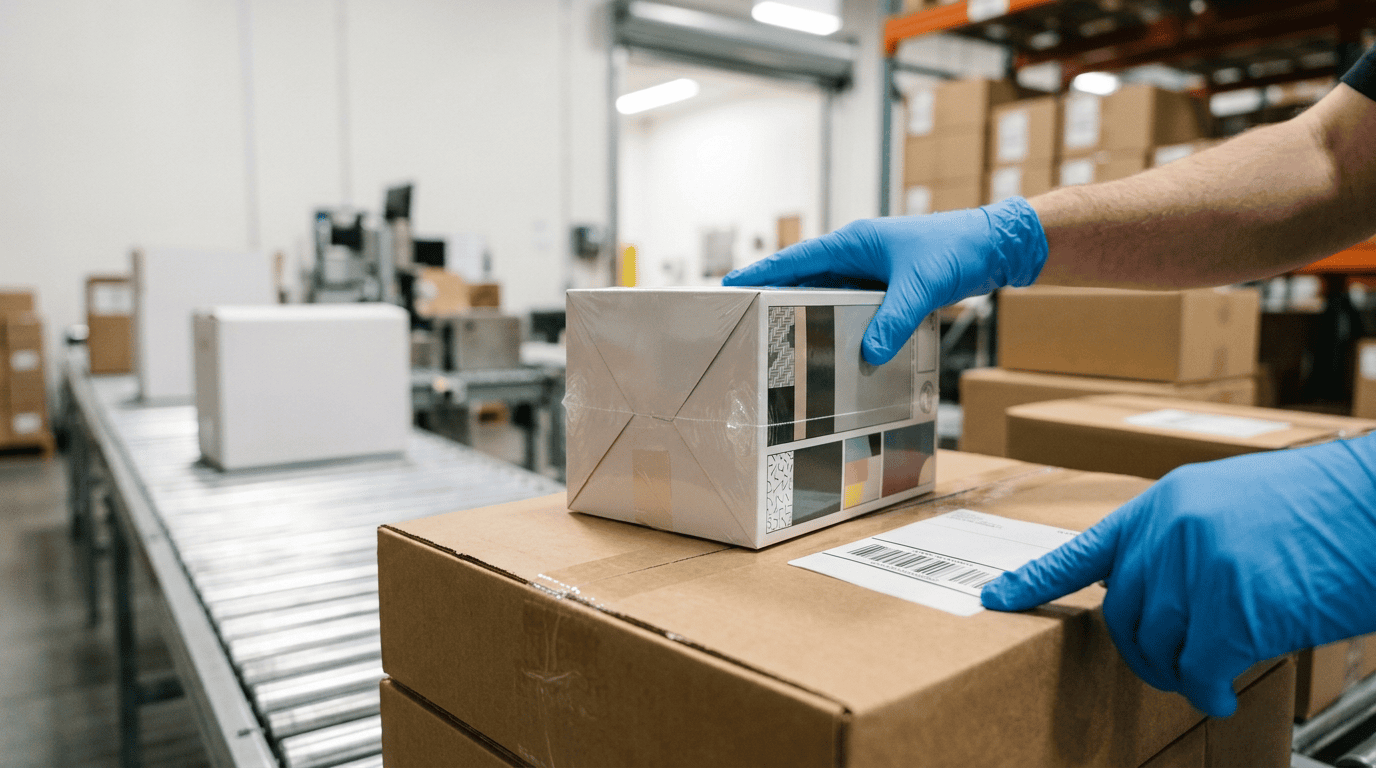
For a sample or pre-shipment review, use a repeatable checklist:
- Compare the retail box to the approved SKU photos and quoted edition.
- Check seals, print alignment, barcode readability, and visible dents.
- Confirm that the figure, base, accessories, and insert match the documented contents.
- Inspect paint application, joints, fit, odor, loose parts, and surface marks as relevant to the stated material.
- Photograph defects with the box code and carton reference visible.
- Agree in advance on the reporting period and remedy process for discrepancies.
Age grading, warnings, material restrictions, intellectual-property rights, labeling, and import rules vary by destination and sales channel. Verify applicable requirements with qualified local resources and ask the supplier for relevant documents tied to the exact SKU and production batch. A generic report or an image from another product should not be treated as evidence for the quoted item.
Freight Timing and Reorders Favor Documented SKUs
Ask suppliers to separate production or order-processing time from transit and customs time. Also confirm whether the goods are ready stock, pending replenishment, or made available only after order confirmation; do not read a quote date as proof of availability.
For both Eeveelutions and Starry Dream, record the following:
- quotation validity and availability confirmation date;
- estimated dispatch basis and shipping method;
- master-carton count, dimensions, and weight;
- edition consistency for later reorders;
- notice provided if packaging or assortment changes;
- procedure for shortages, transit damage, and incorrect items.
Recognition-led products can sell quickly after exposure, while an aesthetic series may build more gradually through display and social content. Treat those as hypotheses to test, not guaranteed patterns. Track sales separately and avoid promising customers a restock until the supplier reconfirms the same SKU.
Questions That Expose an Incomplete Blind Box Quote
Warning signs include a price with no item code, contradictory case quantities, refusal to provide carton details, edited-out packaging information, pressure to pay before specifications are confirmed, or vague answers about whether cases are sealed. Another mistake is comparing a single-box quote with a full-case quote without normalizing the quantities and included services.
Use this inquiry template:
Please quote the exact Eeveelutions and/or Starry Dream SKU for resale in [destination market]. State the brand or manufacturer, item code, edition, material, figure and retail-box dimensions, designs in the series, case pack, master-carton quantity, MOQ basis, and whether each case is factory sealed. Please also provide current retail-box and carton photos, packed carton dimensions and weight, availability basis, estimated processing time, shipping terms, payment terms, defect-reporting procedure, and documents relevant to authenticity, labeling, and destination-market compliance. Identify any differences between the quoted item and the supplied images.
For another example of how recognizable IP should still be evaluated at product level, see the Care Bears character blind box listing. If you are weighing larger-format collectible positioning, the Space Molly Series 3 product page offers a comparison point—though format, case structure, and buyer expectations may differ.
Before placing an order, request written quotes for both exact SKUs and compare them in one worksheet. Include case configuration, estimated landed cost, packaging evidence, documentation, and reorder conditions—not just the unit price. If a field remains unknown, mark it as unresolved rather than filling it with an assumption.
PREGUNTAS FRECUENTES
Is an Eeveelutions blind box automatically easier to sell than Starry Dream?
No. Character recognition may help in stores with existing Pokémon demand, but price, authenticity, product format, packaging, and local customer preferences still affect sales. A controlled test is safer than assuming recognition guarantees sell-through.
Should retailers buy sealed cases or individual blind boxes?
Sealed cases can simplify assortment control and appeal to set buyers, but only if the supplier confirms how the case is packed. Individual boxes may support smaller tests, although their source and assortment integrity should be documented.
What should be included in a comparable supplier quote?
Request the item code, edition, material, dimensions, lineup, case pack, MOQ basis, carton data, availability basis, shipping terms, packaging photos, defect procedure, and relevant authenticity and compliance documents.
How can a retailer test both series without overcommitting?
Build the test around confirmed case quantities, assign each series separate sales tracking, and define a reorder review point in advance. Do not split sealed cases until you understand how doing so affects assortment and collector value.
How should retailers verify a Pokémon blind box supplier?
Ask for clear product and packaging photographs, an identifiable SKU, invoice-ready product descriptions, and documentation supporting authorization and market suitability. Verify the information independently where appropriate.
Choose the Series With Fewer Unanswered Questions
Eeveelutions may be the stronger candidate when proven character demand, documented authenticity, and a workable case pack align. Starry Dream may fit better when visual merchandising, gift appeal, and a measured discovery-led test suit the store. The commercially safer option is the one whose exact SKU, landed cost, packaging condition, documentation, and reorder path can be confirmed before payment.