






For independent retailers sourcing art toys, understanding manufacturing materials is not just about aesthetics; it is a practical operational requirement. The difference between PVC, Vinyl, and ABS directly impacts your international shipping costs, in-store breakages, and how you justify retail price points to collectors.
Based on wholesale procurement data, retailers who cannot distinguish between these plastics often miscalculate freight costs (due to weight differences) or experience higher damage rates during open-shelf display. In this guide, we will break down the physical characteristics of PVC, Vinyl, and ABS, explain how each material affects your landed cost, and outline which material types perform best in different retail environments.
Why PVC is the Industry Standard for Blind Boxes
Polyvinyl Chloride (PVC) is the undisputed workhorse of the art toy industry. The vast majority of standard 3-inch blind box figures, such as the Nanci series or POP MART’s Skullpanda, are injection-molded from PVC.
For retail operations, PVC offers a solid balance of cost and durability. It is slightly flexible, meaning a figure knocked off a checkout counter is unlikely to shatter. Furthermore, PVC holds complex paint applications and gradients exceptionally well. However, because solid PVC is dense and heavy, it increases the overall weight of master cartons, which is a critical factor when calculating gastos de envío al por mayor para el transporte aéreo.
Soft Vinyl (Sofubi): Lower Weight, Higher Perceived Value

Vinyl (often referred to as Soft Vinyl or Sofubi in designer toy circles) is manufactured through a slush-casting process rather than injection molding. The result is a figure that is largely hollow on the inside.
From a B2B sourcing perspective, vinyl is commonly utilized for larger anchor products. When stocking Juguetes artísticos de gran tamaño 400% o 1000% (like the large-scale Baby Three models), vinyl is preferred because it significantly reduces the volumetric weight of the shipping box. For retailers, vinyl often carries a higher perceived value among serious collectors, allowing for stronger gross margins despite having less intricate molding details than PVC.
ABS: The Structural Backbone for Joints and Accessories
Acrylonitrile Butadiene Styrene (ABS) is a hard, rigid plastic (the same material used for Lego bricks). You will rarely see an entire blind box figure made of ABS; instead, it is used strategically for structural components.
If your store stocks mechanical toys or 1/12 scale BJD (Ball-Jointed Doll) blind boxes, the internal joints and connective pegs are almost certainly made of ABS. It provides the necessary friction and rigidity for poseability.
Retailer Warning: While ABS is incredibly strong structurally, it is brittle upon impact. Thin ABS accessories (like a figure’s sword or glasses) will snap if dropped, whereas PVC will bend. Staff must handle display models containing ABS components with extra care to avoid writing them off as damaged inventory.
Matching Toy Materials to Your Retail Environment
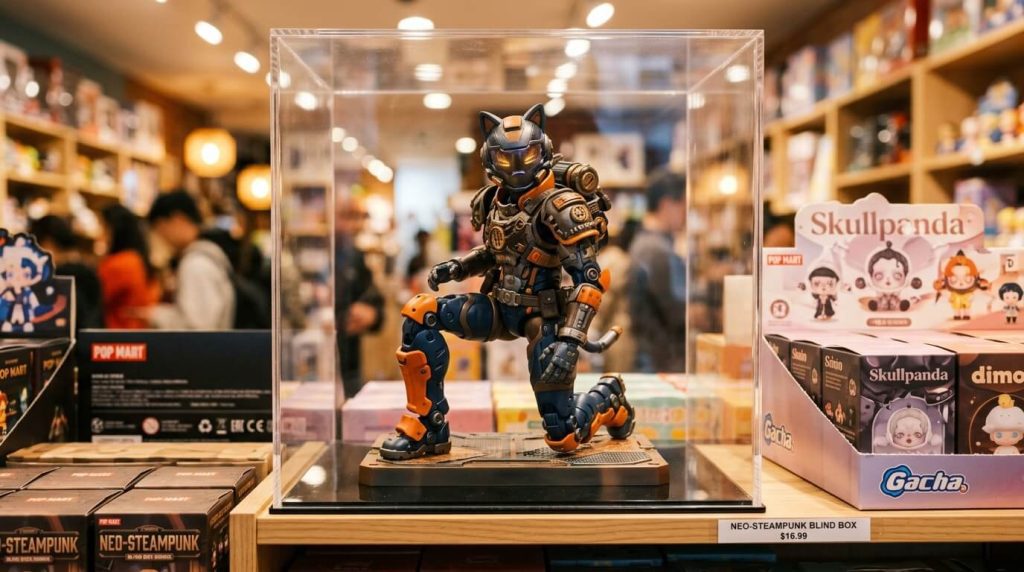
To minimize dead stock and maximize shelf life, retailers should align the material composition of their inventory with their physical store environment.
- High-Traffic General Retail (Boba Shops, Convenience Stores): Stick predominantly to standard PVC blind boxes. They are durable, cost-effective, and can withstand casual handling by customers near the POS counter.
- Boutique Toy & Hobby Shops: Integrate a mix of complex ABS-jointed figures (like MJD/BJD blind boxes) and large hollow Vinyl figures. These stores typically attract dedicated hobbyists willing to pay a premium for articulation and indie-style slush-cast aesthetics.
- Window Displays (Sunlight Exposure): Never place solid PVC figures in direct sunlight or under hot halogen lamps for extended periods. PVC softens under high heat, causing figures to lean or warp over time. For sunny window displays, plush toys or hollow vinyl pieces are usually safer options.
Cost and Margin Breakdown by Material
Understanding the material composition helps buyers evaluate whether the wholesale cost offered by a supplier is justified.
| Primary Material | Common Form Factor | Shipping Weight Impact | Margen bruto aproximado | Retail Durability |
|---|---|---|---|---|
| Solid PVC | Standard 3″ Blind Boxes | Heavy (Increases Freight) | 45% – 55% | High (Bends upon impact) |
| ABS (Mixed) | BJD Joints / Accessories | Medio | 50% – 60% | Medium (Accessories may snap) |
| Soft Vinyl | 400% / 1000% Large Figures | Light (Hollow core) | 40% – 50% | High (Resistant to drops) |
*Note: Wholesale costs and margins depend on the IP license and manufacturing complexity. Buyers can request a custom volume quote for exact pricing details.
Preguntas más frecuentes (FAQ)
Why do some standard blind boxes weigh more than others?
Weight discrepancies in standard-sized blind boxes are almost always due to the volume of solid PVC injected into the mold. A figure with a large, solid PVC base or bulky accessories will weigh significantly more than a slimmer figure, directly impacting your air freight landed costs.
Does PVC yellow or degrade over time on retail shelves?
High-quality PVC is generally stable, but prolonged exposure to UV light (direct window sunlight) can cause the plasticizer to degrade, leading to stickiness or paint fading. It is practical to rotate your unboxed display models every few months or keep them in UV-protected acrylic cases.
Are ABS-jointed blind boxes suitable for younger children?
Usually, no. Because ABS is rigid and used for tiny ball joints or delicate accessories, these items present a choking hazard and can break if played with roughly. They should be merchandised to the “kidult” demographic (ages 14+) who treat them as display collectibles rather than action figures.
Where can I source wholesale assortments featuring these different materials?
Retailers typically source a diverse mix of PVC, ABS, and Vinyl items through specialized B2B aggregators. When utilizing platforms like Kidults Box, buyers can access detailed product specifications and often leverage Cumplimiento de almacenes en EE.UU. to avoid the heavy international freight costs associated with dense PVC master cartons.
For store owners, recognizing the difference between PVC, Vinyl, and ABS is an essential step in managing freight budgets and minimizing in-store damage. If you are preparing your next purchase order and need to balance standard PVC boxes with large-scale vinyl anchors, you can explore the available assortments in our B2B catalog.