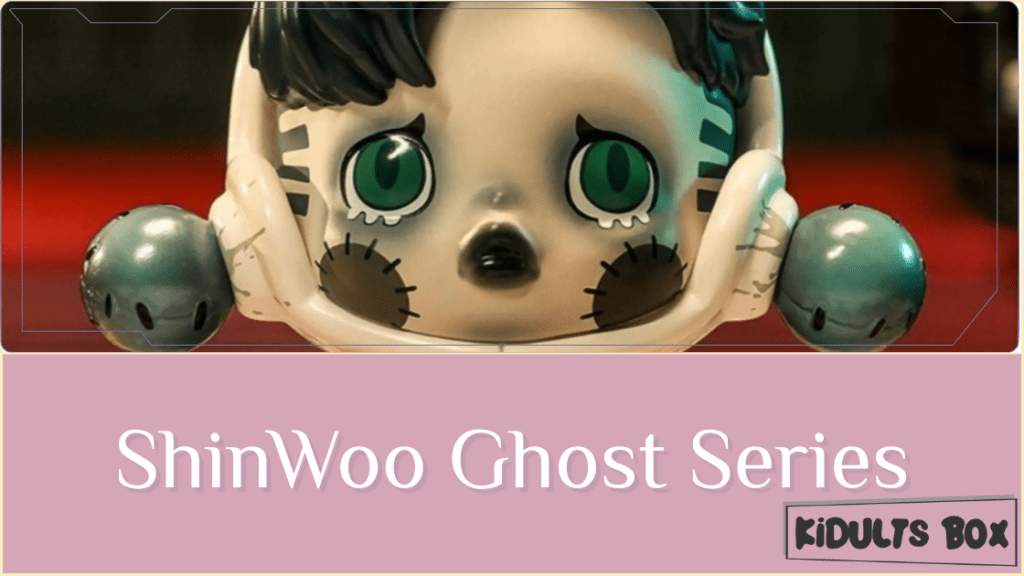





Small figures can still tie up a surprisingly large inventory budget when a supplier quotes by the set rather than by the individual box. Deciding between ShinWoo Hug Me Mini and Ghost at Home starts with separating three things that often get blurred together: figure dimensions, how many distinct designs each series contains, and how many saleable boxes you actually commit to per order.
No verified specifications or set counts were supplied for these two series, so this guide does not assign either an exact height, assortment count, or packing configuration. Instead, use the questions and comparison below to pull those facts out of each supplier and to see how different confirmed set sizes would change your purchase.
The Facts to Lock Down for Hug Me Mini and Ghost at Home
Start by asking each supplier for the exact series name, edition identifier, a current assortment image, and packaging photographs. Similar listing names or cropped marketing pictures are not enough to prove that two quotations cover the same release.
Request measurements for both the figure and its unopened retail box. Figure height alone cannot tell you how much shelf frontage, storage space, or parcel capacity an order needs. Also establish whether accessories or bases change the displayed footprint.
| Comparison field | Evidence to request for both series | How it changes the decision |
|---|---|---|
| Exact release | Full series name, edition, and packaging images | Prevents comparing different versions under a shortened name |
| Figure dimensions | Height, width, and depth, including accessories | Determines display clearance and sample placement |
| Regular design count | Current manufacturer assortment information | Shows the breadth of the standard collection |
| Secret-design rules | Documented inclusion or replacement conditions | Prevents unsupported complete-set promises |
| Boxes per retail set | Written unit count and pack definition | Establishes the actual purchase commitment |
| Master-carton quantity | Sets per carton and total individual boxes | Supports freight estimates and receiving checks |
| Retail-box dimensions | Measurements and photographs with a scale reference | Reveals shelf and outbound packaging requirements |
| Order minimum | MOQ by series and permitted order increments | Shows whether a limited trial order is feasible |
Keep any unconfirmed field visibly marked as pending. An attractive quote is not ready for approval if its unit of sale is unclear. The related SKULLPANDA format and pack-size comparison is another useful reference for distinguishing product format from purchasing quantity.
Match Each Assortment to the Space You Actually Sell From
A collectible specialist may prioritize enough designs to support repeat visits. A gift shop may care more about a compact counter presentation and packaging a casual buyer understands at a glance. An online retailer must also check whether an unopened box fits its existing protective mailers.
For either ShinWoo series, mock up the proposed display using verified retail-box measurements. Leave room for a sample figure, a price label, and customer handling access rather than measuring only tightly stacked inventory.
A larger confirmed design assortment can create more variety, but it does not automatically justify a deeper opening order. Check whether your customers buy occasional gifts, single mystery boxes, or full sets before allocating the budget.

For a hypothetical shelf test, first compare the space occupied by one unopened retail set of each series, then compare equal quantities of individual boxes. These answer two different questions: which set fits the fixture, and which packaging format uses space more efficiently per box?
If shelf space and working capital are both limited, the guide to blind box buying for small collectible stores provides a broader framework for narrowing an opening assortment.
Why a ShinWoo “Set” Needs a Written Box Count
Do not treat “set,” “display,” “case,” and “carton” as interchangeable. Ask the supplier to define every packing level in individual saleable boxes. Also distinguish a sealed assortment from a guaranteed collection of distinct designs.
Hypothetical planning example: if Series A contained six boxes per retail set and Series B contained eight, ordering four sets of each would produce 24 and 32 boxes respectively. Those are illustrative counts only, not specifications for Hug Me Mini or Ghost at Home.
That gap is the point: equal set quantities do not create equal inventory exposure. To compare a balanced trial, work backward from your target number of individual boxes and round to each supplier’s permitted order increment. Before committing, pin down these points in writing:
- Confirm whether MOQ applies per series, per SKU, or across the whole order.
- Ask whether mixed-series cartons are permitted and how they are packed.
- Establish whether a sealed set carries any documented non-duplication condition.
- Confirm whether secret designs replace regular designs rather than adding boxes.
- Record whether opened or split sets receive different claim treatment.
Ask the supplier for a side-by-side packing breakdown for both series. Resolving these points early is a low-pressure way to turn a product inquiry into a usable quote.
Compare Cost per Saleable Box, Not the Set Headline
A lower set price does not necessarily mean a lower unit cost when set sizes differ. First divide the quoted merchandise total by the confirmed number of individual boxes. Then compare delivery terms and the expenses each offer leaves out.
For internal planning, estimate landed cost per saleable box as merchandise cost plus freight, insurance where applicable, destination charges, duties, non-recoverable taxes, and handling, divided by expected saleable units. Keep recoverable taxes separate according to your own accounting treatment.
Request packed carton dimensions and gross weight for both series. Compact figures can still arrive in relatively bulky retail packaging, and freight quotations may be driven by volumetric rather than actual weight. Do not estimate shipping from figure height.
Compare quotes using the same destination, transport method, currency assumptions, and Incoterm with a named place. Ask your broker or logistics provider to verify classification and destination charges; do not assume the supplier’s estimate covers every import expense.
If one assortment needs more boxes to meet the ordering minimum, weigh the total cash commitment alongside unit cost. A modest per-box saving may not justify tying up funds in inventory you cannot test quickly.
Protecting the Unopened-Box Experience Before Dispatch
For blind box retail, packaging condition affects whether an item is suitable for gifting and how confidently customers buy it. Ask for close photographs of retail-box corners, closure seals, display cartons, and the proposed outer shipping carton.
Agree on acceptance criteria for crushed boxes, moisture damage, broken seals, missing accessories, and visible figure defects. Specify how claims must be documented, when they must be submitted, and what remedy the supplier proposes. Do not assume all cosmetic packaging damage is covered.

For a sample review, photograph the unopened box first, then inspect the figure for stability, paint defects, attachment security, and accessory fit. A small sample can expose issues, but it does not establish the quality of every unit in a shipment.
Confirm the stated material and intended age grading rather than inferring either from photos. Buyers should verify applicable safety, labeling, importer-information, and warning requirements for their destination market. A “collectible” description alone does not settle regulatory classification.
Ask for traceable sourcing documentation and relevant product documents tied to the exact release. Treat a supplier’s refusal to identify the goods, explain their sourcing, or clarify what documentation is available as a reason to pause.
Reading Replenishment Signals for Hug Me Mini and Ghost at Home
Separate order preparation, dispatch, transport, and customs clearance when discussing availability. Ask whether the quotation concerns immediately allocatable goods, incoming inventory, or a preorder, and request a written explanation of any uncertain milestone.
Track sales in individual boxes rather than only in sets. For a hypothetical comparison, selling three six-box sets means 18 boxes sold, while selling three eight-box sets means 24. Equal set sales can therefore hide very different replenishment needs.
Build your reorder trigger from observed weekly box sales, the supplier’s confirmed replenishment window, and a buffer sized to how much demand swings. Round the resulting quantity to the verified order increment, then check that it still fits your cash and storage limits.
Pause a purchase when the invoice switches between “case” and “set,” freight is quoted without packed measurements, or complete-assortment claims lack written conditions. These gaps matter more than a polished listing. For a wider assortment review, compare your findings with the four-series CRYBABY figure buying comparison.
Send a Two-Series Quote Request With Matching Assumptions
Request both series in the same message so the supplier answers identical questions. State your destination, selling channel, intended trial quantity in individual boxes, and target launch date—without presenting that date as an agreed delivery commitment.
Please quote ShinWoo Hug Me Mini and Ghost at Home separately. For each, confirm the exact release, figure and retail-box dimensions, regular design count, secret-design rules, boxes per retail set, sets per master carton, MOQ, and permitted order increments.
Please also provide the quote unit, currency, validity, payment terms, Incoterm and named place, packed carton dimensions and gross weight, allocation status, estimated dispatch timing, packaging photographs, available product documentation, and damage-claim procedure. Identify whether any complete-set or non-duplication conditions apply.
Ask for a written side-by-side quotation before placing your first order. Approve it only when both series can be compared per individual box, per order commitment, and per landed shipment—not simply by the advertised set price.
PREGUNTAS FRECUENTES
Which series has the smaller set?
The supplied information does not establish either series’ exact set count. Request written boxes-per-set figures for the specific releases before comparing order size.
Does buying a sealed set guarantee every design?
Do not assume it does. Confirm any non-duplication conditions and whether a secret design can replace a regular design before promising a complete collection.
Is a smaller figure cheaper to ship?
Not necessarily. Freight depends on packed dimensions, weight, service, and destination. Compare measured shipping cartons rather than figure height.
How should a small retailer choose an opening quantity?
Set a trial quantity in individual boxes based on display space, budget, and expected demand, then round it to the confirmed MOQ and packing increment.
What should be checked before listing either series online?
Verify the exact release, dimensions, material, assortment wording, age grading, and packaging images. Confirm destination-market labeling and safety requirements before publishing product claims.
Before You Commit Shelf Space
Choose between the two series using verified pack counts, a realistic display plan, and comparable landed costs. If the supplier cannot define what a set contains, resolve that uncertainty before payment. Small figures become manageable retail inventory only when their ordering units are equally clear.