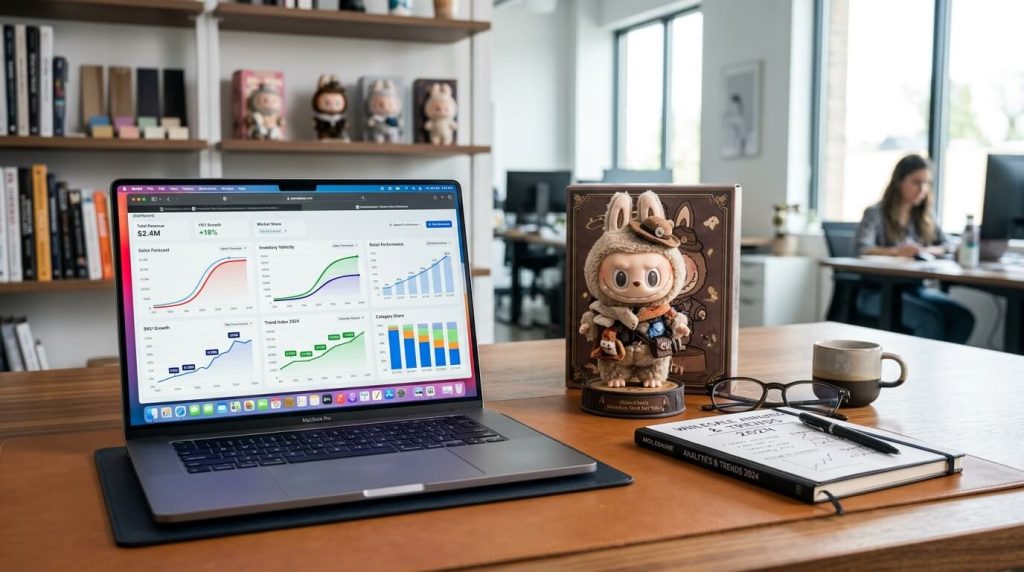




Scaling a single successful art toy store into a multi-unit franchise requires shifting your focus from daily floor sales to operational replication. For a franchise model to succeed, founders must establish standardized store layouts, unified point-of-sale (POS) systems, and, most critically, a highly stable wholesale supply chain that franchisees can rely on.
Based on multi-store operational data, franchisees are most likely to fail when they struggle with inconsistent inventory sourcing or dead stock management. In this preliminary guide, we will outline how to structure a franchise operations manual for art toys, how to centralize your blind box purchasing, and how to build a standard “opening inventory package” for new franchise locations.
1. Standardizing Store Layouts and Merchandising

A core value proposition of buying into a franchise is the proven floor plan. Your franchisees should not have to guess where to place high-ticket items versus impulse buys.
When developing your franchise guidelines, it is practical to mandate the Golden Triangle store layout strategy. This involves placing new arrivals (like the latest plush blind boxes) at the front right, anchor displays (like 400% or 1000% figures) at the back to draw foot traffic inward, and low-ticket impulse items (like plush keychains) at the checkout counter. Standardizing the physical fixtures—such as requiring uniform acrylic display cases for built samples—ensures that the brand aesthetic remains consistent whether the location is a mall kiosk or a brick-and-mortar storefront.
2. Centralizing the Wholesale Supply Chain
Allowing individual franchisees to source their own blind boxes often leads to fragmented pricing, counterfeit risks, and inconsistent profit margins. A successful art toy franchisor acts as a central hub or partners directly with a reliable B2B supplier.
By mandating that franchisees order from an approved wholesale list or directly through your corporate account, you maintain quality control. This approach also allows the entire franchise network to pool their purchasing volume, securing lower unit costs and priority access to highly sought-after IP allocations before they sell out in the broader market.
3. Inventory Tracking and Tech Stack Requirements
Blind box inventory is notoriously difficult to track due to the existence of “hidden” or “chase” figures, identical outer packaging, and fast-moving series updates. A franchise cannot function efficiently without a unified tech stack.
It is necessary to implement POS systems optimized for art toy inventory across all locations. A unified POS allows the franchisor to monitor sell-through rates in real-time. If a specific plush series is moving slowly in a suburban franchise but selling out rapidly in an urban location, the franchisor can facilitate an inventory transfer, significantly reducing the need to heavily discount or liquidate dead stock.
Structuring the Franchisee “Opening Inventory Package”
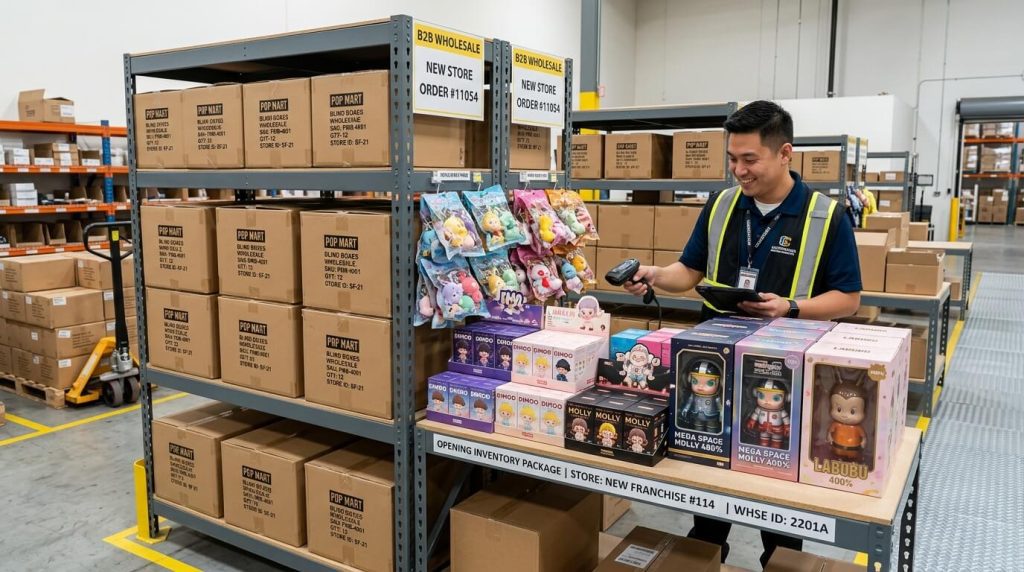
When a new franchisee signs on, providing a curated “Opening Order” minimizes their initial risk. Instead of letting them guess what will sell, the franchisor should provide a data-backed assortment that covers multiple categories and price points.
A practical opening inventory structure for a standard 800-1,200 sq. ft. art toy retail space typically follows this distribution:
- 50% Core Evergreen IPs: Proven, fast-moving items like standard PVC blind boxes (e.g., Nanci or Upsetduck) that provide steady cash flow.
- 30% Plush and Lifestyle Accessories: High-margin add-ons, including plush bag charms and zipper bags, which appeal to broader demographics beyond hardcore collectors.
- 15% Display and Anchor Items: Larger, higher-ticket figures (400% scale) or intricate DIY room boxes that act as visual centerpieces for window displays.
- 5% Impulse Buy / Checkout Items: Low-cost items like enamel pins, badges, or acrylic stands.
Estimated Margins for Multi-Unit Operations
Franchisees expect clear financial projections. While local labor and rent vary, the gross margin on the product itself must be protected through disciplined wholesale sourcing.
| Category in Opening Package | Target Retail Price (MSRP) | Expected Franchisee Gross Margin | Inventory Purpose |
|---|---|---|---|
| Standard PVC Blind Boxes | $14.99 – $18.99 | 45% – 55% | Primary Revenue Driver |
| Plush Blind Boxes & Charms | $12.99 – $19.99 | 50% – 60% | High-Turnover Impulse Sales |
| Large Scale Figures (400%+) | $80.00 – $150.00+ | 40% – 50% | Anchor Displays / High AOV |
| Small Accessories (Badges) | $6.99 – $9.99 | 60% – 70%+ | Checkout Upsell |
*Note: Margins depend on cumulative volume. Franchisors can request a custom volume quote to model out their opening packages.
Frequently Asked Questions (FAQ)
Is a mall kiosk a viable starting point for an art toy franchise?
Yes. Many successful art toy franchises use mall kiosks as a lower-risk entry model. Kiosks require less initial capital for build-out and rely heavily on foot traffic. However, kiosk inventory must be heavily weighted toward smaller, impulse-buy items (like plush keychains) rather than large 1000% figures due to storage limitations.
How do franchisors handle dead stock across multiple locations?
Effective franchisors utilize their unified POS data to manage stock transfers. If an item is stagnant in Store A but selling well in Store B, the product is reallocated. For system-wide slow movers, franchisors typically coordinate a network-wide “lucky bag” or blind box clearance event to recover capital simultaneously.
Should franchisees be allowed to source local independent toys?
Most franchise agreements mandate that 80% to 90% of inventory comes from the approved corporate supply chain to maintain brand consistency. However, allowing franchisees a 10% discretionary budget to stock local indie artists can help the store integrate better with the local community’s art scene.
How can a franchisor ensure reliable supply for a growing network?
Partnering with a dedicated B2B wholesaler is the most practical solution. Platforms like Kidults Box help franchisors scale by offering consistent case ratios, bulk pricing tiers, and US warehouse fulfillment, which ensures that franchisees across the country receive restocks without experiencing lengthy international customs delays.
Transitioning from a single store to a multi-unit operation requires a robust, scalable supply chain. If you are developing an opening inventory package for your future franchisees, evaluating a reliable wholesale partner is the necessary first step.