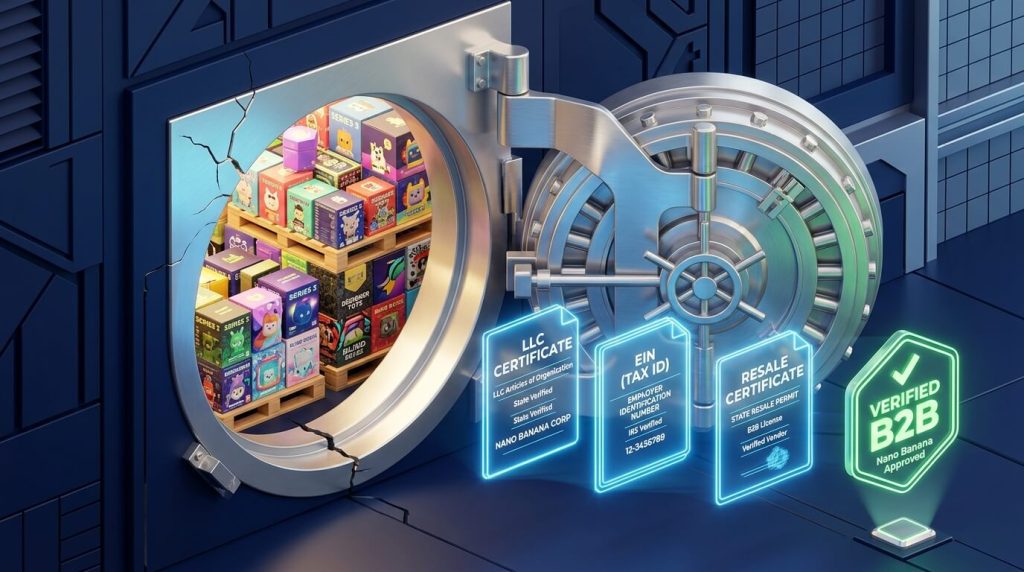




In the global supply chain of art toys, securing a highly anticipated master carton from your wholesale supplier is only half the battle. The physical journey from a manufacturing hub in China to your retail stockroom introduces severe logistical hazards. A single dropped pallet or a water-damaged shipping container can instantly wipe out $5,000 of working capital. For independent retailers, hoping for the best is not an inventory strategy; comprehensive shipping insurance is.
Based on B2B freight data, the art toy sector faces a unique insurance challenge: in the collectible market, a crushed cardboard outer box destroys the product’s retail MSRP, even if the PVC figure inside is completely unharmed. Standard freight adjusters often dispute this. In this B2B operational guide, we will break down International Commercial Terms (Incoterms), the difference between carrier liability and true cargo insurance, and the strict Standard Operating Procedure (SOP) your staff must follow when receiving pallets to guarantee a successful damage claim.
The “BNIB” Dilemma: Why Art Toys Require Specific Coverage
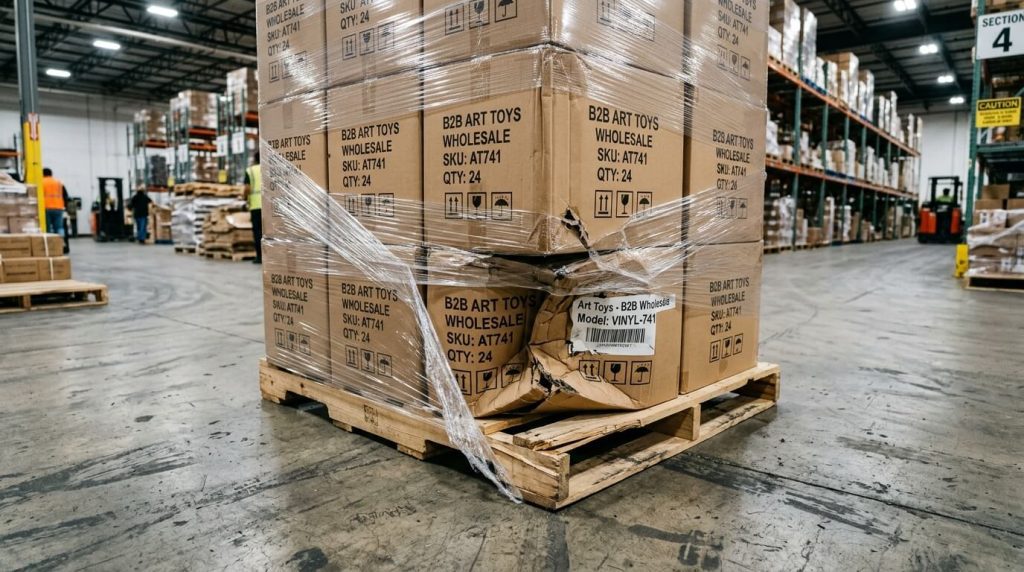
When shipping textiles or machine parts, cosmetic damage to the outer shipping carton is irrelevant. However, art toys derive massive value from being “Brand New In Box” (BNIB). If a master carton of 400% scale luxury figures is crushed at the bottom of an ocean freight container, the retail value plummets by 40% to 60%.
When negotiating insurance, you must ensure your policy covers Commercial Value Loss due to Packaging Damage. If you rely solely on basic logistics coverage, the claims adjuster will open the crushed box, see that the internal PVC or ABS figure is structurally intact, and deny your claim entirely. You must declare upfront that the packaging is integral to the product’s resale value.
Incoterms: Who Owns the Risk?
Before you can insure a shipment, you must know at what exact point the financial risk transfers from your B2B supplier to your retail business. This is dictated by Incoterms.
- EXW (Ex Works): The supplier’s responsibility ends the moment the boxes leave their factory floor. You bear 100% of the risk during local trucking in China, port loading, ocean transit, and final delivery. If you buy EXW, you must secure your own comprehensive cargo insurance.
- FOB (Free On Board): The supplier is responsible for the goods until they are physically loaded onto the ship at the Shenzhen or Ningbo export port. Once the ship departs, the risk is entirely yours. You must insure the ocean and domestic transit legs.
- DDP (Delivered Duty Paid): The gold standard for independent retailers. The B2B supplier assumes all risk, freight costs, and customs duties until the pallet physically arrives at your store. If the goods are damaged in transit, the supplier absorbs the loss and files the insurance claim. (Always verify that your supplier includes full insurance on DDP shipments).
Carrier Liability vs. Cargo Insurance
A fatal mistake made by novice buyers is assuming that FedEx, UPS, or the ocean freight forwarder will automatically reimburse the full value of a lost or destroyed pallet. They will not.
Carrier Liability: By international law, carriers are only legally required to pay a fraction of the value based on weight (e.g., $2.00 per kilogram for international air freight). Because blind boxes are relatively lightweight, a destroyed $2,000 master carton might only yield a $50 liability payout from the carrier.
Comprehensive Cargo Insurance: This is a supplementary policy (often costing 1% to 2% of the total commercial invoice value). It insures the freight for 100% of its actual wholesale cost, regardless of the carrier’s weight limits. When calculating your wholesale shipping costs and landed margins, you must mathematically bake this 2% insurance premium into your Cost of Goods Sold (COGS).
The Inbound Receiving SOP: Securing Your Claim
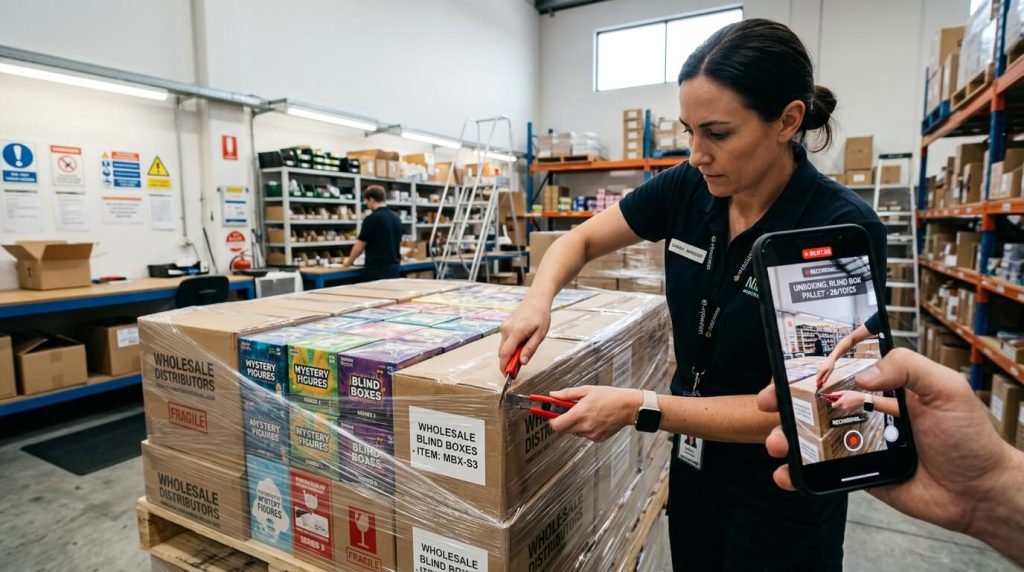
If you have purchased comprehensive insurance, the most common reason a claim gets denied is that the retailer failed to provide adequate Proof of Damage at the time of delivery. Train your stockroom staff on this ruthless 3-step receiving protocol:
Step 1: Sign with Reservations (The POD)
When the delivery driver hands you the digital scanner or paper Proof of Delivery (POD) to sign, do not just sign your name. If you see even a minor dent or a tear in the pallet’s shrink wrap, you must write: “SUBJECT TO INSPECTION – VISIBLE DAMAGE TO PALLET” before signing. If you sign a clean POD, the carrier legally assumes the goods were delivered perfectly, instantly voiding your insurance claim.
Step 2: The Continuous Unboxing Video
Do not open the boxes off-camera. Your staff must use a smartphone to film a continuous, uncut video. Start by showing the shipping label and tracking number clearly. Walk around the entire sealed pallet to document exterior damage. Finally, film the cutting of the shrink wrap and the opening of the master cartons. This video provides undeniable proof that the damage occurred in transit, not after your staff dropped the boxes in the stockroom.
Step 3: Segregation and Salvage
Do not throw away the crushed brown master cartons; the insurance adjuster may demand photographic proof of the impact zones. Segregate the damaged units from your pristine inventory. Once the insurance claim clears and reimburses your wholesale cost, utilize standard retail salvage strategies (like opening the crushed boxes and selling them as “confirmed” unboxed figures) to turn a logistical disaster into pure profit.
Logistical Risk and Mitigation Matrix
Use this operational matrix to evaluate your shipping risk exposure and mandate insurance requirements for your procurement team.
| Freight Method | Primary Damage Risk | Insurance Recommendation | Retail Margin Impact |
|---|---|---|---|
| LCL Ocean Freight (Shared Container) | High Risk: Pallet crushing, moisture, forklift drops. | Mandatory 110% Comprehensive Cargo Insurance. | Adds ~1.5% to COGS. Essential for survival. |
| Air Express (FedEx / DHL) | Medium Risk: Box denting from rapid conveyor sorting. | Declare full value with courier at booking. | Adds ~$15-$30 per tracking number. |
| Domestic US Freight (LTL) | Low/Medium Risk: Local handling impacts. | Standard Carrier Insurance + Visual POD check. | Negligible impact on COGS. |
Frequently Asked Questions (FAQ)
What happens if heat ruins my PVC blind boxes during ocean transit?
Thermal degradation is a severe risk during summer shipping. Unfortunately, standard cargo insurance rarely covers “inherent vice” or temperature damage unless you specifically purchase a premium “Reefer” (refrigerated) container policy, which is not cost-effective for toys. The best mitigation strategy is timing your large wholesale orders to avoid peak summer transit, or sourcing from US domestic warehouses during July and August.
How long does an international freight insurance claim take to process?
A standard cargo claim can take anywhere from 30 to 90 days to process and payout. This underscores why undercapitalized bootstrapped stores can go bankrupt from a single lost shipment. You must have enough working capital to survive a 3-month wait for reimbursement.
Does my business renter’s insurance cover freight damage?
No. Standard commercial property insurance or business renter’s insurance only covers inventory once it is physically inside the threshold of your store. It provides zero coverage while the goods are on a truck or a cargo ship.
How can I simplify the insurance process when sourcing art toys?
The most efficient way for independent retailers to bypass the headache of freight insurance, Incoterms, and customs brokers is to purchase on DDP (Delivered Duty Paid) terms through a verified B2B aggregator. Platforms like Kidults Box handle all international logistics, customs clearance, and transit risk, ensuring that you only pay for pristine, sellable inventory that arrives safely at your door.
Protecting your inbound supply chain is the foundation of retail profitability. A single uninsured loss can wipe out a month of hard-earned retail margins. If you want to eliminate international freight risk entirely and source guaranteed, DDP-shipped master cartons, evaluating our secure B2B catalog is your most strategic operational step.