


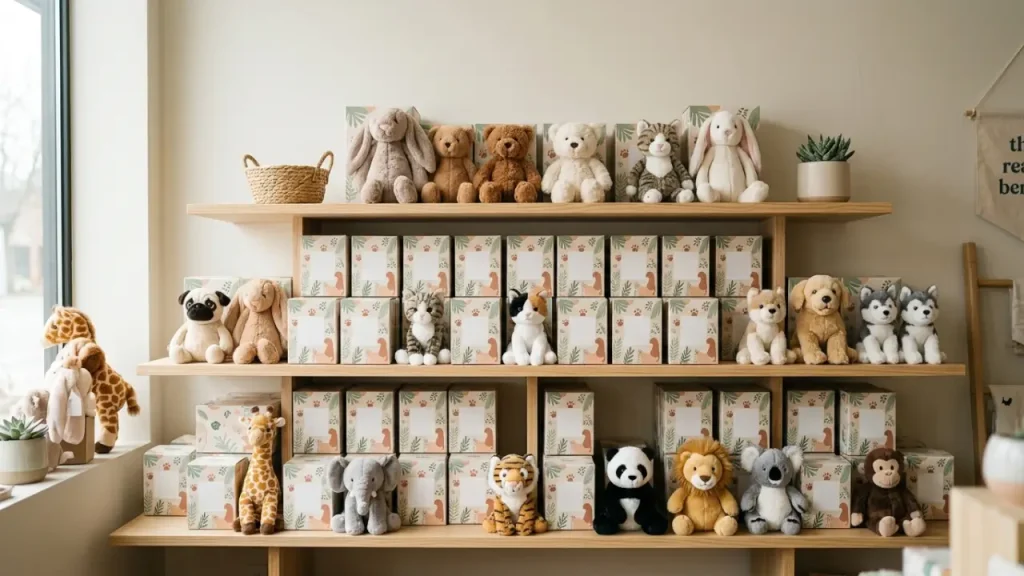
Choosing a new plush line forces a retailer to weigh visual appeal against duplication risk, shelf space, packaging condition and the cost of bringing a full sealed case into stock. That trade-off gets harder with animal-themed mystery products because zoo, bunny, bear and household-pet concepts pull from overlapping audiences yet sell very differently depending on store type. Animal plush blind boxes reward buyers who evaluate format and case economics, not just the cutest face on the sample photo.
In this guide, “new” means a series you are considering for an upcoming assortment or a first store test—not a claim about a specific release date. And the best choice is not automatically the most adorable design; it is the series whose format, assortment structure, cost and realistic selling window fit your actual operation.
Which Animal Theme Fits Your Store and Customer?
Start with the shopping occasion rather than picking a character from product photos. A gift shop, toy store, lifestyle boutique and online collectibles seller may each need different theme coverage even when they serve a similar age group.
- Zoo themes: Useful when you want several recognizable species in one display. Ask whether the assortment feels visually coherent despite the character variety, or whether the styles clash on a shelf.
- Bunny themes: Often suited to soft, pastel, spring, friendship or fashion-led merchandising. Check whether the presentation stays relevant outside a seasonal selling window, or whether it reads as strictly Easter/spring stock.
- Bear themes: Familiar silhouettes work for general gifting, but compare costumes, expressions and accessories so the line does not look nearly identical to bears you already stock.
- Pet themes: Cats, dogs and other companion-animal concepts can support everyday gifting. Review whether the designs appeal broadly or depend on shoppers recognizing a specific breed.
A retailer with limited shelf space might choose one broad zoo assortment rather than separate rabbit, bear and pet series. A larger collectibles store may benefit from distinct themes that encourage repeat visits. For a focused example, review the Nommi Baby and Sitting Zoo comparison and note how theme, display context and customer fit shape the decision.
How to Compare Animal Plush Blind Boxes Beyond the Character Photo
Request a complete series specification before treating two quotations as comparable. A low unit figure reveals little if one quote covers individual boxes, another covers sealed cases and a third excludes freight or protective packing.
| Ponto de avaliação | O que verificar | Why it matters to a retailer |
|---|---|---|
| Composição da série | Number of regular designs and whether a hidden design is possible | Influences repeat-purchase appeal and customer expectations |
| Plush dimensions | Approximate height, width and depth for each design | Determines shelf density, shipping volume and display method |
| Product format | Plush toy, pendant, bag charm, seated plush or another format | Changes use case and may affect labeling or age-related review |
| Outer packaging | Box dimensions, sealing method and visible condition standard | Damaged mystery packaging is harder to sell as unopened stock |
| Configuração do gabinete | Units per sealed set, sets per shipping carton and assortment method | Allows accurate order and duplicate-risk planning |
| Materials and components | Fabric description, filling, clips, chains and detachable parts | Supports quality review and destination-market compliance checks |
| Carton information | Carton dimensions and gross weight | Required for meaningful freight and landed-cost estimates |
| Commercial status | Sample availability, order basis and restock process | Helps distinguish a testable range from a difficult-to-repeat purchase |
Ask for this information in writing and record the specification version used for the quote. If photos, assortment details or carton measurements change later, you need a clear reference point for reconfirmation.

Build a Zoo, Bunny, Bear and Pet Assortment Without Excess Overlap
Buying one case from every appealing animal family can create the illusion of variety while filling the shelf with similar colors, faces and plush formats. Map the range by visual role and customer use instead.
- Choose an anchor series. This should provide the clearest theme and strongest display presence for the planned shelf.
- Add a contrasting series. Contrast can come from color, animal type, expression, size or format—for example a pendant rather than another seated plush.
- Limit look-alike concepts. Two pastel bunny ranges may divide the same demand instead of expanding it.
- Reserve test capacity. Keep part of the buying budget and display space free for a future series or a reorder of the early winner.
As a planning example, a retailer testing 48 total units might allocate 24 units to a broad zoo concept, 12 to a bunny line and 12 to either a bear or pet theme. These are illustrative numbers, not recommended supplier quantities; they simply show how an anchor-and-test structure can reduce exposure. The actual split must follow available case packs and the store’s sales data.
Retailers deciding specifically between rabbit and bear concepts can use the Lovely Emma Bunny Alliance and Bear Alliance guide as a series-level comparison framework. Buyers evaluating a different plush aesthetic may also consult the Siinono plush blind box sourcing guide.
Practical next step: Shortlist two or three series, request their full case specifications, and compare them in one worksheet before asking for a final freight-inclusive quotation.
Why Case Quantity and Landed Cost Decide the Real Winner
MOQ and case quantity are not interchangeable. MOQ is the supplier’s minimum acceptable order, while case quantity describes how units are physically packed. Ask whether the minimum applies per design series, per sealed set, per carton or across a mixed order.
For example, two suppliers might both quote 60 units. One may supply intact series sets while the other supplies loose or mixed individual boxes. The quantities match, but the duplicate pattern, hidden-design handling, carton protection and customer proposition may not. Review the operational differences between conjuntos de séries fechadas versus sortimentos mistos before accepting a lower unit quote.
Use a landed-cost worksheet
Calculate cost at both unit and case level. Include the quoted goods value, any export-side charges, freight, insurance where used, customs duties or taxes, brokerage, local delivery, payment costs and a reasonable allowance for damaged or unsellable packaging. Obtain destination-specific customs advice rather than assuming one market’s treatment applies elsewhere.
Do not plan freight on product weight alone. Plush can be light but bulky, and retail boxes make cartons larger than expected. Ask for packed carton measurements and gross weight, then confirm whether the freight estimate uses actual or dimensional weight.
Connect the first order to a reorder trigger
Set a review point before stock arrives. As a planning reference, an online retailer might review sales once the first quarter of units has sold, then consider a reorder when sell-through reaches a predetermined threshold and enough stock remains to cover replenishment time. That threshold should reflect the supplier’s current lead-time estimate, transit method and the store’s weekly sales—not a universal formula.
Keep Plush, Blind Boxes and Display Cartons Retail-Ready
Mystery products depend on intact packaging. Crushed corners, broken seals, moisture exposure or inconsistent labels reduce buyer confidence even when the plush itself is fine. Confirm how individual boxes, sealed sets and master cartons are protected in transit.

Before approving a larger order, ask for representative product and packaging photos, or arrange a sample where practical. A simple incoming inspection can include:
- Count cartons, sealed sets and individual units against the packing list.
- Check outer cartons for crushing, punctures, moisture or signs of resealing.
- Inspect a defined sample drawn from multiple carton positions, not only the top layer.
- Compare color, stitching, seams, stuffing consistency and attached components against the approved reference.
- Review retail-box printing, any required barcodes, seals and assortment markings.
- Photograph discrepancies before distributing stock to stores or fulfillment locations.
Plush products and attached clips or small components may be subject to safety, labeling, age-grading, chemical, traceability or importer obligations depending on the destination and intended use. Ask what documentation is available, confirm it applies to the exact product and production batch you are buying, and verify current requirements with qualified local advisers or authorities. A report for a different item, material or market should not be treated as automatic coverage.
When an Animal Plush Quote Is Not Ready for Approval
A quotation is incomplete when it cannot be tied to a defined product, packaging format, quantity and delivery basis. Treat unexplained substitutions, pressure to pay before specifications are confirmed, or reluctance to provide carton data as reasons to pause and ask more questions.
Red flags and avoidable buying mistakes
- Comparing only per-unit prices: Packaging, case integrity, freight basis and payment costs may differ.
- Assuming every case has the same assortment: Confirm regular-design distribution and how any hidden design affects a sealed set.
- Ordering by character popularity alone: Check dimensions, display footprint and overlap with current inventory.
- Accepting unclear terminology: Ask whether “case,” “set,” “box” and “carton” refer to retail units or shipping packs.
- Ignoring reorder feasibility: A successful test is less useful if the series cannot be replenished within the required selling window.
- Skipping packaging inspection: Blind-box customers may reject opened, resealed or visibly damaged boxes.
Information to include in the quote request
Please quote the selected animal plush blind box series for delivery to [city and country]. State the MOQ, units per sealed set, sets per master carton, available order format, unit and carton pricing basis, packed carton dimensions, gross weight, estimated preparation time, payment terms and quote validity. Please also identify the plush dimensions, materials, attached components, packaging method, assortment structure and available product-specific compliance documents. Show samples and freight as separate line items where applicable.
Also state whether the order is for a single shop, multiple locations, e-commerce fulfillment or wholesale redistribution. That context helps clarify labeling, carton handling and assortment requirements without inviting assumptions.
Ready to evaluate a shortlist? Send a structured request covering the same quantity, destination and delivery basis to each potential supplier. Ask for a revised written quote whenever the series, case pack, packaging or shipping assumptions change, and approve the order only after the commercial and product specifications align.
PERGUNTAS FREQUENTES
Which animal plush theme is safest for a first retail test?
There is no universally safest theme. A broad zoo assortment may provide visual variety, while bunny, bear or pet themes may fit a more defined customer aesthetic. Use prior category sales, shelf fit and case quantity to choose the test.
Should retailers buy sealed sets or mixed individual boxes?
Sealed sets can provide a clearer assortment proposition, while mixed boxes may offer ordering flexibility. Confirm duplication, hidden-design handling, packaging condition and the exact quantity received before comparing cost.
What should be confirmed about MOQ?
Ask whether the MOQ applies per series, sealed set, shipping carton or total mixed order. Also confirm whether sample quantities and repeat orders follow different conditions.
How should retailers calculate landed cost for plush blind boxes?
Add goods cost, relevant export charges, freight, insurance where used, duties or taxes, brokerage, local delivery, payment fees and an allowance for damage. Use packed carton dimensions and weight rather than estimating from the plush alone.
What quality points matter most for plush blind boxes?
Review seams, stitching, stuffing consistency, color, attached components, retail-box condition, seals and labeling. Inspect units from different areas of the shipment and document discrepancies before distribution.
Before You Place the First Animal Plush Order
The strongest assortment creates visible variety without duplicating the same customer proposition. Compare zoo, bunny, bear and pet concepts by format, case structure, display footprint, landed cost and replenishment potential—not by artwork alone.
Document the approved specifications, verify destination-market requirements, and set an inventory review point before launch. These steps make the first order easier to evaluate and give you better evidence for the next reorder or theme expansion.