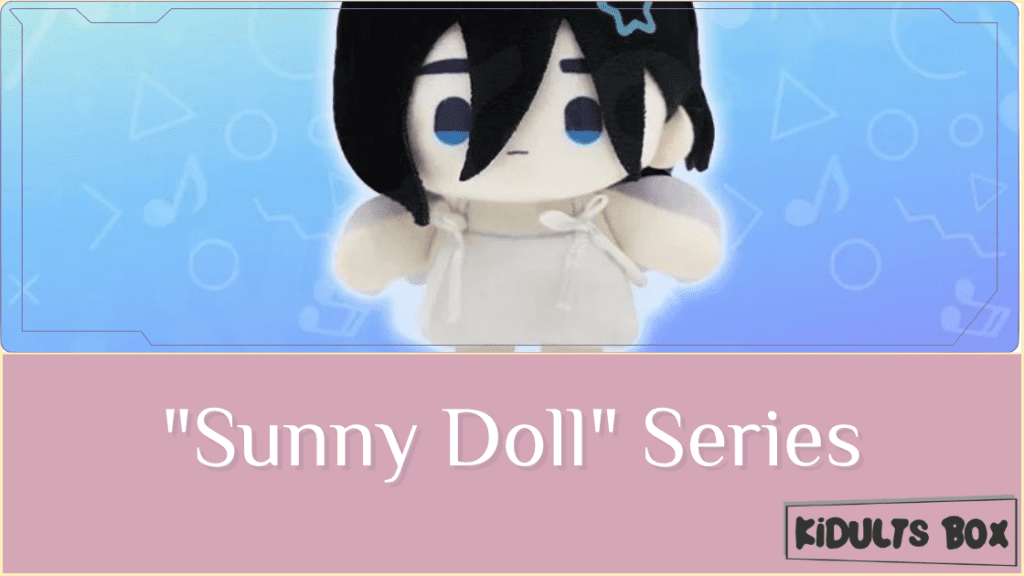





Small character accessories can look easy to source, but the buying decision gets more complicated once you factor in assortment structure, attachment quality, packaging condition, and freight. A single product photo of a Free Stage Pom Pom Keychain blind box will not tell you whether the format suits your store, arrives in saleable condition, or leaves enough room for a workable landed cost.
This guide explains what to confirm before requesting a quote or committing to a case of the Alien Stage keychain blind box. Because specifications and commercial terms may differ by supplier or production batch, treat names, images, and informal descriptions as starting points rather than complete purchasing information.
Where an Alien Stage Keychain Can Fit in a Retail Assortment
The first decision is not how many units to buy. It is whether the format matches the customer and merchandising environment. A compact collectible accessory behaves differently on a shelf than a display figure or a larger plush item.
- Anime, music, and character-focused shops: Ask whether shoppers recognize the IP and whether the supplied packaging clearly identifies the series.
- Gift and lifestyle stores: Evaluate the item as a portable bag charm, impulse gift, or checkout add-on rather than relying only on fandom demand.
- Online blind box sellers: Confirm whether the available supply is a sealed series case, individual random boxes, or a mixed assortment.
- Convention and pop-up vendors: Prioritize packaging durability, compact transport, and enough character variety for visual merchandising.
- Subscription box operators: Check the dimensions and packed weight before deciding whether the keychain fits an existing mailing format.
If you are comparing small accessories across formats, the guide to blind box fridge magnets versus bag charms provides additional selection criteria for gift retailers.
What the “Free Stage Pom Pom” Name Still Leaves Unconfirmed
A series name is not a complete specification. “Pom pom keychain” can refer to different constructions, materials, sizes, and attachment methods. Ask the seller to put the current specification in writing and confirm that it applies to the quoted batch.
| Point to verify | Por que isso afeta o pedido | Question to ask |
|---|---|---|
| Character lineup | Determines variety and customer recognition | How many regular designs are shown for this series, and is there a hidden design? |
| Outer material | Affects feel, cleaning expectations, and product description | What materials are used for the pom pom, character elements, and backing? |
| Attachment hardware | Influences bag compatibility and perceived durability | Is the attachment a clasp, split ring, chain, strap, or combination? |
| Product dimensions | Affects display hooks, photography, and shipping volume | What are the approximate dimensions excluding and including the hanging hardware? |
| Unit packaging | Protects blind-box integrity and supports retail display | Is each item supplied in a sealed box, bag, or another retail package? |
| Configuração do gabinete | Changes assortment risk and receiving procedures | How many units are in a case, and is the case factory sealed? |
| Batch identification | Helps resolve packaging or assortment discrepancies | Are production or batch markings visible on units or cartons? |
| Licensing documentation | May be relevant to marketplace and import review | What documentation can be provided regarding authorized sourcing and sale? |
Do not infer construction from promotional artwork. Request clear photographs of the front, back, attachment point, retail box, case label, and master carton. Where possible, compare those images with a physical sample before approving a larger purchase.
Sealed Cases, Loose Boxes, and Character Distribution
Blind box buyers need to know exactly what the quoted quantity represents. A listing may refer to one unit, one inner case, or one master carton, and those are not interchangeable.
Ask whether a sealed case is intended to contain a defined assortment of regular designs. Do not assume that buying a certain number of loose boxes recreates a sealed case distribution. Loose stock may have been combined from multiple cartons or may remain after other units were sold.
As a planning example, a retailer testing 24 units could compare three structures: two sealed cases of 12, 24 loose random boxes, or a supplier-selected mixed bundle. These are example quantities only, not the confirmed configuration of this series. The sealed-case option may offer more predictable distribution, while loose units may provide ordering flexibility but less assortment certainty.
Review the operational differences in this guide to sealed series sets versus mixed blind box assortments before choosing the purchase format.
Questions that prevent an assortment misunderstanding
- What is the MOQ in units, inner cases, and master cartons?
- Can the MOQ combine this series with other products?
- Are cases sealed, opened for inspection, or assembled from loose inventory?
- Is a complete regular lineup expected in a sealed case, or is every unit independently random?
- How is any hidden design distributed, and is it guaranteed or only possible?
- Will case labels and unit packaging match the sample images provided?
Build the Alien Stage Keychain Landed Cost Before Setting Retail Price
The supplier’s unit quote is only one part of the cost. A useful comparison converts each offer into a landed cost per saleable unit using the same assumptions.
Landed cost per saleable unit = product cost + packaging charges + freight + insurance or handling + duties and taxes + inspection expense + expected damage allowance, divided by the number of saleable units received.
Some charges depend on destination, shipment method, declared product details, and local rules. Verify tariff classification, tax treatment, labeling, and import obligations with appropriate logistics or customs professionals for the destination market.
Keychains that combine soft components, metal hardware, and individual boxes may be charged according to shipment volume rather than product weight alone. Ask for carton dimensions, gross weight, units per carton, and the shipment term used in the quotation. Without these fields, two unit prices are not truly comparable.
For a planning comparison, calculate the result at the MOQ, at one full master carton, and at the quantity likely to sell before the next reorder arrives. This reveals whether a lower unit price requires more inventory than the store can reasonably turn.
If the series appears suitable, request a written quote with both case-level and carton-level quantities. That gives the seller enough information to present an offer you can compare on landed cost rather than headline price.
Protect Soft Pom Poms and Retail Boxes During Transit
Soft accessories can recover from light compression, but prolonged crushing, moisture exposure, bent hardware, or damaged retail boxes can still create unsaleable stock. Evaluate packaging at the unit, case, and shipping-carton levels.

Request packaging photos and ask whether the quoted shipment uses the same arrangement. Check for adequate carton strength, sensible empty-space control, moisture protection where appropriate, and barriers that prevent metal attachments from rubbing against soft surfaces or printed packaging.
A practical receiving check
- Photograph unopened cartons and shipping labels before opening.
- Record crushed corners, punctures, moisture, or resealing.
- Count cases and units against the packing list.
- Sample units from the top, middle, and bottom of more than one carton.
- Check clasps, rings, stitching or bonded parts, surface cleanliness, and packaging seals.
- Separate defects by type and retain photographs, batch markings, and packaging.
Confirm the applicable product, material, labeling, age-grading, and consumer-safety requirements in your sales market. Do not treat a general statement such as “safe material” as a substitute for relevant documentation. Ask which documents correspond to the exact item and batch being quoted.
Retailers comparing this format with other soft collectibles may also find the Siinono plush blind box sourcing guide useful for developing packaging and inspection questions.
Time the Reorder Around Sell-Through, Not an Optimistic ETA
A quoted lead time needs a defined starting and ending point. Ask whether it begins after payment, order confirmation, production approval, or stock allocation, and whether it ends at dispatch, port arrival, customs clearance, or delivery.
Build a reorder trigger from actual weekly sales and the full replenishment cycle. As an example, if a store sells six units per week and estimates that replacement stock may require six weeks from confirmation to receipt, the basic pipeline demand would be 36 units. You may add a separate buffer based on sales volatility, but these figures are planning examples rather than a promised lead time or recommended order quantity.
Before relying on a replenishment plan, confirm:
- whether the quoted inventory is ready stock or subject to procurement or production;
- how long quote validity and stock reservation last;
- carton count, dimensions, and gross weight;
- the shipping term and which party arranges each stage;
- whether split shipments are possible and how they affect cost;
- how quickly shortages or transport damage must be reported.
A first order should generate data for the second. Track sales by week, customer requests, repeat purchases, damaged units, and how many shoppers ask for specific characters. Reordering merely because a few designs sell out can leave slower designs behind.
Warning Signs in Alien Stage Blind Box Quotations
A low quote is not automatically a bad quote, but missing detail shifts risk to the buyer. Pause the comparison when a seller cannot identify the exact product, packaging format, assortment structure, or basis of the price.

- Unclear unit definition: The quote says “one set” without stating the number of blind boxes.
- Changing product images: Photos show different attachments, packaging, or character lineups without explanation.
- No case-status answer: The seller will not confirm whether cartons are sealed or assembled from loose units.
- Unsupported authorization language: Licensing claims are made, but relevant sourcing documentation cannot be discussed.
- Incomplete freight data: Carton dimensions, weight, shipment term, or destination assumptions are absent.
- Pressure before sample review: Payment is requested before essential specifications or packaging evidence are supplied.
- Vague defect process: There is no written procedure for reporting quantity shortages, damage, or incorrect goods.
Another common mistake is comparing a sealed-case quote with a loose-unit quote as though the assortment risk were identical. Record each offer in the same spreadsheet and mark any unknown field rather than filling it with an assumption.
Envie uma solicitação de cotação que gere respostas comparáveis
A structured inquiry reduces follow-up messages and makes supplier responses easier to assess. Buyers can adapt the following template:
Hello, please quote the Alien Stage Free Stage Pom Pom Keychain Blind Box for delivery to [city and country]. Please confirm the exact item name, current product and packaging photos, materials, dimensions, attachment type, designs in the series, hidden-design information, units per sealed case, cases per master carton, MOQ, price by quantity tier, carton dimensions and gross weight, available shipping terms, lead-time definition, sample options, and the process for shortages or defects. Please also state whether the offered cases are sealed and what authorization or product documentation is available for buyer review.
Attach the destination postcode, desired order format, target receipt window, and expected sales channel. If marketplace resale is planned, mention it because documentation and packaging requirements may differ by platform and country.
For a broader example of evaluating character-led merchandise, see the retail sourcing guide for a licensed-character blind box.
Ready to compare offers? Send the same completed inquiry to each shortlisted supplier or sales contact, request a sample or detailed inspection images where practical, and do not approve the order until the case structure, total shipment basis, documentation, and defect procedure are recorded in writing.
PERGUNTAS FREQUENTES
What should I confirm before buying an Alien Stage keychain blind box wholesale?
Confirm the exact series, materials, dimensions, attachment hardware, unit packaging, character lineup, case quantity, sealed-case status, MOQ, carton data, shipment terms, and available product or authorization documentation.
Does a sealed case guarantee every regular character?
Not unless the supplier confirms the assortment structure for the exact series and batch. Ask whether a sealed case is designed as a complete regular lineup and how any hidden design affects that distribution.
How should I compare two wholesale quotes?
Compare the same unit definition and calculate landed cost per saleable unit. Include product cost, packaging charges, freight, duties or taxes, handling, inspection, and a reasonable allowance for damaged or unsaleable stock.
Should I order loose boxes or sealed cases?
Sealed cases may provide clearer provenance and more predictable assortment information, while loose boxes may allow a smaller or more flexible order. The right choice depends on confirmed case distribution, budget, sales volume, and tolerance for duplicate designs.
What quality points matter most for a pom pom keychain?
Check the security and operation of the clasp or ring, attachment points, seams or bonded parts, surface cleanliness, shape recovery after packing, consistency of character details, packaging seals, and retail-box condition.
Before You Place the First Order
Treat the Alien Stage keychain as a combination of collectible assortment, wearable accessory, and packaged retail item. A commercially sound order depends on all three. Confirm the physical specification, identify what one quoted case contains, calculate landed cost, review documentation for the destination market, and set a reorder trigger based on actual sell-through. Those steps are more dependable than choosing an offer from price and promotional images alone.