



Two attractive collectible lines can look almost identical in a catalog photo, then turn into an expensive mistake when their format, packaging, or order structure differs. Before committing to a DIMOO plush order, treat Journal of New Life and Secret Theatre Club as two separate quotes to verify—not two names for the same product.
This guide helps collectible retailers, gift shops, and online sellers compare the two offers on equal terms. Because verified specifications and supplier quotations are not provided here, neither series is declared cheaper, larger, softer, or easier to sell. Instead, use the checks below to identify which documented offer fits your channel and budget.
Match Each Quote to a Real Edition Before Trusting the Series Name
Ask the supplier to identify the full edition name, the manufacturer or brand shown on the packaging, the item code, and the product format for both Journal of New Life and Secret Theatre Club. Confirm whether each quoted item is a plush toy, plush pendant, mixed-material collectible, or another format. A series name alone is not a purchasing specification.
Request photographs of the actual item and its retail box, including the barcode and label panels, then match these against the quotation. If a listing combines several formats or editions under one line, require separate quote lines rather than accepting a general “DIMOO” description.
Build two columns in your purchasing worksheet—one for each series—and complete the following checks before choosing:
| Checkpoint | Record for each series | Decision rule |
|---|---|---|
| Exact identity | Edition, item code, packaging name, and format | Pause if the quote and product photographs do not match. |
| Size and construction | Product dimensions, stated materials, rigid parts, and attachments | Choose dimensions and construction suited to the intended display or use. |
| Blind-box structure | Randomization terms, assortment information, and any documented case rules | Do not promise a complete set without explicit supporting terms. |
| Order structure | MOQ by SKU, retail units per case, and mixed-order permission | Compare the smallest permitted commitment, not just unit price. |
| Embalagem para varejo | Box dimensions, seal type, and protective packing | Check shelf fit and suitability for customer delivery. |
| Freight inputs | Master-carton dimensions, gross weight, and carton count | Obtain freight estimates using the quoted order configuration. |
| Supply and claims | Availability confirmation, dispatch basis, and damage claim process | Prefer an offer with documented terms over unresolved verbal assurances. |
Comparison boundary: do not infer colors, accessories, softness, or customer appeal from “Journal of New Life” or “Secret Theatre Club.” Make those comparisons using approved imagery, physical samples, and edition-specific information.
Which Series Fits Your Shelf, Gift Counter, or Online Store?
The better purchase depends on where the item will sell. Assess each series against the same channel requirements rather than giving either one an automatic advantage based on its theme.
- Collectible specialists: prioritize exact edition identification, sealed-box condition, and clear assortment descriptions. Check whether existing customers have already asked for either series by name.
- Gift shops: compare visible presentation, packaged size, and how easily staff can explain the format at the counter. Confirm whether customers can see the design or are buying a randomized item.
- Vendedores online: examine parcel dimensions, photograph availability, and the clarity of the listing description. Any ambiguity about size or included accessories can create avoidable complaints and returns.
- Convention sellers: compare saleable units per transport carton and the space required for a sample display. An appealing item may still be impractical for a small booth.
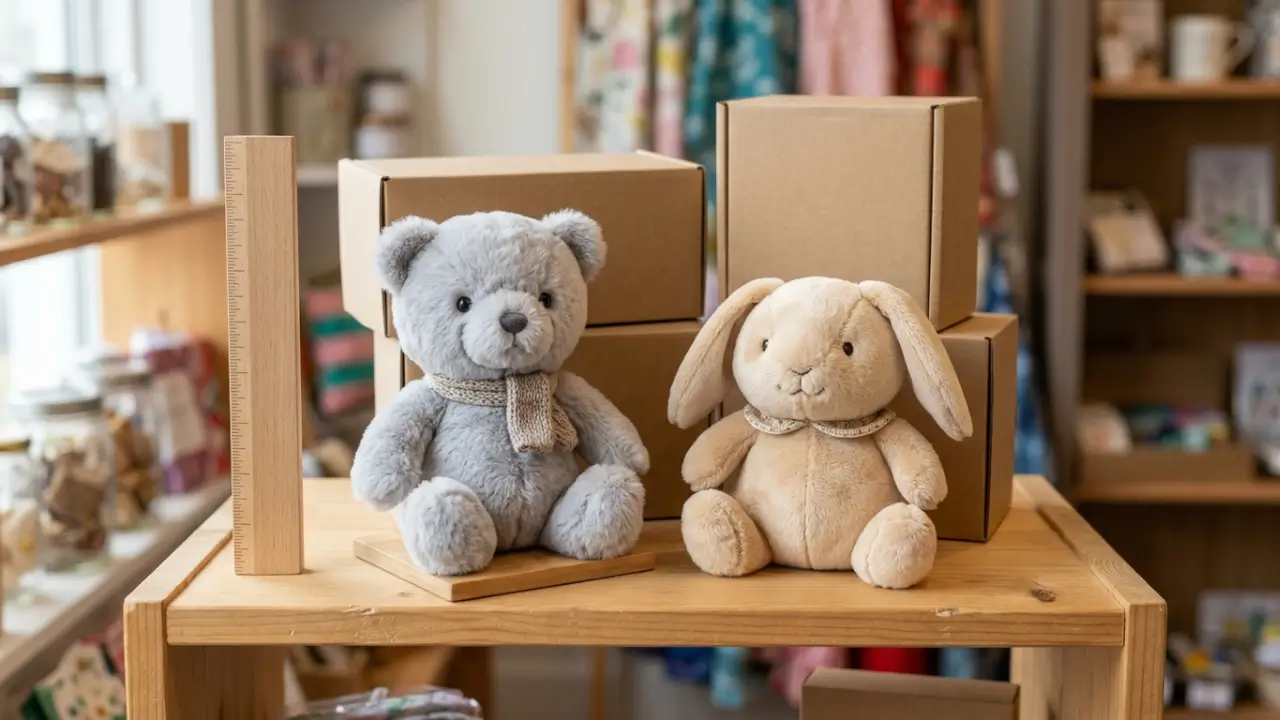
Place samples side by side, if available, and photograph them under the same lighting with a scale reference. Ask staff to describe the differences without relying on promotional copy. If they cannot explain the distinction accurately, improve the product information before ordering.
For adjacent assortment planning, the Baby Molly four-piece plush pendant assortment guide offers a related buying framework. Treat pendant suitability as something to verify for either DIMOO offer, not an assumed feature.
Keep the First DIMOO Order Within a Testable Case Commitment
MOQ and case quantity are different constraints. A supplier may specify a minimum total order while separately requiring full cases for individual SKUs. Ask for both, together with the number of retail units in each inner box and master carton.
Also clarify what “full case” means. It can describe a packing quantity without establishing a complete assortment. Do not assume duplicate-free contents, particular secret-item odds, or guaranteed designs unless edition-specific documentation supports those statements.
As a hypothetical planning example, a retailer might compare one permitted case of each series against two cases of a single series. The split order tests demand across both themes; the concentrated order reduces the number of listings and displays to manage. Neither approach is automatically preferable—calculate the cash commitment and storage footprint before deciding.
Ask whether mixed-series ordering is allowed and whether it changes the quoted price or packing arrangement. Reserve budget for freight, inspection samples, and potential packaging losses instead of allocating every available dollar to merchandise.
If your opening budget is tight, review these blind box selection principles for small stores before widening the assortment.
Already have two quotations in hand? Ask the supplier to complete the missing case-pack and edition details before you negotiate quantity. That small clarification can prevent an unsuitable first order.
Why the Lower DIMOO Unit Quote May Cost More to Sell
Compare Journal of New Life and Secret Theatre Club on the same delivery basis. A merchandise-only quotation is not directly comparable with an offer that includes freight or destination delivery. Request the named Incoterm where applicable, the destination covered, and a list of excluded charges.
Planning calculation: estimated landed cost per saleable unit equals merchandise, freight, insurance where applicable, duties, brokerage, and other nonrecoverable import or delivery charges, divided by expected saleable units. Confirm tax treatment with your accountant or customs adviser; recoverable taxes may still affect cash flow.
Then assess selling costs separately: marketplace fees, customer delivery, protective packaging, and returns handling. Avoid counting inbound freight twice. For plush formats, carton volume can matter as much as weight, so request packed dimensions rather than estimating freight from the item’s appearance.
Ask the supplier to distinguish availability, preparation time, dispatch timing, transit estimates, and possible clearance delays. If either edition is a preorder, document what happens when the expected dispatch window changes. Do not announce a fixed customer release date based solely on an unconfirmed estimate.
Reorder only after reviewing sales by series, remaining sealed units, customer feedback, and the current replenishment estimate. Early interest is not proof that a second shipment will sell at the same pace.
Protect Sealed Boxes Without Ignoring the Plush Inside
A collectible order carries two condition standards: the item itself and the retail packaging. Define both before payment. Ask how crushed corners, broken seals, missing accessories, staining, and construction defects are handled, including evidence requirements and claim deadlines.
For a physical sample, check seams, loose fibers, surface cleanliness, shape recovery after unpacking, and attachment security where relevant. If the item contains rigid components, examine the joins and exposed edges. These are buyer inspection checks, not a substitute for required safety testing.
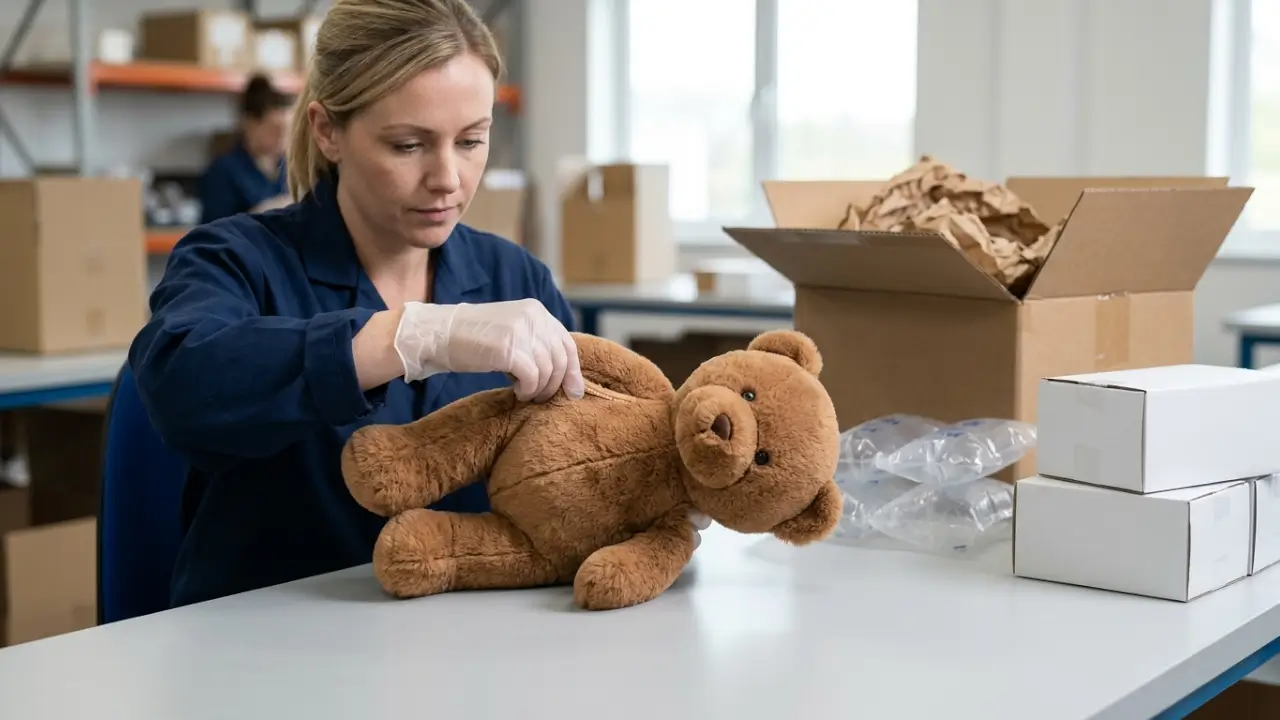
Agree on how sample inspection will work without unnecessarily opening sellable blind boxes. Any sample opened for inspection should be recorded and kept separate from stock described to customers as unopened.
- Request photographs of the inner packing and a closed master carton.
- Confirm whether packing avoids excessive compression of plush or retail boxes.
- Record received carton counts and visible damage before unpacking.
- Verify destination-market labeling, age classification, material information, warnings, and applicable safety documentation.
Ask for traceable sourcing documentation and verify any authenticity claim rather than relying on a logo in a listing. Requirements vary by market and intended use; a “collectible” description alone does not establish exemption from applicable rules.
If the two offers turn out to use different constructions, this plush-versus-figure format comparison can help structure the handling and display assessment.
Send One Matched Quote Request, Not One Vague DIMOO Enquiry
Watch for edition substitutions, generic catalog images presented as shipment evidence, undefined “complete set” claims, and freight estimates offered without carton data. These gaps do not automatically prove misconduct, but they prevent an informed purchase. Resolve them in writing before payment.
Send the same request for both series so differences stay visible:
Please quote DIMOO Journal of New Life and Secret Theatre Club separately for delivery to [country/postcode]. Our sales channel is [store, online, or event], and our proposed test quantity is [quantity, subject to case requirements].
For each offer, confirm the exact edition and item code, product format, dimensions, stated materials, retail packaging, MOQ, units per case, and mixed-order options. Provide actual item and packaging photographs, assortment terms, and available sourcing documentation.
Please include unit and case pricing, currency, payment terms, quote validity, carton dimensions and weights, delivery basis, excluded charges, current availability or preorder status, estimated dispatch timing, and the procedure for shortages or damage claims. Identify destination-relevant documentation available for review.
Keep unresolved points in a separate column rather than filling them with assumptions. A lower quote with missing shipment costs or unclear product identity is not yet a better offer.
Before placing the order, send this completed brief to your shortlisted supplier and request written confirmation for both editions. Approve the series, quantity, and delivery arrangement only after the specifications and total purchasing commitment are clear.
PERGUNTAS FREQUENTES
Which is better for resale: Journal of New Life or Secret Theatre Club?
Neither can be ranked from the series names alone. Compare the exact editions, customer demand, case commitment, packaging, and landed cost. Use a controlled test order if demand is unproven.
Are both quoted editions definitely plush products?
Do not assume that from the names alone. Ask for the exact item code, product format, dimensions, materials, and actual packaging photographs for each offer.
Does a full case guarantee every regular design?
Not without explicit edition-specific terms. Confirm case quantity, assortment rules, duplicate policy if any, and how special designs affect the contents before making customer promises.
What information is needed to compare shipping costs?
Request carton count, packed dimensions, gross weight, destination, shipping method, delivery basis, and excluded charges. Compare both offers using the same destination and service assumptions.
Can opened inspection samples be sold as sealed blind boxes?
No. Keep opened samples separate from unopened inventory and describe their condition accurately if you sell them, subject to applicable marketplace and consumer requirements.
Before You Choose a DIMOO Series
Buy the documented edition that fits your channel, not the more persuasive listing. Confirm product identity first, compare case-level commitment and delivered cost, then review samples and packaging. If either offer still has unresolved specifications, postpone that purchase rather than turning uncertainty into inventory.