



In the Blind Box and Designer Art Toy industry, sealed cardboard is your inventory, but the Open Display Sample is your salesman. A customer rarely drops $20 on a sealed box without first seeing, analyzing, and falling in love with the unboxed physical figure on the shelf.
However, displaying open samples presents a massive operational dilemma for physical retailers. Do you lock the $150 “Secret” chase figure behind a heavy acrylic case, elevating it to museum-grade art but removing the customer’s ability to touch it? Or do you leave the fluffy Bebê três plush on an open shelf, maximizing tactile engagement but exposing your inventory to dust, theft, and the oily fingers of a thousand mall shoppers?
For independent boutiques and B2B partners sourcing wholesale from KidultsBox, optimizing your Visual Merchandising (VMD) architecture is the key to maximizing Average Order Value (AOV) while eliminating shrinkage. This comprehensive whitepaper will brutally deconstruct the psychological, financial, and material science behind Acrylic Enclosures versus Open Shelving, providing you with the ultimate hybrid store layout strategy.
1. The Psychology of the “Barrier” (Veblen Goods vs. Tactile Endowment)
How you display a product fundamentally alters how the human brain perceives its value. You must match the display method to the specific psychological trigger you are trying to pull.
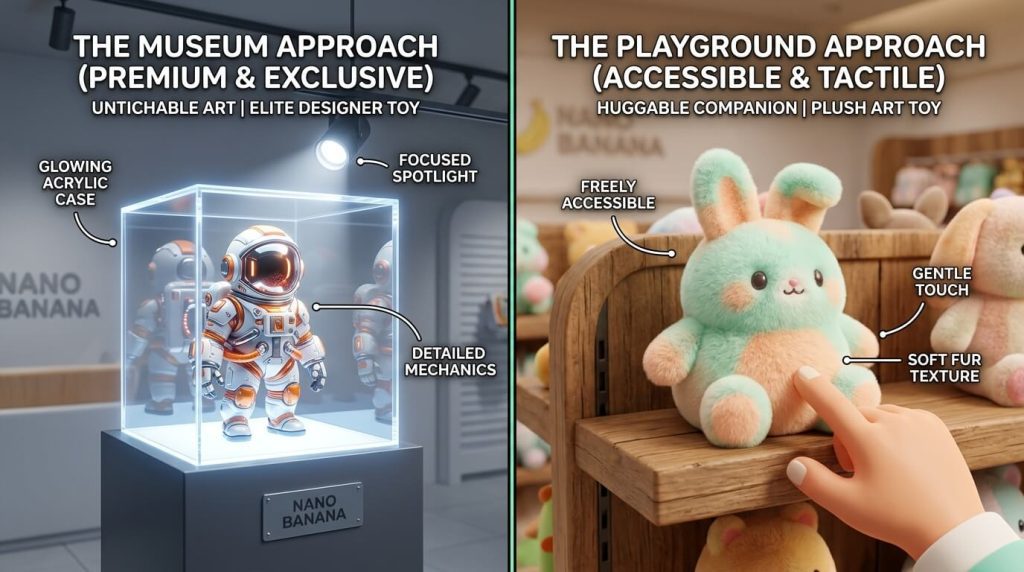
The Acrylic Case: The “Museum” Effect
Placing an object behind a clear barrier (glass or acrylic) triggers a subconscious psychological response: “This item is valuable. It needs to be protected from me.”
In economics, this plays into the concept of a Veblen Good—a product whose demand increases as its perceived exclusivity and price increase. By locking a highly detailed Pop Mart MEGA Space Molly inside a lit acrylic cube, you strip away its identity as a “toy” and rebrand it as a “sculpture.” Customers are willing to pay an irrational premium for art. The physical barrier commands respect.
Open Shelving: The “Endowment Effect”
Conversely, removing the barrier triggers the Endowment Effect. When a customer is allowed to physically pick up an unboxed sample, turn it over in their hands, and feel the weight of the PVC or the softness of the flocking, their brain begins to register psychological ownership of the item before they have even paid for it.
If you put a highly tactile, fluffy Kimmon Mimon plush behind glass, you kill 80% of its selling power because the customer cannot experience its primary feature: softness. Open shelving dramatically lowers the barrier to impulse buying.
2. Financial Modeling: CapEx vs. Shrinkage
Choosing your display method requires a brutal analysis of your Capital Expenditure (CapEx) versus your estimated Shrinkage (loss due to theft or damage).
| Financial Metric | Premium Acrylic Display Cases | Open Tiered Shelving |
|---|---|---|
| Upfront Cost (CapEx) | High. Custom UV-resistant acrylic cubes with integrated magnetic LED lighting can cost $30 to $100+ per unit. Outfitting a whole wall is a major investment. | Low. Standard wooden, metal, or generic clear plastic tiered risers cost pennies on the dollar. Highly scalable. |
| Shrinkage (Theft) | Zero. Items are physically locked away. You can display $200 “Secret” figures with absolute peace of mind. | High. Open 3-inch figures are incredibly easy to slip into a pocket. Requires strict staff monitoring or the Dummy Box Method. |
| Shrinkage (Damage & Dirt) | Zero. 100% protection from dust, coughing customers, and oily fingers. The display sample remains in “Mint” condition and can eventually be sold. | Inevitable. Open samples will become covered in dust within a week. White or pastel plush toys will turn grey from being touched. The sample often becomes a financial write-off (dead stock). |
| Labor & Maintenance | Medium. Requires staff to unlock cases for serious buyers, which can create a bottleneck on busy weekends. | High. Staff must manually dust the open figures daily with microfiber cloths and groom the plush toys to keep the store looking premium. |
3. The Material Science of Display Enclosures
If you decide to invest in enclosed displays for your high-end inventory from KidultsBox, do not just buy cheap plastic boxes from Amazon. You must understand the physics of the materials, or you will accidentally destroy your own inventory.
The UV (Ultraviolet) Threat
Standard glass and cheap polystyrene plastic do not block UV rays. If your store has large front windows, the sunlight will slowly bake the toys inside the cases. The polymer chains in PVC will break down, and white figures will develop a severe, permanent yellow tint.
The Fix: You must purchase Museum-Grade Cast Acrylic cases that specify 98%+ UV protection. It costs more upfront, but it preserves the asset value of your “Secret” figures.
The “Thermal Deformation” (Heat) Trap
Acrylic is a fantastic insulator; it traps heat. If you place a completely sealed, airtight acrylic cube directly under a hot halogen or high-wattage LED store spotlight, the internal temperature of the cube will skyrocket.
The Fix: High heat softens PVC. If a figure is holding a thin sword, or standing on a thin peg, the heat will cause the plastic to warp and bend (often called the “Michael Jackson Lean”). Always ensure your acrylic cases have small ventilation gaps, and use only low-heat LED lighting in your store.
The Static Electricity Dust Magnet:
Acrylic naturally generates a massive static charge when wiped with a dry cloth. This static acts like a magnet, literally pulling dust and hair out of the air and sticking it to the outside of the display case, making it look filthy.
Retail Hack: Train your staff to wipe the acrylic cases ONLY with a microfiber cloth lightly sprayed with a specialized Anti-Static Acrylic Cleaner (like Novus). Never use Windex or paper towels, as ammonia causes acrylic to turn cloudy (“crazing”), and paper towels will cover the case in micro-scratches.
4. Product-Specific Merchandising Matrix
You cannot treat all toys equally. The physical composition of the blind box dictates its display housing. Use this KidultsBox Matrix to train your visual merchandising team.
| Toy Material / Category | Ideal Display Method | The Retail Logic |
|---|---|---|
| Standard PVC / Vinyl (e.g., Pop Mart Dimoo, Skullpanda) | Open Shelving (Tiered Risers) | These rely on volume sales. The customer needs to see the intricate paint details closely without glare from a glass case blocking their view. They are durable and easy to wipe dust off of. |
| Plush & Flocked Toys (e.g., Baby Three, Lulu The Piggy) | The “Petting Zoo” (Open) | If a customer cannot feel the flocking or the soft fur, they will not buy it. Accept that one sample per series will become slightly dirty over time (a marketing expense). Just keep a lint roller at the register to groom them daily. |
| BJD (Ball Jointed Dolls) (e.g., Caixa da Penny) | Hybrid: Acrylic Diorama | BJDs feature real fabric clothes that collect dust aggressively, and small props that get stolen easily. Place them inside large, clear acrylic “Room Boxes” (Dioramas) so customers can see the dynamic articulation without touching the delicate clothes. |
| The “Secret” Chase Figures (Valued $100+) | Locked, Lit Acrylic Cube | These are high-value targets for theft. Locking them in a premium, individual lit cube instantly elevates their status to a “Grail” item, justifying the massive secondary-market price tag you put on them. |
5. The Ultimate “Hybrid” Store Layout (The KidultsBox Standard)
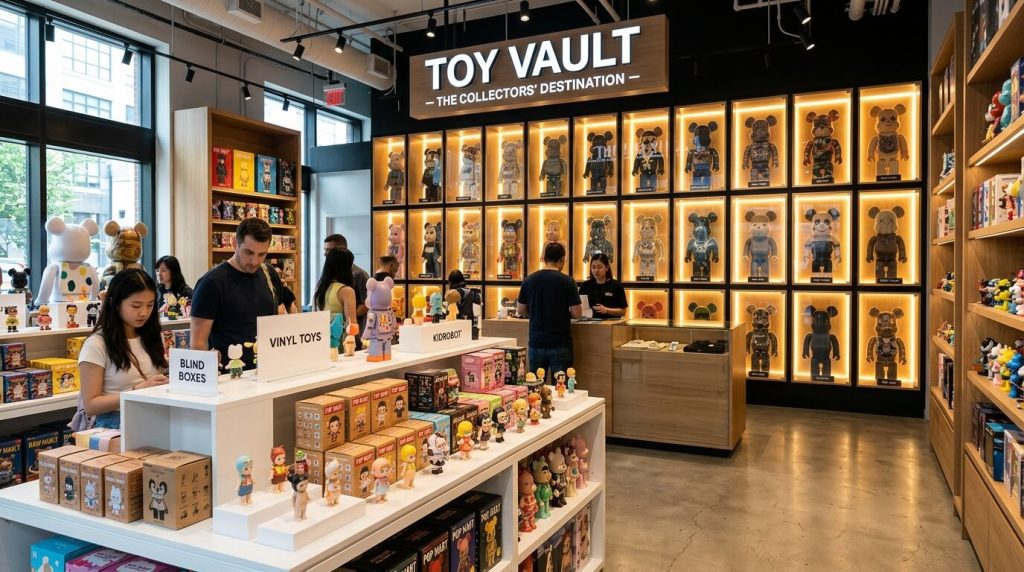
The most profitable independent toy boutiques globally do not choose between Acrylic and Open Shelving; they engineer a psychological journey that uses both.
Phase 1: The “Open Discovery” Zone (Front of Store)
When a customer walks in, the center island tables and lower wall shelves should feature Open Tiered Shelving. This is your “Discovery Zone.” It is filled with $15 standard blind boxes and touchable plush samples. The barrier to entry is zero. Customers can pick up the dummy boxes, feel the display samples, and engage in the fast-paced, high-volume “Gacha” experience.
Phase 2: The “Museum” Vault (Back/Register Wall)
Directly behind the cash register, where staff has 100% visibility, is the Acrylic Vault. This wall features custom-lit, enclosed acrylic cases housing the 1000% MEGA figures, the rare “Secret” pulls, and the confirmed high-end sets.
The Funnel Effect: The customer is drawn into the store by the fun, tactile open shelving. But as they move toward the register to pay, their eyes are drawn up to the locked acrylic vault. They realize they aren’t just in a toy store; they are in a high-end collector’s gallery. This elevates the prestige of the entire store, making their $15 open-shelf purchase feel like an entry ticket into an exclusive club.
6. Monetizing the Acrylic: Selling the Display
Here is the ultimate retail hack: Your display infrastructure is actually inventory.
When a customer buys a beautiful art toy, their next immediate problem is: “How do I display this at home without it getting dusty?”
If you use premium, modular acrylic boxes to display your samples, you should stock those exact same empty acrylic boxes for sale directly underneath the display.
The Upsell Script: “Did you want to grab one of these UV-protected acrylic cases to go with your new figure? It’s the exact same one we use for our displays here; they stack magnetically and keep the dust off.”
Acrylic display cases often cost $2 to $4 wholesale and easily retail for $12 to $20. By selling the solution to the display problem, you instantly increase your Average Order Value (AOV) with a 70%+ gross margin item.
Perguntas frequentes (FAQ)
Q: How do I light my acrylic cases without creating blinding glare for the customer?
A: Never point a spotlight directly at the front flat face of an acrylic box; it turns into a mirror. You must use Top-Down Edge Lighting (LED strips hidden in the ceiling of the acrylic cube) or angle your store’s ceiling track lights at a steep 45-degree angle so the glare bounces down to the floor, not into the customer’s eyes.
Q: Should I secure open figures to the shelf so they aren’t knocked over?
A: Yes. In a high-traffic store, customers will constantly bump the shelves, causing a domino effect of falling figures. Use a tiny dot of Museum Wax (QuakeHold) or clear, traceless Nano-Tape on the bottom of the figure’s foot. It holds the figure firmly to the open shelf but removes cleanly without damaging the paint.
Q: If I leave a plush sample out and it gets dirty, how do I clean it without ruining it?
A: For plush and flocked toys (like Baby Three), use a standard sticky lint roller to remove surface dust daily. If the fur looks matted from oily hands, use a clean, dry toothbrush or a specialized pet-grooming slicker brush to gently fluff the synthetic fibers back to their original volume. Never use wet wipes on flocked vinyl, as water can degrade the glue.
Q: Can KidultsBox supply acrylic display cases along with the wholesale toys?
A: Yes! We understand that display solutions are a massive revenue driver for our retail partners. Alongside our core blind box catalog, you can order bulk wholesale shipments of premium, stackable, LED-integrated acrylic display boxes to both outfit your store and sell to your customers.