





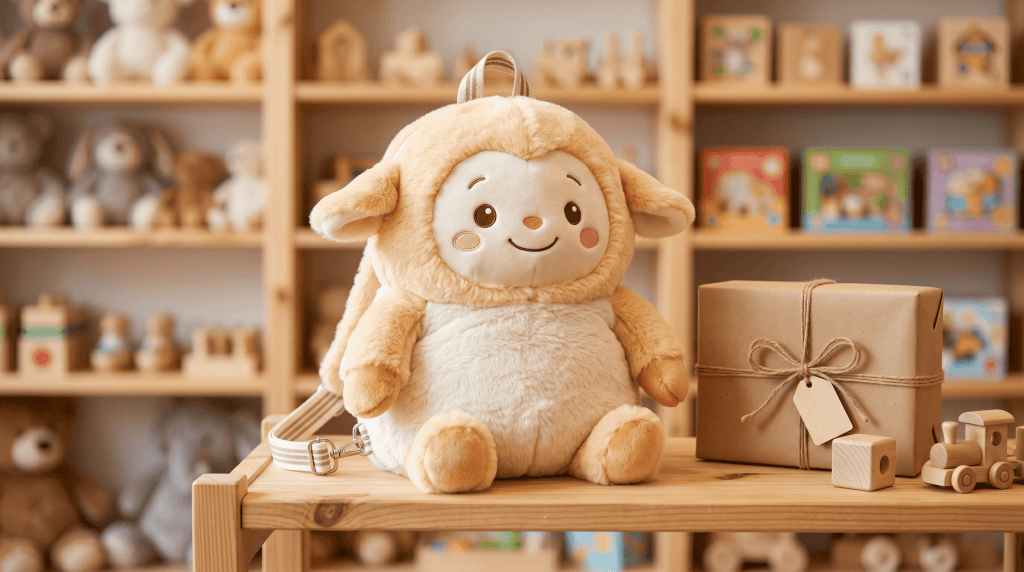
Retail buyers often see strong product photos and social buzz long before they have enough information to place a safe order. A wearable plush item needs more checks than a shelf-only collectible because customers will handle it, wear it, gift it, and judge both the character appeal and the practical bag function. As an eye-catching addition for toy shops, anime stores, gift retailers, and pop-up sellers, the Baby Three 400% Hugging Baby Backpack can perform well, but the buying decision should still weigh size, strap comfort, packaging, landed cost, and reorder timing.
This guide looks at that backpack from a commercial buyer’s point of view. Use it to prepare quote questions, compare supplier responses, and decide whether the item fits your assortment before committing to bulk inventory.
Where a 400% plush backpack fits in your product mix
A character backpack is not only a bag SKU. It sits between plush, fashion accessory, gift item, and collectible merchandise. That positioning affects where you display it, how you price it, and what nearby products help convert shoppers.
Before requesting a quote, identify the buyer group you are targeting:
- Collectible toy shops: customers may already know Baby Three and respond to large-format character goods.
- Anime and designer toy retailers: the wearable format can work as a statement accessory near blind boxes, plush charms, and badges.
- Gift shops: buyers may prioritize softness, presentation, and easy gifting over character lore.
- Online stores: product page clarity matters, especially dimensions, strap details, and packaging condition.
- Pop-up vendors: the 400% plush scale may create visual impact, but carton volume and transport space must be planned.
If your store already carries large collectible formats, compare customer expectations with items such as the Baby Three Sweet Dream 400% Figure. A backpack buyer may ask more practical questions than a figure buyer, so your product listing and staff notes should cover both display appeal and usability.
Confirm the 400% Hugging Baby Backpack details before comparing quotes
Two suppliers can quote what sounds like the same product while describing different packaging, case quantity, accessory details, or product condition. Ask for a written specification sheet or a quote message that clearly identifies the series, format, and included components.
Use the table below to compare responses. If one supplier leaves several fields blank, the quote is not yet comparable.
| Buyer check | O que verificar | Por que isso afeta o pedido |
|---|---|---|
| Identidade do produto | Exact product name, series, and 400% backpack format | Reduces the risk of receiving a different Baby Three item or a non-backpack plush |
| Dimensões | Approximate item size and wearable proportions | Helps with shelf planning, display photos, and customer expectations |
| Strap design | Shoulder strap type, adjustability, and attachment points | Affects comfort claims and customer satisfaction after purchase |
| Storage function | Whether it has a usable compartment and how it opens | Clarifies whether customers should treat it as a novelty accessory or practical mini bag |
| Outer material | Plush fabric description and lining information, if available | Supports product listing accuracy and care guidance |
| Embalagem | Individual bag, retail box, hangtag, carton packing, or other format | Changes display value, freight volume, and damage risk |
| Case quantity | Units per carton and carton dimensions if available | Needed for freight estimates and store allocation |
| Labeling | Age grading, care label, fiber content, and destination-market label needs | Buyers should verify compliance requirements before import or resale |
Why wearable plush needs a different quality check than display figures
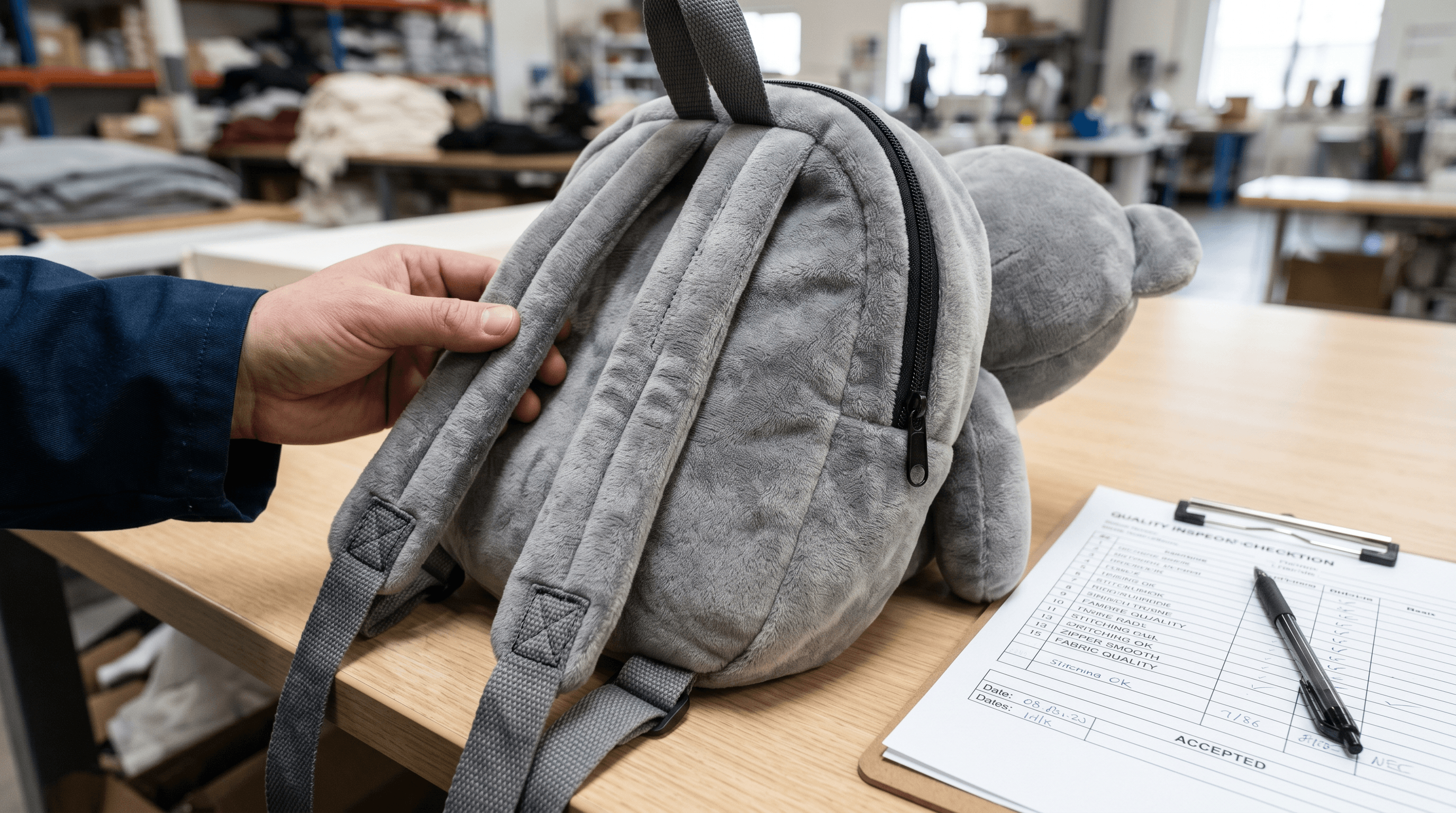
A large plush figure may mostly stay on a shelf. A wearable plush backpack is pulled by straps, opened repeatedly, and pressed against clothing. For that reason, the quality check should include handling points, not only visual appearance.
Ask suppliers for close-up photos or sample inspection notes for these areas:
- strap seams and stitching density around attachment points;
- zipper or opening function, including whether the puller moves smoothly;
- face embroidery, eyes, nose, and character details;
- fabric direction, pile consistency, and visible shedding risk;
- inner lining and loose threads inside the compartment;
- hangtag, label, and barcode area if needed for your retail system;
- compression marks after packing and whether the plush recovers shape.
As a planning reference, a retailer may inspect a first carton by checking several units from different positions: top, middle, side, and bottom. This does not replace professional inspection when needed, but it helps you spot obvious packing pressure, seam problems, or inconsistent finishing before the goods reach the sales floor.
For shops that also carry smaller wearable accessories, compare customer handling expectations with the Baby Three Take Me Out Zipper Bag. Smaller bag charms may move faster as add-ons, while a 400% backpack usually requires more shelf space and a higher-consideration purchase.
Plan order quantity around carton volume, not only unit demand
The 400% scale is part of the product appeal, but it also creates inventory pressure. Plush backpacks can occupy more carton space than blind boxes, badges, or small charms. A buyer should estimate how many units can be displayed, stored, and reordered without blocking cash in slow-moving bulky inventory.
Instead of asking only, “What is the MOQ?” ask these follow-up questions:
- What is the minimum order quantity for this exact backpack SKU?
- Is the order packed by fixed case quantity?
- Can cartons be mixed with related Baby Three items, or must the backpack ship separately?
- What are carton dimensions and gross weight for freight estimation?
- Are samples, small trial orders, or repeat orders handled differently?
Example planning logic: a boutique gift shop may prefer a small test allocation for one display area, while an online seller may need enough units to keep listing momentum after launch. A pop-up seller may focus on visual impact and bring fewer units to each event because large backpacks take transport space. These are planning examples, not recommended order quantities; your supplier’s actual MOQ and carton rules should decide what is possible.
Calculate the backpack’s real cost after freight and handling
Large plush items can look profitable at the unit quote stage but become less attractive after carton volume, freight, duties, payment fees, storage, and packaging damage are considered. Buyers should compare landed cost, not only product cost.
A simple landed-cost review may include:
- quoted product cost per unit;
- domestic handling or origin charges if applicable;
- international freight or courier cost based on carton size and weight;
- import duties, taxes, customs brokerage, or local fees where relevant;
- payment service charges or currency exchange spread;
- expected packaging replacement, cleaning, or discounting for damaged units;
- warehouse space or store backroom pressure for bulky cartons.
Decision rule: if two quotes differ only slightly on product price, the supplier with clearer carton data and packaging information may be easier to evaluate. A low unit price without carton dimensions, case quantity, or packing photos is not a complete commercial quote.
If you are building a broader plush accessory assortment, smaller add-ons such as Link Click plush badges may help balance basket size and freight efficiency. Buyers often use compact add-ons to support higher-volume sales while reserving bulky backpacks for display-driven conversion.
Protect gift-ready presentation during storage and delivery
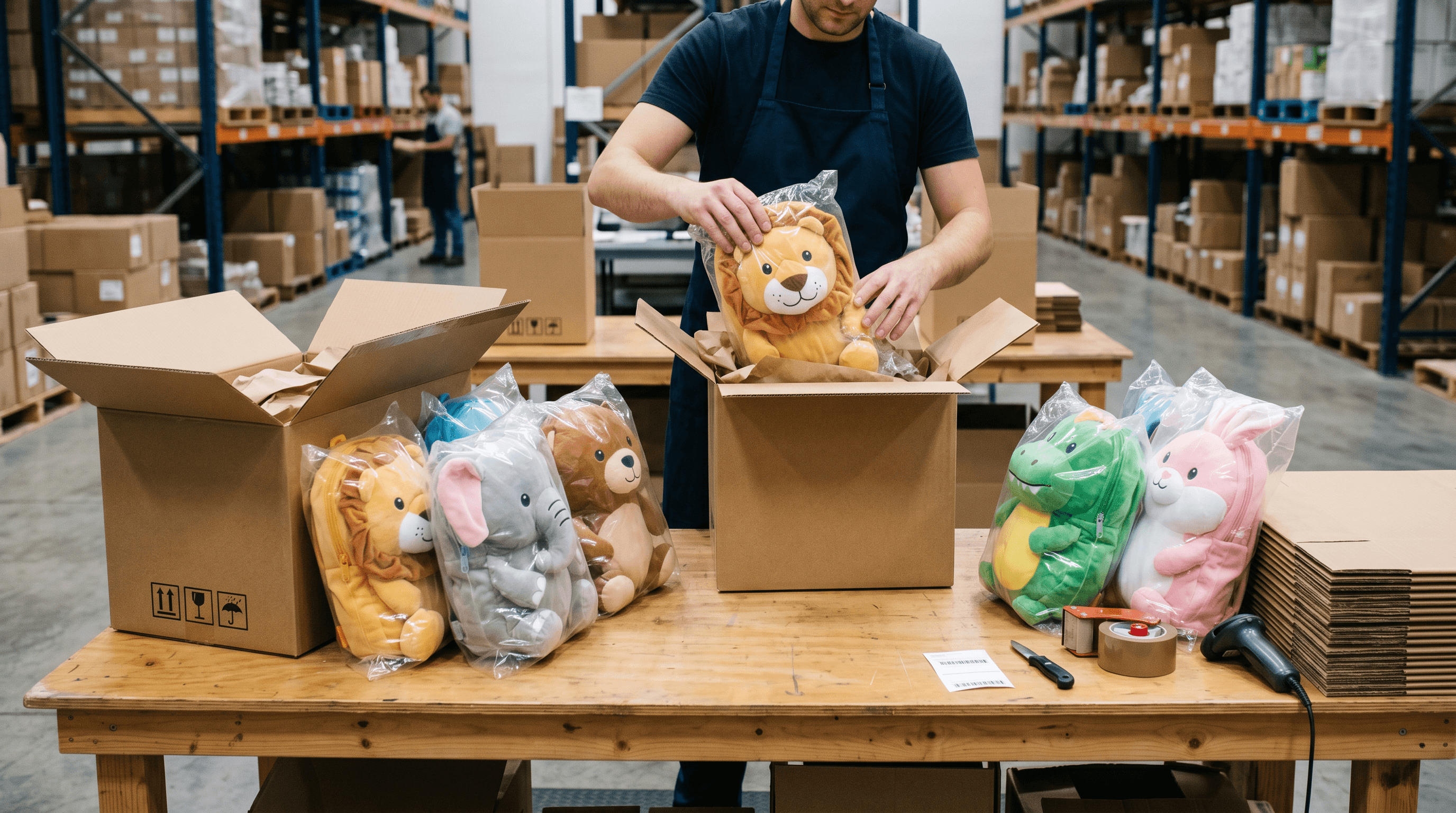
For many customers, a character plush backpack is a giftable item. Creased packaging, crushed plush faces, missing hangtags, or visible dirt can turn a full-price product into a discount item. Packaging questions should be asked before payment, not after cartons arrive.
Ask the supplier to confirm:
- whether each backpack is individually protected;
- whether the plush is compressed and how long it may take to recover shape;
- whether retail tags are attached or packed separately;
- how many units are packed per carton;
- whether carton edges are reinforced for long-distance transport;
- how returns, shortage claims, or visible transit damage are documented.
For destination markets with toy or textile rules, buyers should confirm applicable requirements with qualified advisors or local authorities. Depending on how the product is positioned, you may need to review age labeling, choking-hazard warnings, fiber content labels, care instructions, country-of-origin marking, or other local retail requirements. Do not assume that a cute plush accessory is automatically acceptable for every market or age group.
Seasonal and romantic plush launches can create useful comparison points. For example, retailers reviewing gift presentation may also study how plush blind box buyers evaluate packaging in the Nommi Amaryllis Sweetheart Series guide.
Time the launch so bulky plush inventory does not sit too long
Backpacks have a different sales rhythm from small blind boxes. They can attract attention in windows, social photos, and live-selling streams, but they also occupy more storage space if demand is overestimated. Reorder planning should start before the first purchase order.
Build a simple sales calendar around these checkpoints:
- Pre-order or teaser period: collect interest from existing customers before committing to a large quantity, where your selling model allows it.
- Arrival inspection: check cartons quickly so any shortage or damage questions are raised while documentation is fresh.
- Launch week: display one sample clearly and keep sellable units protected.
- Mid-cycle review: compare sell-through by channel, such as store shelf, online listing, live sale, or event booth.
- Reorder trigger: decide in advance when to request a new quote, especially if lead time and freight options may change.
As a planning reference, some retailers set a reorder review when a display item continues to generate questions but backroom stock is declining. The exact trigger depends on your sales velocity, supplier availability, and shipping method. Avoid waiting until the last unit sells if the item is important to your store’s character goods assortment.
Warning signs that a backpack quote is not ready to accept
Red flags do not always mean a supplier is unreliable, but they do mean the buyer should slow down and ask for clarification. A quote for a wearable plush backpack should give enough detail for you to estimate cost, risk, and resale presentation.
- Only lifestyle photos are provided: ask for real product, packaging, and carton photos where possible.
- No clear product identifier: confirm the exact Baby Three 400% Hugging Baby Backpack rather than a similar plush item.
- MOQ is stated without case quantity: you still need carton packing details for freight and storage planning.
- Price changes after basic questions: check whether the original quote excluded packaging, fees, or shipping assumptions.
- No answer on straps or compartment: functionality matters because customers will wear and use the item.
- Compliance questions are brushed aside: buyers should verify destination-market requirements independently if the supplier cannot provide clear labeling details.
- Unrealistic urgency: pressure to pay before specifications are confirmed can lead to receiving the wrong format or unsuitable packaging.
If you are comparing several Baby Three wearable plush options, prepare one inquiry sheet and send the same questions to each supplier. Consistent questions make the replies easier to judge and help you identify which quote is actually complete.
Questions to send before paying for Baby Three backpack stock
Use this inquiry template to make supplier communication more specific. Edit it for your market, channel, and preferred shipping method.
Hello, I am interested in the Baby Three 400% Hugging Baby Backpack for retail resale. Please confirm the exact product name, available specifications, unit packing, case quantity, carton size and weight, MOQ, price basis, and whether samples or a small test order are possible. Please also provide product photos, packaging photos, strap and compartment details, labeling information, and estimated production or dispatch timing if applicable. We also need to estimate landed cost for our destination market, so please clarify shipping options and any charges not included in the unit price.
Before approving payment, compare the answers side by side. The strongest quote is not always the lowest one; it is the quote that gives you enough information to calculate real cost, protect presentation, and explain the product accurately to customers.
Ready to move forward? Build a short list of required specs, confirm carton data, request clear product and packaging images, and ask for a written quote that separates product cost from freight and other charges. That process will make your first Baby Three backpack order easier to approve and easier to reorder.
PERGUNTAS FREQUENTES
Is the Baby Three plush backpack better for toy stores or gift shops?
It can fit both, but the selling angle differs. Toy stores may highlight the Baby Three character and 400% format, while gift shops may focus on softness, presentation, and wearable novelty.
What should buyers confirm before ordering the 400% Hugging Baby Backpack?
Confirm the exact product identity, dimensions, strap details, storage function, packaging, case quantity, carton data, labeling information, MOQ, and shipping options.
Why does carton size matter for plush backpack wholesale orders?
Plush backpacks can be bulky, so freight cost and storage space may significantly affect landed cost. Carton dimensions and weight help buyers compare quotes more accurately.
Should retailers request a sample first?
A sample can be useful when the buyer needs to check strap comfort, stitching, zipper function, plush texture, and packaging presentation. Availability and cost should be confirmed with the supplier.
What compliance points should importers review?
Buyers should verify destination-market requirements for age labeling, textile or fiber labels, care instructions, country-of-origin marking, small parts, and any toy or accessory rules that may apply.
Before you place the first order
The Baby Three 400% Hugging Baby Backpack can add strong visual appeal to a character goods assortment, but it should be sourced with the discipline of a wearable accessory. Confirm the exact SKU, inspect functional details, compare landed cost, and plan the launch around carton volume and reorder timing.
A well-prepared quote request protects the buyer from unclear specifications and makes supplier comparison faster. Treat the product as both plush and backpack, and your purchase decision will be more commercially grounded.

