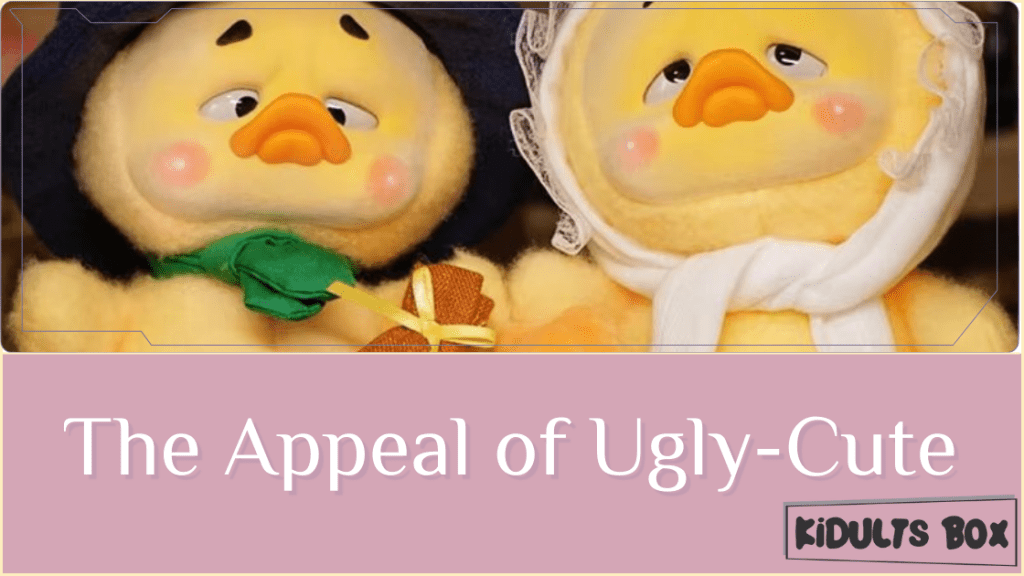




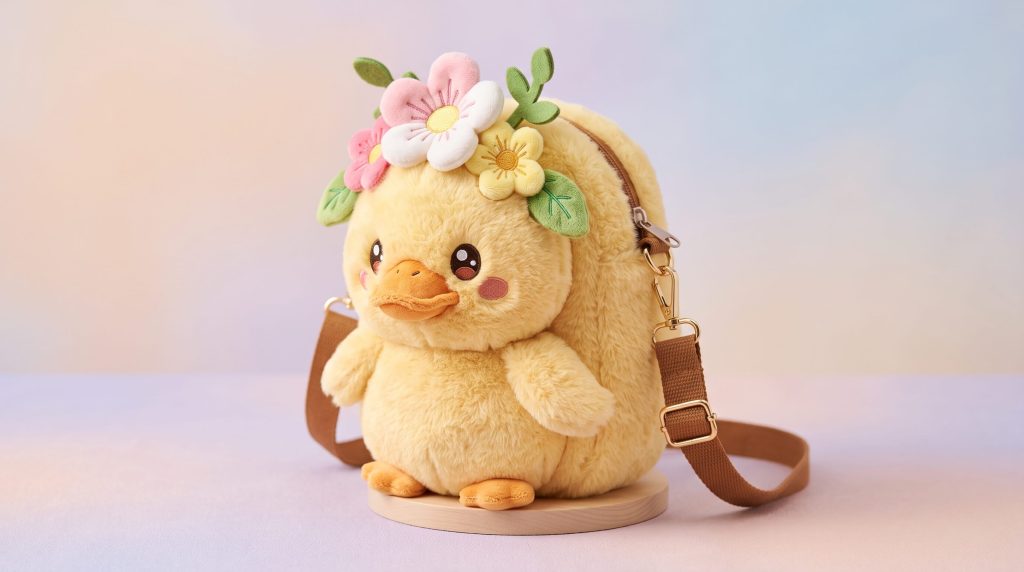
A wearable plush bag forces a retail buyer to solve several problems at once: will the format suit the intended sales channel, can the supplier clearly document what is included, and will the final landed cost leave room for a workable retail price? Those questions get harder when the product combines a character plush, a bag or carrying function, and blind box purchasing all in one unit.
The UpsetDuck Blooming Duck Plush Bag sits in exactly that overlap, so it deserves to be evaluated as both a collectible and a wearable accessory. Before requesting a quote, define the target customer, confirm the physical specifications, and separate product appeal from assumptions about assortment, packaging, and availability.
Which retail channels fit a wearable plush bag?
This format may suit different buyers, but each channel creates a different purchasing test. A gift shop may prioritize visual presentation and impulse appeal. A toy or collectible retailer may focus on character recognition, repeat purchases, and assortment balance. An apparel or accessories store may need clearer information about how the bag is carried and displayed.
- Lojas de artigos colecionáveis: Ask whether the unit is sold as a sealed blind item, a disclosed assortment, or a mix of both. The answer affects customer expectations and inventory planning.
- Lojas de presentes e produtos de estilo de vida: Check whether the packaging communicates the product type clearly enough for a customer who is not already familiar with the character.
- Accessory boutiques: Confirm dimensions, strap or carrying components, closure details, and usable storage space rather than relying only on product images.
- Vendedores online: Request image assets and written specifications that let the listing distinguish the bag function from the collectible element.
- Seasonal or event retailers: Compare the delivery window with the actual selling period and leave time for receiving, inspection, and product photography.
A useful decision rule is simple: if the buying channel cannot explain how the product will be displayed, priced, and replenished, the order is not fully planned yet.
What to confirm before comparing wearable plush bag quotes
Quotes are only comparable when they describe the same product configuration. For the UpsetDuck Blooming Duck format, ask the supplier to state each specification in writing. Product photos can show appearance, but they do not reliably confirm measurements, materials, packing method, or assortment terms.
| Buyer checkpoint | What to ask | Why it affects the decision |
|---|---|---|
| Identidade do produto | What is the exact series or product name, and is the item a bag, plush accessory, or combined format? | Prevents a quote for a visually similar but different item. |
| Dimensões finais | What are the approximate height, width, depth, and usable interior dimensions? | Determines display footprint, customer expectations, and shipping volume. |
| Carrying components | What strap, handle, fastening, or attachment parts are included? | Identifies missing components and helps the retailer write accurate listings. |
| Material details | What outer and filling materials are specified for the quoted version? | Supports product descriptions and destination-market review. |
| Blind box structure | Is the assortment sealed, mixed by case, or selectable? Are rare or special variations documented? | Changes customer communication and the risk of uneven stock. |
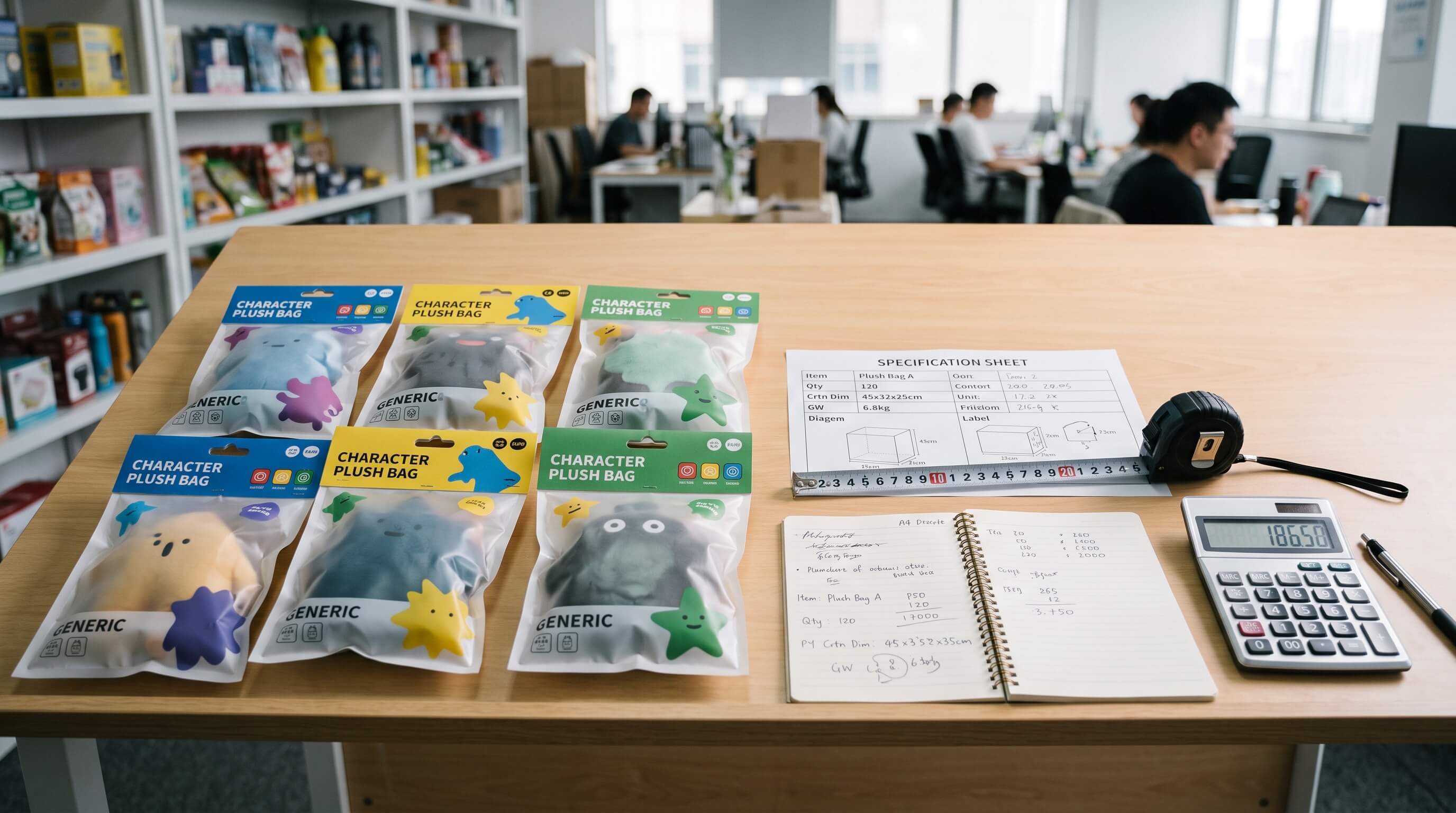
| Unit and case packing | How many retail units are in one master carton, and what are the carton dimensions and gross weight? | Improves freight estimates and storage planning. |
| Packaging condition | What retail packaging is included, and how is it protected inside the carton? | Important when the package is part of the collectible presentation. |
| Inspection basis | Which visual, functional, and packing checks can be agreed before shipment? | Creates a practical reference for receiving and dispute review. |
When a supplier cannot answer these questions yet, mark the quote as provisional. A lower unit figure is not necessarily better if the quoted configuration is incomplete.
How the blind box format changes order planning
Blind purchasing can increase repeat interest, but it also makes assortment planning less predictable. Buyers should not assume that every case contains an even mix unless the supplier provides that information. They should also avoid presenting a possibility as a guaranteed rare-item ratio.
For a first test, a retailer may compare two planning approaches:
- Small channel test: Use a limited quantity to measure sell-through, customer questions, packaging damage, and the share of buyers who want to purchase again.
- Assortment-led launch: Plan enough units to create a visibly varied display, but only after confirming case quantity and the supplier’s stated assortment method.
The right quantity depends on retail space, expected traffic, cash allocation, and reorder confidence. As a planning reference, a buyer could model one test quantity for a single store and a separate quantity for online or multi-store distribution. Do not combine those channels in one estimate if they have different sales speeds.
When comparing how another UpsetDuck blind box product may be evaluated, the Guia de fornecedores da UpSetDuck “Born This Way” gives the buying team a useful comparison framework for character-led blind box products. The purpose is not to assume identical specifications, but to reuse a proven set of questions.
Why landed cost matters more than the quoted unit price
A wholesale quote should be converted into a landed-cost estimate before a purchase decision. The calculation may include the product price, inner or master-carton packing, freight, customs-related charges, duties or taxes where applicable, payment fees, inspection costs, and local delivery. Buyers should verify which charges are included in the supplier’s terms rather than treating an abbreviated quote as all-inclusive.
Use this basic planning formula:
Estimated landed cost per unit = total order and delivery costs divided by the number of sellable units received.
Include a realistic allowance for damaged or unsellable packaging if the product is presentation-sensitive. For example, if a retailer receives fewer sellable units than ordered because of transit damage, dividing the total cost by the original order quantity will understate the effective cost.
Compare at least two scenarios: a smaller order with potentially higher per-unit freight, and a larger case-based order with more inventory exposure. The larger option only makes commercial sense when expected sell-through, storage capacity, and reorder timing support it.
Packaging checks that protect the plush bag at receiving
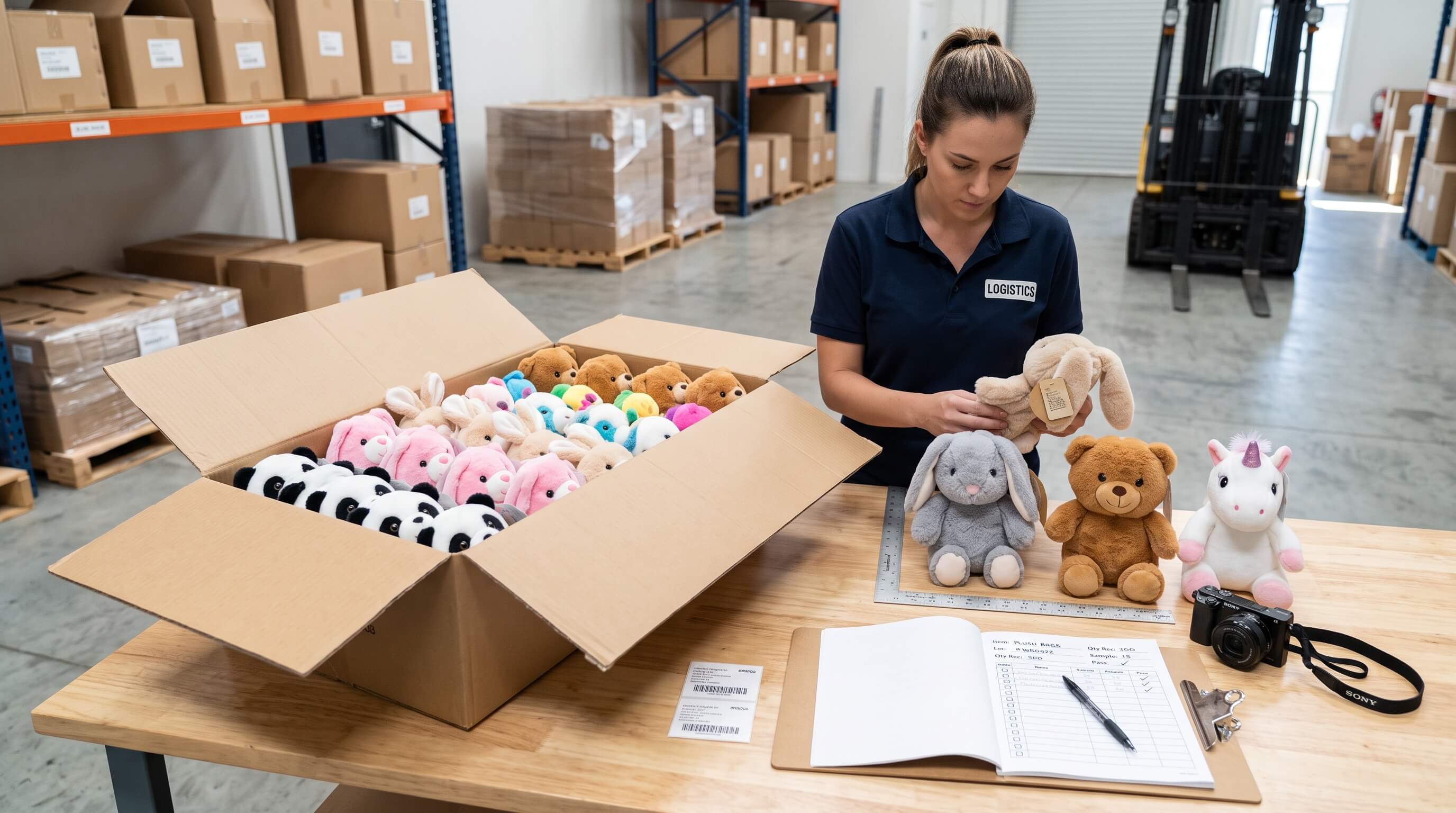
A wearable plush bag has more potential inspection points than a simple static figure because the buyer may need to assess both the plush appearance and the carrying function. Before payment or shipment, ask whether a reference sample, approved photos, or a written specification will be used for comparison.
- Check that the shape and decorative features match the approved product reference.
- Inspect seams, attached parts, closures, straps, handles, and connection points for visible defects.
- Confirm that the bag opens and closes as described and that the interior is consistent with the quoted design.
- Review whether retail boxes, bags, sleeves, or inserts arrive crushed, stained, torn, or poorly sealed.
- Compare carton markings, unit count, and product assortment with the packing list.
- Photograph cartons and representative units during receiving so discrepancies are documented promptly.
Compliance is destination-specific. Buyers should confirm applicable toy, textile, accessory, labeling, packaging, chemical, and import requirements with the relevant authorities or a qualified compliance professional before placing an order. Do not treat a supplier’s general product description as proof that the item satisfies every market requirement.
Working backward from your launch date
Shipping planning should begin with the selling date, not the hoped-for arrival date. Work backward from the launch to allow time for supplier confirmation, production or preparation, freight, customs processing, receiving, inspection, and any relabeling or photography.
Ask the supplier for the current estimated preparation or lead-time range, the shipping origin, available shipping methods, carton dimensions, gross weight, and the point at which the delivery estimate begins. These details help the buyer distinguish preparation time from transit time.
Reorder planning also deserves attention. A product may sell quickly during an initial display but become difficult to replenish if the next order requires a different case quantity or has a longer preparation window. Set a review point based on actual sales data. For example, a retailer may investigate reorder options when the remaining sellable units fall below the quantity needed to cover the estimated replenishment period, rather than waiting until the display is empty.
For broader blind box inventory comparisons, the Labubu stocking guide for retailers can help buyers think through assortment, case planning, and product-line rotation. Apply its planning logic carefully rather than assuming the same terms apply to UpsetDuck.
Red flags in wearable plush bag supplier replies
Supplier communication should be judged by the usefulness and consistency of the answers, not by speed alone. The following warning signs deserve clarification before money is committed:
- The supplier uses product photos but avoids confirming dimensions, components, or packing details.
- The quote does not identify whether the price is per unit, inner pack, case, or assortment.
- Case quantity changes between messages without an updated carton specification.
- The supplier describes blind box ratios vaguely or uses terms such as “random” without explaining the packing basis.
- Packaging is shown in marketing images but is not listed in the quotation.
- Inspection questions are treated as unnecessary, even though the product contains functional carrying parts.
- The delivery estimate does not state whether it covers preparation, transit, customs, or final delivery.
- The buyer is pressured to approve a substitute without a clear comparison of dimensions, materials, packaging, and assortment.
One unclear answer may be a normal information gap. Several unresolved gaps across product, packing, and delivery terms indicate that the buyer should pause and request a consolidated specification sheet.
A practical inquiry template for the UpsetDuck Blooming Duck order
A focused inquiry makes supplier replies easier to compare. Buyers can adapt the following checklist:
- Product name and exact series: UpsetDuck Blooming Duck Plush Bag.
- Target sales channel and destination market.
- Unit price basis, currency, trade terms, and any included packaging.
- Available order quantities, MOQ if applicable, inner-pack quantity, and master-carton quantity.
- Finished product dimensions, weight, material information, and carrying-component details.
- Blind box assortment method and any documented case-level information.
- Retail packaging dimensions, carton dimensions, gross weight, and packing photos.
- Estimated preparation time, shipping options, shipping origin, and delivery-estimate basis.
- Available product references for quality comparison and proposed receiving checks.
- Destination-market labeling or compliance documents that the buyer should review.
- Payment milestones, quote validity, and the process for handling specification changes.
Send the same inquiry to each candidate supplier. Standardized questions reduce the risk of comparing a fully specified quote against a partial one.
If this product fits your range, prepare the specification list before contacting a supplier for a quote. A clear request can reveal whether the main commercial risk is price, assortment uncertainty, shipping volume, or product presentation.
Final checks before placing the first order
Before approval, verify that the quote, product reference, packing information, and delivery assumptions describe the same item. Confirm the order quantity against available storage and planned sales channels. Check that the expected retail presentation is acceptable after freight, not only in supplier photographs.
For buyers evaluating multiple character products, the Guia do comprador de caixas surpresa da Cupa offers another example of how to structure questions around product selection, assortment, and wholesale evaluation. Use it as a comparison resource, while requesting UpsetDuck-specific answers for every commercial term.
When you are ready to move forward, send a complete quote request for the UpsetDuck Blooming Duck Plush Bag and ask the supplier to confirm the final unit configuration, case quantity, packaging, delivery basis, and inspection reference in writing. That documentation gives your team a stronger basis for comparing offers and planning a responsible first order.
PERGUNTAS FREQUENTES
Is the UpsetDuck Blooming Duck Plush Bag sold as a blind box?
The product title indicates a blind box product guide, but buyers should confirm the exact sales and packing format with the supplier. Ask whether each unit is sealed, whether cases contain a documented assortment, and whether any variations are selectable.
What should buyers confirm before requesting a wholesale quote?
Confirm the exact product identity, dimensions, materials, carrying components, unit and case quantities, retail packaging, assortment method, shipping basis, preparation estimate, and destination-market requirements.
How can a retailer estimate the landed cost?
Add product, packing, freight, customs-related charges, duties or taxes where applicable, payment fees, inspection, and local delivery costs. Divide the total by the number of sellable units actually expected to arrive.
What quality checks matter most for a wearable plush bag?
Inspect appearance, seams, attached details, straps or handles, closures, interior space, packaging condition, carton count, and the match between received units and the approved product reference.
Should a buyer order a full case for the first test?
Not automatically. Compare the case quantity with the intended channel, storage capacity, expected demand, cash allocation, and the supplier’s assortment information. A smaller test may reduce inventory exposure, while a case-based plan may simplify display or freight calculations.
Before You Place That First Order
A wearable plush bag can be commercially interesting because it combines character appeal with an accessory use case, but that combination also creates more specifications to verify. Treat the UpsetDuck Blooming Duck item as a complete buying project: define the customer, document the configuration, calculate landed cost, inspect both plush and functional components, and plan replenishment from realistic delivery assumptions.