


Amazon is the largest search engine for buyers on the planet. With hundreds of millions of active Prime subscribers, the allure of sending your wholesale art toy inventory into Amazon’s Fulfillment Network (FBA) is incredibly strong. You send the boxes to a warehouse, Amazon handles the shipping, and you collect the checks. It sounds like the ultimate passive retail model.
However, the Designer Art Toy and Blind Box sector operates under a unique set of physical and psychological rules. When you mix the “Mystery Gacha” mechanic with Amazon’s notoriously customer-centric, no-questions-asked return policies, you are brewing a recipe for margin destruction and account suspension.
For independent retailers and international sellers sourcing inventory from KidultsBox, deciding whether to list your Pop Mart ou Bebê três figures on Amazon FBA requires brutal financial calculation. This comprehensive B2B playbook breaks down the exact FBA fees, the catastrophic reality of blind box returns, and the specific strategies required to actually make a profit on Jeff Bezos’s platform.
1. The Financial Reality: Deconstructing the FBA Margin
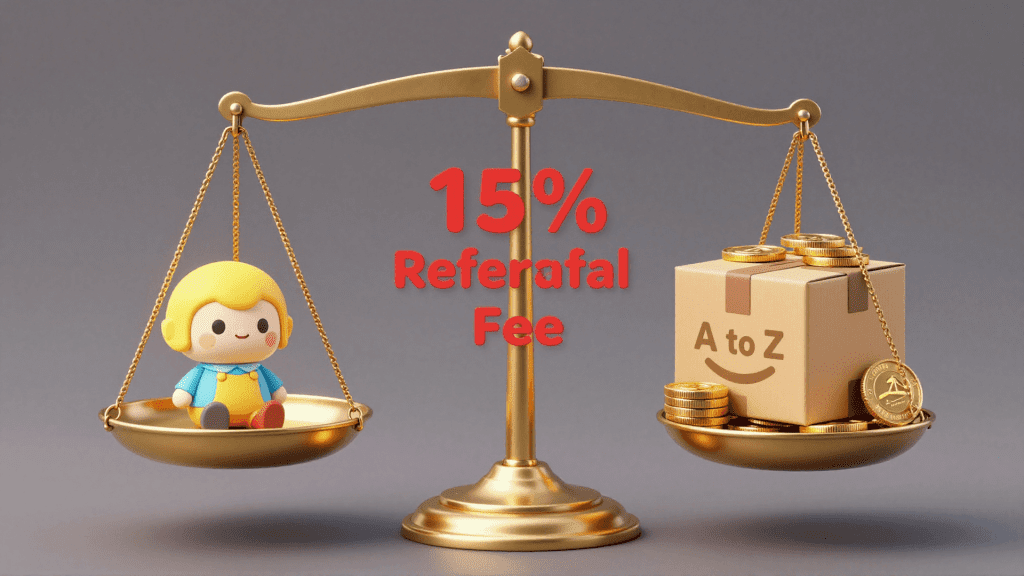
To determine if FBA is worth it, we must strip away the hype and look at the unit economics. Selling a blind box in a physical retail store often yields a 50% to 60% gross margin. Amazon will eat nearly half of that before you pay for your own advertising (PPC).
The Single Blind Box Math (2026 Estimates)
Let’s assume you source a trending plush blind box from KidultsBox and sell it on Amazon as a single unit.
- Your Amazon Retail Price (MSRP): $19.99
- Hypothetical landed cost: -$8.50 (illustrative only; not a KidultsBox quote or current product price)
- Amazon Referral Fee (15% for Toys): -$3.00
- FBA Fulfillment Fee (Standard Small, ~8oz): -$3.30
- Inbound Freight to FBA Warehouse: -$0.40
- Net Profit per Box: $4.79 (Margin: 24%)
A 24% net margin leaves very little room for Amazon PPC (Pay-Per-Click) advertising. If you spend $2.00 in ad clicks to acquire that customer, your profit drops to $2.79. In the FBA model, single blind boxes are a high-volume, low-margin grind.
2. The Fatal Flaw: Amazon’s Return Policy vs. Blind Boxes
The thin profit margins on single boxes are not the reason sellers fail. The reason sellers fail is The Return Policy.
Amazon’s customer base is conditioned to expect exactly what is in the main product image. If the main image shows a cute pink bunny, but the item is a “Blind Box” and the customer pulls a green frog, what happens?
The “Item Not As Described” (INAD) Nightmare
1. The customer opens the sealed foil bag, sees a figure they don’t want, and immediately requests a free return, citing “Item Not As Described” or “Defective.”
2. Amazon automatically refunds the customer and charges your account for the return shipping.
3. The Total Loss: The returned item is now “Opened.” Amazon places it in your “Unfulfillable Inventory.” You cannot resell an opened blind box as “New.” You have lost the wholesale cost of the toy, the shipping fees, and the FBA fees.
4. The Account Ban: If your Order Defect Rate (ODR) spikes above 1% because of these returns, Amazon will suspend your Seller Central account.
3. The Antidote: Selling “Confirmed” (Opened) Figures
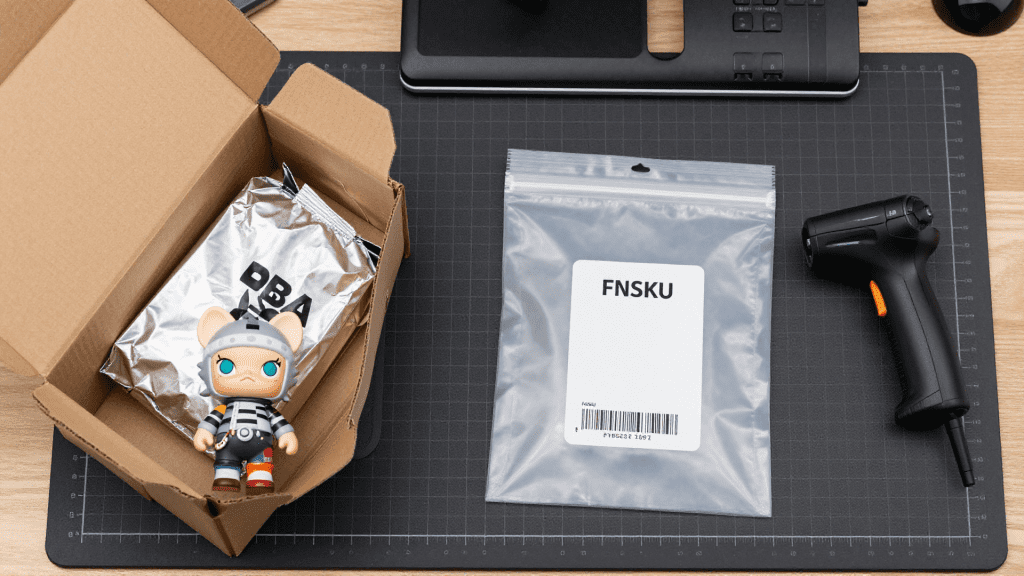
If selling sealed random boxes on FBA is a trap, how do you make money? You pivot your business model from “Gacha” to “Guaranteed.”
The most successful toy sellers on Amazon do not sell blind boxes. They sell Confirmed Figures.
The FBA Confirmed Figure Strategy:
- You order a wholesale Master Carton (144 units) from KidultsBox.
- You (or your 3PL Prep Center) manually open every single box and foil bag to identify the figure.
- You create a unique Amazon ASIN (product listing) for each specific character in the series. (e.g., “Pop Mart Labubu Macaron – Chestnut Edition – OPENED BOX”).
- You place the figure and its ID card back into the box, place it in a clear polybag, and apply the specific Amazon FNSKU barcode for that character.
Why this works:
The customer knows exactly what they are buying. Return rates drop to near 0%. Furthermore, because certain figures in a series are vastly more popular than others, you can sell the highly desired “Confirmed” figures at a massive premium (e.g., $35 instead of $19.99), completely offsetting Amazon’s high fees.
4. The “End Box” Strategy: Targeting Whales and Avoiding Fees
If opening 144 boxes by hand sounds exhausting, the alternative is selling strictly Full Cases (End Boxes).
Instead of listing a single blind box for $19.99, you list the sealed End Box (containing 12 non-repeating figures) for $230.00.
| Financial Dynamic | Selling 12 Single Boxes on FBA | Selling 1 Full Case (12 Units) on FBA |
|---|---|---|
| FBA Fulfillment Fees | 12 x $3.30 = $39.60 (Paid across 12 orders) | 1 x $6.50 (Standard Large) = $6.50 |
| FBA Prep Labor | Labeling and polybagging 12 individual tiny boxes. | Slapping one FNSKU barcode on the master shrinkwrap. |
| Customer Type | Casual shoppers. High risk of return if they pull a duplicate. | Hardcore collectors (“Whales”). Zero risk of duplicate complaints. |
By selling Full Cases, you slash your FBA fulfillment costs by over 80%. Your margin explodes, and your return rate drops because the buyer is guaranteed the full base set.
5. FBA Prep Logistics: The FNSKU Barcode Mandate
You cannot simply take a shipment from KidultsBox and forward it directly to an Amazon warehouse without preparation. Blind boxes have a fatal flaw for Amazon fulfillment: Identical UPCs.
Every single blind box in a 12-piece series shares the exact same manufacturer barcode on the outside of the cardboard. If you send these to Amazon using “Commingled Manufacturer Barcodes,” Amazon’s scanners will treat them all as the same item. If you are selling “Confirmed” figures, this will result in total inventory cross-contamination.
The FNSKU Requirement
You must cover the manufacturer’s barcode on every single box with an Amazon FNSKU (Fulfillment Network Stock Keeping Unit) label. This unique barcode tells Amazon that this specific box belongs to your seller account, and correlates to the exact ASIN you created.
If you are shipping DDP from KidultsBox directly to a US/EU Amazon Prep Center, you must pay your prep center to apply these labels before the goods are forwarded to the final FBA warehouse.
6. Brand Registry & The Hijacker Threat
Selling popular IPs like Pop Mart or Kimmon on Amazon means you are entering existing, highly trafficked product listings.
The Ungating Process: Because toys are heavily counterfeited, Amazon “gates” the Toy category and specific major brands. Before you can list a Pop Mart item, Amazon will require you to submit a commercial invoice from your supplier to prove authenticity.
The KidultsBox Advantage: KidultsBox provides verifiable, professional B2B commercial invoices that clearly state the manufacturer, quantities, and authenticity of the goods, which is critical for passing Amazon’s rigorous ungating checks.
The Buy Box War: Because you do not own the Pop Mart trademark, you cannot apply for Amazon Brand Registry. You will be competing with dozens of other sellers on the same ASIN for the “Buy Box” (the Add to Cart button). This usually results in a “Race to the Bottom,” where sellers constantly lower their prices by $0.01 to win the algorithm, destroying the profit margin for everyone.
7. The Verdict: Is Amazon FBA Right for You?
If your goal is to build a highly curated, premium brand with 60% margins, FBA is the wrong platform. You should build a Shopify store, drive traffic via TikTok and Pinterest, and fulfill orders using a local 3PL.
If your goal is pure, high-volume cash flow and you do not care about building a personal brand, FBA is incredibly lucrative—IF you follow the rules. You must have enough capital to order in bulk from KidultsBox, pay a prep center to apply FNSKU labels, and ruthlessly execute the “Confirmed Figure” or “Full Case” strategies to avoid the return-policy death trap.
Perguntas frequentes (FAQ)
Q: Can I put a “No Returns” policy on my Amazon blind box listing?
A: Não. Third-party sellers on Amazon FBA must match or exceed Amazon’s generous 30-day return policy. You cannot refuse a return, which is why selling sealed random blind boxes on the platform is so dangerous.
Q: Does KidultsBox offer FNSKU labeling services?
A: As a global wholesale distributor, we ship master cartons in their original, sealed factory condition. We highly recommend routing your KidultsBox wholesale shipment to a dedicated Amazon Prep Center in your target country (US/UK) to handle the unboxing, polybagging, and FNSKU labeling before it enters the Amazon network.
Q: What happens if a customer returns a blind box that they opened?
A: Amazon will issue a refund to the customer and place the opened item in your “Unfulfillable Inventory.” You must then pay an Amazon Removal Fee (usually around $1.00) to have the opened toy shipped back to your house, where you can hopefully resell it on eBay or Mercari as an open figure to recoup some costs.
Q: Should I use FBM (Fulfillment by Merchant) instead of FBA?
A: For single blind boxes, FBM is often safer. You save the $3.30 FBA fee, and more importantly, you control the return process. If a customer tries to return an opened box, you can charge them a 50% restocking fee under Amazon FBM rules, which you cannot do if Amazon FBA handles the customer service. However, FBM listings receive significantly less traffic than Prime FBA listings.