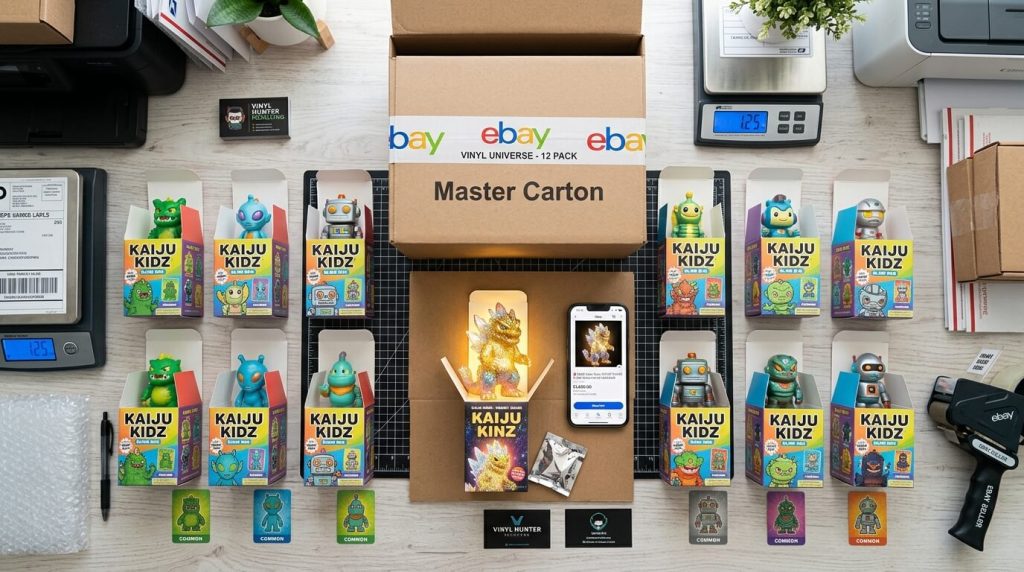





Limited counter space forces phone accessory retailers to be selective about every non-core product they add. A blind box program only earns its place if it complements cases, straps, chargers, and device personalization products without creating excessive display or inventory risk.
The decision is not simply which character looks popular. Buyers need to compare product format, package dimensions, case quantity, attachment hardware, customer fit, landed cost, and reorder practicality. A visually appealing series can still be a poor purchase if its cartons occupy too much space or its packaging arrives unsuitable for front-counter display.
Which Blind Boxes Actually Fit Beside Phone Cases and Straps?
Start by matching the product to the reason customers visit the store. A phone case shopper may respond to a small charm or pendant that extends the personalization theme. A customer buying a gift may prefer a recognizable display collectible with gift-ready packaging.
Common buyer situations include:
- Phone case and strap specialists: Look for compact products that visually coordinate with colorful cases, lanyards, or wrist straps.
- Repair shops with retail counters: Favor small, understandable impulse items that can be displayed without distracting from service transactions.
- Kiosks and compact mall stores: Prioritize revenue potential per unit of shelf or counter space rather than choosing the largest collectible.
- Lifestyle accessory stores: Consider a broader mix of pendants, vinyl figures, plush formats, and small gift products.
- Online and physical hybrid retailers: Select series that can be photographed, listed by sealed box, and packed efficiently for parcel orders.
Product format matters as much as character artwork. The comparison between blind box magnets and bag charms, for example, illustrates why the intended use should be evaluated before a buyer commits shelf space. A bag charm may align more naturally with phone straps and wearable accessories, while a magnet may depend more heavily on general gift demand.
Product Formats That Can Extend a Phone Accessory Range
There is no universally best format. Use the table to identify which products deserve a sample review or quote based on the store’s customers and physical layout.
| Blind box format | Potential store fit | O que verificar antes de fazer o pedido | Main buying risk |
|---|---|---|---|
| Bag charms or keychain figures | Fits personalization and carry-accessory displays | Attachment type, dimensions, weight, and finish | Hardware may be inconvenient for the intended use |
| Plush pendants | Strong visual texture for straps, bags, or gift displays | Overall size, loop or clasp construction, and individual packaging | Bulky pieces may consume more display and freight volume |
| Vinyl-face plush | Combines a sculpted character face with a softer collectible format | Face finish, fabric condition, attachment point, and carton protection | More surfaces and materials create additional inspection points |
| Small vinyl figures | Suitable for desk, dashboard-style, or collector merchandising | Figure dimensions, base stability, and box condition standards | Less direct connection to mobile accessories |
| Mini decorative accessories | Can support low-space impulse merchandising | Actual function, included components, and consumer labeling | Product purpose may not be obvious from the package |
| Gift-oriented character series | Useful for birthdays, holidays, and add-on purchases | Series theme, assortment structure, and packaging presentation | Demand may be occasion-driven rather than consistent |
| Larger display collectibles | Can act as a visual anchor in stores with collector traffic | Package dimensions, unit weight, display security, and selling space | Higher space commitment and slower stock rotation |
Retailers considering hybrid plush should review how vinyl-face plush differs from standard plush. The distinction affects inspection, packing density, customer expectations, and how the product should be displayed.

Build a Small Assortment Around Customer Intent
A phone store does not need to imitate a dedicated collectible shop. A controlled assortment can test whether customers respond to functional attachment products, soft pendants, or shelf figures before the retailer broadens the category.
As a planning example, a first assortment may divide the available blind box budget among three roles: a compact charm-led series, a visually distinctive plush or hybrid series, and a display collectible. This is an allocation model, not a recommended order quantity. Actual quantities should be based on supplier case packs, available space, and expected sell-through.
For each candidate series, ask:
- Does the product have an attachment function, a display function, or only a collecting function?
- Can staff explain the series in one short sentence?
- Will one retail box fit beside phone cases without blocking higher-priority merchandise?
- Does the package clearly communicate that the contents are randomized?
- Can unopened units be sold online without promising a specific character?
- Will multiple series compete for the same customer and price position?
Buyers should also decide between complete series cases and broader variety. This guide to sealed series sets versus mixed blind box assortments explains how assortment structure can affect predictability, collector confidence, and inventory planning.
If several formats appear suitable, request packaging dimensions, case configuration, assortment details, and product photos before narrowing the list. This soft screening step can prevent time being spent on quotes that do not fit the store. When two or three series survive this screen, move them into a formal quote request so you can compare on total risk, not just artwork.
Case Quantities Can Create More Risk Than Unit Size
A small retail box does not automatically mean a low inventory commitment. Buyers should confirm the number of blind boxes per display case, the number of cases per master carton, whether cases are sealed series assortments, and whether the supplier permits different series to be combined in one order.
Do not compare MOQ as a single number. Separate these four questions:
- What is the minimum quantity for the entire purchase?
- What is the minimum per series or item code?
- Must the buyer purchase complete display cases?
- Can different eligible products be combined to reach an order threshold?
As a planning example, compare the inventory exposure of one series requiring several complete cases with another that can be ordered in fewer cases. The second quote may offer a higher unit cost but lower total cash and shelf-space exposure. Buyers should calculate both outcomes rather than treating the lowest unit quote as the automatic winner.
Ask whether the quoted assortment is a sealed case, loose random units, or a supplier-created mix. Those configurations are not interchangeable. If a hidden design may be included, request a clear explanation of the case structure without assuming that every case contains one.
Calculate Cost Per Sellable Blind Box, Not Just Purchase Price
The usable cost comparison is landed cost per sellable unit. It should account for the product quote, international or domestic freight as applicable, customs-related charges, payment costs, local delivery, and a reasonable allowance for damaged or unsellable packaging.
Fórmula de planejamento: estimated landed order cost divided by the expected number of sellable units equals estimated landed cost per sellable unit.
For phone stores, also consider the opportunity cost of display space. A larger box may need to produce stronger sales value than several compact products occupying the same counter area. Compare package footprint, not only the dimensions of the figure after unboxing.
Request quotes in a consistent format that states:
- Product name and series version
- Quantity of retail boxes per display case
- Number of cases and total units quoted
- Unit, case, and order totals where applicable
- Carton dimensions and gross weight
- Trade or delivery terms used for the quote
- Production or dispatch assumptions, stated separately
- Quote validity and payment requirements
Without the same quantity basis and shipping terms, two supplier quotes are not truly comparable.
Protect Gift-Ready Boxes and Attachment Hardware
Blind boxes are packaging-sensitive merchandise. Customers may reject crushed corners, torn seals, faded printing, or boxes that appear opened, even when the product inside is unaffected. Ask how retail boxes are arranged inside the display case and how display cases are protected within the shipping carton.

A sample or pre-shipment review should cover both the collectible and its retail presentation:
- Check that outer boxes are sealed consistently and do not reveal the enclosed design.
- Inspect printed series information and compare it with the approved reference material.
- Test clasps, loops, chains, or other attachment parts for normal intended handling.
- Review painted, vinyl, fabric, and stitched surfaces under consistent lighting.
- Confirm that included cards or accessories match the stated product configuration.
- Record acceptable packaging tolerances before the main order is finalized.
Buyers should request available material, age-grading, traceability, labeling, and intellectual-property documentation relevant to the product and destination market. Requirements vary, so importers and retailers should independently verify applicable consumer product, customs, safety, and labeling obligations rather than relying on a general statement of compliance.
Reorder Blind Boxes Before the Display Looks Abandoned
Lead time should be treated as a chain of stages: quote approval, payment, order preparation or production, inspection, freight, customs processing where relevant, and local delivery. Ask which stages are estimates and which depend on stock or production confirmation.
Track sell-through by series and format, not only total blind box revenue. A charm series may rotate quickly while a larger figure sells slowly, even when both appear successful in aggregate reporting.
As a planning reference, create a reorder trigger based on average weekly sales plus the supplier’s confirmed replenishment timeline and a buyer-selected buffer. Recalculate the trigger when freight method, season, or supplier availability changes. Do not promise customers a restock date until the relevant timing has been confirmed.
Watch the visual condition of the display as inventory falls. Scattered leftover units can make a series look picked over. Retailers may consolidate remaining stock into a smaller display, move it into a mixed gift area, or stop reordering a series before adding its replacement.
When a Blind Box Quote Is Not Ready for Approval
Pause the purchase if a supplier cannot identify the exact series version, explain case configuration, provide package dimensions, or distinguish sealed cases from loose units. Other warning signs include inconsistent product photos, vague answers about branding authorization, changing payment details, or pressure to pay before core specifications are documented.
Send a structured inquiry so every supplier responds to the same requirements:
Hello, we are evaluating blind boxes for a mobile phone accessory store. Please quote the listed series and confirm the retail box dimensions, product dimensions, units per display case, cases per master carton, minimum order requirements, assortment structure, carton dimensions and weight, packaging method, available material and labeling information, estimated order preparation timeline, shipping terms, payment terms, and quote validity. Please also clarify whether the goods are sealed original cases or loose mixed units and provide current reference photos for approval.
Before approving payment, verify the seller’s identity, ensure the invoice matches the agreed product and quantity, and document the approved packaging and series version. A recognizable series such as Mega Space Molly Series 3 may attract collector interest, but recognition does not remove the need to confirm authenticity, configuration, condition standards, and commercial terms.
Ready to compare options? Prepare your target formats, available counter dimensions, preferred order structure, destination, and required documentation, then request an itemized quote. A complete inquiry makes it easier to compare suppliers on total purchase risk rather than product photos alone.
PERGUNTAS FREQUENTES
What type of blind box works best in a phone accessory store?
Compact charms, pendants, and small figures can fit the category, but the right choice depends on customer profile, counter space, package size, attachment function, and landed cost. Test a focused assortment instead of assuming one format suits every store.
Should phone stores buy sealed cases or mixed blind box units?
Sealed cases can provide clearer series integrity, while mixed units may broaden variety. Buyers should confirm exactly how the assortment was created, whether units remain individually sealed, and whether the configuration matches customer expectations.
How should a retailer compare blind box supplier quotes?
Compare the same series version, total units, case configuration, carton dimensions, shipping terms, payment terms, packaging standard, and estimated landed cost per sellable unit. A unit price alone is not enough.
What quality checks matter for charm and plush blind boxes?
Inspect seals, retail box condition, attachment hardware, stitching, fabric, painted surfaces, included accessories, and consistency with approved reference photos. Document acceptable tolerances before the main order.
When should a phone accessory store reorder a blind box series?
Set a trigger using actual weekly sales, confirmed replenishment timing, and a reasonable buffer chosen by the buyer. Review the trigger when demand, freight method, season, or supplier availability changes.
Before Adding Blind Boxes to the Counter
Treat blind boxes as a planned extension of phone personalization and gifting, not as random counter filler. Begin with customer intent, compare formats and case exposure, calculate landed cost per sellable unit, protect retail packaging, and document every quote assumption. A disciplined first purchase provides better evidence for reorders and helps prevent limited display space from being trapped in the wrong series.