


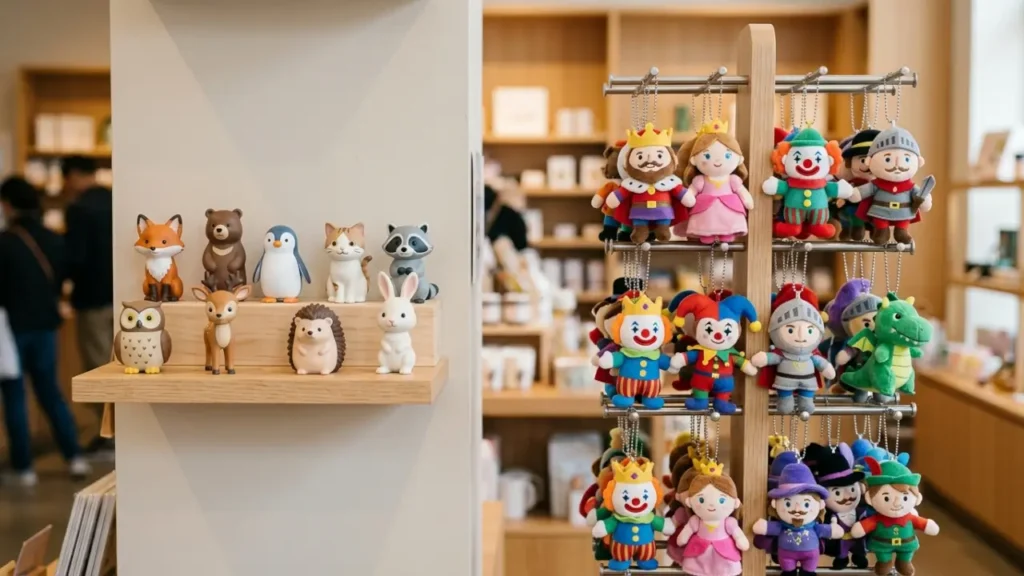
Deciding between a shelf collectible and a carry accessory changes your display space, your freight costs, and the questions customers ask before buying. When retailers weigh LuLu Animal Party figures against Puppet Show plush keychains, the most useful starting point is the selling format itself and the operational demands that follow from it.
This guide compares the two formats named in the title. Exact dimensions, materials, assortment rules, packaging, and availability still need confirmation against the supplier’s current SKU information. Use the checks below to decide which format fits your store and what evidence makes two competing quotes genuinely comparable.
Where Would LuLu Animal Party Figures Earn Their Shelf Space?
Start with the customer interaction you can actually support. A collectible store may position figures beside existing display collections. A gift shop may evaluate plush keychains for an accessory fixture, while an online seller needs photographs that communicate scale and attachment details at a glance.
These are merchandising hypotheses, not evidence that either series will sell faster. Ask staff what customers request most: display pieces, tactile gifts, bag accessories, or additions to an existing character collection. Then check whether the proposed SKU actually meets that request.
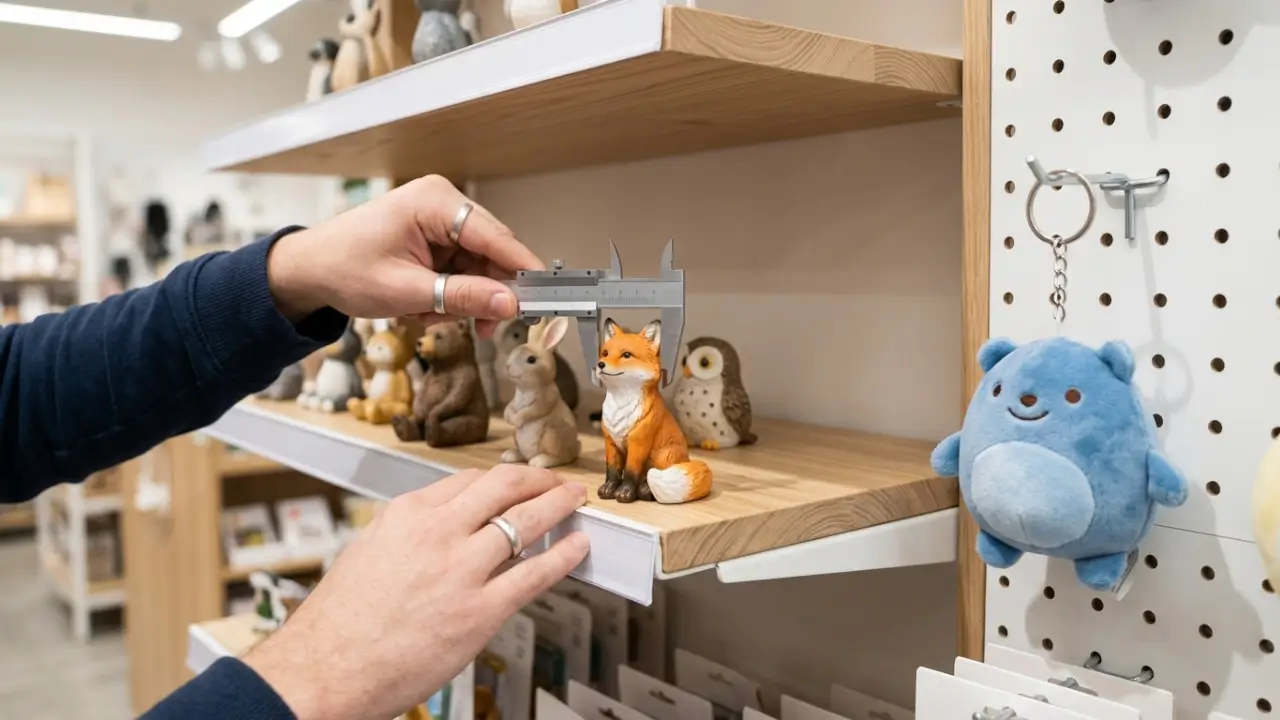
- Lojas de artigos colecionáveis: Measure the available shelf and confirm whether a figure stands independently or needs an included support.
- Gift and accessory shops: Check whether the plush packaging can hang on your intended fixture and whether the attachment is visible to the customer.
- Varejistas online: Estimate storage and outbound parcel needs from packaged dimensions, not from promotional photographs.
- Stores testing a new category: Choose a quantity that produces useful sales feedback without consuming the whole buying budget.
For a broader assortment perspective, review these collectible selection ideas for gift shops alongside your own customer requests.
Compare Figure and Keychain Specifications Before Choosing a Winner
Ask for a specification sheet and photographs of the exact versions being quoted. A series name alone cannot establish size, materials, included accessories, or the retail packaging format. In particular, confirm whether each offer is a sealed random assortment, an identified single design, or another sales configuration.
| Decision point | LuLu Animal Party figures: confirm | Puppet Show plush keychains: confirm | Ação do comprador |
|---|---|---|---|
| Retail footprint | Figure height, base dimensions, and box size | Plush dimensions, attachment length, and package size | Measure the complete selling unit against your fixture. |
| Display behavior | Standing stability and any included support | Hanging position and clearance between units | Test a sample on the intended shelf or hook. |
| Construction | Declared materials, joints, and detachable pieces | Fabric, filling, seams, and attachment construction | Request specifications for the exact SKU. |
| Finish quality | Paint alignment, surface marks, and fitted parts | Stitching, embroidery, loose fibers, and hardware edges | Agree on visible defect examples before ordering. |
| Variedade | Design selection or random allocation rules | Design selection or random allocation rules | Document what the quoted pack does and does not guarantee. |
| Retail protection | Internal restraint and protection for protruding parts | Protection against dirt, moisture, and deformation | Review inner and outer packaging photographs. |
| After-sale handling | Missing accessories, breakage, or unstable pieces | Failed attachments, opened seams, or missing components | Confirm evidence requirements and the claim process. |
A single sample can reveal a fixture mismatch that product photographs miss entirely. Photograph it beside a ruler and inside your proposed retail display before you commit.
For another format comparison, the THE MONSTERS plush and figure buying guide offers related questions you can reuse when checking supplier specifications.
When Case Packs Decide the Figure-to-Plush Split
Ask suppliers to separate the minimum order quantity, inner-pack quantity, master-carton quantity, and any minimum per design. These are often different constraints. A quote described as a “set” also needs a written definition of exactly what it contains.
If either offer uses blind-box packaging, confirm whether a sealed case carries a defined assortment. Do not assume it guarantees every standard design, prevents duplicates, or includes a special design. Request the stated assortment rules and keep them attached to the purchase order.
For example, a retailer planning a 24-unit trial might first allocate 12 units to each format. If the quoted pack quantities block that even split, compare the nearest permitted combinations and their total cash commitment. The example is a planning exercise, not a statement of either product’s actual MOQ.
Evaluate results by units sold, cash recovered, display space occupied, and customer feedback. Equal unit quantities do not necessarily create an equal financial test. Record which designs or formats customers ask for before deciding what to reorder.
If your budget is tight, use the small-store blind box buying guide to frame your test-order priorities before requesting both quotes.
Why the Lower Unit Quote May Cost More on Your Shelf
Compare both offers at the same delivery point and in the same currency. Ask which freight, insurance, import charges, and handling costs are already included. A supplier’s unit quote is incomplete for comparison if the other offer bundles in services it excludes.
Estimate landed cost per sellable unit by adding merchandise, freight, insurance, applicable duties and taxes, clearance, and local delivery, then dividing by expected sellable units. Treat recoverable taxes according to your accounting arrangements. Keep any damage allowance explicitly labeled as a planning assumption.
Neither format is automatically cheaper to transport. Plush may be lightweight but bulky; figure packaging may also eat substantial space. Obtain packed carton dimensions, gross weight, carton count, and the carrier’s chargeable-weight basis. Ask whether compression could affect the plush or how it presents on the shelf.
Build the receiving date backward from your required shelf-ready date. Confirm order preparation, dispatch timing, transit estimates, possible customs handling, receiving inspection, and labeling work as separate steps. For reorders, check remaining sales cover against the current replenishment estimate and confirm the same SKU will be supplied.
Inspect Figure Finishes and Plush Attachments Before Acceptance
Set acceptance criteria before you pay. Figure checks should cover visible finish defects, loose parts, included accessories, and stability where relevant. Plush keychain checks should cover seams, embroidery, attachment security, hardware condition, and consistency with the approved sample.
Ask for photographs of the retail unit, the inner protection, and the shipping carton. Gift-oriented stores should specify whether crushed boxes, torn packaging, or dirty surfaces make an item unsuitable for full-price sale. Agree in advance how those issues will be documented and assessed.
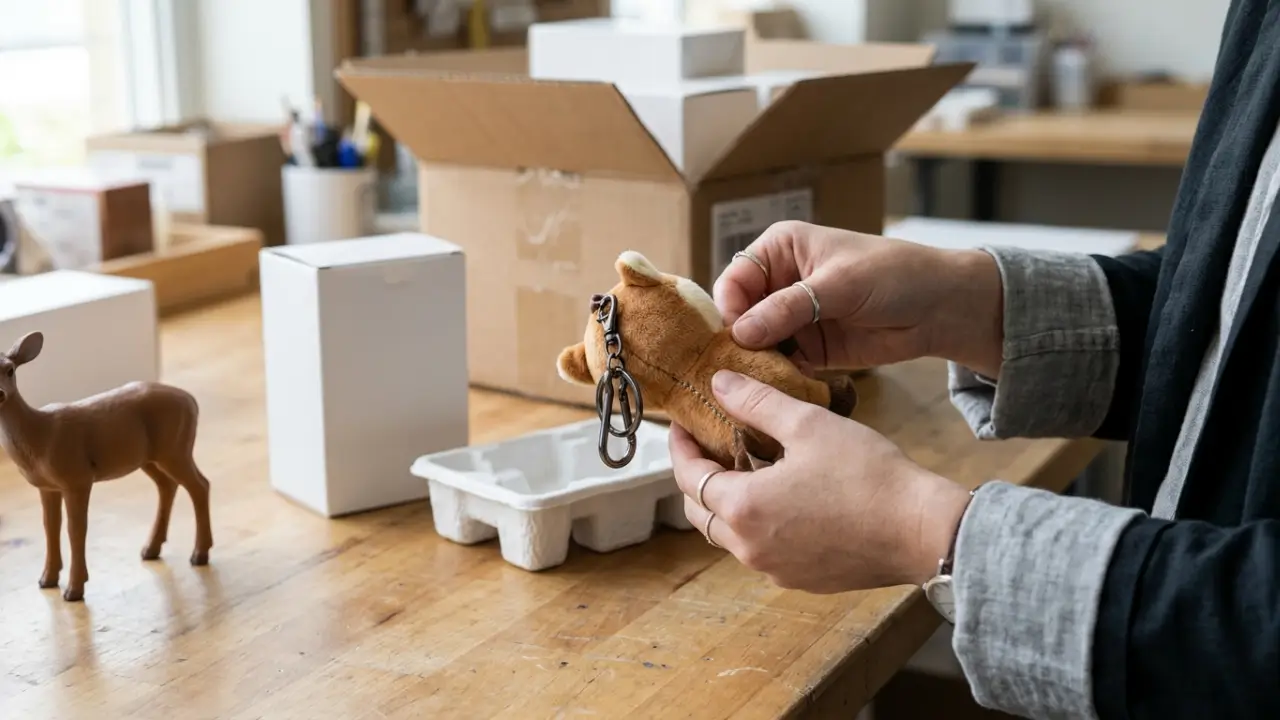
Inspection should include samples from different carton locations where practical. Record any damage to the shipping carton before opening, photograph affected units, and keep SKU and batch identifiers where present. Confirm claim deadlines and available remedies in writing.
Check destination-market requirements for age grading, warnings, labeling, materials, and traceability. Neither collectible styling nor a keychain attachment determines the applicable classification on its own. Request documents tied to the exact product and verify their relevance with an appropriate testing or compliance adviser when needed.
Pause when a supplier substitutes another version’s photos, cannot identify the quoted SKU, or offers an unrelated report as proof for the whole range. Missing evidence needs resolving before the order proceeds.
Ask for Two Quotes That Describe the Same Buying Decision
Send both suppliers the same request structure. Ask them to mark unknown details as pending confirmation rather than filling the gaps with assumptions.
- Exact series name, SKU, version, and current product photographs.
- Product dimensions, materials, attachments, and included accessories.
- Retail packaging format and any random-assortment rules.
- MOQ, inner packs, master cartons, and design-selection restrictions.
- Unit price, currency, payment terms, and quote validity.
- Carton dimensions, gross weights, delivery terms, and freight inclusions.
- Estimated preparation and dispatch timing, with availability reconfirmed.
- Applicable documentation, labeling details, and defect-claim terms.
A concise inquiry could read: “We are comparing LuLu Animal Party figures and Puppet Show plush keychains for [sales channel] in [destination market]. Please quote [planned quantity] of each, identify the exact versions and pack configuration, and provide packaging dimensions, delivery terms, available documentation, and claim procedures.”
Request written quotes with supporting photos before committing to either format. Choose the offer that fits your customers, fixtures, landed-cost target, and receiving schedule. Resolve vague pack descriptions, unexplained version changes, and missing freight details before you issue the purchase order.
PERGUNTAS FREQUENTES
Which format is better for a small retail store?
Choose according to your available fixture, customer requests, and total order commitment. Figures need suitable display space; plush keychains need a workable hanging or accessory presentation. Confirm packaged dimensions and case quantities before deciding.
Does a full case guarantee a complete assortment?
Do not assume it does. Ask for the exact SKU’s written assortment rules, including duplicate possibilities and any exclusions. Confirm whether “case” means an inner display pack or a shipping carton.
Are plush keychains cheaper to ship than figures?
Not necessarily. Compare packed carton dimensions, gross weight, and the carrier’s chargeable-weight calculation. Bulky plush and protective figure packaging can both increase freight costs.
What should buyers check on samples?
Check figures for finish defects, stability, and included parts. Check plush keychains for seams, embroidery, attachment security, and hardware condition. Review packaging condition and consistency with the quoted specifications for both.
Can the same compliance documents cover both formats?
Do not assume so. Ask which exact products each document covers and verify applicable requirements for the destination market, intended use, age grading, and materials.
Before You Commit Shelf Space to Either Format
Base the decision on a confirmed SKU, a usable sample, a workable pack quantity, and a delivered-cost comparison. Start with the format your store can present clearly and replenish sensibly. Add the second once customer feedback and sales results justify the extra inventory.