


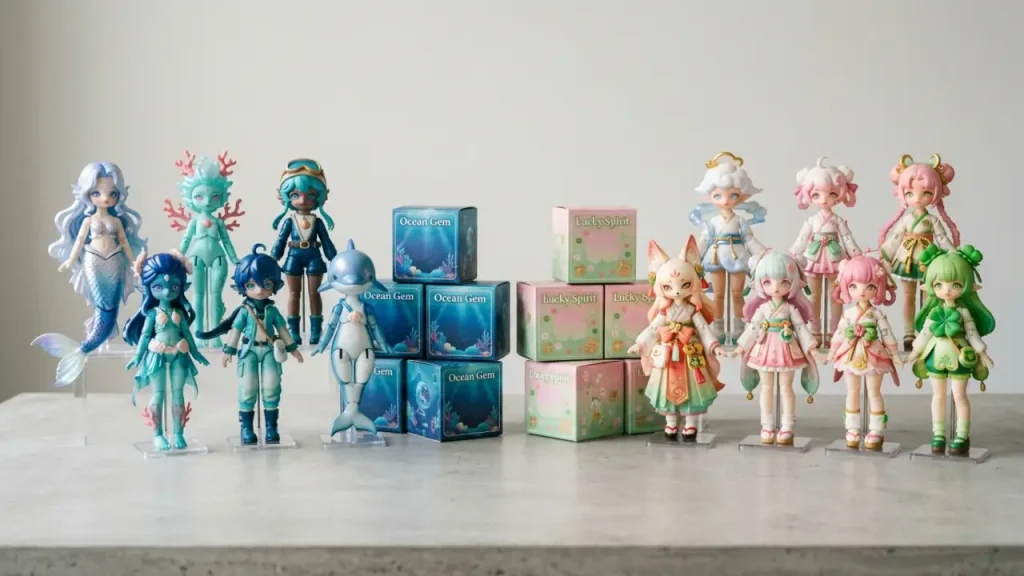
Shelf space and purchasing budget rarely stretch far enough to test every collectible series at once, so a 1/8 BJD line has to earn its place. That decision needs more than comparing which promotional images look stronger. The practical question is whether Minty Ocean Gem or Minty Little Lucky Spirits better matches the store’s customers, price architecture, display space, and reorder cycle.
The two series names imply different creative directions, but names alone do not confirm character designs, materials, assortment ratios, hidden editions, included accessories, or packaging specifications. Request current product sheets and case information for both lines before treating either one as the safer purchase.
Which Minty Series Fits the Store’s Actual Customer?
Start with the shopper rather than the product. A specialist doll store may attract customers who evaluate face design, articulation, clothing, wigs, and customization potential. A gift shop may need an immediately understandable theme and packaging that works without staff explanation. Online collectible sellers must also consider how well every regular design can be photographed and listed.
- BJD and doll specialists: Ask for joint structure, body measurements, eye type, wig details, clothing construction, and accessory lists.
- Blind box retailers: Compare the number of regular designs, display-box quantity, hidden-edition policy, and whether sealed cases have a defined assortment structure.
- Gift and lifestyle stores: Review packaging dimensions, theme clarity, gift-readiness, and the likely amount of shelf explanation required.
- Vendedores online: Obtain approved images or arrange original photography, then calculate fulfillment materials for the larger 1/8 format.
- Convention and pop-up vendors: Check whether boxes are easy to transport, stack, secure, and display in limited booth space.
A useful decision rule is to choose the series that complements existing stock rather than duplicating it. If the current doll range already leans heavily toward aquatic or jewel-like styling, a contrasting concept may broaden customer choice. Conversely, a store known for a tightly curated visual identity may benefit from reinforcing its established theme. Confirm the actual designs before making either judgment.
How to Compare a 1/8 BJD Blind Box Without Guessing
Use the same information request for both series. This prevents a polished presentation for one line from being compared with incomplete specifications for the other.
| Comparison point | O que solicitar | Decisão no setor de varejo |
|---|---|---|
| Composição da série | Regular designs, possible secret design, and assortment method | Estimate how much variety customers see from one case |
| Doll dimensions | Standing and seated measurements, including prominent accessories | Confirm shelf, showcase, and shipping-box fit |
| Materials and construction | Material list, joint description, wig or hair format, eyes, and clothing details | Prepare accurate listings and customer expectations |
| Included contents | Itemized contents for every regular design | Identify whether designs provide comparable perceived value |
| Embalagem para varejo | Box dimensions, gross weight, seals, inserts, and language shown | Calculate display density and parcel requirements |
| Configuração do gabinete | Units per display and master carton; sealed-case assortment terms | Model opening inventory and duplicate exposure |
| Replacement process | Evidence required and reporting window for defects or missing parts | Understand after-sales workload before ordering |
| Availability status | Current production or order status and whether reorders are expected | Avoid building a campaign around unconfirmed supply |
| Market documentation | Available labeling, safety, material, or testing documents relevant to the destination | Review import and sales suitability with qualified local guidance |
Score each line using store-specific priorities. For example, a doll shop might weight construction details and accessories more heavily, while an online retailer might prioritize carton dimensions, replacement procedures, and consistent image assets. Do not create one universal score that ignores the sales channel.
Retailers comparing other formats can also review this guide to sealed series sets versus mixed blind box assortments. It explains why the purchasing unit can materially change inventory risk.
Sealed Cases, Split Cases, and Duplicate Exposure
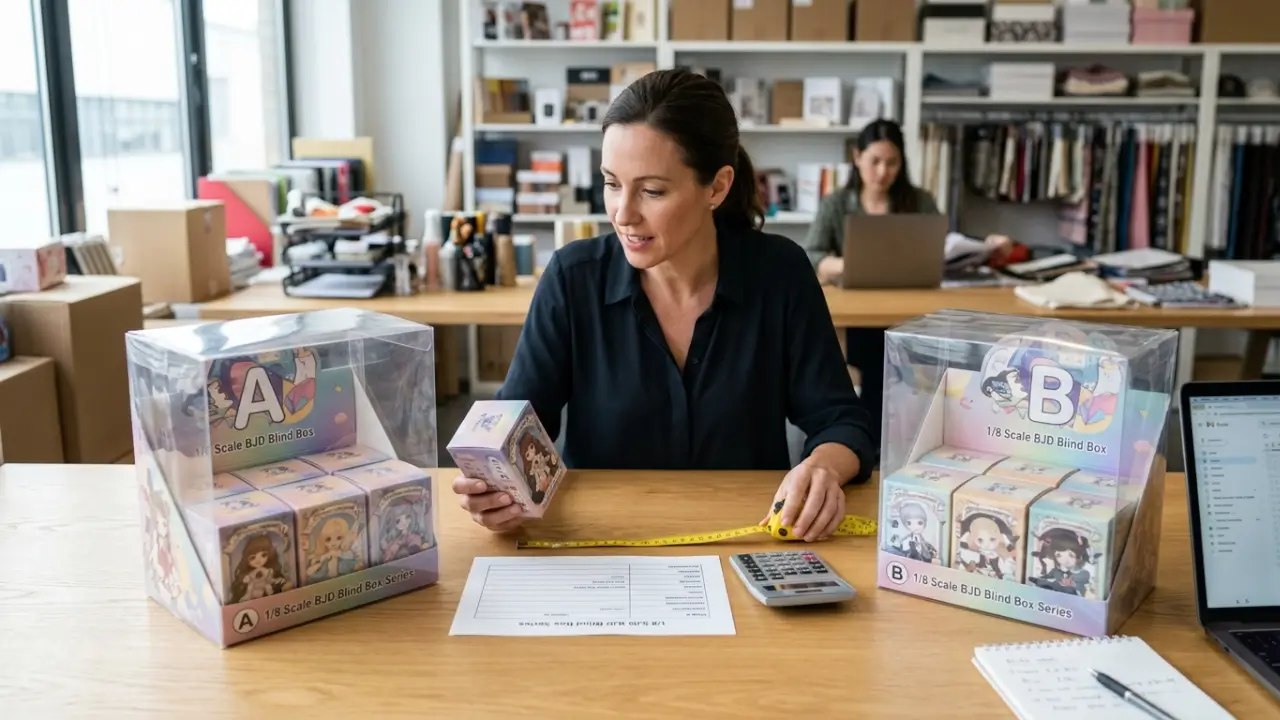
The unit price is not enough to plan a BJD order. Ask whether the quote applies to individual random boxes, intact display boxes, sealed cases, or supplier-created mixed cartons. These formats are not interchangeable.
An intact series case may provide a defined set of regular designs, but never assume a no-duplicate configuration unless it is documented. Likewise, the presence of a secret design may affect the regular assortment differently from one series to another. Request each supplier’s current assortment explanation in writing.
For planning purposes, imagine a retailer can fund 24 units. If a confirmed case contains a hypothetical eight units, the buyer could test three intact cases. If the case contains a different quantity, or if only mixed individual boxes are available, the duplicate and merchandising risks change. These numbers are examples only; buyers must obtain the actual case packs and MOQ for both Minty series.
Order-planning questions
- What is the MOQ for each series, and is it measured in pieces, displays, cases, or order value?
- Can Ocean Gem and Little Lucky Spirits be combined toward the supplier’s MOQ?
- Are cartons sealed at the original series level or repacked?
- Does ordering a full case change assortment treatment?
- Can a first test order be repeated, or is the series limited to a particular ordering window?
- What carton quantity remains after reserving units for samples, photography, and defect handling?
Before allocating a purchase between the two lines, ask for a quote based on the same purchasing unit and destination. A supplier inquiry can then reveal whether a balanced test or a single-series launch is operationally cleaner.
Why 1/8 Scale Changes Cost and Display Planning
A 1/8 doll can create a different logistics profile from a smaller collectible, but the scale label does not provide complete dimensions. Hair, hats, stands, wings, garments, or other design elements may change the space needed. Request packed and unpacked measurements rather than converting the scale into an assumed height.
Compare the Minty options against other BJD formats already carried by the store. The Sakura 1/12 BJD buying guide oferece uma referência útil em menor escala, enquanto o Bonnie 1/6 BJD sourcing guide can help retailers think about the operational effect of a larger format. These references should support planning, not replace current specifications for either Minty series.
Measure one real shelf bay and determine how many boxed units can face forward without hiding the series identity. Then test the likely e-commerce parcel size. A doll that fits the retail shelf may still require a larger protective shipping carton, increasing dimensional freight or fulfillment cost.
Build Landed Cost Around the Carton, Not the Product Photo
Compare both series using landed cost per sellable unit. Begin with the quoted merchandise total, then add international freight, insurance where applicable, import duties or taxes, customs and brokerage charges, payment fees, domestic delivery, inspection expense, and protective fulfillment materials. Divide the total by units expected to be sellable, not merely units ordered.
A useful worksheet is:
Custo estimado no destino por unidade comercializável = merchandise, freight, import, handling, inspection, and packaging costs divided by expected sellable units.
Run the calculation separately for Ocean Gem and Little Lucky Spirits even if their quoted unit prices match. Carton dimensions, gross weight, order quantity, and damage exposure can produce different landed costs.
Also model a cautious scenario. As a planning example, a buyer might compare the base calculation with one that reserves one unit per several cases for photography, display, or issue handling. This is not a predicted defect rate; it is a way to see whether the intended retail price remains workable when not every purchased unit is immediately sellable.
Do not rely on a freight estimate that lacks a carton count, carton dimensions, gross weight, shipping term, destination, and quote validity. A low product price paired with incomplete logistics information is not yet a comparable offer.
Protect Clothing, Faces, and Gift Boxes in Transit
BJD buyers inspect more than the outer character design. Poorly protected face surfaces, displaced wigs, wrinkled clothing, loose accessories, or crushed blind boxes can create returns even when the doll itself remains usable. Request packaging photos or a sample showing the internal tray, protective films, accessory compartments, seals, and outer carton arrangement.
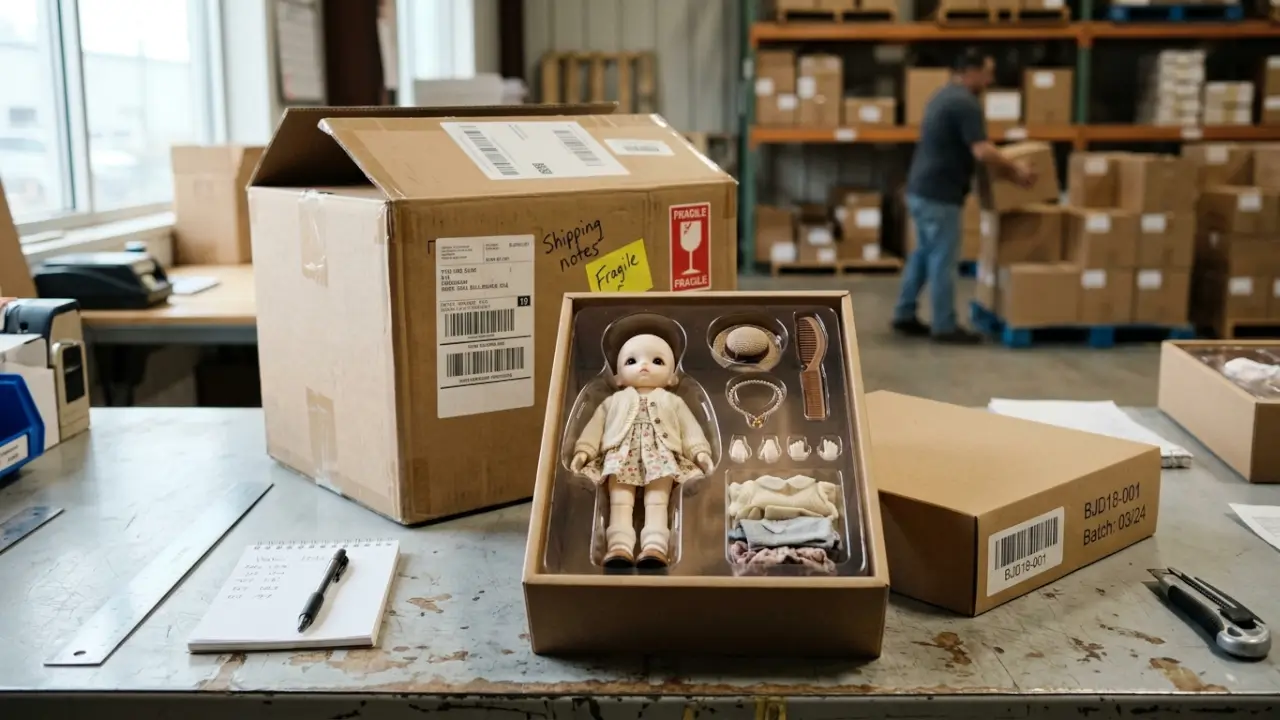
A practical receiving check
- Photograph unopened master cartons and record visible impact, moisture, or compression.
- Count cases and individual units against the packing list.
- Check blind box seals and look for inconsistent wrapping or signs of repacking.
- Open a documented sample across cartons rather than taking every sample from the top layer.
- Review joint assembly, face finish, hair or wig placement, garments, accessories, and inserts.
- Record issues by carton and retain photos needed for the supplier’s claim process.
Confirm the agreed inspection method before shipment. If buyers need third-party inspection, they should define the scope and acceptance criteria rather than asking for a vague “quality check.” Requirements concerning age grading, warnings, labeling, materials, intellectual property, customs, and product safety vary by destination. Verify applicable rules and request supporting documentation rather than assuming that paperwork for one market applies elsewhere.
Reorder Timing Can Decide Between the Two Minty Lines
A successful test is useful only if the retailer knows whether replenishment is possible. Ask for the current order status, production or dispatch estimate, shipping method options, and the point at which timing becomes firm. Treat all estimates as subject to confirmation.
Set a reorder trigger based on sales velocity plus the confirmed replenishment cycle. For example, if a test allocation contains three cases, a retailer may review performance after the first case sells rather than waiting until only a few individual boxes remain. The correct threshold depends on the supplier’s updated timing, freight method, and the store’s acceptable stockout risk.
Keep the two series separate in sales reporting. Record units sold, full-price sell-through, customer requests, returns, and design-level feedback when known. If Ocean Gem sells quickly because of a launch campaign while Little Lucky Spirits receives steadier organic demand, raw unit sales alone may give the wrong reorder signal.
Retailers new to doll assortments may also consult the Luluya 1/8 BJD retail buying guide for additional questions relevant to this product scale.
When the Two Minty Quotes Are Not Yet Comparable
Warning signs often appear as missing information rather than an obviously bad offer. Pause the decision if one quote omits case configuration, provides only unpacked doll dimensions, changes terminology between “display” and “carton,” or cannot explain whether goods are sealed or repacked. Other concerns include pressure to pay before specifications are documented, unclear defect reporting terms, and freight totals without shipment assumptions.
Send both suppliers or sales contacts the same inquiry:
Please quote Minty Ocean Gem and Minty Little Lucky Spirits for delivery to [city, country, postal code]. For each series, confirm the MOQ, units per display, displays per master carton, sealed-case assortment, product and package dimensions, carton dimensions and gross weight, included contents, available product documentation, order status, estimated dispatch timing, shipping term, payment terms, and procedure for reporting missing or damaged items. Please identify which details are estimates and how long the quote remains valid.
Attach the intended quantity range and state whether substitutions, mixed cartons, or split cases are acceptable. This reduces follow-up and makes hidden differences easier to identify.
Before paying for stock, request current quotes for both Minty series and place the specifications side by side. Choose Ocean Gem, Little Lucky Spirits, or a controlled split test only after case format, landed cost, packaging, documentation, and replenishment assumptions are confirmed in writing.
PERGUNTAS FREQUENTES
Should a retailer stock both Minty BJD series?
Stocking both can test customer preference, but only if the combined MOQ, case quantities, and display space remain manageable. Track each series separately so stronger performance is not hidden by combined sales data.
Can retailers assume a sealed case contains no duplicate regular designs?
No. Ask for the current sealed-case assortment policy for each series. Case composition, duplicate treatment, and the effect of a possible secret design should be confirmed in writing.
Which specifications matter most for a 1/8 BJD blind box?
Confirm packed and unpacked dimensions, materials, joint structure, included clothing and accessories, case configuration, carton weight, packaging protection, and the process for reporting missing or damaged parts.
How should buyers compare Ocean Gem and Little Lucky Spirits prices?
Compare landed cost per expected sellable unit using equivalent quantities and shipping assumptions. Include freight, import charges, handling, inspection, payment costs, and protective fulfillment packaging where applicable.
When should a retailer reorder a Minty BJD series?
Set a trigger using actual sales velocity and the supplier’s reconfirmed replenishment cycle. Review performance while enough inventory remains to cover the estimated production, dispatch, and transit period.
Before Choosing the First Minty Order
Neither series is automatically the correct choice for every retailer. Ocean Gem may fit one store’s assortment while Little Lucky Spirits may create more useful contrast in another. The defensible decision comes from matching verified designs and specifications to customer demand, then comparing sealed-case structure, landed cost, packaging risk, and reorder feasibility on equal terms.