


Managing inventory quality is just as critical as selecting the right IPs. For art toy retailers, factory defects directly impact gross margins, complicate customer service, and can damage a store’s reputation. While wholesale buyers cannot inspect sealed blind boxes individually, establishing a robust Quality Control (QC) protocol for incoming master cartons is a practical necessity.
Based on mass manufacturing standards in the toy industry, a small percentage of factory defects is inevitable. In this guide, we will break down the acceptable baseline for defective units, how to differentiate between PVC and plush manufacturing flaws, and how to structure your store’s operating procedures to handle blind box defects and damages without absorbing total losses.
The Baseline: Understanding Acceptable Defect Rates
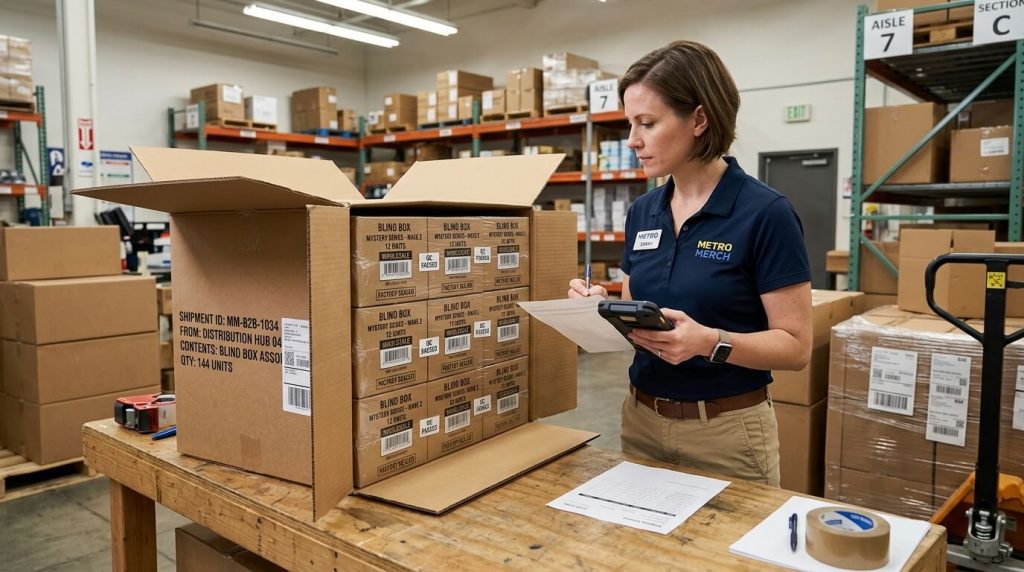
Before implementing a QC process, retailers must understand standard factory tolerances. In the injection molding and commercial plush industries, an acceptable defect rate typically hovers between 1% and 3%. This means in a master carton of 100 blind boxes, finding one or two items with minor paint flaws or loose stitching is considered standard operational variance.
It is crucial to distinguish between factory defects (errors made during production, such as missing parts or paint overspray) and shipping damage (crushed outer boxes due to freight mishandling). Each requires a different mitigation strategy and a different approach when negotiating with your B2B supplier.
Common Defect Signatures by Material
Staff training should include identifying common manufacturing flaws. When customers report an issue, understanding these material-specific defects helps retailers determine if the claim is valid or if the flaw falls within normal factory variance.
PVC and Vinyl Figure Defects
Standard art toys are mass-produced via injection molding and hand-painted or pad-printed on assembly lines. The most common issues include:
- Paint Bleeding and Overspray: This is the most frequent defect. Paint occasionally bleeds outside its designated boundary, particularly around high-contrast areas like the eyes or small accessories.
- Mold Flashing: Excess plastic left along the seam lines where the two halves of the metal mold meet. If the factory fails to sand this down properly, the figure will have sharp, visible ridges.
- Loose Joints (BJD specifically): For complex items like 1/12 scale BJD blind boxes, loose ball joints or improperly strung elastic cords can render the figure unable to stand or hold poses.
Plush Blind Box Defects
The rise of plush blind boxes introduces textiles into the QC equation. Because plush toys require more manual sewing, human error is slightly more prevalent.
- Faceplate Detachment: Many modern plush toys, such as the Kimmon series, feature a heavy vinyl face glued to a soft plush body. Extreme temperature fluctuations during international shipping can occasionally weaken the factory adhesive, causing the face to detach.
- Asymmetrical Stitching: Minor asymmetry in ear placement or facial embroidery is common and often accepted by collectors as “unique character quirks.” However, burst seams exposing internal stuffing qualify as critical defects.
Implementing an In-Store QC Protocol
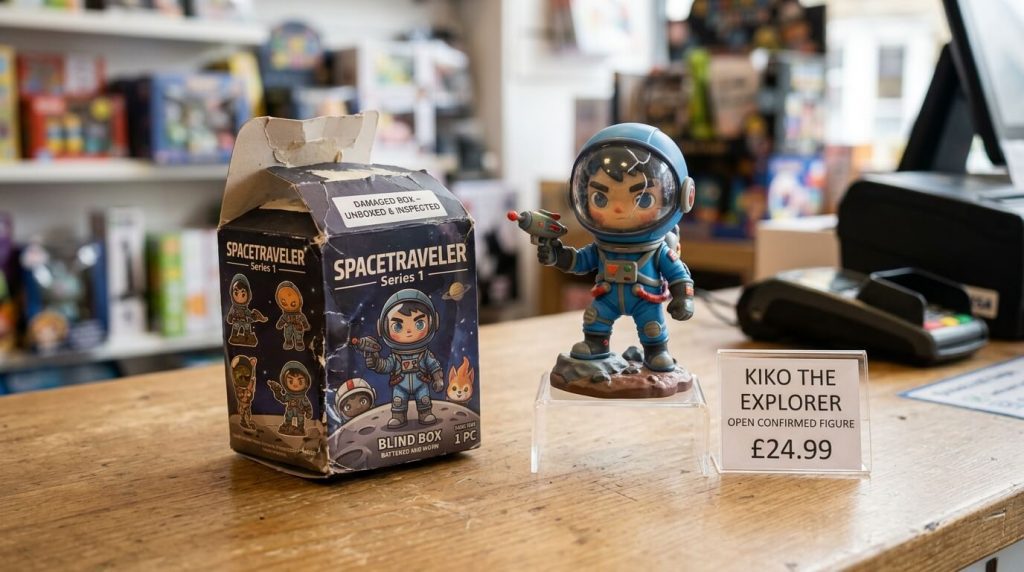
Because the core product is sealed, retail staff cannot check the actual figure prior to the sale. Therefore, your in-store QC protocol must focus on outer packaging integrity and clear customer communication.
1. The Incoming Freight Inspection
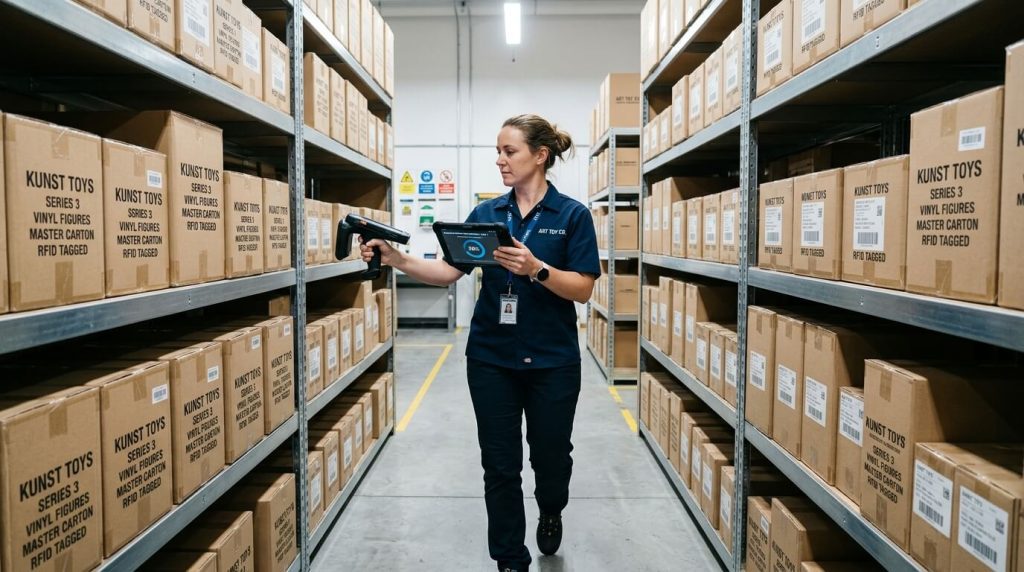
When receiving wholesale orders, staff must inspect the master cartons immediately. Look for water damage, crushed corners, or compromised factory tape. It is standard practice to verify the integrity of the shrink wrap on individual cases. If the wrap looks sloppy or heat-gunned manually, it may be a sign of tampering. Retailers should familiarize themselves with how to identify resealed boxes to prevent inventory scams.
2. Handling Crushed Outer Boxes
A crushed blind box with an intact internal foil bag is not a factory defect, but it is difficult to sell at full MSRP. A practical retail strategy is to open the damaged box, reveal the figure, and sell it as a “Confirmed Open Box” item, often at a slight premium if it is a popular character, mitigating the loss from the damaged packaging.
Managing Customer Returns for Factory Defects
A clear return policy is your primary defense against margin erosion. When a customer opens a blind box in your store or at home and discovers a missing arm or severe paint defect, the retailer needs a standardized response.
Most independent retailers adopt a policy of offering an exchange for the same open figure (if a spare is available in the display case) or providing store credit, rather than cash refunds. It is highly advised to require an unboxing video or the original receipt and foil bag to process any claim, which aligns with standard policies for managing opened blind box returns.
Retail Action Matrix: How to Handle Flaws
Not all flaws require a total write-off. Using a triage system helps maintain profitability.
| Defect / Issue Type | Categoria | Retail Action / Resolution | Financial Impact |
|---|---|---|---|
| Missing parts / Broken limbs | Critical Factory Defect | Exchange for customer; claim credit with wholesale supplier. | Supplier Reimbursed |
| Vinyl faceplate detached (Plush) | Repairable Defect | Fix in-store with fabric-safe glue; sell as “Confirmed/Display Item”. | Minimal Margin Loss |
| Crushed outer cardboard box | Shipping Damage | Open box, sell as confirmed character without outer packaging. | Neutral / Slight Profit |
| Minor paint bleed / asymmetrical ears | Normal Factory Variance | Educate customer on factory tolerances; usually no refund required. | Zero Impact |
Perguntas frequentes (FAQ)
Should retailers open blind boxes to check for defects before selling?
No. The primary value of a blind box lies in the sealed, surprise unboxing experience. Opening the product destroys its “new” status. Quality control must be managed through reliable sourcing and post-sale customer service policies.
What is the difference between an acceptable flaw and a critical defect?
An acceptable flaw is a minor cosmetic imperfection, such as a slight paint smudge less than 1mm in size, which falls under mass-production tolerances. A critical defect impacts the function or core aesthetic of the toy, such as a missing accessory, a broken joint, or an unpainted faceplate.
How do wholesale suppliers handle defective merchandise?
Reputable B2B suppliers typically require photographic evidence of the defect, the original packaging, and the lot number to issue a credit on your next order. It is crucial to review your supplier’s Return & Refund Policy before placing large volume orders.
Can I sell mildly defective figures at a discount?
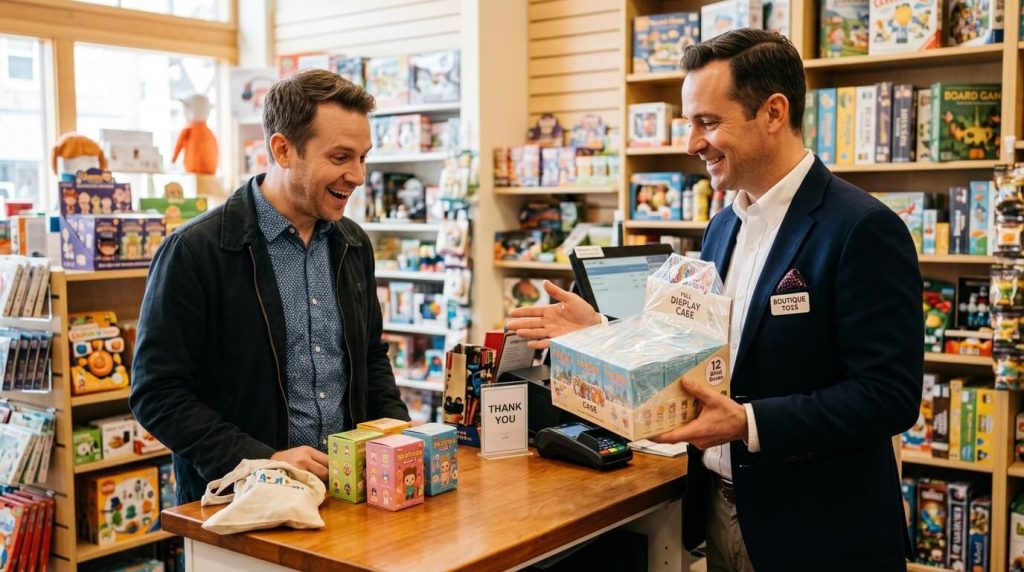
Yes. Many retailers maintain a small “B-Grade” or clearance bin near the register. Figures with minor factory flaws or missing standard accessories can often be sold at a 30% to 50% discount to budget-conscious collectors or customizers, allowing the store to recoup the wholesale cost.
Establishing a clear protocol for quality control and customer returns protects your retail margins and builds trust with your collector base. For wholesale buyers seeking a supply chain partner with transparent defect resolution and authentic inventory, exploring a reliable B2B catalog is the first step.
Confira aqui o catálogo de brinquedos artísticos para atacado »