






The business model of the traditional university bookstore is evolving. With course materials aggressively shifting to digital rentals, campus retailers can no longer rely on textbook margins to sustain their brick-and-mortar operations. To replace this lost revenue, forward-thinking university store managers are pivoting toward experiential retail, lifestyle goods, and “dopamine commerce”—making art toys and blind boxes a highly lucrative addition to the campus retail floor.
Based on collegiate retail data, Gen Z consumers exhibit a high frequency of impulse spending directed at stress-relief and social-currency items. In this B2B guide, we will analyze the economics of the campus “dopamine economy,” outline the exact inventory matrix suited for tight dorm room constraints, and detail how to merchandise blind boxes to capture high-velocity student foot traffic.
The Gen Z “Dopamine Economy” on Campus
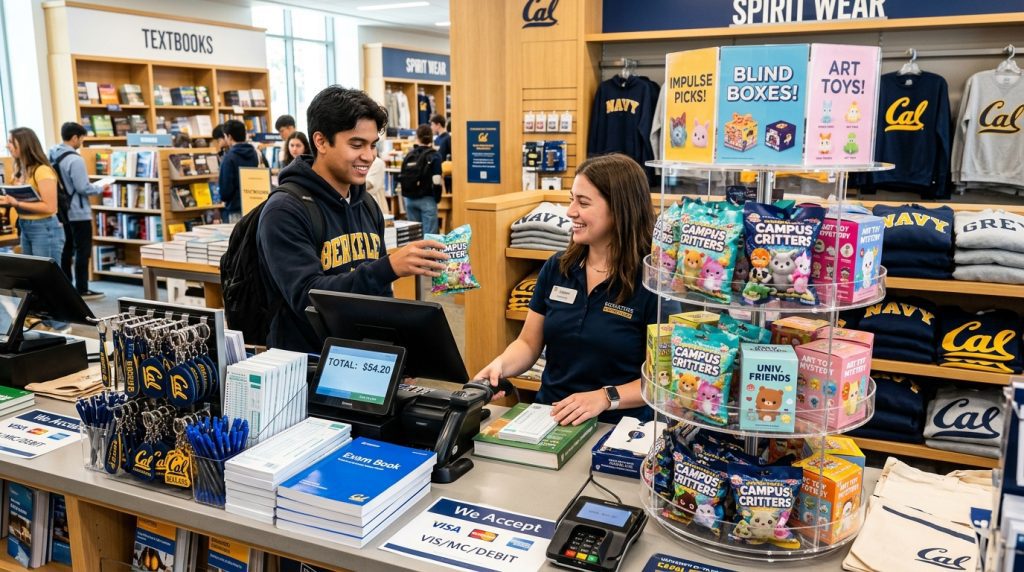
To sell to college students, wholesale buyers must understand their purchasing psychology. University students typically operate with limited disposable income, yet they frequently spend $10 to $15 on a coffee or a quick treat. This is known as “dopamine spending”—small, affordable micro-purchases that provide immediate emotional gratification during high-stress periods (like midterm or finals week).
Blind boxes fit perfectly into this financial bracket. The thrill of the unboxing experience provides an instant serotonin boost. For a university bookstore, placing a $14 blind box next to the energy drinks and scantrons converts a purely functional retail visit into an experiential transaction, drastically increasing the store’s Average Order Value (AOV).
Curating the Campus Assortment: Form Factor is Everything
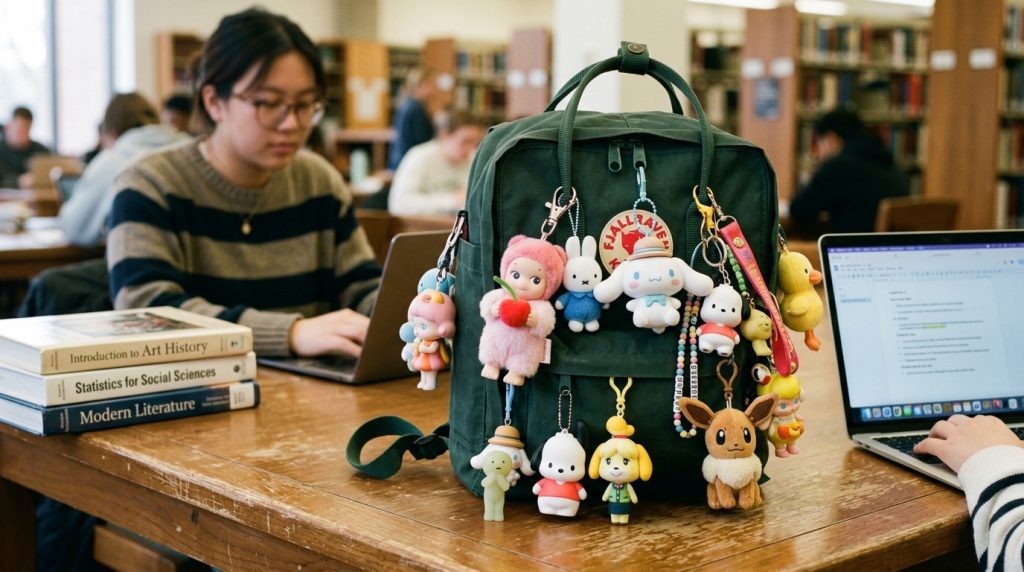
A university bookstore is not a dedicated art toy boutique. You must curate your wholesale assortment based on the physical constraints of college life: students carry backpacks all day and live in microscopic dorm rooms. Large 400% vinyl figures will not sell here. Inventory must be highly portable and functional.
1. The “Backpack Real Estate” (Plush Charms)
The dominant Gen Z fashion trend on college campuses is backpack customization (often referred to as “ita-bag” culture). Students use their backpacks as blank canvases to display their personality. Sourcing foil-bagged plush keychains is the single most profitable strategy for campus stores. They are lightweight, durable enough to survive being tossed around lecture halls, and act as highly visible social currency among peers.
2. Functional Stationery Blind Boxes
Campus stores must justify their inventory to their primary mandate: academics. The perfect crossover product is the functional blind box. As noted in our back-to-school merchandising guide, stocking plush zipper bags, blind box pen cases, or character-themed ID lanyard holders blends the utility of school supplies with the hype of art toys. These items sell exceptionally well during the August/September rush.
3. The “Deskterior” Study Buddies
For standard PVC figures, focus on the “Deskterior” (desk interior) aesthetic. Small, 3-inch figures from series like Nanci or Kimmon serve as low-profile study companions for cramped dorm desks. They provide aesthetic value without consuming valuable real estate.
Strategic Merchandising for Campus Foot Traffic
College students are notoriously rushed. If your blind boxes are hidden in the back corner behind university apparel, they will not turn over. You must intercept the student journey.
- The Checkout Counter Trap: The highest dwell time in a campus store is the checkout line. Capitalizing on the psychology of POS impulse buys, install countertop spinner racks filled with plush badges or zipper bags right next to the registers. When a student is already purchasing a $60 university hoodie, adding a $12 plush keychain feels financially insignificant.
- Library & Cafe Proximity: If your campus store has an integrated coffee shop or sits adjacent to the library, position your “Deskterior” PVC figures facing the cafe seating. As seen in the Toy Cafe retail model, giving students a place to sit, drink coffee, and unbox their toy instantly drives repeat purchases.
Operational Hazard: Campus Shrinkage and Theft
University bookstores experience massive, condensed waves of foot traffic between classes. A store can go from completely empty to packed with 150 students in five minutes. This environment is a nightmare for loss prevention.
Small, lightweight blind boxes are prime targets for shoplifting. To mitigate this risk, campus retailers must utilize strict inventory safeguards. Never place high-value “Confirmed Chase” figures on open shelves. Use locked acrylic cases for display models, and consider moving the actual blind box inventory directly behind the cashier counter if your shrinkage rate exceeds 3%. For comprehensive protocols, review our B2B guide on retail shrinkage and loss prevention.
Campus Inventory & Seasonality Matrix
University retail is highly cyclical. Use this matrix to time your wholesale purchasing with the academic calendar.
| Academic Season | Target Sourcing Category | Retail Strategy & Focus |
|---|---|---|
| August / Sept (Rush Week) | Zipper Bags, Pen Cases, Keychains | High Volume. Cross-merchandise with notebooks, planners, and new backpacks. |
| November / Dec (Finals) | Plush Toys, Stress-relief items | Market as “Study break dopamine” or easy holiday gifts for roommates. |
| February (Valentine’s Day) | Cute/Romantic PVC Series | Push as affordable, low-pressure gifts for partners and friends on campus. |
| May / Summer Break | Halt Heavy Sourcing | Campus empties out. Transition to lean inventory; liquidate slow movers via discounts. |
Perguntas frequentes (FAQ)
Are wholesale blind boxes profitable enough for campus retail margins?
Yes. Traditional collegiate apparel and textbooks often carry strict margin caps due to university licensing agreements. Blind boxes, however, are standard consumer goods with wholesale costs typically allowing for a 50% to 60% gross margin, making them a highly efficient cash flow driver for the store.
What do I do with unsold inventory during the summer break?
The summer drop-off is the biggest challenge in collegiate retail. You must implement strict inventory control by April. Do not order new master cartons in May. Instead, use the summer months to consolidate your stock and run clearance events for incoming orientation groups. Rely on your B2B supplier’s local warehouse to buy lean, smaller batches rather than over-committing to ocean freight.
How can we compete with online retailers like Amazon on campus?
You compete on immediate gratification. A stressed college student studying for an exam at 9:00 PM doesn’t want a toy delivered in two days; they want the dopamine hit of opening a blind box right now. By stocking visually appealing, trending IP series right on campus, you monopolize the instant-impulse market.
Can university procurement departments order from wholesale platforms?
Yes. Most campus bookstores operate through centralized purchasing systems (like Follett or Barnes & Noble College) or as independent auxiliaries. Establishing a B2B account with a reliable supplier like Kidults Box provides the necessary commercial invoices, standardized SKUs, and domestic US fulfillment required by strict university procurement policies.
Transforming your university bookstore from a textbook depository into a lifestyle destination is the key to surviving the digital shift. If you are preparing your open-to-buy budget for the upcoming semester rush, exploring a curated catalog of high-velocity campus accessories is your essential next step.