


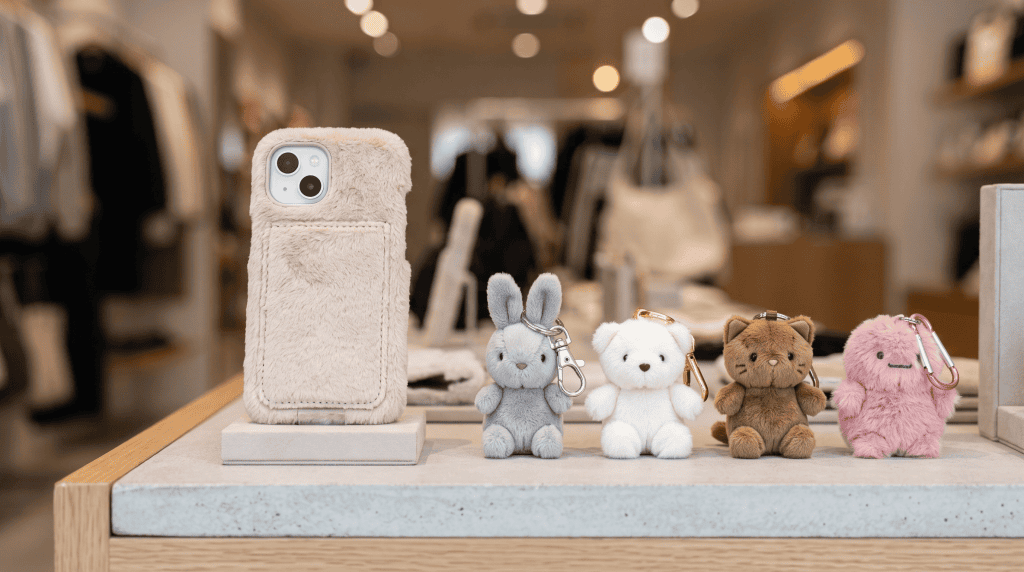
Picking a small plush add-on looks simple until you realize one choice can quietly triple your SKU count. Retailers have to balance visual appeal against inventory complexity, and the two most common candidates pull in opposite directions. Plush phone cases may feel more functional and substantial, but every supported phone model can create another SKU. Plush keychains serve a broader customer base, although hardware quality and crowded displays can affect results.
The format that sells better depends on the store, customer, display method, and buying discipline. Instead of relying on unit price or product photos, buyers should compare attachment rate, sell-through by SKU, landed cost per sellable unit, and reorder flexibility.
Which Add-On Fits Your Customer and Sales Channel?
Start with where the accessory will be sold and what shoppers expect from it. A phone-accessory store may be able to explain model compatibility and organize cases by device. A collectible shop, gift retailer, anime store, or pop-up seller may benefit more from a keychain that does not require the customer to own a particular phone.
- Phone and electronics retailers: Plush cases can complement an existing model-based display, but staff must identify compatible devices accurately.
- Collectible and blind-box stores: Keychains can sit beside figures, bags, and plush products without introducing phone-model questions.
- Сувенирные магазины: Keychains are easier to buy when the recipient’s phone model is unknown. Cases may work when the buyer has confirmed the exact device.
- Интернет-продавцы: Cases require precise compatibility listings and clear camera-cutout images. Keychains need accurate dimensions, attachment details, and scale references.
- Event and pop-up sellers: A compact, broadly compatible keychain assortment may be simpler than transporting multiple case SKUs.
Buyers already comparing plush styles can also review how vinyl-face plush and standard plush differ for retailers. The same customer preference for softness, sculpted detail, or easy handling can influence accessory selection.
Plush Phone Cases vs Keychains at a Glance
No single column determines the winner. Use this table to identify which format creates the more manageable retail proposition for your operation.
| Контрольная точка | Plush phone cases | Plush keychains | Действия покупателя |
|---|---|---|---|
| Customer compatibility | Limited to stated device models | Usable on many bags, keys, and displays | Compare addressable customers, not only product interest |
| SKU complexity | Can multiply by model, color, and character | Usually divided by design or color | Request a complete SKU matrix before ordering |
| Product utility | Combines decoration with phone-case use | Functions as a portable charm or accessory | Ask shoppers how they expect to use the item |
| Fit-related returns | Higher exposure if compatibility is unclear | No device-fit return issue, although scale may disappoint | Improve listings and shelf labels before launch |
| Quality focus | Fit, cutouts, seams, surface stability, and access to controls | Clasp, ring, stitching, attachment loop, and loose parts | Approve a sample against a written checklist |
| Display planning | Needs model identification and organized hooks or bins | Can share a compact impulse display | Measure display capacity by facing and SKU |
| Reorder decision | Track sales separately for each phone model | Track character or design sell-through | Do not let one fast SKU hide slow variants |
| Obsolescence risk | Phone demand may shift as devices change | Less dependent on a technology cycle | Keep early case orders controlled until demand is proven |
A useful decision rule is to favor cases when the store knows its customers’ device mix and can maintain accurate model-level inventory. Favor keychains when broad gifting, impulse purchases, and simpler SKU management matter more.
Why Phone Compatibility Can Turn One Design into Many SKUs
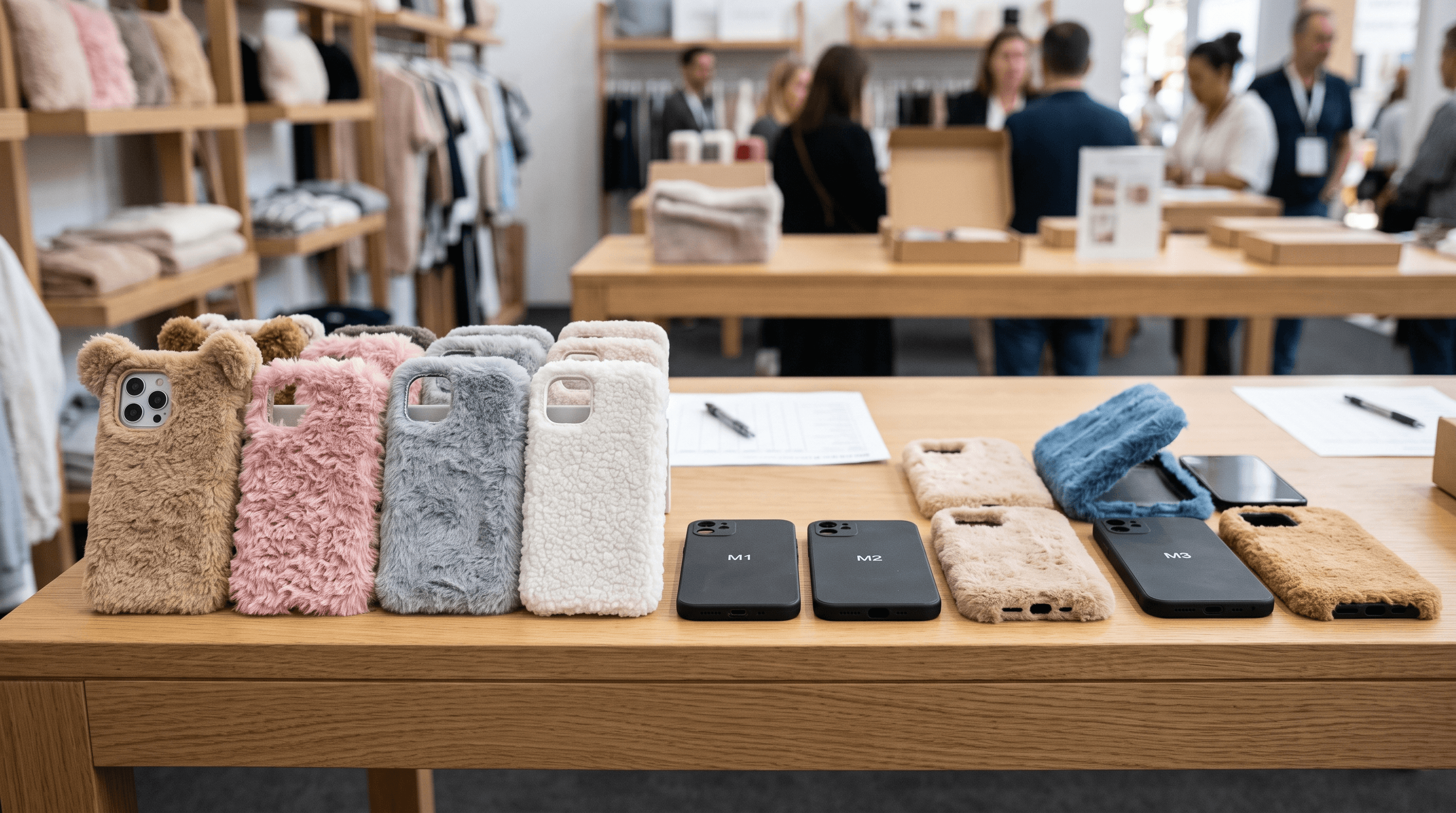
A case is not one product simply because the plush artwork is the same. Buyers should confirm the exact phone models, case construction, button coverage, camera opening, charging-port access, overall thickness, and whether decorative elements interfere with normal handling. Any compatibility statement should be verified against the intended device rather than inferred from a similar model name.
MOQ questions also need to be asked at SKU level. A supplier may describe an overall order requirement, but the buyer still needs to know whether the minimum applies per phone model, per character, per color, per carton, or across a mixed assortment. Case quantity and MOQ are not necessarily the same, so request both.
Planning example: A hypothetical 60-unit test divided among three phone models and two designs creates six SKUs before colors are added. The same 60 keychains divided among six designs also creates six SKUs, but every design remains available to every shopper. This illustrates why equal unit counts can carry very different demand risk.
Before committing to a broad case range, ask the supplier for a variant sheet and map every variant to expected customer demand. If that information is unavailable or inconsistent with the quote, reduce complexity rather than guessing.
Keychains Avoid Device Fit, but the Hardware Still Needs Testing
Keychains remove the phone-model problem, but they introduce attachment and durability questions. Confirm whether the product uses a split ring, lobster clasp, ball chain, fabric loop, or another fitting. Ask for the hardware material description, finish options, attachment method, and replacement policy for visibly defective units without assuming a particular performance level.
A sample review should examine:
- Whether the clasp opens and closes consistently.
- Whether the ring, chain, or loop is securely connected to the plush body.
- Whether seams separate when the accessory is handled normally.
- Whether facial details, embroidery, or applied decorations are aligned.
- Whether loose fibers, sharp edges, staining, or strong odors are present.
- Whether size and weight match the listing and intended use on a bag or key set.
Buyers should agree with the supplier on how inspection will be performed and what constitutes a major or minor defect. If the item contains small detachable components or is marketed toward children, verify testing, labeling, age-grading, and safety obligations for the destination market with qualified local resources.
If you are building accessories around a collectible range, compare the likely keychain audience with the shoppers described in the Руководство для покупателей «Cupa Blind Box». A related audience can improve merchandising logic, but it does not replace a controlled accessory test.
Measure the Winner by Sell-Through, Not Unit Price
The lower quoted unit price is not automatically the more profitable choice. Buyers should calculate landed cost per sellable unit and consider how much display space and working capital each SKU consumes.
Landed cost per sellable unit = product cost + retail packaging + export packing + freight + applicable duty and tax + brokerage or handling + inspection and expected defect allowance, divided by the number of sellable units.
Confirm which cost elements are included in each quote and which remain the buyer’s responsibility. Customs classification, duties, taxes, and import procedures vary by destination, so buyers should verify them rather than relying on a general estimate.
For sales analysis, compare these measures:
- Attachment rate: How often is the accessory purchased with a blind box, plush, bag, or phone product?
- Sell-through by SKU: Which phone models, designs, or characters move, and which remain?
- Gross profit contribution per display area: Does a dense keychain rack outperform a larger case presentation?
- Return and defect rate: Are compatibility mistakes or hardware problems reducing sellable revenue?
- Weeks of cover: How long will current stock last at the recent sales pace?
A soft launch can provide better evidence than a large speculative order. Ask for a quote that separates variants, packaging, and freight so the two formats can be compared on the same basis.
Packaging Must Explain Fit and Protect the Plush Surface
Packaging has two jobs: preserving the product and helping the shopper understand it. Phone-case packaging should make compatible models unmistakable. Keychain packaging should show dimensions and attachment style so customers do not infer scale from close-up photography.
Ask whether products are individually bagged, carded, boxed, or supplied loose inside an inner carton. Confirm retail-pack dimensions, units per inner pack, master-carton quantity, carton dimensions, gross weight, and whether mixed designs are allowed. These details affect freight, receiving labor, storage, and display planning.
Plush surfaces may be compressed, marked, or distorted if packaging is too tight. Hardware may also press against fabric or decorative components during transit. Buyers can request pre-shipment photos showing the retail pack, inner arrangement, closed carton, and carton markings, then compare them with the approved packing specification.
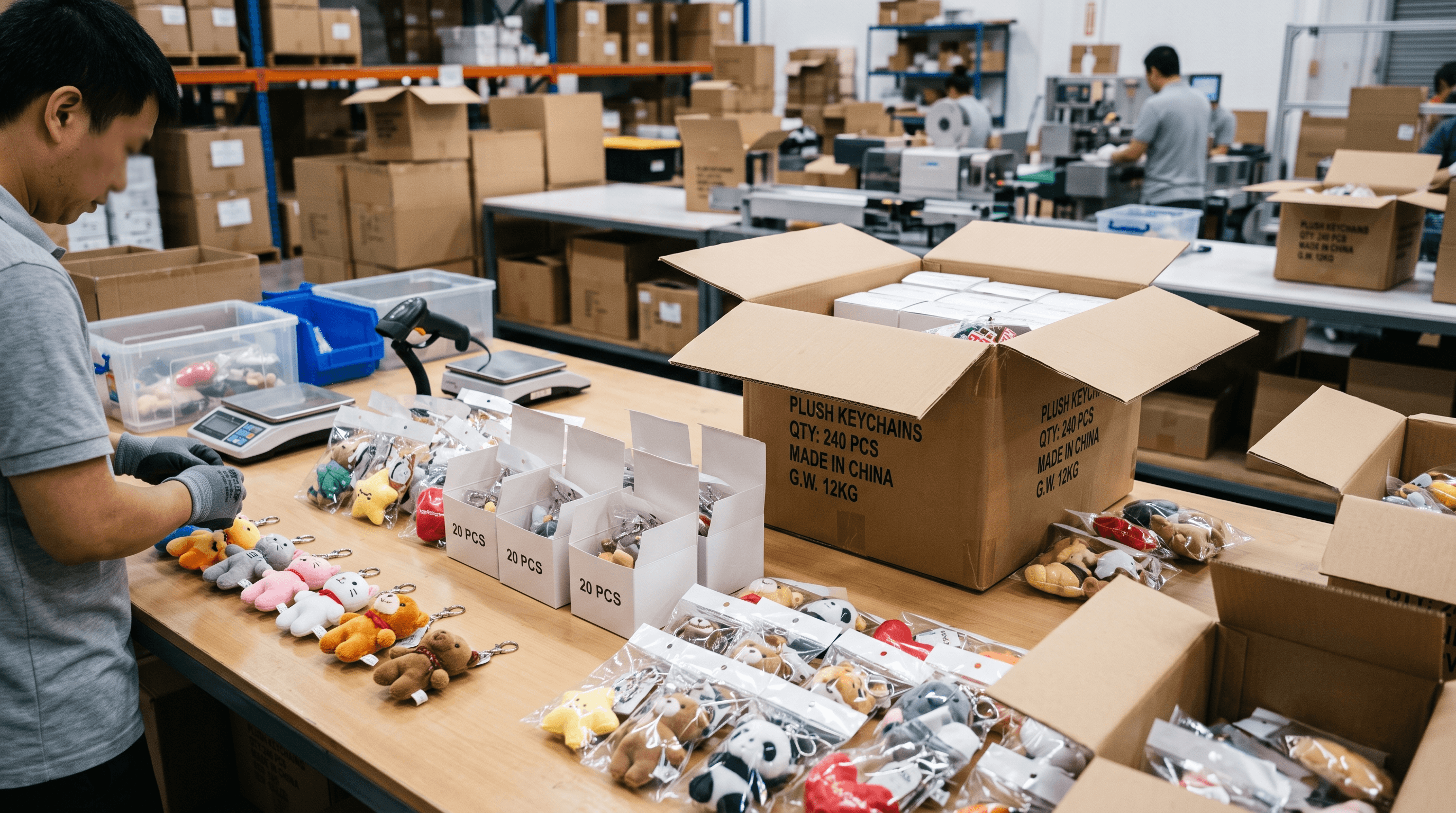
For incoming checks, select units across different cartons rather than inspecting only the top layer. Review model labels, colors, stitching, attachment points, case openings, odor, visible contamination, and packaging damage. Document findings with SKU references and photographs so any discrepancy can be discussed precisely.
Build a Test Order Around Reorder Risk
Lead time matters differently for the two products. Phone-case inventory can become harder to sell if device demand changes, while a keychain may remain relevant longer but still depend on character interest. Ask for the production lead-time basis, packaging completion point, dispatch terms, shipping method, and any factors that could change the schedule. Do not treat an estimate as a guaranteed arrival date.
Example reorder logic: A retailer might review a test assortment weekly and trigger a reorder when a proven SKU reaches several weeks of expected cover, while pausing variants that have sold little. The actual threshold should reflect freight mode, supplier lead-time confirmation, sales volatility, and the next promotional date.
Keep variant-level records. A strong total for cases can conceal that one phone model sold quickly while several others did not. Likewise, a keychain collection may depend heavily on one design. Series-level stocking methods, such as those discussed in this retail stocking comparison, can also help buyers separate overall demand from individual-variant performance.
Questions to Send Before Ordering Either Plush Add-On
Warning signs include quotes that omit variant-level quantities, compatibility claims without a model list, changing packaging specifications, unclear hardware descriptions, and refusal to provide carton information. Another common mistake is comparing one supplier’s product-only quote with another supplier’s packed or delivered quotation.
Use the following inquiry checklist to make responses easier to compare:
- Provide the complete SKU list, including phone model, design, color, and attachment type where applicable.
- State the MOQ basis and whether variants can be mixed.
- Confirm units per inner pack and master carton.
- Provide product dimensions, packaged dimensions, carton dimensions, and weights.
- Describe case materials, cutouts, button coverage, plush construction, hardware, stitching, and decoration methods.
- Explain sample availability and how a production sample can be approved.
- State what is included in the quote and identify the relevant trade terms.
- Provide an estimated production schedule and available dispatch methods without presenting estimates as guarantees.
- Explain the quality-check process and how shortages, incorrect variants, or visible defects are handled.
- Provide available product, labeling, or testing documentation for buyer review; buyers should verify destination-market requirements independently.
Inquiry template: “Please quote the attached plush case and/or plush keychain assortment by SKU. Show MOQ, mixed-variant rules, case quantity, packaging specifications, carton data, sample terms, production estimate, quote inclusions, and available compliance documentation. Please also identify any compatibility, material, or packaging details that require buyer approval.”
Before paying for a broad assortment, request comparable SKU-level information and review samples against a written specification. That step makes it easier to choose between plush phone cases and keychains based on commercial evidence rather than appearance alone.
ЧАСТО ЗАДАВАЕМЫЕ ВОПРОСЫ
Do plush phone cases usually sell better than plush keychains?
Neither format wins in every store. Cases can work where device compatibility is known and clearly merchandised, while keychains can reach a broader gift and collectible audience with fewer fit-related SKUs.
What is the main inventory risk with plush phone cases?
The main risk is SKU fragmentation by phone model, design, and color. Buyers should review sales by exact variant and avoid assuming that demand for one model applies to the full assortment.
What should buyers inspect on a plush keychain sample?
Check the clasp or ring, attachment loop, seams, decoration alignment, surface cleanliness, dimensions, weight, loose components, and retail packaging. Agree on defect criteria before production.
How should MOQ be compared for cases and keychains?
Ask whether MOQ applies per model, design, color, attachment type, carton, or total order. Compare the number of units required for each sellable SKU, not only the headline MOQ.
Can plush cases and keychains be tested in the same assortment?
Yes, a controlled test may compare attachment rate, sell-through, returns, defects, display productivity, and reorder demand. Keep the sales data separated by product type and SKU.
Final Decision: Utility or Broad Compatibility?
Choose plush phone cases when customers’ device models are predictable, compatibility can be communicated accurately, and the store can manage multiple variants. Choose plush keychains when broad usability, gifting, compact display, and simpler assortment planning are stronger priorities.
The most reliable answer comes from a documented test: standardize quote assumptions, approve samples, track each SKU, calculate landed cost per sellable unit, and reorder only the variants supported by actual demand.