


The physical cardboard packaging of a Blind Box has a fatal limitation: surface area. A 3×3 inch box can only display a few static images and a barcode. But the modern “Kidult” consumer demands a rich, media-heavy, interactive experience before they part with their money. In 2026, the solution is not printing larger boxes; it is building a digital bridge. Enter the “Phygital” (Physical + Digital) Retail Strategy powered by Interactive QR Codes.
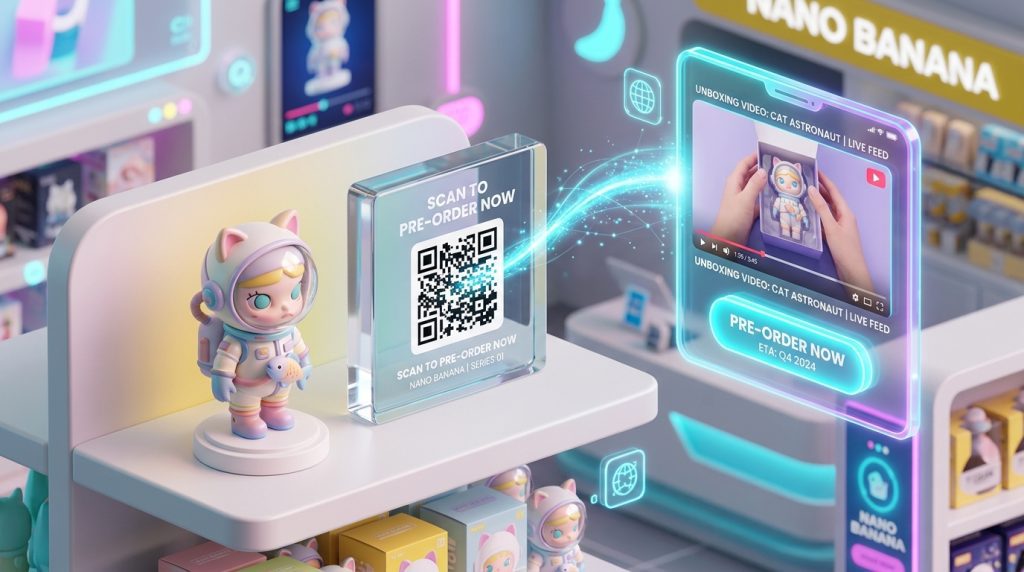
By placing strategically engineered QR codes on your shelf talkers, display cases, and storefront windows, you transform static inventory into an interactive O2O (Online-to-Offline) ecosystem. Customers scanning a code can instantly watch ASMR unboxing videos, reveal the probability rates of “Secret” figures, join your store’s VIP Discord, or pre-order out-of-stock items directly from their smartphone while standing in your physical aisle.
For independent boutiques sourcing high-margin wholesale inventory from KidultsBox, this comprehensive technological whitepaper will decode the exact software, UTM data-tracking analytics, and visual merchandising aesthetics required to implement a flawless, high-converting QR code strategy in your toy store.
1. The Foundation: Dynamic vs. Static QR Codes
If you use a free online generator to create a QR code, print it on sticker paper, and slap it on your shelf, you are making a critical logistical error. You must understand the difference between Static and Dynamic architecture.
Why Dynamic QR is Mandatory for Retail
Static QR Codes: The actual destination URL is hard-coded into the pixel pattern of the image. If you print a static QR code that links to the Pop Mart Skullpanda page on your Shopify store, and next month you delete that page because the series sold out, your physical QR code is permanently broken. It becomes a frustrating “404 Error” for your in-store customers.
Dynamic QR Codes: The code links to a short, intermediary URL hosted by a software provider (like Bitly, QR Code Generator Pro, or Beaconstac). This intermediary URL instantly redirects the user to your final destination.
The Magic: You can change the final destination URL at any time without ever changing the physical printed code on your shelf! If Skullpanda sells out, you log into your software and redirect that exact same physical shelf QR code to a “Pre-Order the Next Series” page. Zero reprint costs. Zero dead links.
2. Five Strategic QR Code Implementations for Toy Stores
Do not just link to your homepage. Every QR code must have a highly specific, conversion-driven purpose based on where it is placed in the store.
| QR Code Type & Location | The Customer’s “Scan Intent” | The Destination URL Strategy |
|---|---|---|
| The “Secret Revealer” (Placed next to the Open Sample figure on the shelf) | Curiosity. “What does the 1/144 hidden Chase figure actually look like?” | Link to a dedicated landing page showing high-res, glowing photos of the Secret figure, plus an embedded YouTube/TikTok video of someone pulling it. Builds massive FOMO. |
| The “Virtual Shelf” (Endless Aisle) (Placed on an empty shelf space or “Sold Out” sign) | Disappointment. “I drove all the way here and they are out of the Baby Three Macaron.” | Link directly to the specific product page on your Shopify store with a massive [PRE-ORDER FOR RESTOCK] button. Capture their money before they leave the store empty-handed. |
| The “Trading Board” Access (Placed near the cash register) | Community/Utility. “I got a duplicate, how do I swap it?” | Link directly to your store’s private Discord Server invite page (specifically the #buy-sell-trade channel). Converts offline traffic into captive digital community members. |
| The “AR Unboxing Filter” (Placed on the storefront window) | Entertainment. “What is this store?” | Link to a custom Instagram or Snapchat Augmented Reality (AR) filter. When they point their camera at your window, digital confetti and a 3D toy burst out. Generates instant UGC (User Generated Content). |
| The “Digital Spec Sheet” (Placed next to high-end BJD Dolls) | Information Gathering. “Why does this cost $25?” | Link to an infographic showing the 15 points of articulation, the real fabric clothing details, and a video showing how to pose the joints. Justifies the premium price tag. |
3. A/B Testing the Real World: Tracking “Shelf Heat” with UTMs
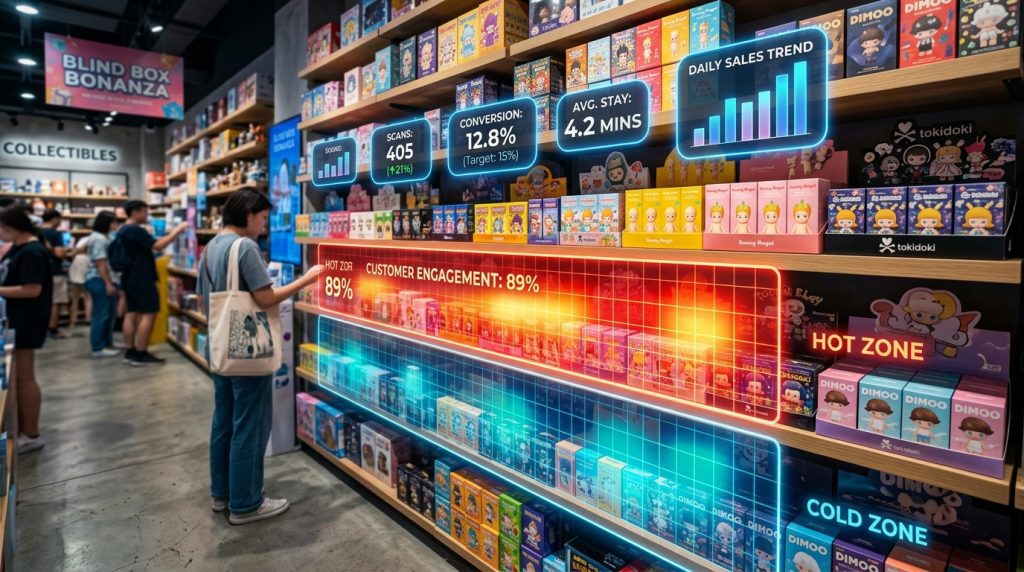
E-commerce managers know exactly how many people click a button on a website. Physical retail managers traditionally have to guess what displays are working. With Dynamic QR codes and UTM parameters, you can track physical interactions like website clicks.
What is a UTM Parameter? It is a tag added to the end of a URL that Google Analytics reads to track the source of the traffic.
Let’s say you have a massive display of Плюшевые игрушки Киммон. You place one QR code on the top shelf, and one on the bottom shelf. Both link to the same product page, but the URLs look like this:
Top Shelf URL: yourstore.com/kimmon?utm_source=instore&utm_medium=qrcode&utm_campaign=top_shelf
Bottom Shelf URL: yourstore.com/kimmon?utm_source=instore&utm_medium=qrcode&utm_campaign=bottom_shelf
At the end of the month, you open Google Analytics. You see the top_shelf code was scanned 400 times and generated $1,200 in online pre-orders. The bottom_shelf code was scanned 12 times. You now have hard, mathematical proof that your bottom shelf is a “Cold Zone.” You can now confidently move your highest-margin wholesale inventory from KidultsBox exclusively to your top shelves to maximize ROI.
4. Visual Merchandising (VMD): Designing Aesthetic QR Codes
If you print a black-and-white, jagged QR code on standard printer paper and tape it to your glass cabinets, it looks cheap. It destroys the “Designer Art” illusion of your boutique. Your physical implementation must be premium.
The “Call to Action” (CTA) Necessity:
A naked QR code without text is invisible to consumers. They will assume it is for internal inventory tracking and ignore it. You MUST frame the QR code with a clear, benefit-driven Call to Action.
Wrong: [QR Code]
Right: “SCAN TO SEE THE SECRET FIGURE!” [QR Code]
Aesthetic Integration Strategies
- Laser-Engraved Acrylic Blocks: Have your QR codes laser-etched or UV-printed onto 1-inch thick, clear acrylic blocks. Place these elegant blocks directly on the shelf next to the toys. They look like high-end museum plaques.
- E-Ink Digital Shelf Labels: For the ultimate 2026 tech integration, use E-Ink displays (like those found in modern grocery stores, but larger). The digital screen can display the price, the character’s name, and generate a dynamic QR code that changes automatically based on your POS inventory system.
- Color Integration: QR codes do not have to be black and white. They can be any dark color on a light background. If your display is pastel pink for Valentine’s Day, generate a deep burgundy QR code on a pale pink background. Maintain the store’s color palette!
5. The Lead Generation Hack (Building Your Email List)
Your physical foot traffic is anonymous until they buy something. A teenager might walk into your store, browse the Стена с «слепыми» коробками for 10 minutes, and leave. You just lost a potential customer forever.
You must use QR codes as Lead Magnets to capture their anonymity.
The Execution: Place a beautifully lit sign near the entrance or the checkout line: “Scan here to spin the Digital Gacha Wheel for a chance to win a free Pop Mart box!”
When they scan the code, they are taken to a landing page on your website featuring a spinning prize wheel. To spin it, they must enter their email address and phone number. Even if they only win a “10% Off Your Next Purchase” coupon, you have successfully captured their contact information. You can now retarget them with your weekly email newsletters every time a new KidultsBox wholesale pallet arrives, turning a “browser” into a lifetime customer.
Часто задаваемые вопросы (FAQ)
Q: What happens if the customer has bad cellular reception inside my store?
A: This is the Achilles heel of the strategy. If your store is deep inside a concrete mall, your QR codes will fail. You MUST provide a free, frictionless “Guest Wi-Fi” network. Use the Wi-Fi login splash page as another marketing touchpoint (e.g., “Welcome to Neon Toys! Click here to connect and browse our digital catalog.”).
Q: Can I put the QR code directly on the blind box packaging?
A: No. Never stick anything on the original cardboard blind boxes. Collectors are meticulous about the pristine condition of the packaging. Always place your retail QR codes on the shelf edge (shelf talkers) or on a standalone acrylic stand next to the product.
Q: How small can I print a QR code for a shelf?
A: For a customer to comfortably scan a code from a standing distance of 2 to 3 feet, the physical printed QR code should be no smaller than 1.5 inches by 1.5 inches (3.8 cm). Anything smaller will require them to lean in awkwardly, creating friction and reducing scan rates.
Q: Can KidultsBox provide the digital assets (videos/photos) for my landing pages?
A: Yes! As a verified B2B retail partner, you gain access to our extensive catalog of high-resolution product photography, unboxing clips, and promotional assets provided by the manufacturers. You can easily embed these into your Shopify landing pages to enrich the customer’s QR code scanning experience.