





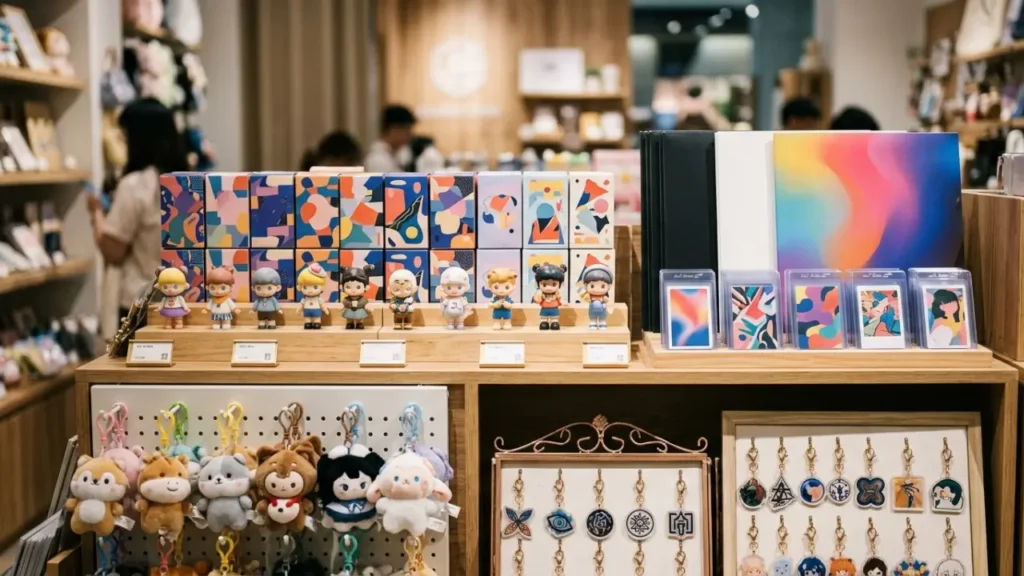
A popular character does not automatically make a good wholesale purchase. Merchandise buyers need blind box products that match their customers, fit available display space, and leave enough margin after freight and handling. For K-Pop and anime stores, another distinction matters: an appealing collectible is not necessarily official fandom merchandise.
The best choice depends on the job the product must do. A checkout add-on, a collector-focused release, and a giftable plush accessory need different buying criteria. Use the comparisons below to build a shortlist and request quotes that can actually be compared.
Match blind box products to the fandom purchase
Start with what customers already buy, rather than assuming all fandom audiences want the same collectibles.
- K-Pop album and photocard stores: Test bag accessories or desk companions as adjacent lifestyle purchases. Do not imply an artist connection unless the specific product’s authorization supports that claim.
- Anime specialty stores: Prioritize verifiable series identity and character relevance. Ask whether customers recognize the actual assortment, not simply the visual style.
- ผู้จัดงานและผู้ขายแบบชั่วคราว: Compare portability, package durability, and how clearly shoppers can understand the random assortment without staff explanation.
- Online gift retailers: Check whether photographs can communicate size, contents, and the possibility of duplicates accurately.
Separate official franchise merchandise from independent character designs in your assortment plan. Both may have a role, but they should not share misleading fandom claims. Review recent category sales and customer requests before allocating shelf space.
Which collectible format earns its shelf space?
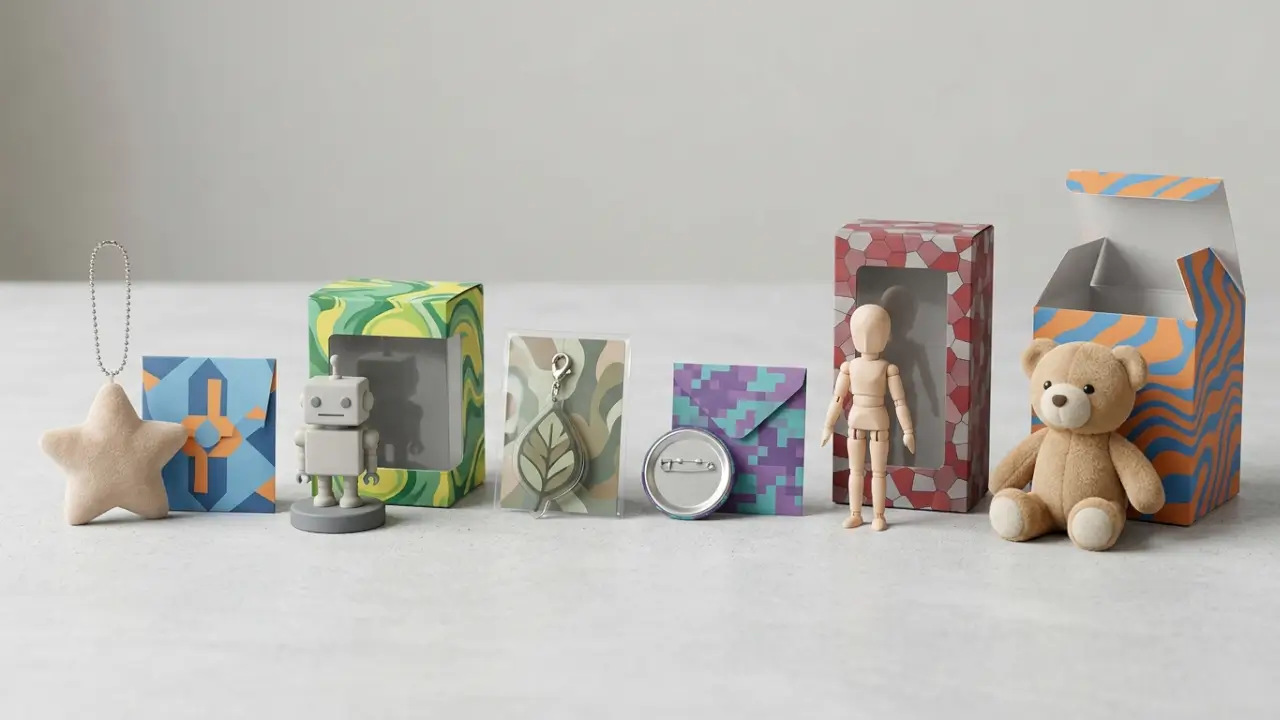
Compare formats before comparing individual series. The table describes buying scenarios, not verified specifications or availability for any supplier. Confirm that each shortlisted SKU actually uses sealed random packaging.
| Format | Potential retail role | Confirm before ordering | Main buying risk |
|---|---|---|---|
| Plush pendant blind boxes | Bag accessory add-ons in K-Pop or anime stores | Attachment type, dimensions, stitching, and boxed volume | Bulky freight or attachment failures |
| Mini figure blind boxes | Desk displays and character collecting | Character lineup, base inclusion, finish, and stability | Unclear assortment or fragile details |
| Acrylic charm blind packs | Compact checkout or convention stock | Protective film, edge finish, print alignment, and hardware | Scratches or weak attachments |
| Badge blind packs | Small-format fandom purchases | Diameter, backing type, artwork, and protective packaging | Bent pins or damaged printed surfaces |
| Articulated doll blind boxes | Specialist collectors and display-led retail | Scale, included accessories, joints, and handling instructions | Higher explanation and after-sales burden |
| Mini plush blind boxes | Gift-led displays and character collections | Whether freestanding or attachable, materials, and seams | Customers mistaking a plush toy for a pendant |
For bag-accessory decisions, compare plush pendants and acrylic keychains for gift appeal. Evaluate both the customer-facing value and the space each boxed unit occupies.
Measure the shelf using packaged dimensions, not the collectible’s height. A small figure in oversized packaging can require more space than its product photography suggests.
Build a shortlist without treating every series as fandom merchandise
Organize candidate products into three roles: recognizable fandom stock, adjacent gift purchases, and specialist collector items. This prevents a visually attractive but unfamiliar series from taking the entire test budget.
Anime retailers considering related product lines can use the Alien Stage AAHS versus Rabbit comparison to prepare questions about character appeal and format. Confirm the precise edition, packaging configuration, and sourcing documentation before treating either line as order-ready.
For a specialist doll section, the Luluya Cloud Feather Pavilion BJD buying guide provides another research starting point. Assess whether staff can explain included components and handling needs before introducing a more complex collectible format.
Shortlisting rule: Record the intended customer, display location, and evidence of demand beside every candidate. If those fields remain blank, request more information before asking for a larger quantity.
If your shortlist spans several formats, ask the supplier for specification sheets and case details first. A small information request can eliminate unsuitable options before a full quotation.
Let sealed case rules shape the first test order
Ask separately about the minimum order per SKU, minimum total order, display-box quantity, and master-carton quantity. These are different constraints. Also confirm whether mixing series is allowed and whether split cases change the unit price or assortment conditions.
Never assume a sealed display contains a complete non-duplicate set. Request written confirmation of regular designs, duplicate rules, and any special-figure substitution policy. Do not advertise rarity odds unless they are documented for the exact edition.
- Is the quote per individual blind box, sealed display, or shipping carton?
- Can different series share an order without changing their packaging?
- Does opening a display affect any stated assortment condition?
- Are samples representative of the edition intended for the bulk order?
As a hypothetical planning example, a retailer might compare 24 units spread across two formats against 24 units concentrated in one series, subject to actual case rules. The mixed test evaluates category appeal; the concentrated test better evaluates a single series’ depth. Neither is automatically safer.
For compact stores, review blind box options for limited shelf space alongside your shelf measurements. Leave room for assortment information and, where appropriate, an opened sample.
Why a cheaper blind box can cost more to sell
Compare quotations using the same quantities, packaging scope, currency, and delivery terms. A lower unit quote may exclude protective packing or involve a larger minimum purchase.
Planning calculation: Landed cost per sellable unit equals merchandise, freight, insurance where applicable, import charges, brokerage, and destination handling divided by expected sellable units. Verify applicable taxes and duties with a qualified adviser; recoverable taxes may need different accounting treatment.
Request gross carton weight and outer dimensions. Plush formats may consume freight volume, while figure packaging may need additional impact protection. Compare actual carton data rather than assuming one material always ships more cheaply.
For event-linked launches, work backward from the selling date. Separate supplier readiness, dispatch, transit, customs clearance, and receiving checks. Ask whether the quote covers available goods or a pre-order allocation; neither a listing nor a payment request proves readiness.
Use the anime blind box pre-order evaluation guide when release timing affects the purchase. Reorder using observed sales and a confirmed replenishment window, not launch-week excitement alone.
Protect the seal, the finish, and the merchandise claim
Retail packaging is part of the collectible experience. Ask for photographs of the exact edition’s retail box, barcode, seals, assortment panel, and shipping carton. Check that protective packing preserves corners without obscuring required labels.
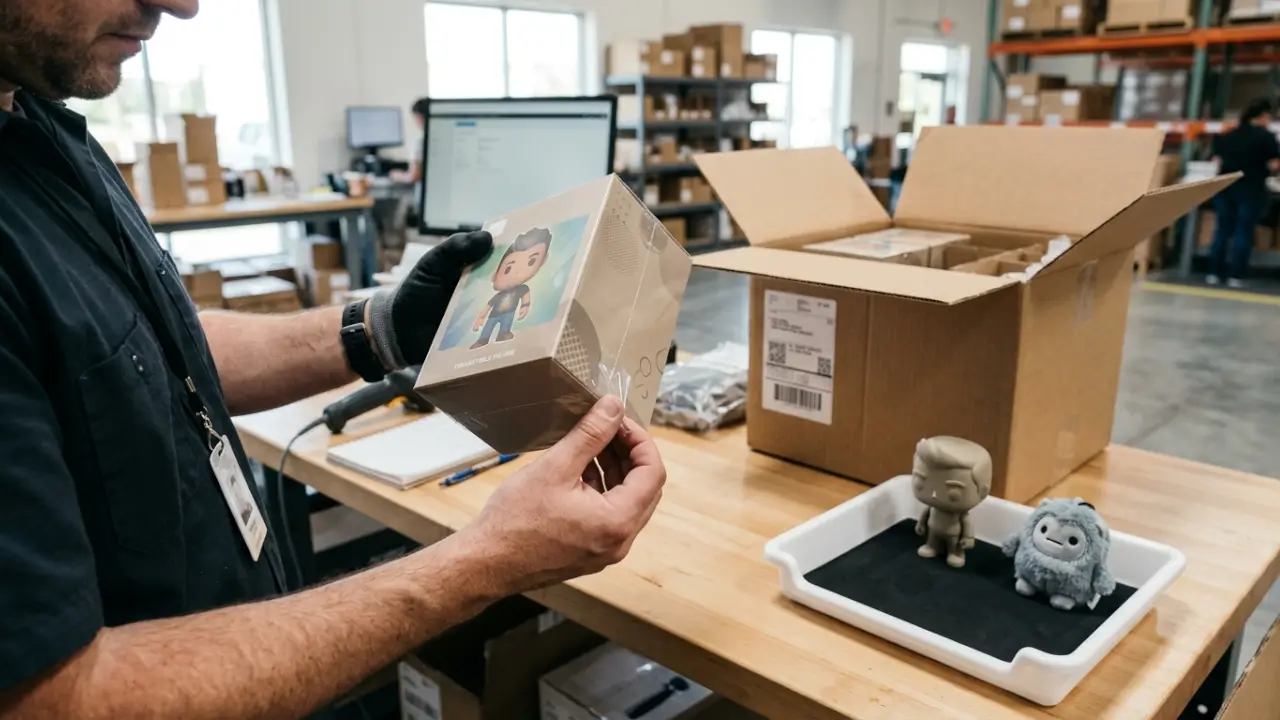
Agree on sample and receiving checks appropriate to the format. Keep opened inspection units separate from inventory advertised as sealed.
- Plush: Check seams, loose fibers, visible staining, shape, and attachment security.
- Figures and dolls: Check paint transfer, broken details, accessory completeness, stability, and joints where present.
- Acrylic and badges: Check surface protection, edges, print alignment, and attachment function.
- All formats: Match the received edition and packaging to the approved order record.
Request documentation supporting authenticity and any official licensing claim. Character artwork or a collaboration name alone does not establish authorization. Buyers should verify destination-market requirements for product classification, age grading, warnings, traceability, and importer labeling. Describing an item as a collectible does not automatically remove safety obligations.
Pause the order if a supplier will not identify the edition, gives conflicting case quantities, cannot support official-merchandise claims, or promises guaranteed rare figures without documented assortment terms. Agree on evidence deadlines and a written shortage or damage process before payment.
Send a quote request that identifies the exact assortment
A useful inquiry lets the supplier answer against a defined product and delivery requirement. Include the following information, then require each quotation to keep the same scope:
- Store type, customer profile, and intended sales market.
- Exact series, edition, format, and reference photographs.
- Proposed test quantity and whether mixed series are acceptable.
- Required case configuration and questions about duplicates.
- Packaging, dimensions, sample, and documentation requests.
- Destination, preferred delivery terms, and target receiving date.
- Requested readiness estimate, payment terms, and defect procedure.
Please quote the listed blind box series by individual unit and sealed display. Confirm MOQ, master-carton quantity, assortment conditions, carton dimensions and weight, and whether the goods are available or pre-order. Please also provide edition photographs, relevant sourcing documentation, delivery terms to our destination, and the process for reporting shortages or damage.
Ready to choose your opening assortment? Send your shortlisted SKUs, test quantities, destination, and receiving deadline to the supplier. Request an itemized written quote and sample options before committing to bulk stock.
คำถามที่พบบ่อย
Which blind box format should a K-Pop store test first?
Consider plush pendants or compact accessories if customers already buy bag decorations and lifestyle gifts. Test demand first, and do not imply an artist affiliation without documentation for the exact product.
Does a sealed case guarantee a complete set?
No. Case contents vary by series and edition. Ask for written confirmation of duplicate rules, regular assortment coverage, and whether a special figure replaces another design.
How should an anime store check official merchandise claims?
Request exact-edition photographs and documentation supporting authenticity and licensing claims. Check that the documents apply to the product and intended market rather than relying on character artwork alone.
What should buyers compare besides the unit price?
Compare order minimums, case quantities, packaging, carton dimensions, freight, import charges, readiness, and defect terms. Use consistent delivery terms to estimate landed cost per sellable unit.
When should a retailer reorder a successful series?
Reorder when observed sales and remaining stock justify replenishment within the confirmed supply window. Check edition continuity and current demand before assuming launch-period sales will continue.
Choose a testable assortment, not just attractive boxes
Start with customer fit, verify the exact SKU, and calculate the cost of receiving sellable stock. Expand only after the first order demonstrates acceptable demand, packaging condition, and supplier follow-through.

