





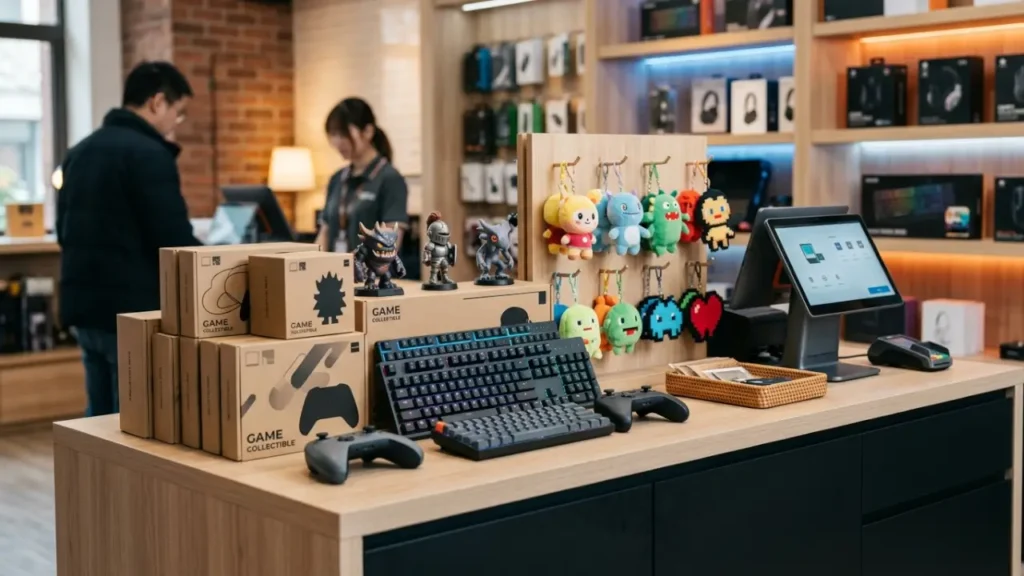
Adding collectibles beside keyboards, controllers, and headsets can broaden a store’s offer, but the wrong assortment eats shelf space without lifting accessory sales. The decision starts with one practical question: will shoppers use the item on their setup, carry it with their gear, or recognize it as a collectible worth buying? Answer that first, and blind box products become an add-on category instead of dead stock.
There is no universal best series for every gaming retailer. A keyboard specialist needs a different selection from an anime-focused accessory shop or a gaming café. Use the comparisons below to shortlist formats, confirm specifications, and request quotes without assuming that a gaming aesthetic means hardware compatibility or licensed game merchandise.
Which Blind Box Products Fit Your Gaming Shoppers?
Start with what customers already buy. Desk figures are a logical format to test where shoppers browse setup decorations. Carry accessories may suit stores selling bags and portable gaming gear. Randomized functional accessories need more scrutiny because an incompatible item can become a return rather than a collectible.
The table compares potential sourcing formats, not confirmed supplier availability. Ask whether each proposed SKU is actually supplied in a blind-box format before adding it to your purchasing plan.
| Format to evaluate | Best-fit retail situation | Check before ordering | Main buying risk |
|---|---|---|---|
| Small collectible figures | PC setup and desk-display shoppers | Figure dimensions, base stability, boxed footprint | Attractive photography hides an oversized or unstable figure |
| Plush pendants | Portable gaming and gift-oriented customers | Attachment construction, weight, packed volume | Bulky cartons or weak attachment points |
| Acrylic keychains or charms | Compact checkout displays and bag-accessory sales | Print finish, edge quality, hardware, protective packaging | Scratches or low perceived value after unboxing |
| Decorative artisan keycaps | Mechanical-keyboard specialists | Stem fit, profile, key position, clearance, supported layouts | Random selection delivers an unsuitable keycap |
| Controller thumb-grip collectibles | Controller-focused shops, if a suitable series exists | Exact controller compatibility, fit, material, grip performance | A decorative shape interferes with normal play |
| Miniature scene collectibles | Stores with room for a setup-display area | Assembly, loose parts, completed footprint, breakage protection | Assembly difficulty or fragile components |
Decision rule: if the store cannot clearly explain compatibility before purchase, prioritize non-functional collectibles for the first trial. For constrained checkout areas, review these blind-box options for limited shelf space before committing to a display.
Separate Desk Decoration from Hardware Compatibility
A collectible beside a keyboard does not need to fit the keyboard. A replacement keycap does. Keep those categories separate in purchasing sheets, shelf descriptions, and staff explanations so a decorative item is never sold as a functional part.
For desk figures, request dimensions that include protruding ears, accessories, and the base. Check whether the figure stands securely and fits your proposed shelf. For pendants, ask whether the fastening is a ring, clasp, cord, or another attachment; do not imply that it safely attaches to a console unless that use is supported.
For any functional accessory, request an explicit compatibility list and a sample for assessment. “Universal” without model details is a warning sign. Random color or character selection should not also mean random fit.
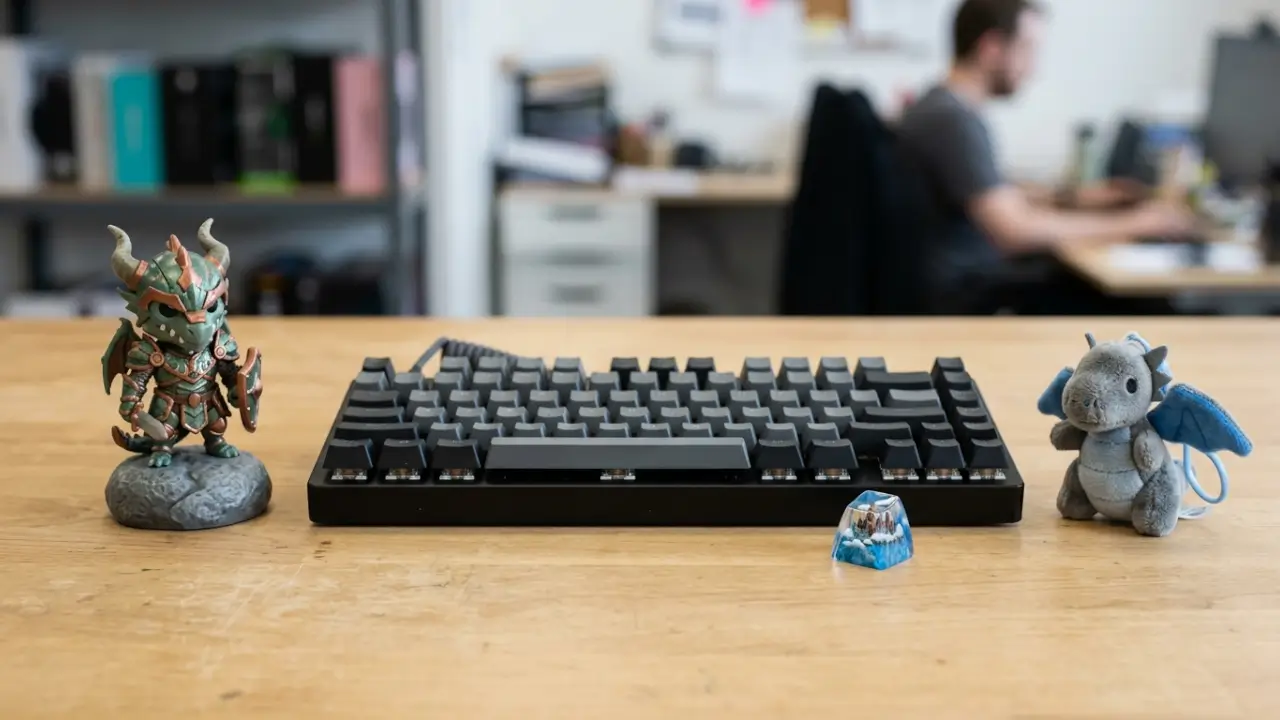
Build a shortlist around shopper preferences rather than assuming every gaming customer follows the same characters. The Little Monster CUPA—I Am Undefined series is one named product page to review for visual fit; confirm its specifications and sourcing terms rather than treating it as a game tie-in.
If your customers mainly buy gifts or carry accessories, use the plush pendant versus acrylic keychain comparison to narrow the format before comparing individual series.
Build a Trial Around Sealed Cases, Not Favorite Characters
Blind-box purchasing has two separate quantity questions: how much the supplier requires you to buy, and how the assortment is packed. Ask for MOQ per SKU, boxes per display case, display cases per shipping carton, and any minimum total order requirement.
Do not assume a sealed case contains every regular design or prevents duplicates. Request the supplier’s written explanation of case composition, secret-variant handling, and whether mixed-series orders are permitted. Avoid advertising a complete set unless the supplied configuration supports that claim.
As a planning example, a first trial might compare one sealed case of desk figures with one sealed case of carry accessories, if the supplier permits that order. Compare performance per saleable unit and per shelf footprint, since the cases may contain different quantities.
- Reserve a display sample only if its cost and loss of sealed inventory are acceptable.
- Keep each series identifiable in the stock system rather than combining all collectibles under one SKU.
- Record units sold, damaged boxes, returns, and attachment to accessory purchases.
- Set the review date around actual trading patterns, not unboxing activity alone.
Before expanding the shortlist, ask a supplier to confirm case structure and sample options for your two strongest formats. That small information request can eliminate unsuitable lines before a full quote comparison.
Calculate What Each Saleable Box Costs on Your Shelf
A lower unit quote can be less attractive once freight, damaged packaging, and display stock are included. Plush and miniature scenes may use more carton space than compact charms; ask for packed measurements rather than estimating freight from product photos.
Use this planning calculation: total acquisition cost divided by expected saleable units. Acquisition cost should include merchandise, freight, insurance where applicable, duties, non-recoverable taxes, brokerage or clearance charges, and required inbound preparation. Verify destination-specific treatment with your broker or adviser.
Keep quotes comparable by recording currency, freight terms, delivery point, case quantity, and packaging configuration. Allow separately for payment fees, selling-channel costs, returns, and markdowns when assessing commercial viability.
Ask suppliers to separate order preparation time from transit estimates and identify what could delay release. For launches, do not promise a customer collection date based only on an estimated dispatch date. These retailer checks for blind-box pre-orders can help distinguish release uncertainty from routine replenishment.
Reorder against sales observed during the trial. A useful planning trigger is expected unit sales during replenishment time plus a chosen buffer, adjusted for remaining stock and confirmed incoming orders. Reconfirm availability and case terms before assuming the same series can be replenished.
Protect the Sealed-Box Experience Before Stock Reaches Checkout
The outer box is part of the collectible purchase. Crushed corners, broken seals, and unclear labels can undermine buyer confidence even when the item inside is intact. Specify whether retail display cases must arrive intact and how those displays will be protected inside the shipping carton.
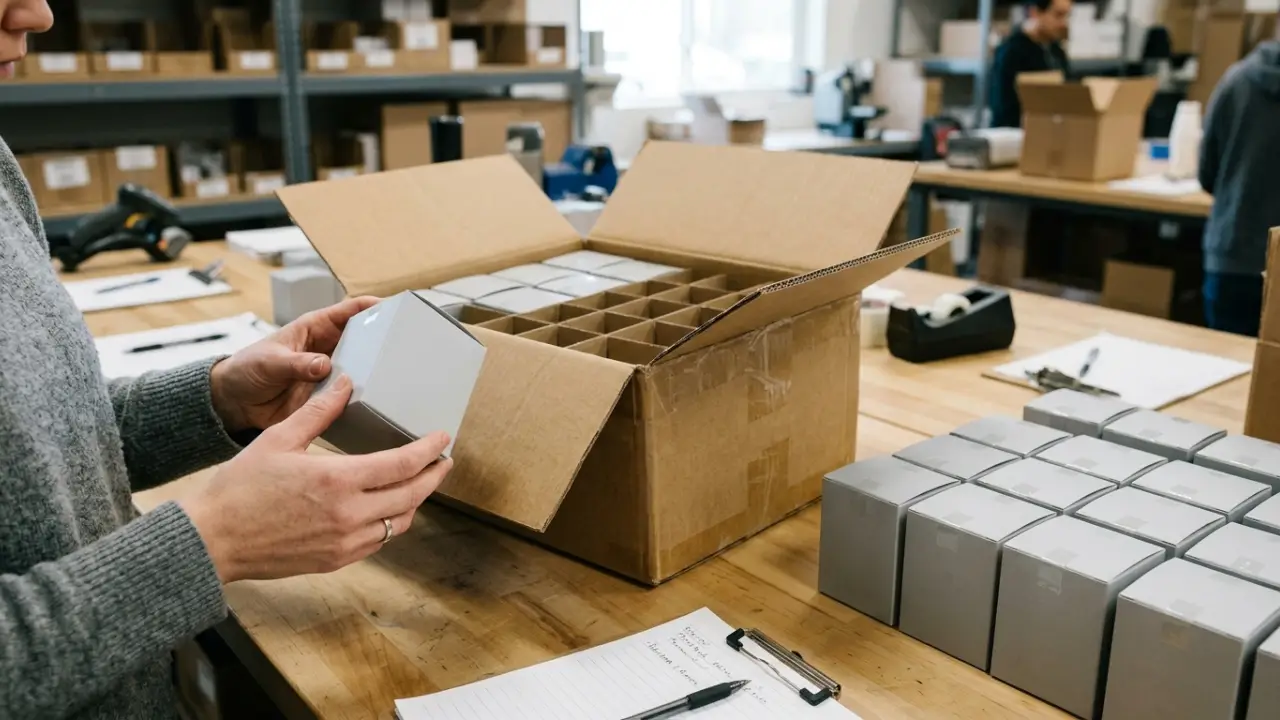
Agree on an inspection and claims process before payment. Ask what evidence is required, how quickly issues must be reported, and whether the process distinguishes transit damage, missing units, manufacturing defects, and opened merchandise.
- Figures: assess visible finish, part fit, sharp edges, and stability on agreed samples.
- Plush pendants: check stitching, loose components, attachment security, and cleanliness.
- Acrylic accessories: check scratches, chips, print alignment, and metal fittings.
- Retail packaging: compare seals, SKU details, warnings, and condition against the agreed specification.
Clarify how destructive sample checks affect saleable inventory. Never reseal an inspected box and present it as untouched stock.
Buyers should verify product classification, age grading, small-parts warnings, materials documentation, and destination-market labeling requirements. A “collectible” description does not automatically remove safety obligations. For branded characters, also check authenticity, sourcing documentation, and any territory or sales-channel restrictions that may apply.
Request a Gaming-Store Quote That Exposes Missing Details
Send the same brief to each shortlisted supplier. Comparing different series, carton quantities, or delivery terms under a single “price per box” column hides the differences that matter.
Use this inquiry template and replace the bracketed details:
We operate a [gaming accessory store type] serving [customer profile] in [destination market]. We are evaluating [series or formats] for a trial order. Please quote the exact SKU and confirm MOQ, sealed-case quantity, master-carton quantity, assortment rules, and mixed-order options.
Please include product and retail-box dimensions, carton measurements and weight, sample terms, available packaging photos, compatibility details where relevant, and applicable product documentation. Confirm order preparation estimates, freight terms, quote validity, payment terms, and the process for shortages, defects, or damaged packaging. Please distinguish confirmed details from estimates.
Pause the purchase if the supplier substitutes vague answers for SKU-level information. Particular warning signs include unsupported licensing claims, unexplained “complete set” promises, missing carton details, and compatibility descriptions that change between messages.
Another common mistake is choosing too many themes before proving demand. An appealing assortment can still leave the store with several partial cases and no clear reorder winner.
Request a written quote for your shortlisted series using this brief, and ask for missing case, packaging, or compatibility details before authorizing the trial order.
คำถามที่พบบ่อย
Which blind-box format should a gaming accessory store test first?
Start with the format closest to existing customer behavior. Small figures suit desk-display shoppers, while pendants or charms suit carry-accessory buyers. Test functional accessories only when compatibility is documented.
Does a sealed blind-box case guarantee a complete set?
Do not assume it does. Ask for written case-composition details, including duplicate possibilities and whether a secret variant replaces a regular design.
How should a store choose its first order quantity?
Confirm MOQ and case packs, then choose the smallest permitted trial that fits the display and inventory budget. Compare formats using saleable units and shelf space, not case count alone.
Can decorative keycaps be sold as universally compatible?
A decorative keycap should not be described as universally compatible without supporting specifications. Confirm stem fit, profile, key position, clearance, and supported layouts before listing it.
What should buyers confirm before importing branded blind boxes?
Verify authenticity and sourcing documentation, applicable sales restrictions, product classification, labeling, and safety requirements for the destination market. Ask a qualified adviser or customs broker where requirements are unclear.
Before You Give Collectibles More Shelf Space
Choose a narrow assortment with a clear role: desk decoration, carry accessory, or verified functional add-on. Confirm case structure, calculate saleable-unit cost, and document packaging expectations. Expand only when the trial shows which products earn their space and can be reordered on acceptable terms.

