


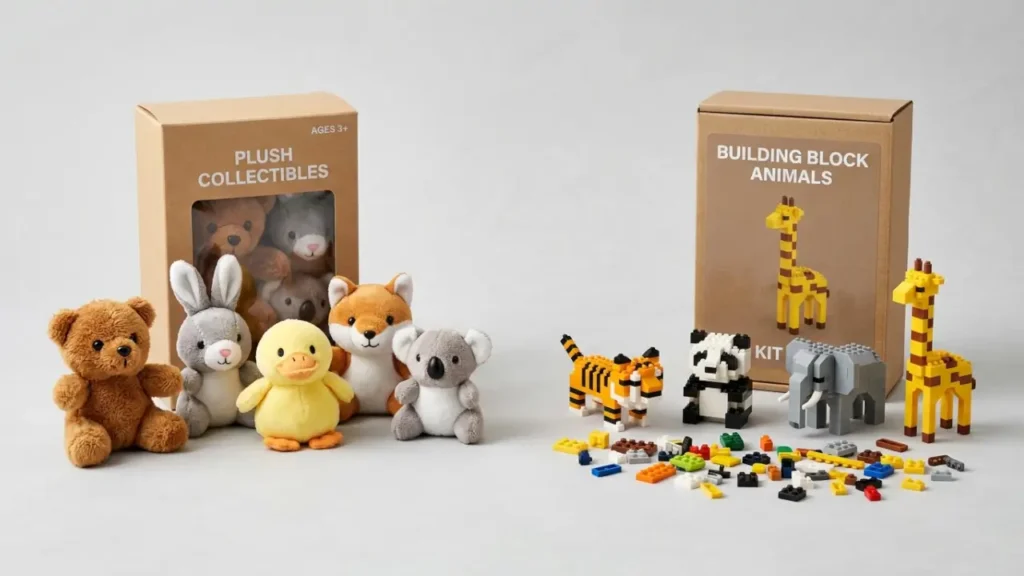
Picking a blind box format decides more than shelf appeal: it changes freight exposure, display needs, and the complaints staff may need to resolve. Before committing counter space to soft toys or construction kits, retailers should evaluate the exact sellable packs rather than assuming plush is easier to sell or that building blocks offer better value per box.
This guide helps gift stores, hobby retailers, online sellers, and mixed-assortment shops decide which format deserves a test order. The useful comparison is customer fit plus operating cost, supported by samples and written supplier terms.
When Plush Blind Boxes Fit Better Than Build-at-Home Collectibles
Start with the shopping occasion. Plush can suit customers seeking a ready-to-display character or tactile gift. Building block blind boxes can suit customers who enjoy assembly and displaying something they have constructed. Neither format automatically fits young children; check each SKU’s intended age group and applicable requirements.
- ร้านขายของที่ระลึก: Compare gift-ready presentation and whether the recipient needs tools, instructions, or assembly help.
- Hobby shops: Review build complexity, model stability, and whether the finished piece fits customers’ display habits.
- ผู้ค้าปลีกออนไลน์: Check whether photos clearly communicate plush dimensions or the difference between a block kit and an assembled model.
- Small shops: Measure the boxed product and demonstration footprint before allocating counter space.
Use recent sales of comparable gifts or construction sets as a starting signal, not proof of demand. For plush assortment planning, the Nommi Baby versus Sitting Zoo gift-store comparison provides a related series-selection perspective.
Compare the Sellable Box, Not Just the Character Photo
Request a specification sheet for each shortlisted SKU. Building block blind boxes may differ in brick size, assembly format, and whether one box completes a model. Plush versions may differ in dimensions, filling, accessories, and attachment hardware. Confirm these details before comparing unit quotations.
| Buying criterion | Plush format: check | Building block format: check | การตัดสินใจด้านค้าปลีก |
|---|---|---|---|
| Customer experience | Ready-to-display format; any accessories to attach | Assembly required; instructions included | Match the product to gifting or activity-led purchases. |
| Sellable unit | One complete plush and listed accessories | Complete model or part of a combined build | Avoid an unclear purchase requirement. |
| Shelf footprint | Box dimensions and unpacked plush size | Box dimensions and finished model size | Calculate facings and sample-display space. |
| Sample checks | Seams, filling distribution, embroidery, attachments | Piece completeness, fit, instructions, stability | Budget the appropriate inspection effort. |
| After-sales needs | Loose stitching, detached trim, misshapen items | Missing pieces, incorrect parts, unclear build steps | Confirm the remedy for each defect type. |
| Freight inputs | Packed carton volume and gross weight | Packed carton volume and gross weight | Use actual packing data, not material assumptions. |
| โครงสร้างการจัดกลุ่มสินค้า | Design pool and any stated case distribution | Model pool and any stated case distribution | Document duplicate risk before ordering. |
| Market suitability | Relevant age, material, and labeling information | Relevant age, small-part, and labeling information | Verify destination-market requirements. |
Keep outer-box size separate from product size in your worksheet. A compact finished model does not necessarily arrive in a compact retail pack. The guide to blind box products for limited shelf space is useful when comparing display constraints.
Set a Test Order Around Sealed Cases and Duplicate Risk
Ask suppliers to distinguish minimum order quantity, sealed display quantity, and master-carton quantity. Confirm whether mixed-series orders are permitted and whether opening a case changes the price or assortment terms. A low advertised unit price is not meaningful if the required purchase exceeds your test budget.
Do not assume a sealed case contains every regular design without repeats. Ask what distribution, if any, is confirmed for the exact SKU and how special variants affect it. Record unconfirmed assortment claims as uncertainty, not purchasing facts.
For example, a planning comparison might allocate 24 sellable units to each format, but only if actual case packs permit it. If the packs differ, compare equal purchasing budgets or equal shelf allocations instead. Reserve sample units separately from saleable inventory.
Measure units sold per week, contribution after variable costs, and customer-service incidents. Review the results before expanding either format. Equal starting quantities alone do not create a fair test if one product receives a prominent demonstration display and the other does not.
Why Freight Can Reverse the Plush-versus-Block Price Comparison
Plush can require substantial carton space relative to weight, while block kits may concentrate more weight into smaller packs. These are possibilities, not quote assumptions. Obtain packed dimensions, gross weights, carton counts, and the delivery term for both options.
Estimate landed cost per sellable unit by combining merchandise, freight, insurance where applicable, destination charges, duties or taxes where applicable, and necessary preparation costs, then dividing by expected sellable units. Confirm tax treatment and import charges with an appropriate adviser or broker.
Compare quotes on the same destination and cost basis. Then estimate contribution after channel fees, outbound fulfillment, and a documented allowance for defects or returns. Also account for the cost of opening stock for demonstrations and testing.
Ask separately about order preparation, dispatch readiness, transit, and potential destination processing. For new releases, use the blind box pre-order evaluation guide to structure availability questions rather than treating a launch date as a delivery commitment.
Before choosing a format, send suppliers the same comparison worksheet. Ask them to fill gaps in carton data, case structure, and defect handling so you can assess equivalent offers.
Inspect Plush Seams and Complete a Block Build Before Launch
Review both the unopened retail packaging and a sample product. Crushed corners, damaged seals, or inconsistent labels can undermine gift presentation even when the contents remain usable. Ask how retail boxes are protected inside master cartons and whether the shipment can combine formats without compression damage.
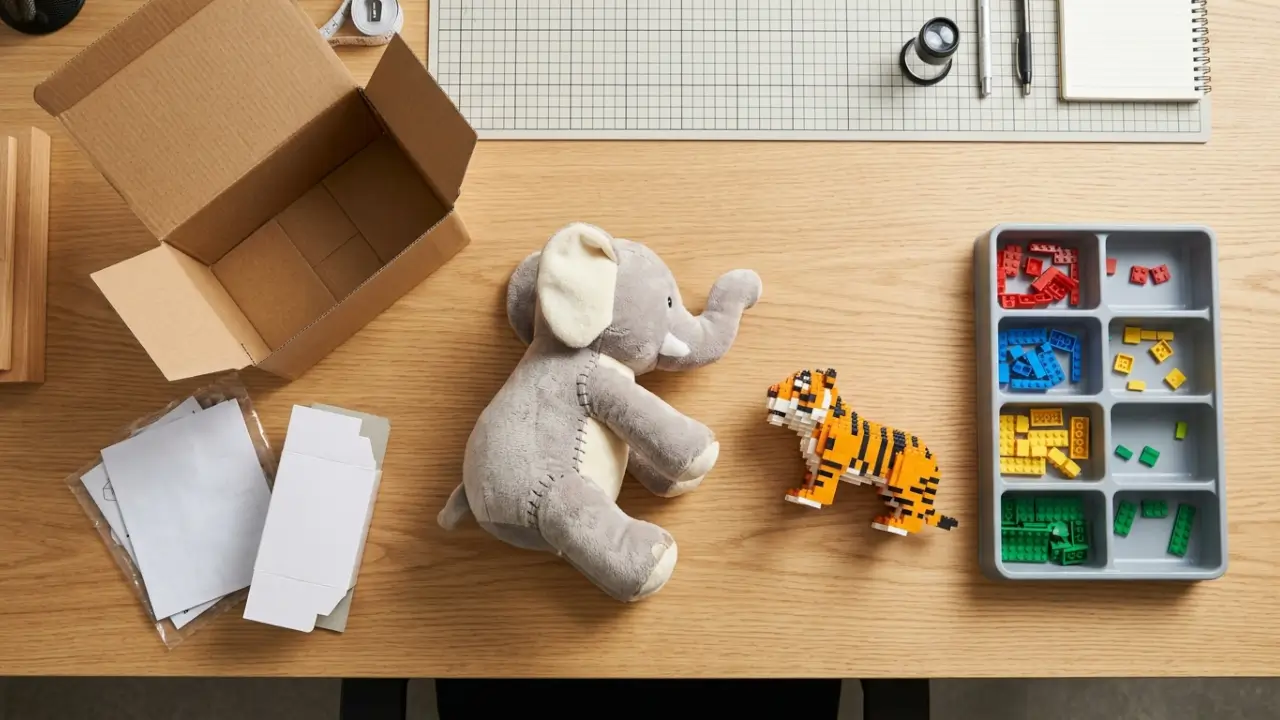
For plush, check seam consistency, embroidery placement, visible contamination, filling distribution, and attached trim or hardware. Compare the sample with the stated dimensions and materials. Agree how compressed or misshapen items should be assessed rather than assuming they will recover acceptably.
For blocks, complete a sample build using only the supplied parts and instructions. Record missing or incorrect pieces, unclear steps, connection problems, and instability during normal display handling. A finished promotional model cannot reveal whether the packed kit is complete.
Opening samples does not verify every sealed unit or replace any required safety assessment. Agree an inspection approach that balances checking contents with preserving blind-box seals.
Buyers should verify product classification, age grading, warnings, traceability, and applicable documentation for their destination market. Small parts may occur in both formats. Request documents linked to the exact product where required; do not assume a collectible label or generic supplier certificate settles compliance.
Promises That Leave Blind Box Retailers Carrying the Risk
Treat the following as reasons to pause and request clarification, rather than automatic proof of misconduct:
- “Complete set” without a distribution statement: Ask whether this refers to a sealed case, an opened selection, or merely the series design list.
- A plush quote with no packed dimensions: Freight and shelf planning remain provisional.
- A block quote with no completeness information: Confirm whether each box builds independently and what happens if parts are missing.
- Sample approval with no SKU or version reference: Document which production version and packaging the sample represents.
- Replacement assurances without a process: Request evidence requirements, claim deadlines, available remedies, and who pays related freight.
- Branded artwork with unclear sourcing: Ask for appropriate authenticity and distribution information before committing.
Another mistake is ranking the formats solely by initial sell-through. Track staff time, complaints, and contribution alongside sales. Set a reorder trigger using observed demand over the confirmed replenishment period, plus a buffer appropriate to demand uncertainty. Recheck availability and pack terms before each reorder.
Send One Brief for Two Comparable Blind Box Quotes
Prepare a side-by-side purchasing brief with product references and your intended sales market. Include the following information and questions so suppliers do not quote different assumptions.
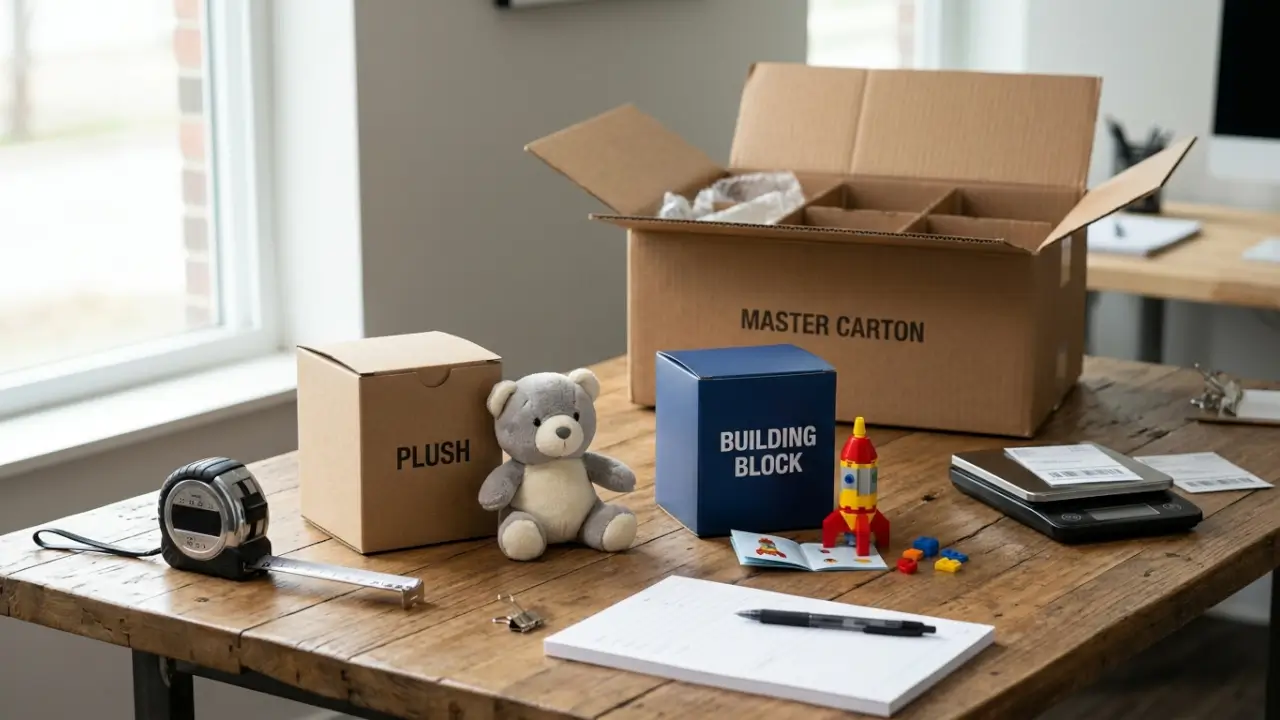
The same brief can support a plush-only, block-only, or mixed-format trial:
- Retail context: Destination country, sales channel, customer profile, and planned launch window.
- Exact products: Series, version, SKU references, and requested sample arrangements.
- Order structure: Trial quantity, MOQ, sealed case quantity, master-carton quantity, and mixed-order options.
- Contents: Plush dimensions and accessories, or block model dimensions, included parts information, and instructions.
- Assortment: Confirmed distribution terms, duplicate possibilities, and treatment of special variants.
- Delivery basis: Currency, quotation validity, delivery term, carton measurements, weights, and readiness estimates.
- Risk controls: Packaging protection, relevant product documentation, inspection arrangements, and defect remedies.
Request written quotes for your shortlisted plush and building block SKUs before placing the trial order. Ask suppliers to identify every unconfirmed detail explicitly. Approve samples and resolve material gaps before comparing the final purchasing totals.
คำถามที่พบบ่อย
Are plush blind boxes better for gift stores?
They may suit ready-to-display gifting, but the choice depends on customer preferences, packaging, price positioning, and intended age group. Test a focused assortment rather than assuming the format will sell.
Are building block blind boxes cheaper to ship?
Not necessarily. Compare packed carton dimensions, gross weight, shipment size, and the freight charging method. Smaller boxes can still be heavier, so use actual packing data.
Does a sealed blind box case guarantee no duplicates?
Do not assume it does. Request the assortment terms for the exact SKU, including any confirmed distribution and the effect of special variants.
What should retailers test in a building block sample?
Complete the build using the supplied parts and instructions. Check completeness, part fit, instruction clarity, and finished-model stability, then confirm the supplier’s missing-part remedy.
Should a first order include both formats?
A mixed trial can be useful if case packs, budget, and display space permit. Track each format separately and compare sales, contribution, and service workload before reordering.
Choose the Format You Can Sell and Support
Shortlist by customer occasion, then decide using confirmed specifications, case terms, landed cost, and sample results. If both formats fit, run a controlled trial. Give the next order to the assortment that earns its space without creating disproportionate inventory or service risk.