



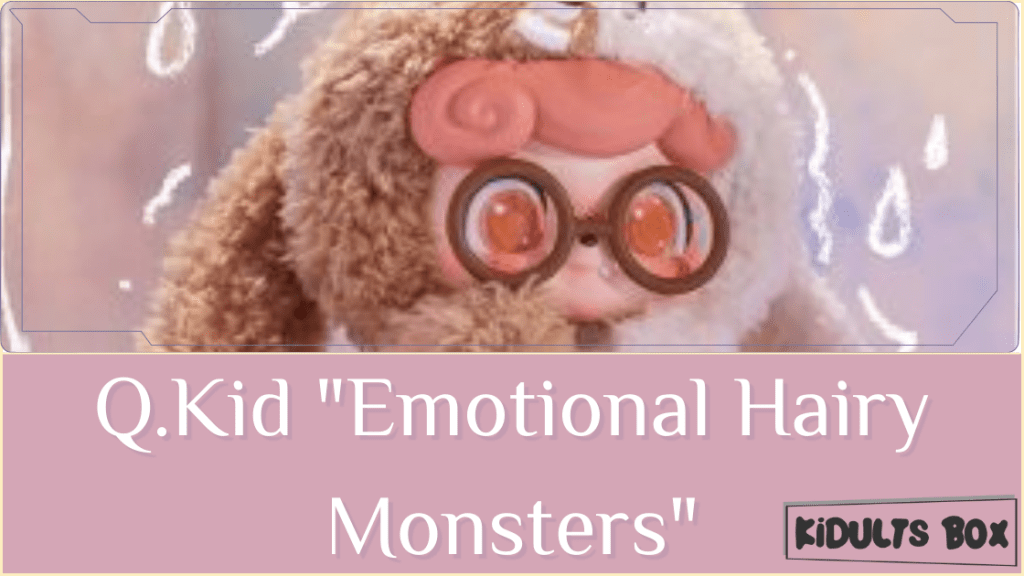
They have wild fur, oversized eyes, and expressions that range from chaotic to confused. They are not “cute” in the traditional sense, yet they are flying off the shelves. Welcome to the world of Q.Kid’s “Emotional Hairy Monsters” (情绪毛绒怪).
1. The “Ugly Cute” Revolution
For decades, the toy industry was dominated by symmetry and perfection. Dolls had perfect hair, perfect smiles, and perfect proportions. But in the 2020s, a counter-culture movement emerged: Guai (怪) or “Weird/Ugly Cute.”
Q.เด็ก (often associated with the manufacturing of viral hits like Baby Three) tapped into this vein with the “Emotional Hairy Monsters” series. These figures reject perfection. They embrace the chaotic, the messy, and the imperfect—just like the internal emotional state of their adult buyers.
2. Design Philosophy: Monsters as Emotional Containers
Why monsters? In psychology, a “monster” is often the physical manifestation of an internal fear or emotion that is too big to control. Q.Kid flips this script by making the monsters soft and holdable.
The “Externalization” Theory: By turning a negative emotion (like Anxiety or Anger) into a physical, furry creature, the owner can “hold” their emotion. It transforms a scary feeling into a cute companion. This is the core design philosophy of the series: “Your emotions are valid, even the messy ones.”
3. Material Science: The “Messy Fur” Aesthetic
Unlike the smooth, short-pile plush used in traditional toys (like Squishmallows), Q.Kid utilizes a specific type of long-pile, shaggy synthetic fur.
The “Bed Head” Texture
The fur is intentionally designed to look slightly unkempt. This “Bed Head” look serves two purposes:
- Relatability: It mimics how we feel when we are stressed or tired.
- Interactivity: Owners are encouraged to “groom” their monsters. Brushing the fur, trimming around the eyes, or styling it becomes a bonding ritual. This DIY aspect (similar to ลูกน้อยคนที่สาม) creates a deep sense of ownership.
4. Character Analysis: Decoding the Emotions
While the specific names vary by wave/series translation, the archetypes in the Q.Kid Emotional Monster line usually correspond to the “Big 5” emotions. Retailers should market them based on these personalities.
| Archetype | Visual Traits | Emotional Representation |
|---|---|---|
| The Rage Monster | Often Red or Orange. Gritted teeth, wild upwards-pointing fur. | Anger / Frustration. Perfect for office workers dealing with difficult emails. |
| The Weepy Monster | Blue or Cyan. Droopy eyes, downward-facing ears, sometimes tear motifs. | Sadness / Empathy. A companion for “Blue Days.” |
| The Panic Monster | Purple or Neon Green. Wide, dilated pupils, messy spiral fur. | Anxiety / Overthinking. Represents the chaotic energy of a panic attack, but made cute. |
| The Zen Monster | Beige or Grey. Closed eyes, neutral mouth, smoother fur. | Calm / Indifference. The “It is what it is” attitude. |
5. Market Analysis: Why Gen Z Needs “Monsters”
The success of Q.Kid’s monster line is not accidental. It aligns perfectly with the current mental health conversation among Gen Z.
- Destigmatization: Owning a toy that represents “Anxiety” is a way of wearing one’s heart on one’s sleeve (or backpack). It signals to others, “I have feelings, and that’s okay.”
- The “Gap” Effect (反差萌): The contrast between a “Scary Monster” concept and the “Soft Plush” material creates a dopamine hit. It’s safe danger.
- Bag Decor Culture: These hairy monsters are designed with keychains specifically to be hung on bags. Their large size and wild fur make them high-visibility fashion statements.
6. Retail Strategy: Displaying Chaos
How do you sell a product that looks “messy” without making your store look messy? Here is the คิดัลท์ส์บ็อกซ์ guide to merchandising Q.Kid.
1. The “Grooming Station” Demo:
Set up a small display with a sample monster and a tiny comb. Let customers brush the fur. The tactile transformation from “Messy” to “Fluffy” is incredibly satisfying and is a powerful sales closer.
2. Group by Color Gradient: Because the fur is so textured, a random display looks cluttered. Arrange the monsters by color (Rainbow order) to create visual cohesion on your Blind Box Wall.
3. Use “Emotional Tags”: Instead of just listing the price, add shelf talkers that say: “For your stressful Mondays” หรือ “For when you need a hug.” Contextualize the purchase.
7. Frequently Asked Questions
Q: Is Q.Kid the same as Baby Three?
A: They are often confused because they share a similar “Ugly Cute” aesthetic and plush/vinyl hybrid construction. While they are distinct product lines, they appeal to the exact same demographic and are often manufactured in the same ecosystem of high-quality plush factories in China.
Q: How do I clean the “Hairy” monsters?
A: Because of the long-pile fur, do not machine wash as it will cause matting. We recommend spot cleaning with a damp cloth and, crucially, brushing the fur while it dries to maintain fluffiness.
Q: Are the eyes movable?
A: It depends on the specific series version. Many Q.Kid and Baby Three style figures feature “Rolling Eyes” (360-degree rotation), allowing the owner to change the monster’s expression from “Looking at you” to “Side-eyeing.” Check the specific product description on KidultsBox.
Q: Why are there zippers on some of them?
A: Many Q.Kid monsters are designed as “Plush Pendants” or small pouches. The zipper allows them to store small items like Airpods or coins, adding functionality to the fashion statement.
Shop Q.Kid & Plush Blind Boxes
Browse the product: Q.ซีรีส์ตุ๊กตาผ้าขนฟูสัตว์ประหลาดอารมณ์เด็กแบบสุ่มในกล่อง.